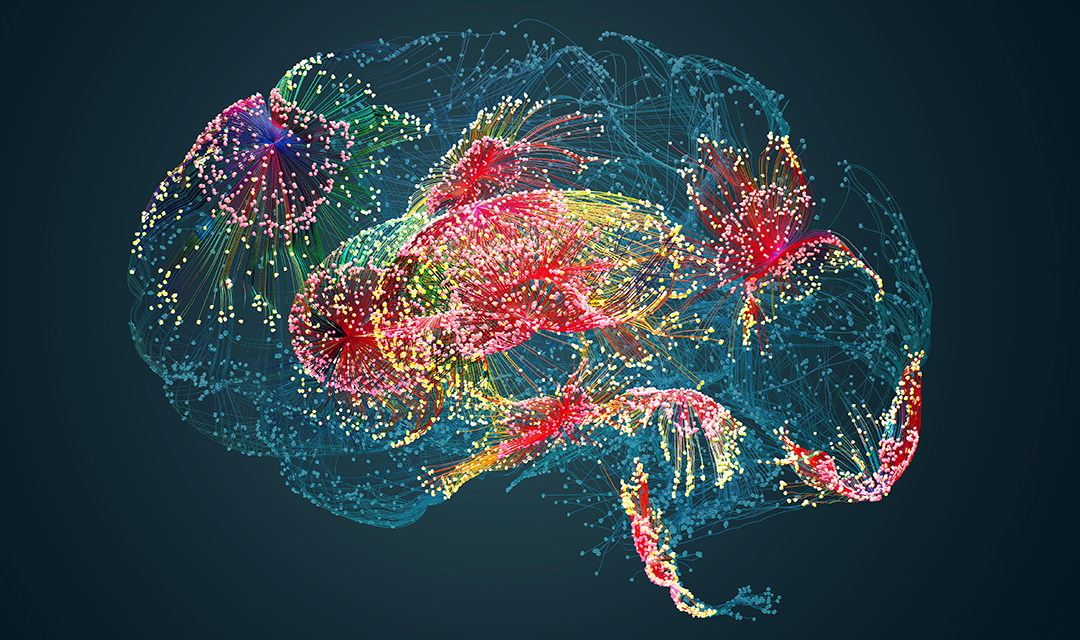
More than 80 billion neurons in the human brain control our movement, perception, memory, decision-making, and emotions. These neurons can work independently, and they can also form dynamic, adaptable networks that operate both within and across dozens of brain regions, serving as the brain’s communication and computation system.
After having only been able to study one neuron at a time for many years, scientists and engineers can now study the interactions of many neurons within single regions of the brain, which has resulted in advances in neuroscience. But our ability to understand neuron interactions across those multiple regions still limits our understanding of the human brain.
The spiking activity of an individual neuron can be influenced by neurons within the same brain area, as well as neurons in other brain areas across wide areas of the brain. Many studies have examined the activity of populations of neurons within a single brain area. But since most brain functions rely on interactions across brain areas, it is likely that some component of the activity of each brain area is shaped by interactions with other brain areas.
Developments in neural recording technology have enabled simultaneous recordings of populations of neurons in multiple brain areas, which has given rise to the possibility of distinguishing interactions across brain areas from interactions solely within a single brain area. However, most statistical methods for analyzing populations of neurons are not designed to distinguish activity shared across areas from activity shared solely among neurons within each area.