Jung Min-kyung
Since 2017, I have covered South Korea’s political and economic landscape as a reporter, with a focus on foreign affairs, inter-Korean relations and security.As a foreign affairs reporter, I closely follow developments from the Ministry of Unification, the Foreign Ministry and the Defense Ministry, tracking shifts in diplomacy, military policy and North Korea’s evolving posture. My work focuses on the intersection of geopolitics, security and policy decisions shaping the Korean Peninsula.Earlier in my career, I also reported on South Korea’s financial sector, covering banking, markets and regulatory developments—experience that continues to inform my understanding of how economic policy intersects with national strategy.
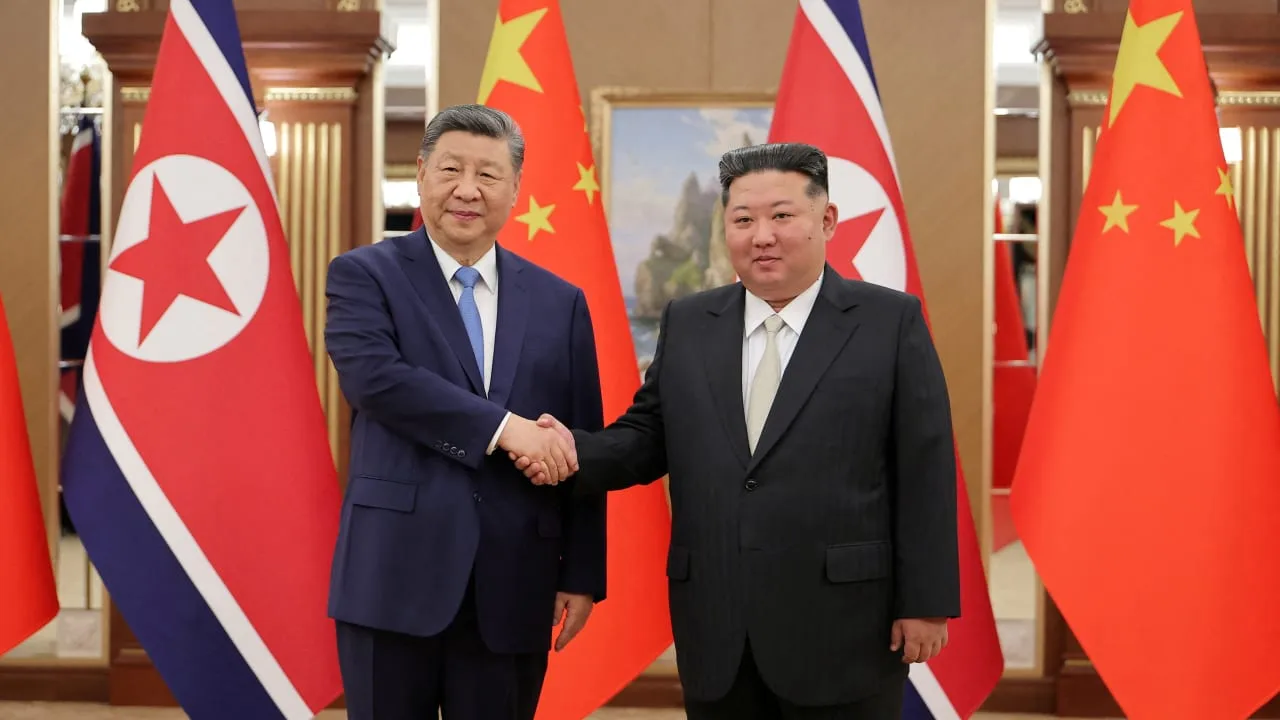
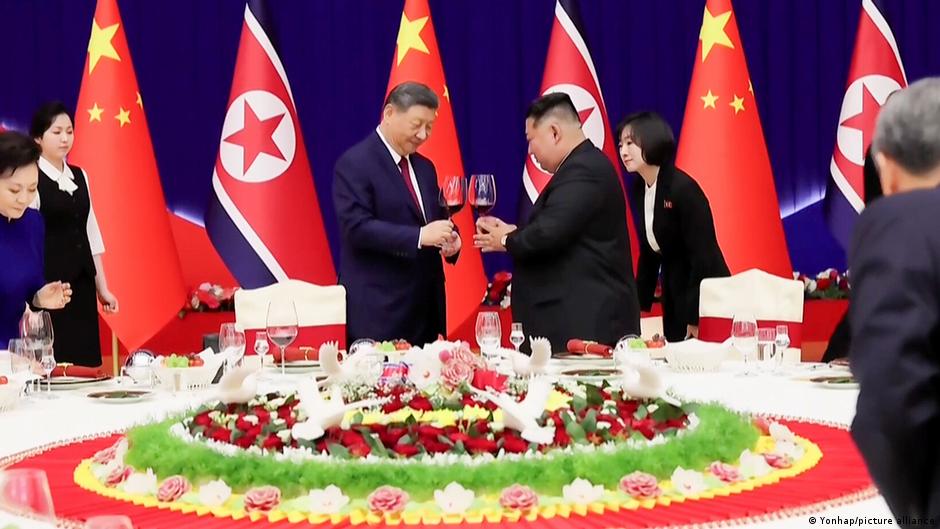
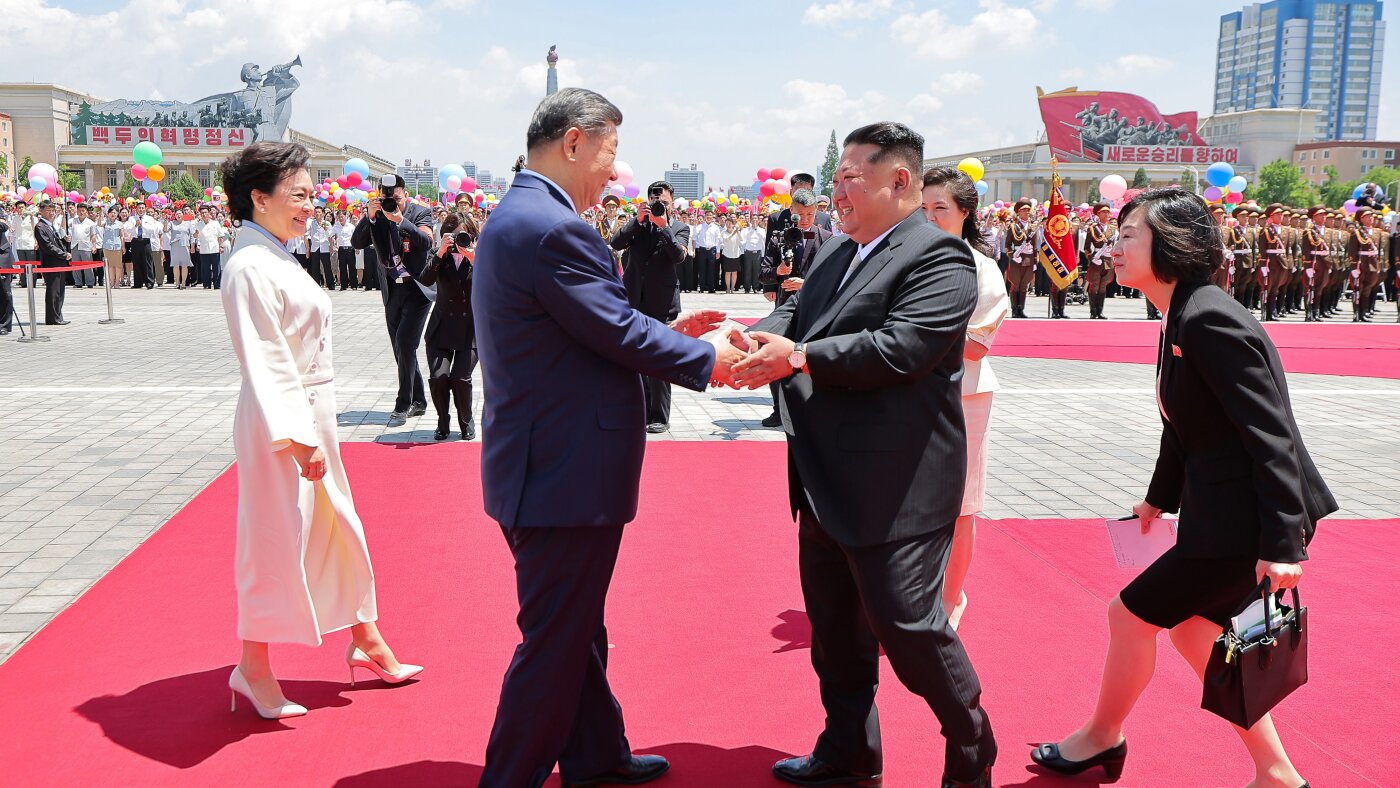
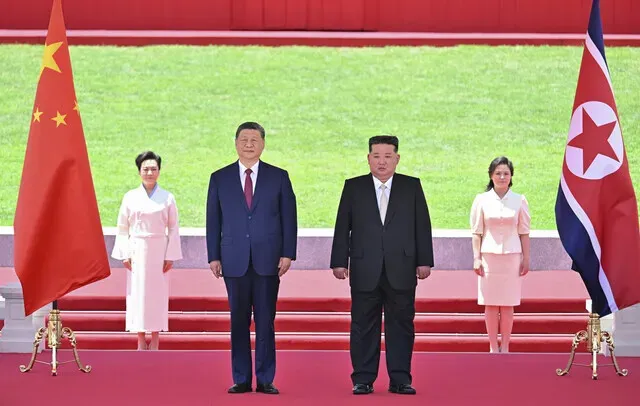
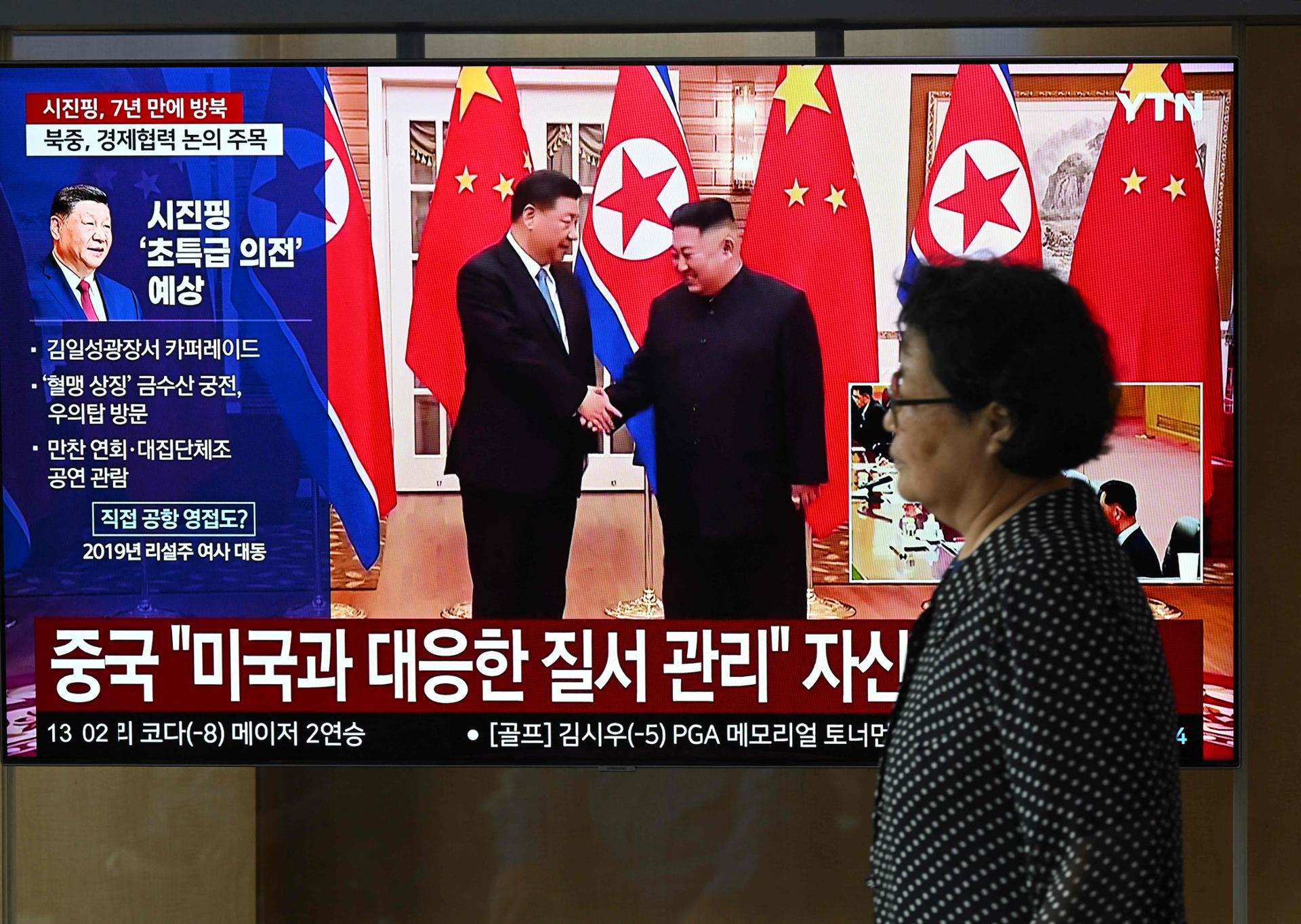
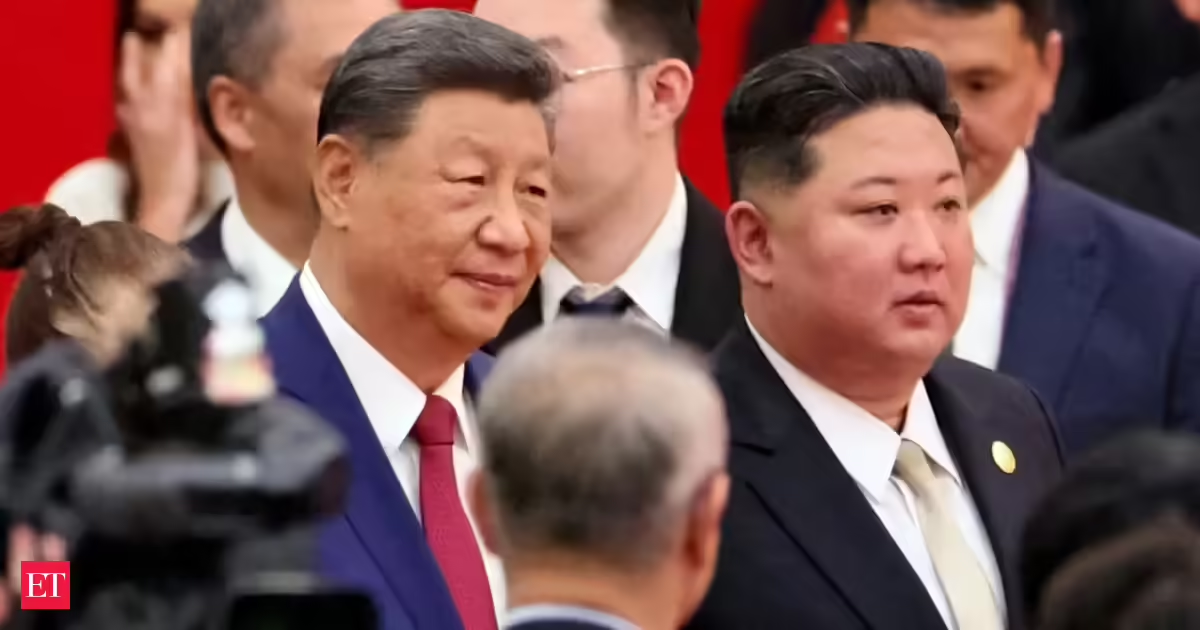
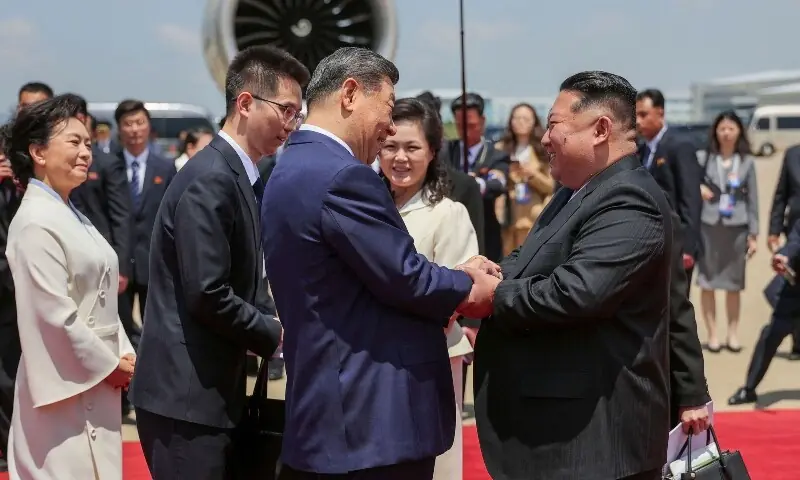
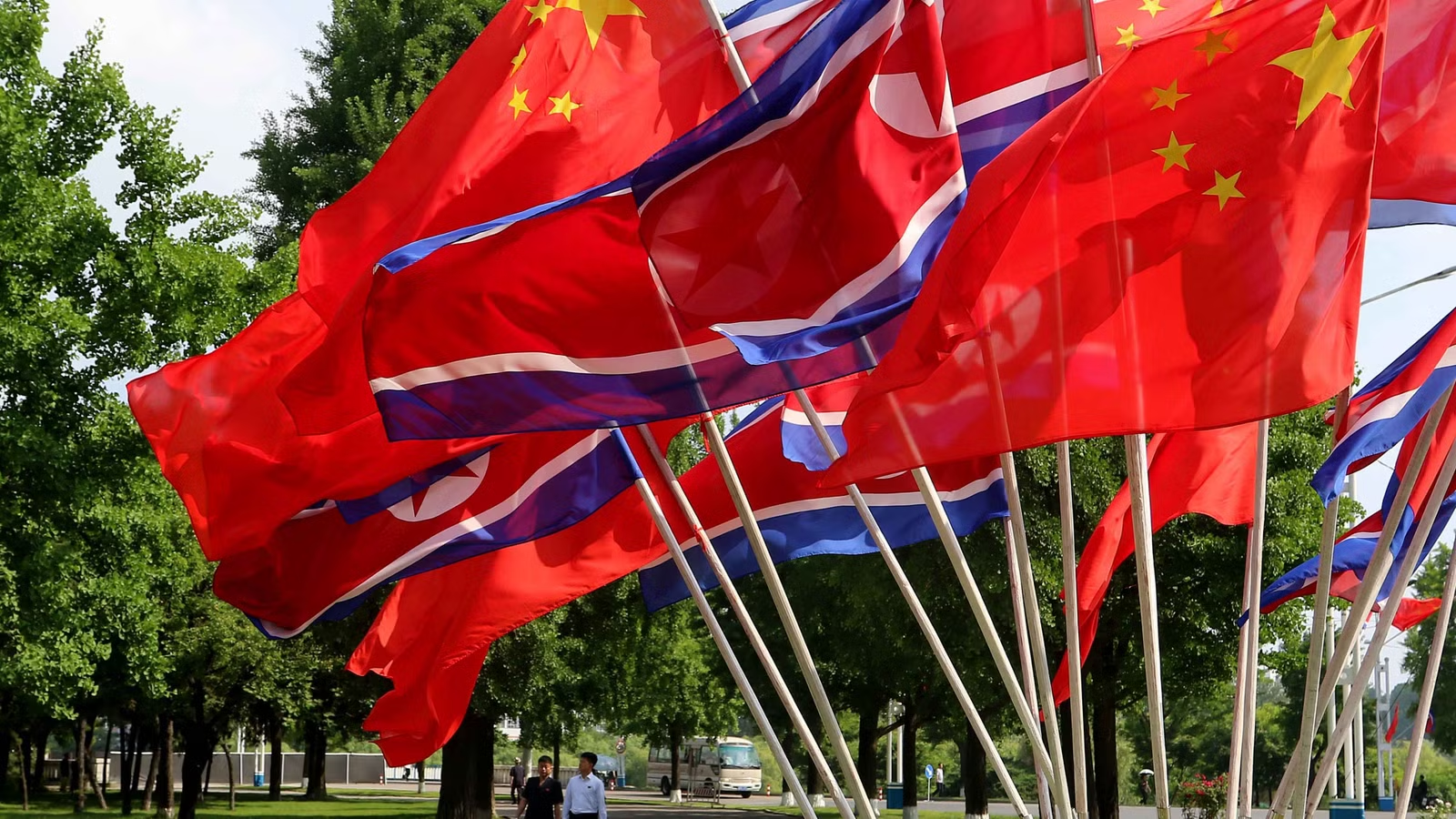
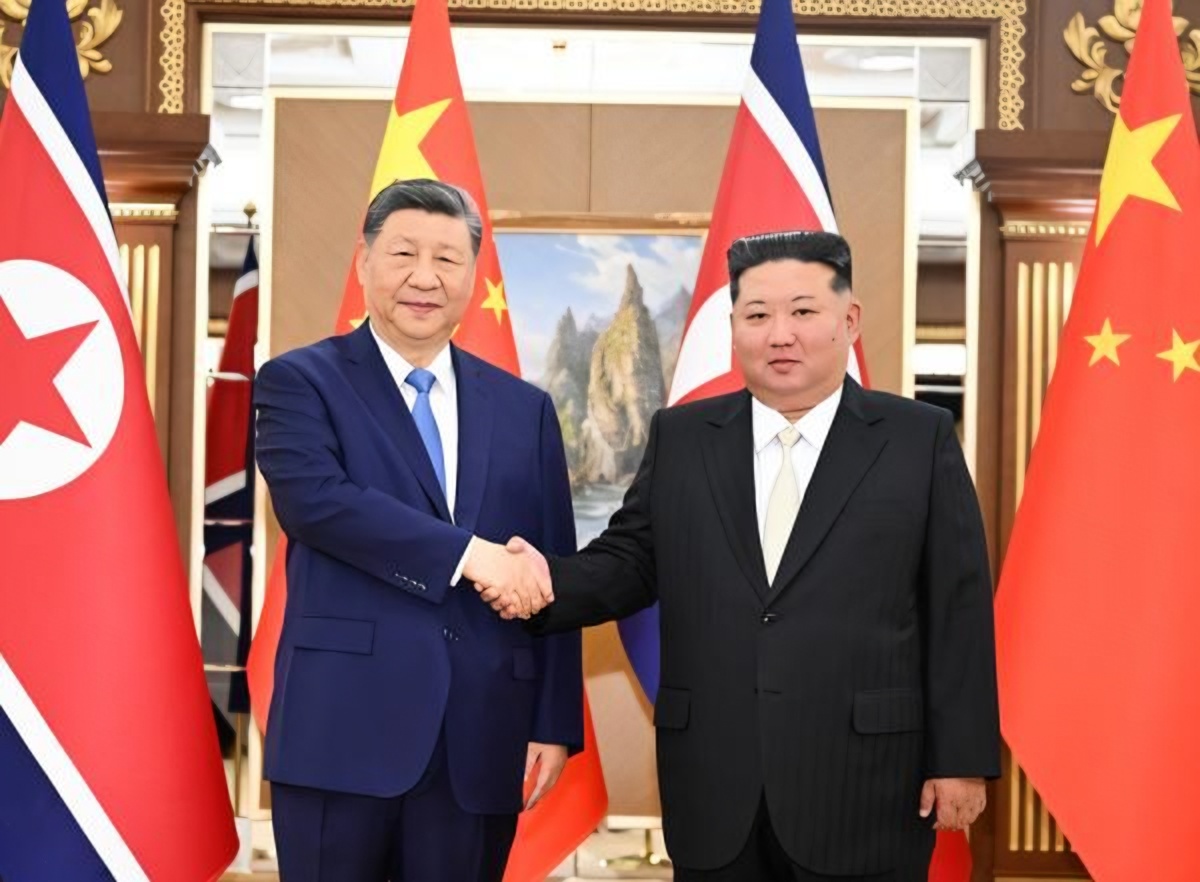
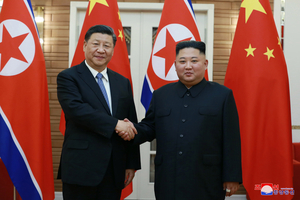
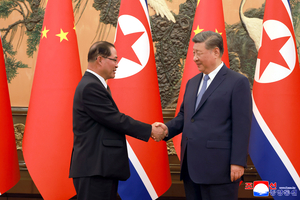
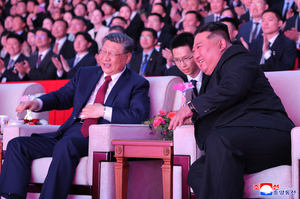
Chinese President Xi Jinping (left) and North Korean leader Kim Jong-un attend a performance at the Pyongyang Indoor Stadium held Monday to welcome Xi during his state visit to North Korea, according to the Korean Central News Agency on Tuesday. (Yonhap) China seeks to draw NK closer but Pyongyang appears cautious, expert saysNorth Korean leader Kim Jong-un and Chinese President Xi Jinping pledged to open a new era in bilateral relations during their summit in Pyongyang, with both sides emphasizing political trust, practical cooperation and their shared socialist identity, the North's state media reported Tuesday.The summit, held Monday during Xi’s first visit to North Korea in seven years, came as the two countries mark the 65th anniversary of their Treaty of Friendship, Cooperation and Mutual Assistance. It also unfolded against the backdrop of North Korea’s deepening military alignment with Russia, and intensifying strategic competition between the United States and China.The Korean Central News Agency said Kim and Xi agreed to put bilateral ties “on a more solid basis” and expand cooperation in politics, economy, culture and other fields. The two sides also agreed to defend each other’s sovereignty and security, it said."The top leaders of the DPRK and China sincerely exchanged the experience gained in party- and state-building in the course of advancing the socialist cause and discussed important issues for putting the traditional DPRK-China friendly and cooperative relations on a more solid basis," the KCNA said, referring to North Korea by the acronym for its official name, the Democratic People's Republic of Korea.Kim said the Workers' Party of Korea and the North Korean government would continue to place the preservation and development of ties with China at the forefront of their strategic priorities, pledging to elevate the relationship into an enduring and exemplary partnership among socialist states.He also praised what he described as China's "world-startling successes" in building a modern socialist country under Xi's leadership, before reaffirming Pyongyang's support for Beijing's core interests."No matter how the situation may change, our party and government will fully support the policy and stand of the Chinese party and government to defend the core interests on the 'one-China' principle," Kim said, according to KCNA.Xi, according to Chinese state media Xinhua News Agency, which reported on the summit a day earlier, said Beijing would continue to support Kim’s leadership and North Korea’s socialist cause “no matter how the international situation changes.” Xinhua reported that Xi proposed strengthening high-level exchanges, practical cooperation, people-to-people exchanges and strategic coordination.Chinese state media also said Xi called for expanding cooperation with North Korea in diplomacy, law enforcement and military affairs, while seeking broader practical cooperation in economy and trade, agriculture, construction, science and technology, and healthcare.Meanwhile, the summit readouts from both Pyongyang and Beijing made no mention of denuclearization or developments on the Korean Peninsula, marking a departure from Xi's 2019 visit, during which China publicly stated its commitment to advancing denuclearization efforts.Yang Moo-jin, distinguished professor at the University of North Korean Studies, said the summit suggested an implicit exchange of priorities between the two sides.“North Korea reaffirmed its support for the ‘One China’ principle, while China refrained from emphasizing denuclearization,” Yang said. “For Pyongyang, securing de facto recognition of its status as a nuclear-armed state remains one of its most important diplomatic goals.”Yang said Xi’s visit appeared aimed at restoring China’s influence over North Korea at a time when Pyongyang has drawn closer to Moscow.“China appears intent on preventing North Korea from becoming overly dependent on Moscow while simultaneously reasserting Beijing’s leadership in regional affairs,” he said. “For Pyongyang, this creates room for a more balanced diplomacy that extracts benefits from both relationships.”He added that North Korea may pursue a division of labor in its external relations, relying on Russia for security and China for economic support.“As North Korea’s strategic status rises through its nuclear capabilities, a division of labor could emerge in which Pyongyang relies on Russia primarily for security while depending on China for economic development — an arrangement that could deepen what might be described as ‘security with Russia, economy with China,’” Yang said.Lim Eul-chul, a professor at Kyungnam University’s Institute for Far Eastern Studies, said the North Korean and Chinese accounts of the summit revealed clear differences in emphasis.“North Korea’s account focused on regime legitimacy and the special nature of China-North Korea relations, portraying the relationship as the country’s foremost strategic undertaking and a model for socialist interstate relations,” Lim said. “Through this narrative, Pyongyang sought to demonstrate domestically and internationally that it is not diplomatically isolated and continues to enjoy the backing of a powerful ally.”By contrast, Lim said, China placed greater emphasis on concrete cooperation and its broader vision for the international order.“Xinhua devoted considerable attention to concrete measures such as the full reopening of border crossings, the resumption of civil aviation and passenger rail services, and expanded cooperation in trade, agriculture, construction and healthcare.”Lim said Beijing appeared to be trying to draw North Korea into a China-centered economic and institutional framework, while Pyongyang remains cautious about becoming overly dependent on China’s economic model.On Tuesday, Xi and Kim visited the China-DPRK Friendship Tower in Pyongyang with their wives, Peng Liyuan and Ri Sol Ju, according to Xinhua. The monument honors Chinese soldiers who fought alongside North Korean forces during the 1950-53 Korean War.The two leaders agreed that the wartime experience was an “eternal historical memory” shared by both sides and pledged to maintain memorial facilities for Chinese People’s Volunteers martyrs, Xinhua reported.Experts said the renewed emphasis on wartime solidarity and military-related exchanges could signal a stronger strategic alignment between Beijing and Pyongyang.“China cannot officially recognize North Korea as a nuclear-weapon state,” Lim said. “However, what deserves attention is what may be described as ‘intentional silence.’”“By endorsing North Korea’s socialist project without qualification, China may be signaling that it is prepared to engage with Pyongyang while tacitly accepting its current nuclear status rather than insisting on denuclearization as a prerequisite,” he added.Yang said the restoration of close North Korea-China ties, following the rapid expansion of North Korea-Russia relations, poses a serious challenge for Seoul.“This could accelerate the entrenchment of a new Cold War structure pitting the South Korea-US alliance — and potentially the trilateral South Korea-US-Japan partnership — against a China-North Korea-Russia bloc,” Yang said.“To break such a structure, South Korea needs pragmatic diplomacy toward both Washington and Beijing while continuing efforts to pursue peaceful coexistence and improve inter-Korean relations, so that the peninsula does not become a mere arena for great-power rivalry,” he said.