Jung Min-kyung
Since 2017, I have covered South Korea’s political and economic landscape as a reporter, with a focus on foreign affairs, inter-Korean relations and security.As a foreign affairs reporter, I closely follow developments from the Ministry of Unification, the Foreign Ministry and the Defense Ministry, tracking shifts in diplomacy, military policy and North Korea’s evolving posture. My work focuses on the intersection of geopolitics, security and policy decisions shaping the Korean Peninsula.Earlier in my career, I also reported on South Korea’s financial sector, covering banking, markets and regulatory developments—experience that continues to inform my understanding of how economic policy intersects with national strategy.
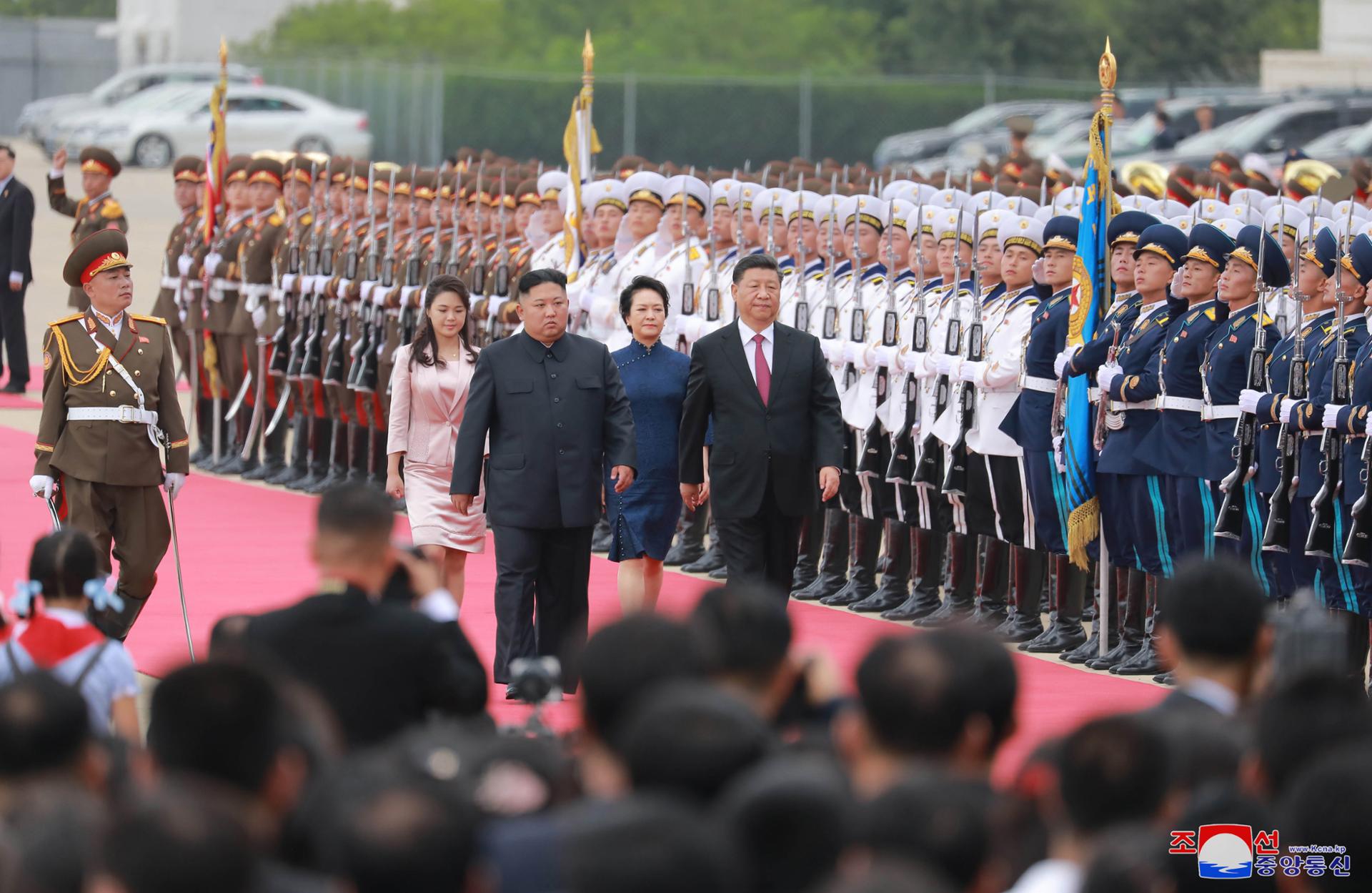
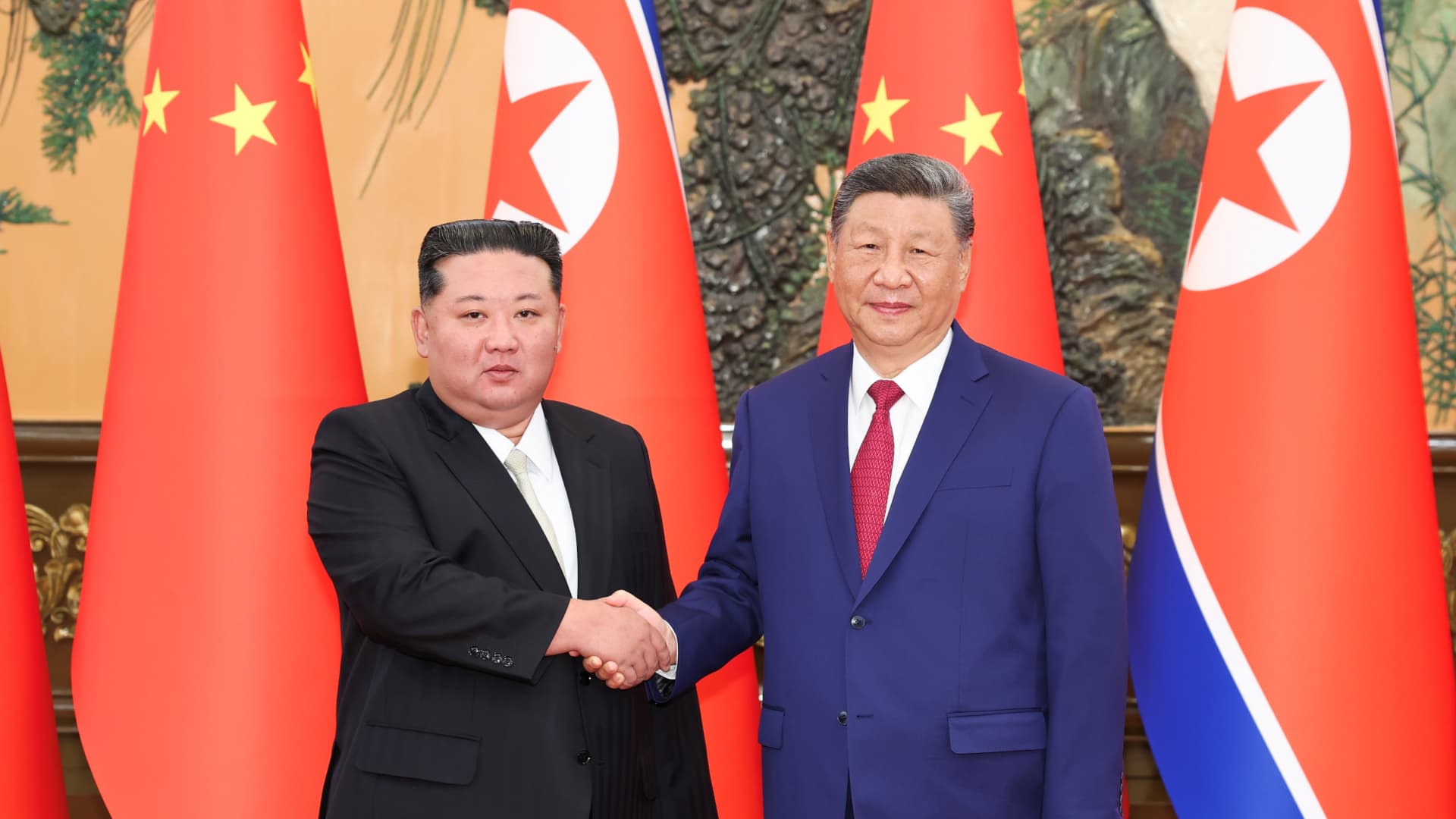
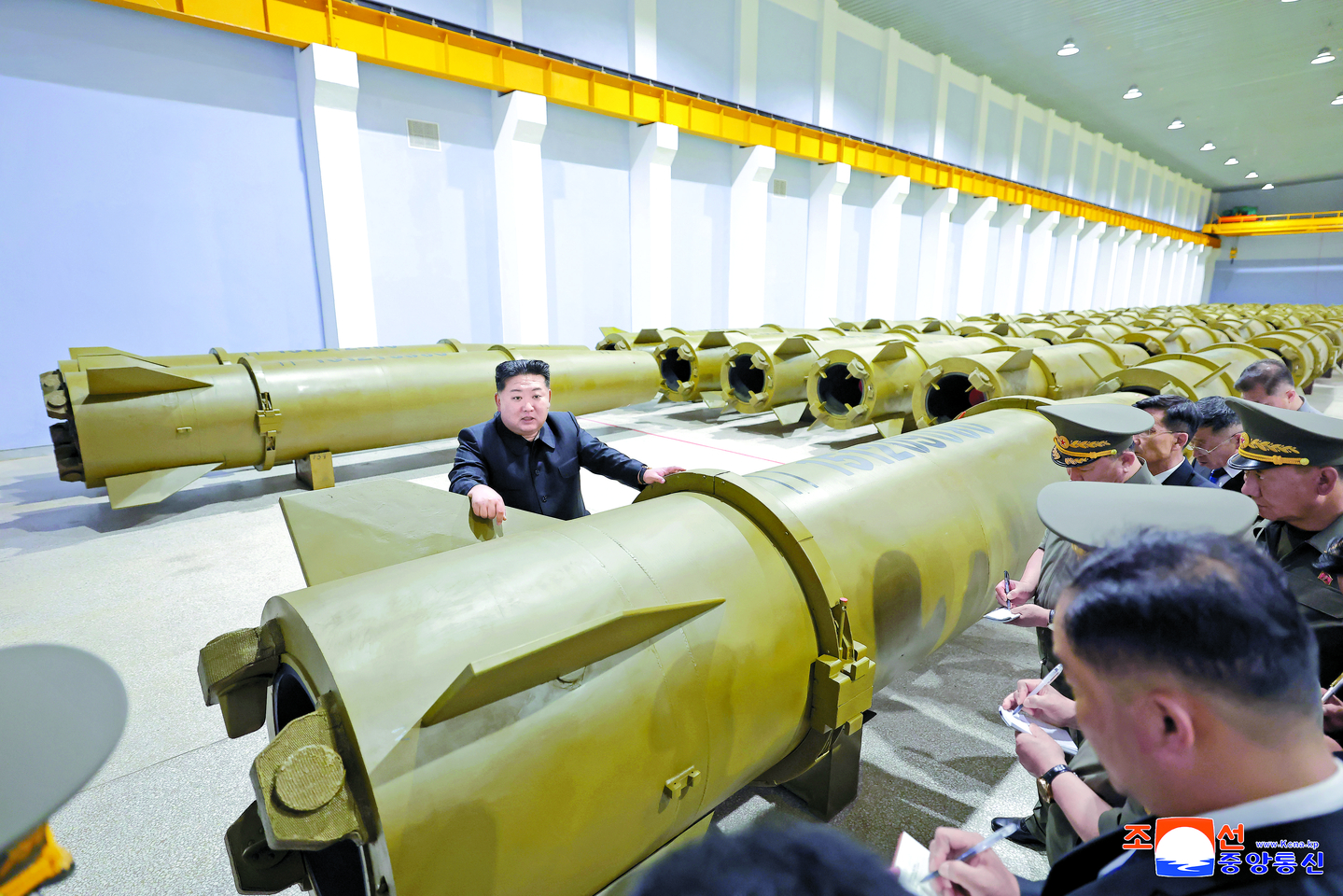
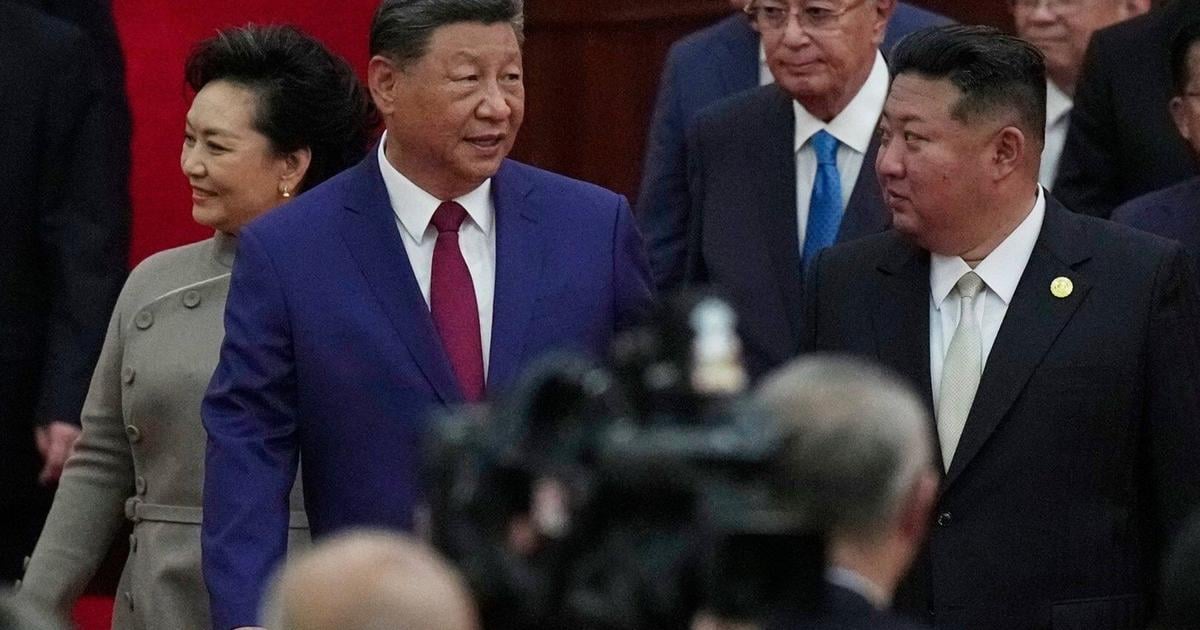
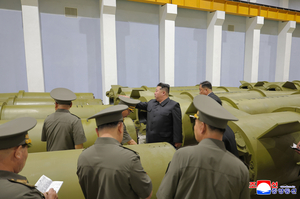
North Korean leader Kim Jong-un (center) inspects a major munitions industrial enterprise on Saturday to review the production of key weapons during the first half of 2026, the Korean Central News Agency reported the following day. (KCNA-Yonhap) Just one day before Chinese President Xi Jinping is set to arrive in Pyongyang for a rare state visit, North Korea on Sunday delivered an unmistakable message: Its nuclear weapons program is not up for negotiation.A strongly worded statement by the North Korean leader's influential sister, Kim Yo-jong, and Kim Jong-un's inspection of nuclear and missile production facilities appear to be an attempt to define the terms of the summit before Xi even lands, making clear that any discussion of denuclearization would be unacceptable, according to experts.In a statement carried by the Korean Central News Agency on Sunday, Kim Yo-jong, who serves as a department director of the Central Committee of the Workers' Party of Korea, declared that North Korea's nuclear status is irreversible."The DPRK's status as a nuclear weapons state is the line of no retreat, and it is a stark reality whether anyone recognizes it or not," she said, referring to North Korea by its official name, the Democratic People's Republic of Korea.The move comes as Xi is scheduled to visit North Korea on Monday and Tuesday for his first trip to the country in nearly seven years, amid growing strategic cooperation between Pyongyang and Moscow and renewed speculation over future US-North Korea diplomacy."The US representative of trade had already intimated last month that the China-US summit reconfirmed what was called 'denuclearization.' However, it is just a complete fabrication and false information," Kim Yo-jong added.Her remarks came after a US State Department spokesperson highlighted Friday that President Donald Trump and Xi had reaffirmed their shared goal of denuclearizing North Korea during their summit in Beijing last month.Rejecting that characterization, Kim Yo-jong urged the United States to abandon its "daydream" about denuclearization.An analyst in Seoul said the statement was ostensibly directed at Washington but was equally, if not more, intended for Beijing ahead of Xi's arrival.Lim Eul-chul, professor at Kyungnam University's Institute for Far Eastern Studies, described the statement as "a highly significant message directed at China.""The most noteworthy element is her outright rejection of the claim that the United States and China reaffirmed the goal of North Korean denuclearization during their recent summit," Lim said."While China itself has remained silent, Kim Yo-jong stepped forward to rebut the claim. On the surface, this appears to reflect confidence in Beijing, but paradoxically it also reveals lingering doubts about China and serves as a sophisticated form of psychological pressure on Xi Jinping ahead of his visit."According to Lim, Pyongyang is attempting to preemptively block any possibility that Beijing might align with Washington on the denuclearization issue."The statement demonstrates Pyongyang's strong rejection of any framework based on a US-China understanding regarding denuclearization," he said. "By doing so, North Korea is attempting to preemptively prevent China from aligning with US pressure for denuclearization, exclude the issue from Xi's visit agenda, and once again emphasize that the nuclear question belongs to a constitutional realm that is not open to compromise."The rhetoric has been accompanied by concrete demonstrations of military capability.KCNA, in a separate report on Sunday, said Kim Jong-un had inspected a major munitions industrial enterprise on Friday to review first-half weapons production and plans for expanding missile manufacturing.During the inspection, Kim said it was necessary to dramatically increase missile output as North Korea reorganizes its military formations."It is necessary to boost the existing production capacity 2.5 times within the Five-Year Plan period on an annual growth basis in order to supply enough quantity of missiles the demand for which will drastically increase as our armed forces' operational group formation and combat organization are to be modified," Kim was quoted by KCNA as saying, stressing that it is "a core task of very important significance."He also reviewed a long-term plan to expand production capacity for various ballistic and cruise missiles and ordered that it be submitted to the upcoming plenary meeting of the Workers' Party for deliberation.The inspection followed another highly symbolic visit earlier in the week to what North Korean state media described as a newly operational nuclear material production facility, where Kim promised an "exponential" expansion of the country's nuclear arsenal and said weapons-grade nuclear material production capacity had more than doubled over the past five years.On Thursday, he also visited the new 5,000-ton destroyer Kang Kon together with his daughter, Kim Ju-ae, where he discussed strengthening North Korea's naval nuclear deterrent and plans to build a new 10,000-ton-class destroyer, according to the KCNA the following day.Lim said the timing of the recent military inspections reflects a level of confidence not previously seen from Pyongyang."North Korea's unusually forceful effort to set the terms of the agenda immediately before Xi's arrival reflects a level of confidence not seen in the past," he said.He attributed that confidence to two factors: North Korea's increasingly close relationship with Russia and its growing nuclear production capability."The underlying message is that China-North Korea relations can continue to develop only if China accepts North Korea as a nuclear weapons state," Lim said.Whether Beijing is prepared to do so remains uncertain.China has traditionally maintained support for the denuclearization of the Korean Peninsula, but recent developments have fueled questions about whether its position is evolving. The joint statement issued after the China-Russia summit in Beijing last month made no reference to denuclearization, instead opposing efforts to threaten North Korea's security through diplomatic isolation, economic sanctions or military pressure.Against that backdrop, Lim said Xi's visit may become an important test of whether Beijing is merely avoiding the issue or is quietly recalibrating its longstanding policy."Whether China is willing, either explicitly or implicitly, to recognize North Korea's nuclear status is therefore likely to become the single most important point to watch at the upcoming potential Xi-Kim summit," he said.