Jung Min-kyung
Since 2017, I have covered South Korea’s political and economic landscape as a reporter, with a focus on foreign affairs, inter-Korean relations and security.As a foreign affairs reporter, I closely follow developments from the Ministry of Unification, the Foreign Ministry and the Defense Ministry, tracking shifts in diplomacy, military policy and North Korea’s evolving posture. My work focuses on the intersection of geopolitics, security and policy decisions shaping the Korean Peninsula.Earlier in my career, I also reported on South Korea’s financial sector, covering banking, markets and regulatory developments—experience that continues to inform my understanding of how economic policy intersects with national strategy.
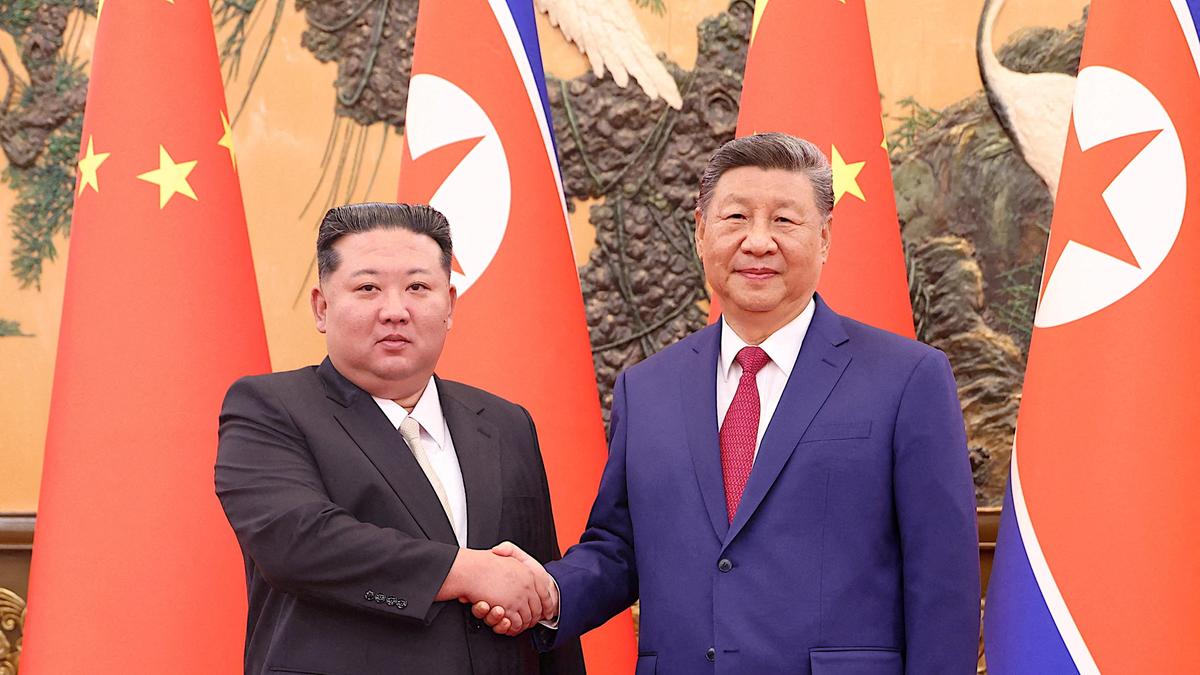
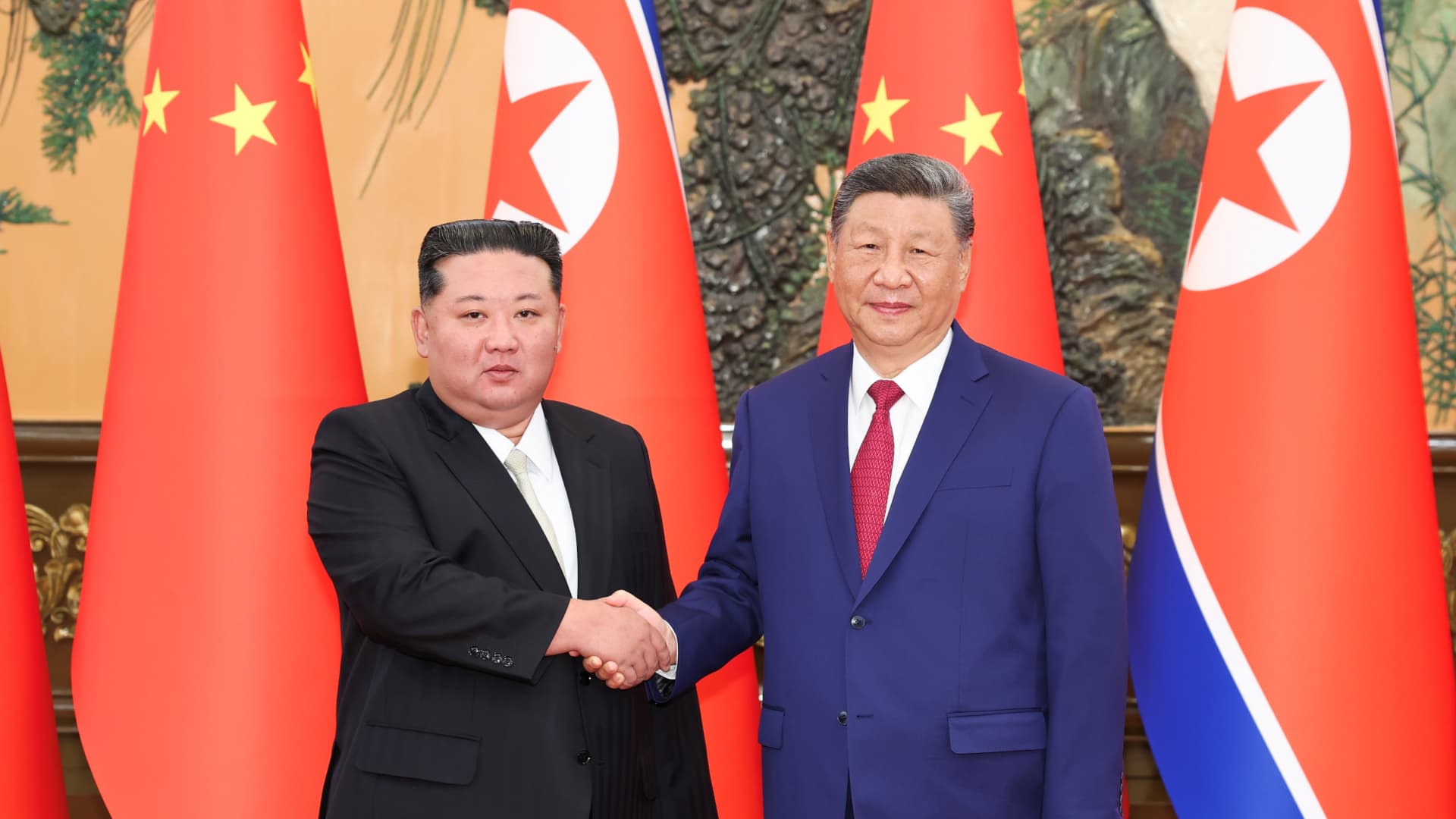
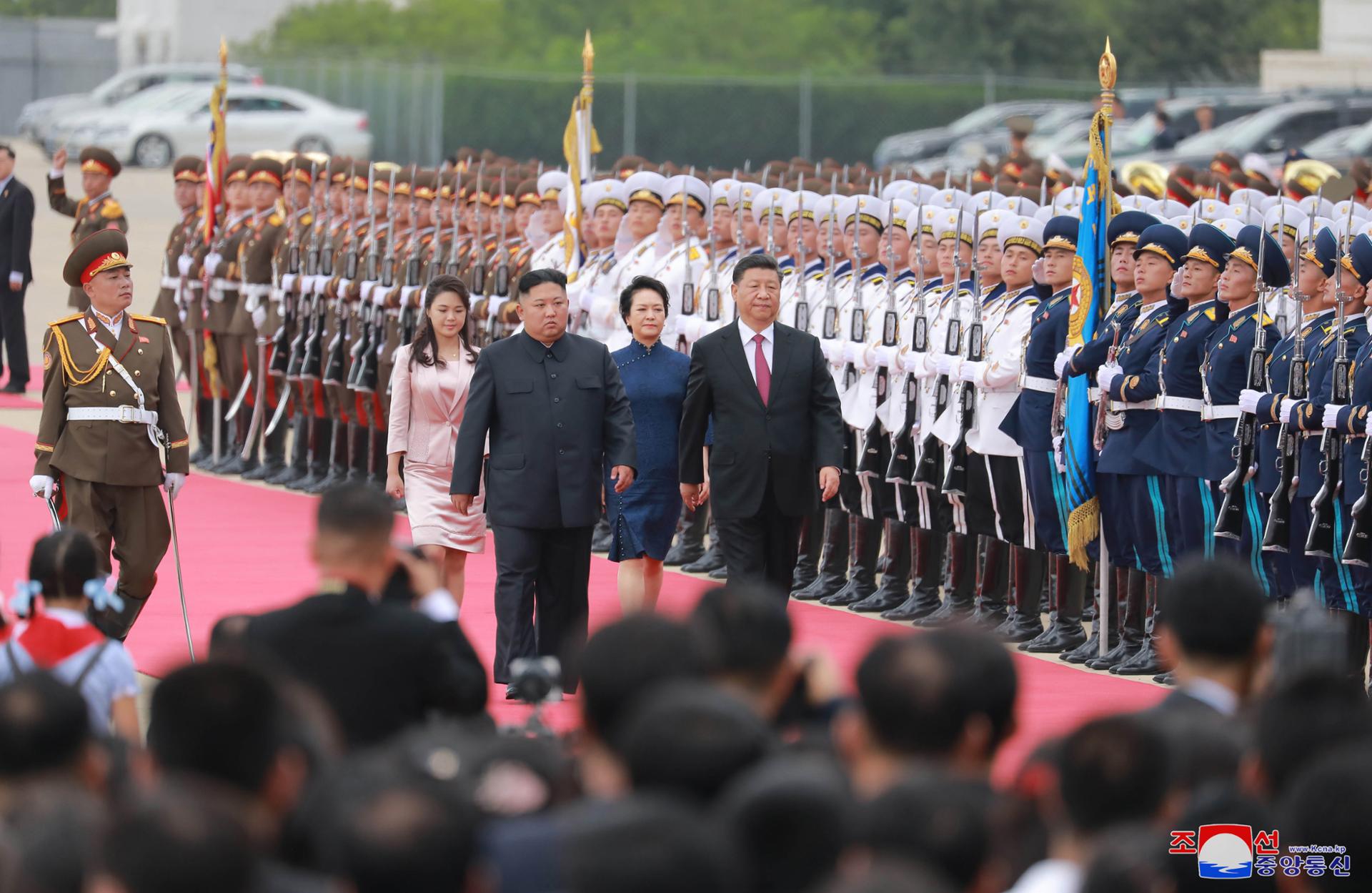
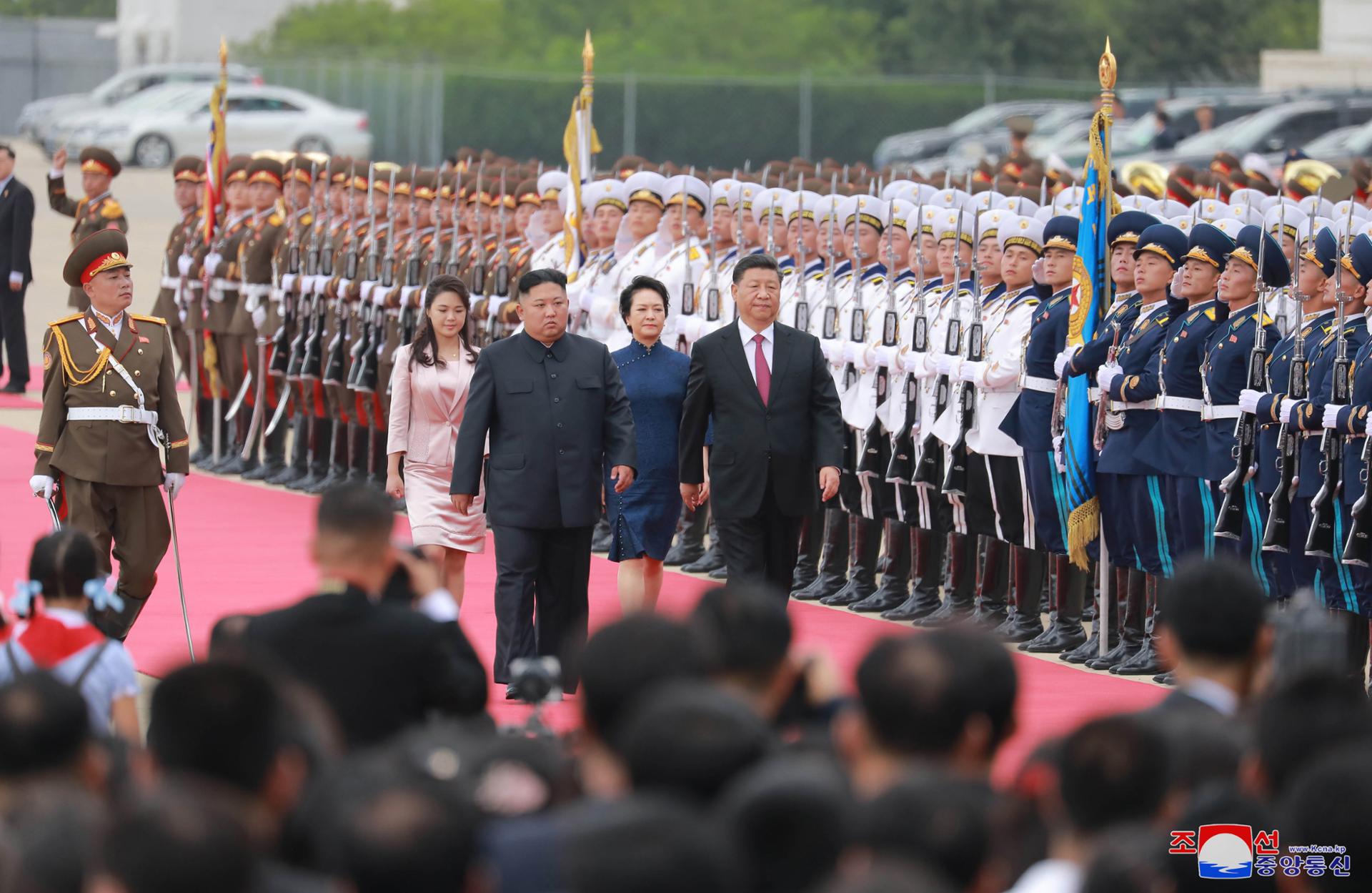
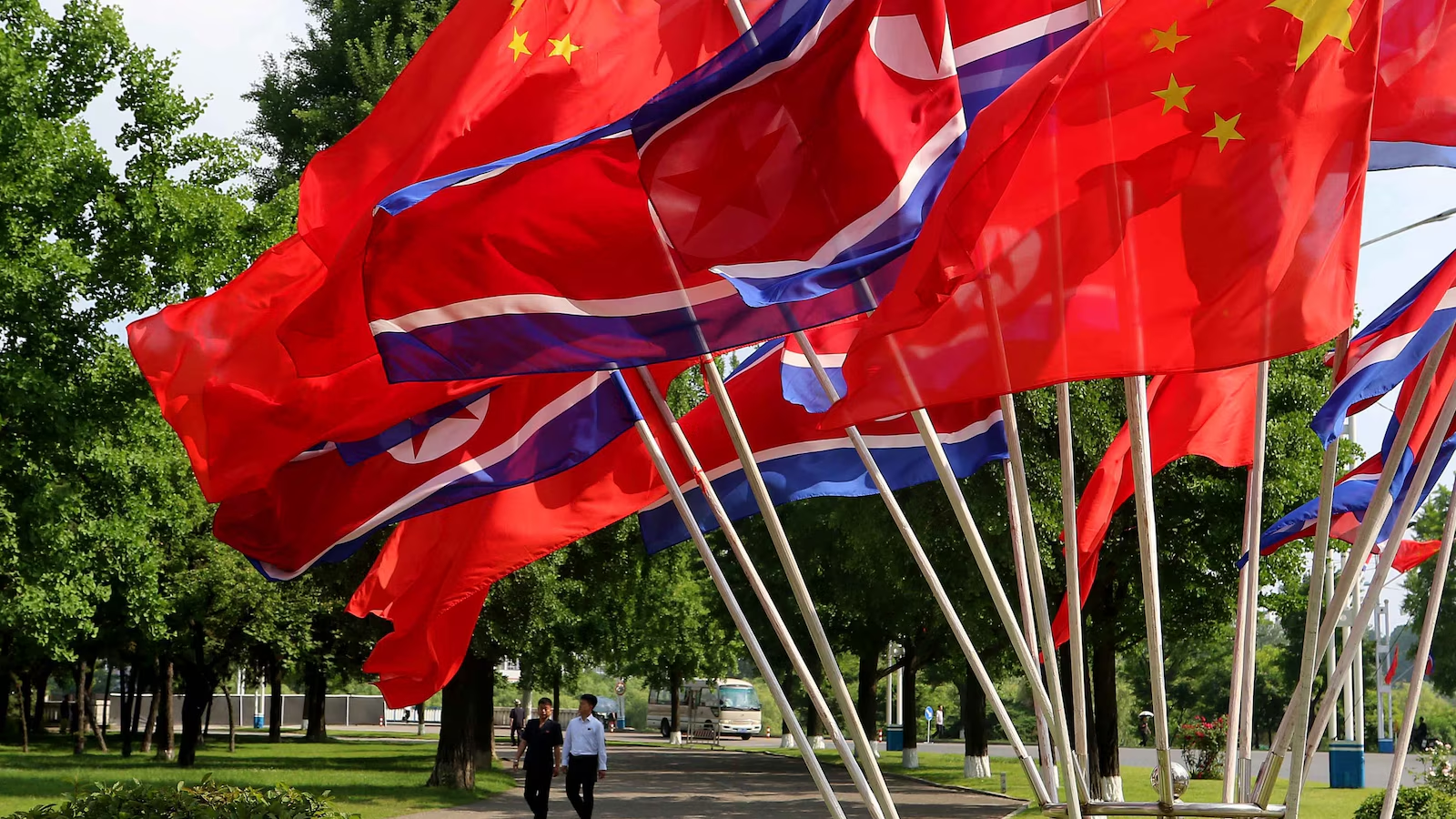
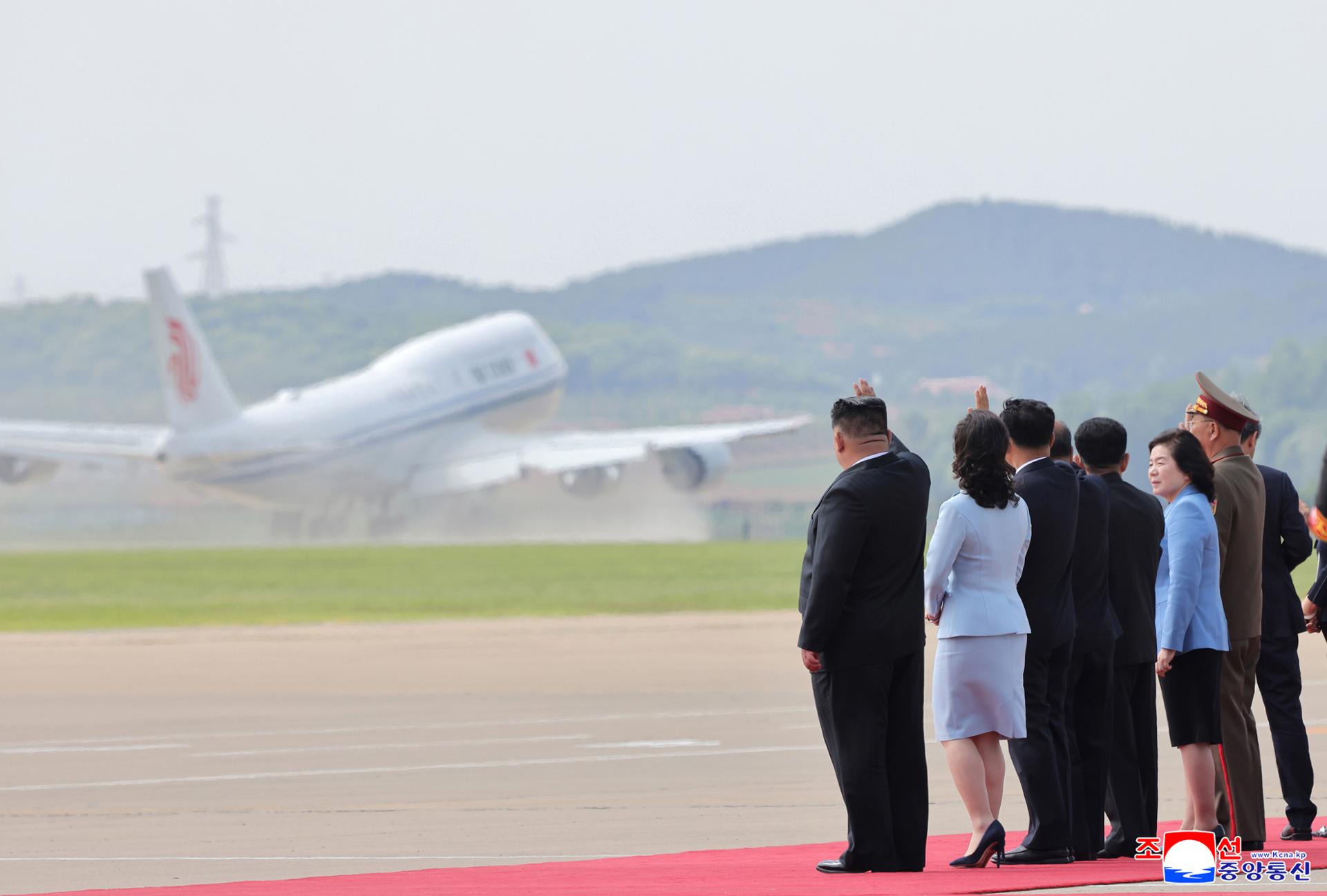
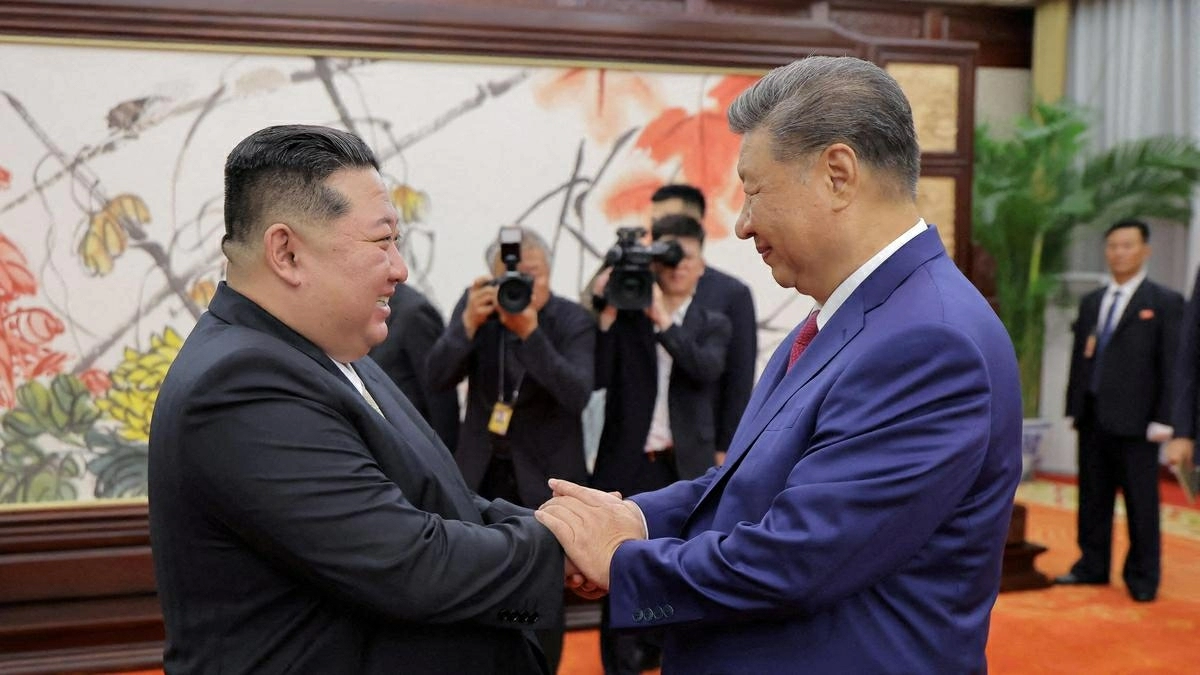
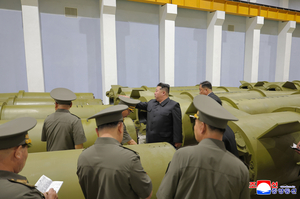
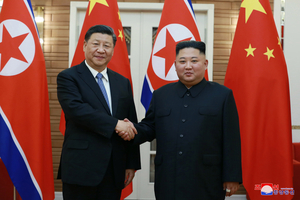
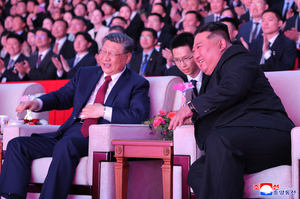
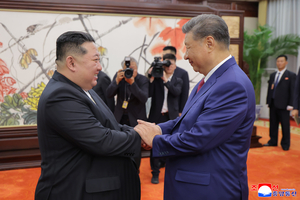
In this file photo uploaded Friday, Chinese President Xi Jinping (right) and North Korean leader Kim Jong-un shake hands ahead of their bilateral summit during Kim's visit to China on Sept. 4, 2025. China and North Korea announced Friday that Xi will pay a state visit to North Korea on Monday and Tuesday, marking his first trip to the country since June 2019 and his second since Kim took power. (KCNA-Yonhap) When Chinese President Xi Jinping arrives in Pyongyang on Monday, what matters may not be what he and North Korean leader Kim Jong-un say behind closed doors, but what they choose to show the world, according to experts on Sunday.Will Kim's daughter, known as Ju-ae, appear alongside the two leaders? Will the summit avoid any mention of denuclearization? Will Beijing signal it is reclaiming influence over a North Korea that has grown increasingly close to Russia?Experts say the rare visit from Xi — his first to North Korea in nearly seven years — is about far more than commemorating the 65th anniversary of a friendship treaty. It is a carefully choreographed display of strategic interests at a time when Pyongyang is expanding its nuclear program, Moscow has become a crucial partner and the possibility of renewed US-North Korea diplomacy still lingers.Is China still North Korea's indispensable partner?On the surface, Xi's visit commemorates the 65th anniversary of the 1961 Treaty of Friendship between China and North Korea. But analysts say the anniversary is merely the backdrop for a summit driven by far more pressing strategic calculations."Nominally, the visit marks the 65th anniversary of the 1961 Sino-North Korean Treaty of Friendship," said Yang Moo-jin, a distinguished professor at the University of North Korean Studies. "But this should be viewed not simply as a reciprocal or goodwill visit, but as an opportunity to reactivate and strengthen bilateral cooperation between Beijing and Pyongyang."The summit will also test whether China and North Korea have fully repaired a relationship that cooled during the pandemic and as Pyongyang deepened military ties with Moscow, according to Yang.Park Won-gon, a professor of North Korean studies at Ewha Womans University, said Xi's decision to make Pyongyang his first overseas destination of the year carries unusual symbolism."While many foreign leaders — including South Korean President Lee Jae Myung — have traveled to China this year to meet Xi, Xi himself has chosen Pyongyang as the destination for his first overseas trip," Park said. "That alone is meaningful."The trip will be Xi's first visit to North Korea in nearly seven years. He last traveled to Pyongyang in June 2019 for his first state visit since taking office, while his most recent meeting with Kim came in September 2025 during China's Victory Day commemorations in Beijing."This visit is likely to serve as a declaration that China-North Korea relations have returned to normal."For Beijing, restoring that relationship is about more than diplomacy."From China's perspective, the visit serves to expand its influence by positioning itself ahead of potential US-North Korea dialogue and by checking the growing closeness between North Korea and Russia," Yang said.Park argued that China ultimately wants to ensure North Korea remains within its strategic orbit."China's priority is to keep North Korea within its own sphere of influence and to use Pyongyang as a strategic asset in its competition with the United States," he said. "From Beijing's perspective, an improvement in US-North Korea relations could actually reduce China's leverage."Will Kim get China's support on his own termsWhile Russia has emerged as North Korea's most important military partner, China remains its indispensable economic lifeline, observers have pointed out.Analysts say Kim is likely to seek Beijing's political understanding and economic backing as he presses ahead with ambitious domestic development plans while simultaneously expanding the country's military capabilities. In this file photo uploaded Friday, Chinese President Xi Jinping (left) and North Korean leader Kim Jong-un shake hands ahead of their summit in Pyongyang on June 20, 2019, during Xi's state visit to North Korea. China and North Korea announced Friday that Xi will pay a state visit to North Korea on Monday and Tuesday, marking his first trip to the country in nearly seven years and his second since Kim took power. (KCNA-Yonhap) "For North Korea, economic considerations are especially important," Park said. "Although Russia provides economic support, implementing major development initiatives — such as the regional development projects formally adopted at the Ninth Party Congress — ultimately requires Chinese assistance."Yang said Pyongyang also needs Beijing's support as it pursues the strategic line adopted at the latest party congress."As economic cooperation resumes following the reopening of direct Beijing-Pyongyang flights and the gradual recovery of exchanges suspended during the COVID-19 pandemic, North Korea needs China's economic assistance," Yang said.Yet Kim is also likely to remind Xi that North Korea's growing partnership with Russia gives Pyongyang more room to maneuver than in the past.Don't expect 'denuclearization'If there is one topic analysts believe is unlikely to feature prominently in the summit, it is North Korea's denuclearization.Instead, they expect both sides to emphasize peace and stability on the Korean Peninsula while carefully avoiding language Pyongyang now rejects outright."Following the recent US-China summit, the White House fact sheet stated that the two presidents had discussed the denuclearization of North Korea, but China itself made no such reference," Park said."The summit is more likely to emphasize general themes such as peace and stability on the Korean Peninsula rather than denuclearization."Still, Park does not expect Beijing to formally embrace North Korea's claim that it is a permanent nuclear weapons state."China is also unlikely to go so far as to explicitly recognize North Korea as a nuclear weapons state. It will probably adopt a carefully calibrated position."The timing of the visit is notable.The announcement of Xi's trip on Friday came just one day after Kim inspected what the Korean Central News Agency described as a newly operational nuclear material production facility, using the occasion to call for an "exponential" expansion of the country's nuclear arsenal and to declare that weapons-grade nuclear material production capacity had more than doubled over the past five years.Park believes the message was directed at both Beijing and Washington."The timing suggests that North Korea is reaffirming its identity as a nuclear weapons state and seeking at least tacit acceptance from China that discussions of denuclearization or 'North Korea's denuclearization' will not be part of the summit agenda," he said.At the same time, Park noted that Pyongyang has avoided steps that could completely shut the door to future diplomacy."North Korea has avoided excessively provoking the Trump administration," he said, noting that it has refrained from conducting a seventh nuclear test or launching an intercontinental ballistic missile capable of striking the US mainland since Trump's return.Ju-ae's presenceAmong the many questions surrounding Xi 's visit, one of the most symbolic may be whether Kim Jong-un's daughter Ju-ae, is seen alongside the two leaders. North Korean leader Kim Jong-un (center) accompanied by his daughter Kim Ju-ae, visits navy destroyer Kang Kon and observes its sea trials after it entered the operational capability evaluation phase, according to the Korean Central News Agency on Saturday. (KCNA-Yonhap) Ju-ae has increasingly appeared at major military and political events, fueling speculation she is being groomed as her father's successor. Her appearance during Xi's visit would therefore carry significance far beyond protocol.Yang said one of the key issues to watch is "whether China signals any approval of a possible succession system centered on Ju-ae."Nevertheless, Yang cautioned against overinterpreting any appearance."Since Kim Jong-un remains firmly in power and Kim Ju-ae has not been officially designated as his successor, there is unlikely to be any explicit event related to succession during the visit," he said.Park noted that a direct meeting between Xi and Ju-ae would carry symbolic meaning."Should Kim Ju-ae appear and be photographed meeting Xi directly, it would carry symbolic implications," Park said. "Such an encounter could be interpreted as China implicitly recognizing a fourth-generation hereditary succession."For that reason, he said, Beijing itself may be cautious. The summit is ultimately intended to place Xi and Kim Jong-un at center stage, and elevating Ju-ae could shift attention to the succession question instead.