Jung Min-kyung
Since 2017, I have covered South Korea’s political and economic landscape as a reporter, with a focus on foreign affairs, inter-Korean relations and security.As a foreign affairs reporter, I closely follow developments from the Ministry of Unification, the Foreign Ministry and the Defense Ministry, tracking shifts in diplomacy, military policy and North Korea’s evolving posture. My work focuses on the intersection of geopolitics, security and policy decisions shaping the Korean Peninsula.Earlier in my career, I also reported on South Korea’s financial sector, covering banking, markets and regulatory developments—experience that continues to inform my understanding of how economic policy intersects with national strategy.
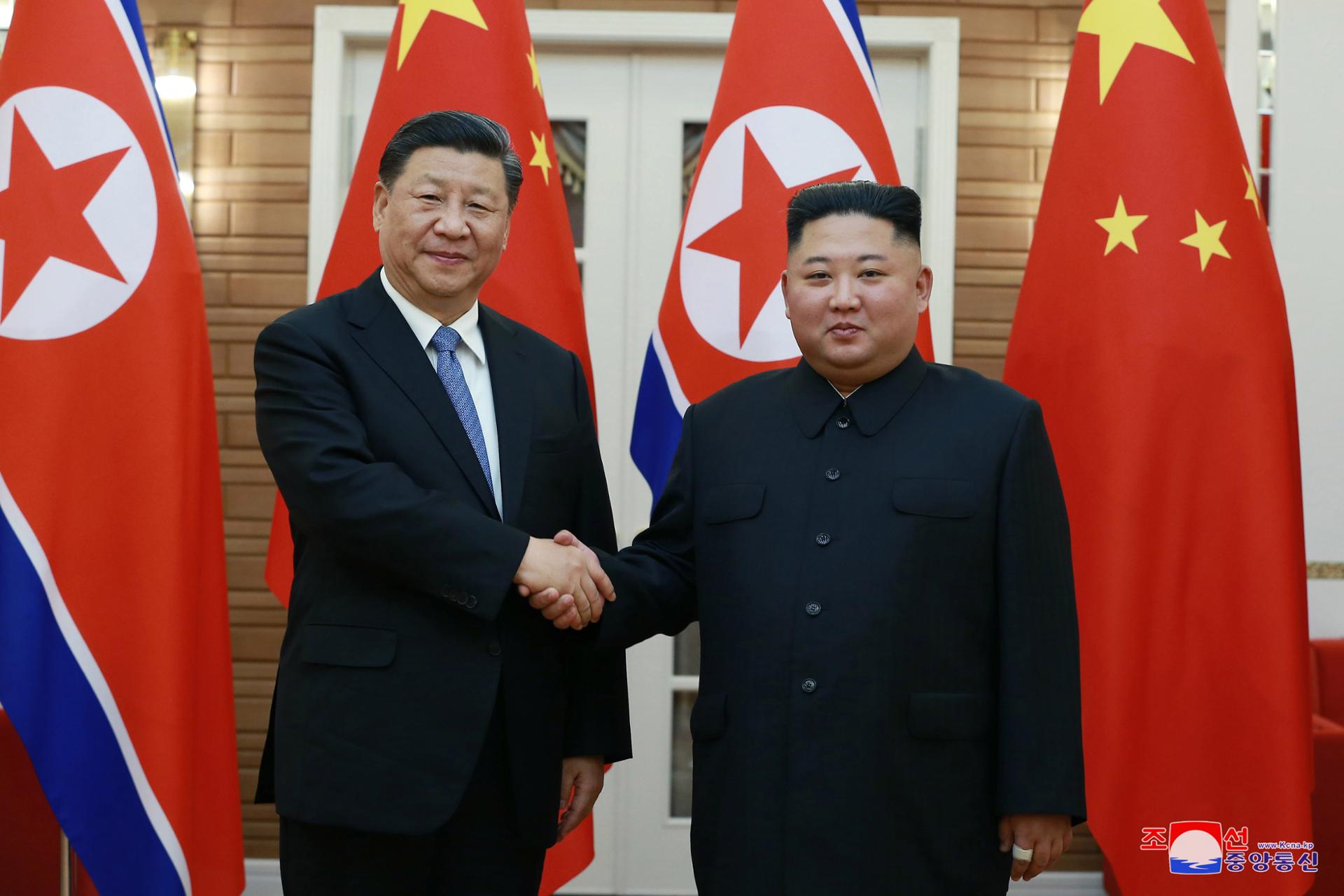
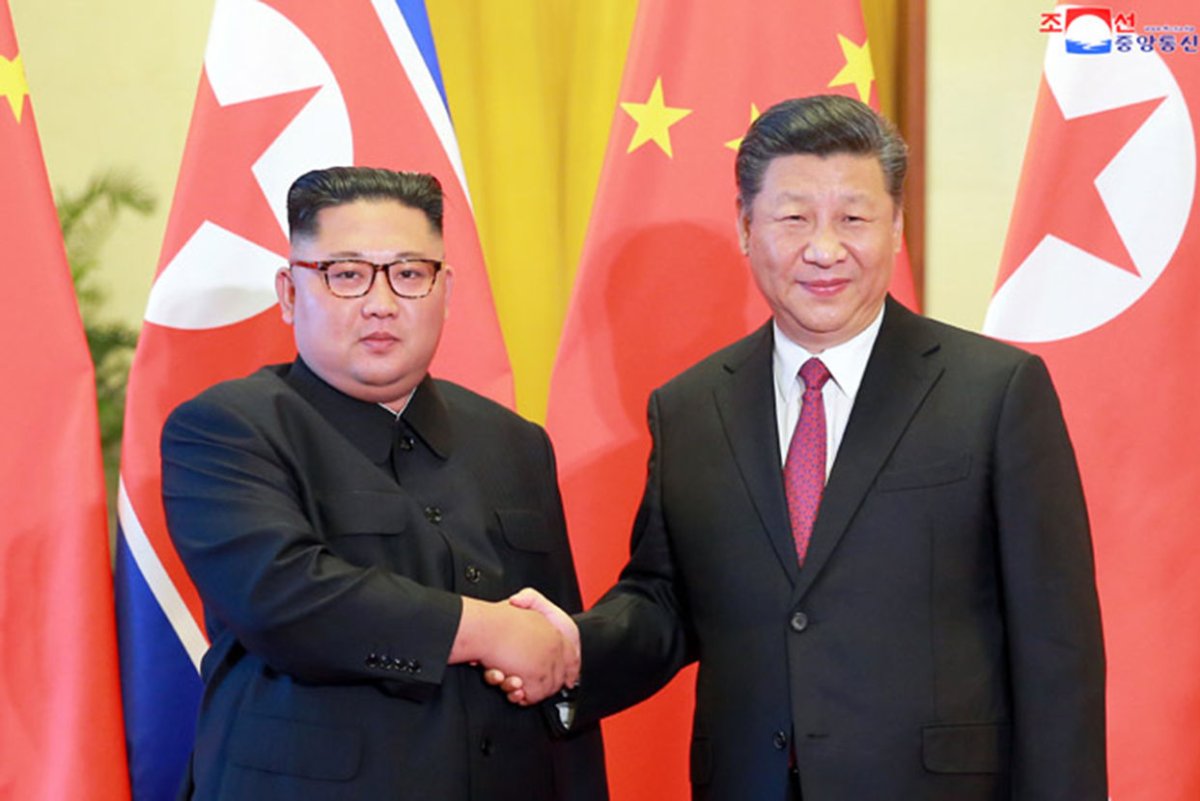
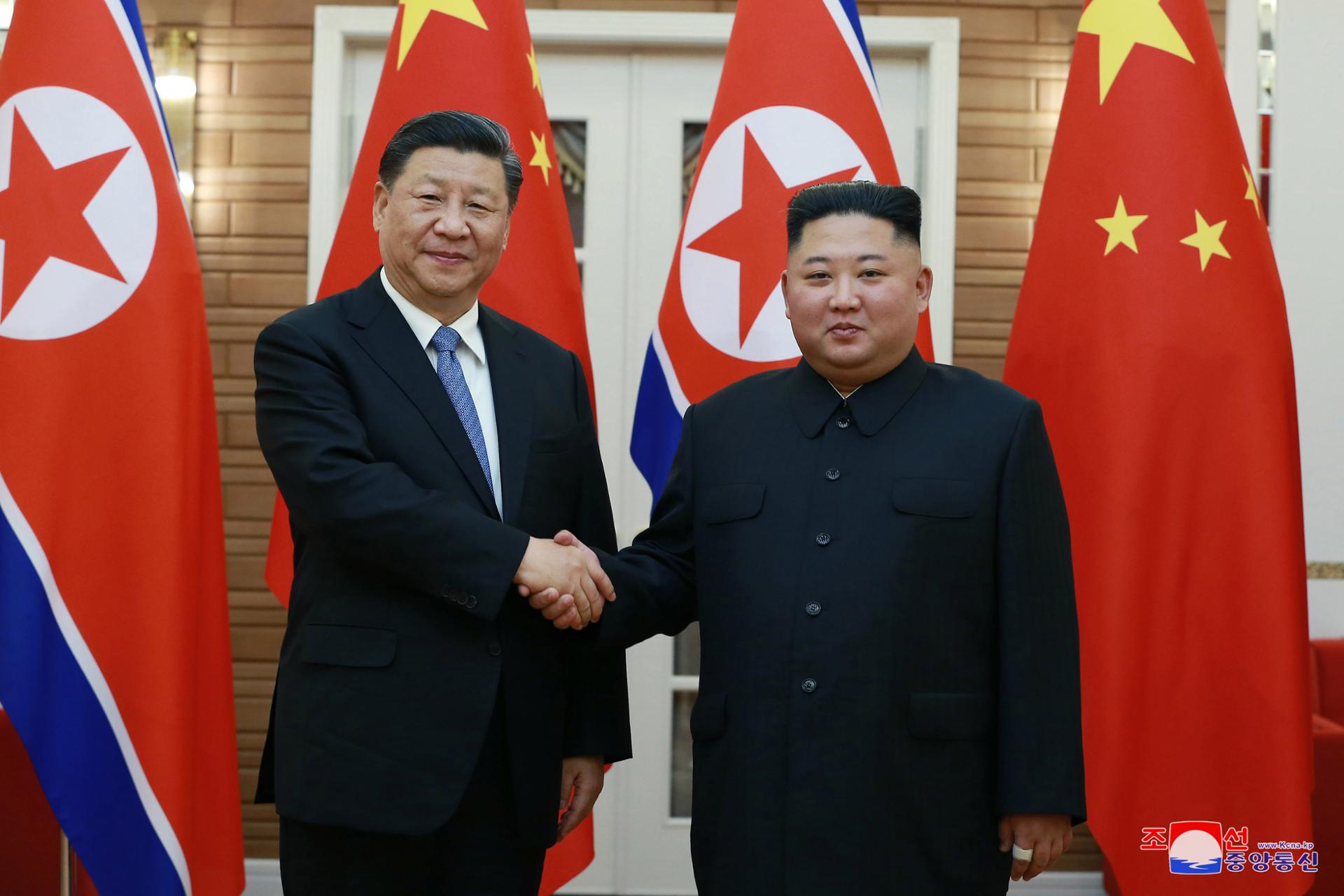
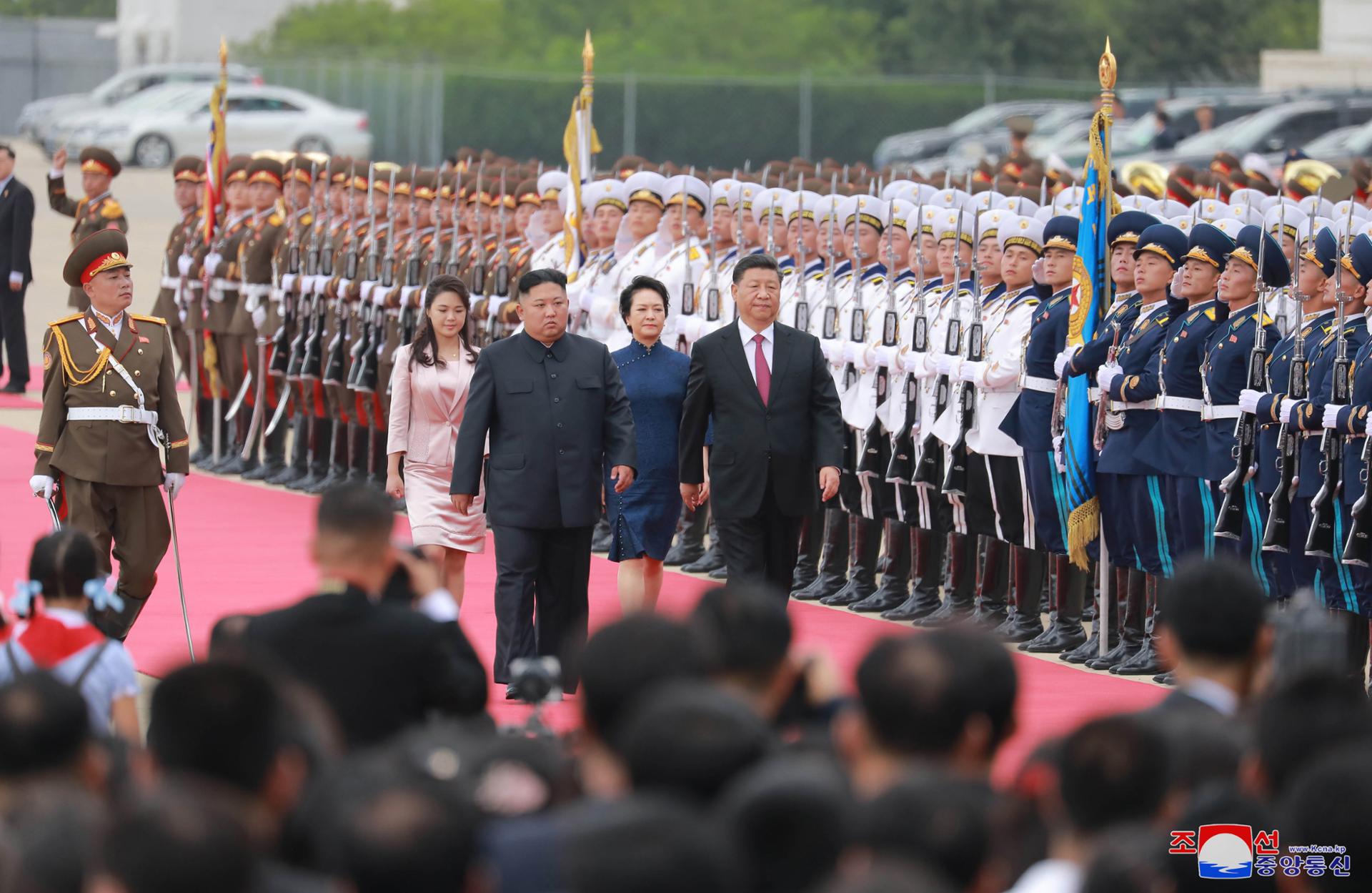
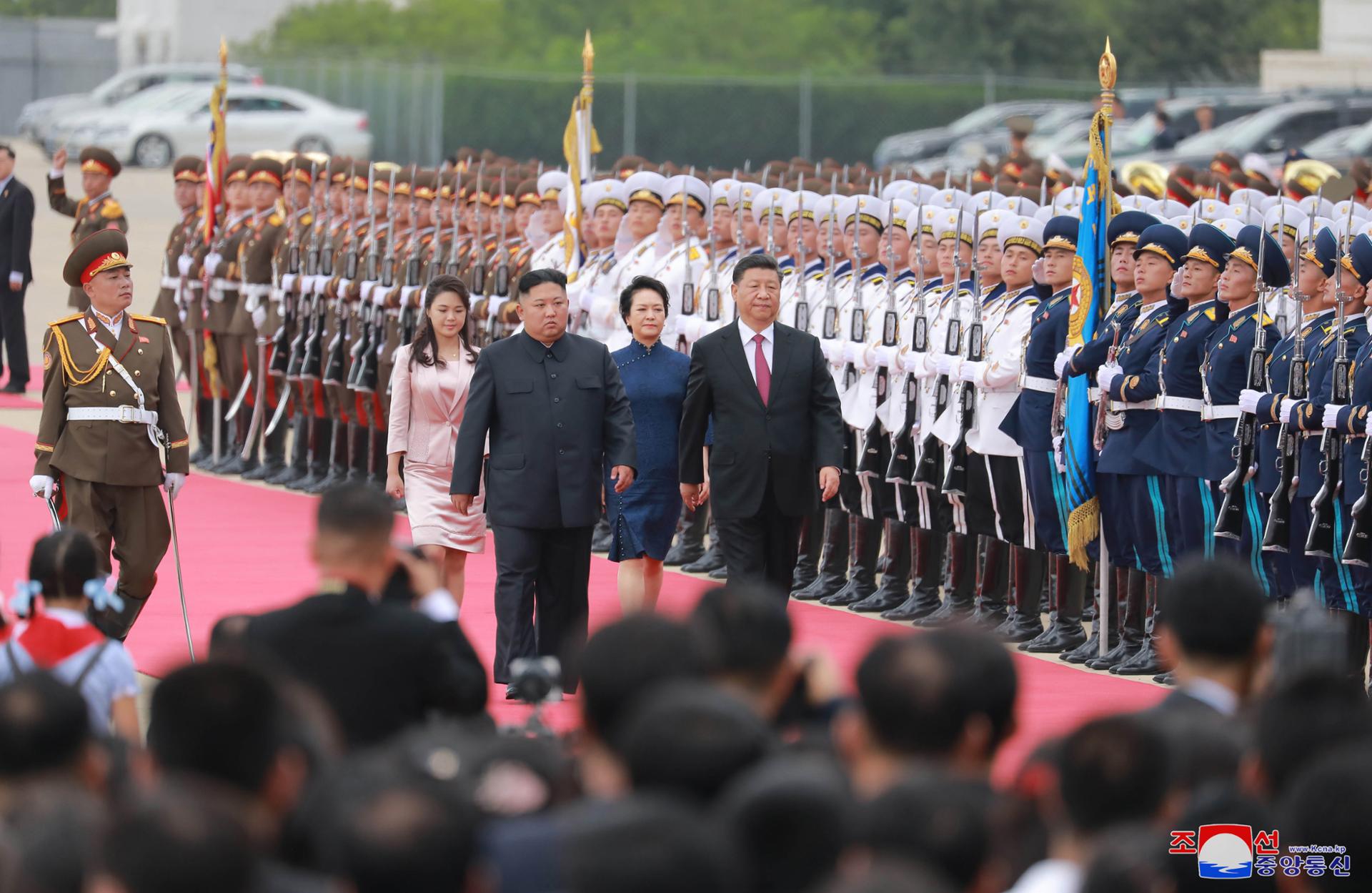
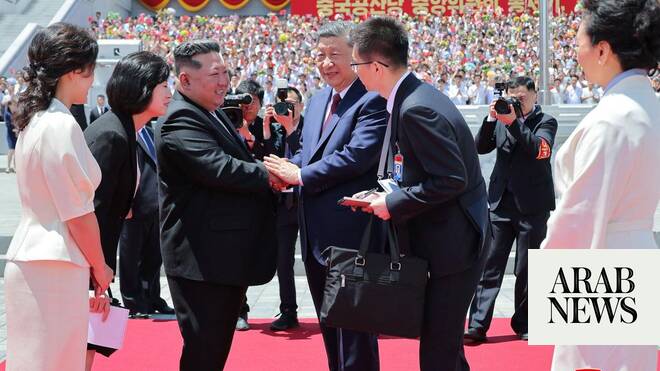
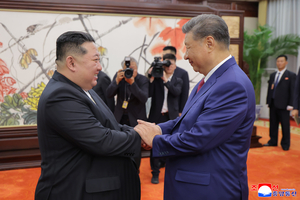
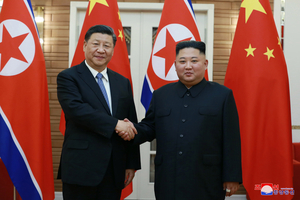
In this file photo uploaded Friday, Chinese President Xi Jinping shakes hands with North Korean leader Kim Jong-un ahead of a bilateral summit in Pyongyang on June 20, 2019. China and North Korea announced Friday that Xi would pay a state visit to North Korea from Monday to Tuesday, marking his first trip to the country in nearly seven years and his second since Kim took power. (KCNA-Yonhap) Nearly seven years after his last trip to North Korea, Chinese President Xi Jinping returned to Pyongyang on Monday, seeking to reconnect with an ally that has grown increasingly emboldened by its military partnership with Russia and more assertive about its nuclear ambitions.Xi arrived in the North Korean capital at the invitation of North Korean leader Kim Jong-un, accompanied by first lady Peng Liyuan, Chinese Communist Party official Cai Qi and Foreign Minister Wang Yi, according to China's state-run Xinhua News Agency.The visit comes as the countries mark the 65th anniversary of their Treaty of Friendship, Cooperation and Mutual Assistance, but observers say the summit carries significance far beyond the symbolic milestone. Xi and Kim are expected to discuss economic cooperation, regional security issues and ways to coordinate their positions amid intensifying strategic competition with the United States and its allies.Ahead of his arrival, Pyongyang was decorated with Chinese and North Korean flags, portraits of Xi and banners celebrating the countries' traditional friendship, while Chinese media showed reporters traveling to North Korea aboard a cross-border train service that resumed earlier this year after years of disruption.Xi's visit follows a series of recent diplomatic engagements, including summits with US President Donald Trump and Russian President Vladimir Putin in Beijing last month. It also comes as North Korea has moved closer to Moscow, with North Korean troops participating in Russia's Victory Day parade for the first time in May.Pyongyang appeared to be in full welcoming mode ahead of Xi's arrival, with Chinese and North Korean flags fluttering along major thoroughfares and banners celebrating the countries' long-standing friendship draped across the capital, Chinese media reports showed.Meanwhile, in a front-page article published Monday in Rodong Sinmun, the newspaper of the ruling Workers' Party of Korea, Xi called for deeper strategic coordination between Beijing and Pyongyang and declared that bilateral relations were entering a new phase."Relations between the two countries stand at a new historical starting point, facing new development opportunities and shouldering new missions of the times," Xi wrote.He urged the two sides to "deepen strategic communication and firmly steer China-DPRK relations in the right direction," while maintaining high-level exchanges and "close contacts like relatives," referring to North Korea's official name, the Democratic People's Republic of Korea.Recalling his previous meetings with Kim, Xi said the relationship would remain "unwavering" regardless of changes in international circumstances."China stands ready to work with the DPRK to steer bilateral relations from a strategic perspective, keep China-DPRK relations abreast of the times and achieve greater development of the relationship," he wrote.Xi also called for joint efforts to uphold "the international system with the United Nations at its core and the international order based on international law," and to "jointly promote an equal and orderly multipolarization of the world and a universally beneficial and inclusive economic globalization."The article has drawn attention not only for what it said, but also for what it omitted.Hong Min, a senior researcher at the Korea Institute for National Unification, noted that unlike Xi's article published before his 2019 visit, this year's piece contains no references to denuclearization, North Korea-US dialogue or negotiations on the Korean Peninsula."The 2019 article was heavily focused on the Korean Peninsula issue, denuclearization and dialogue between North Korea and the United States," Hong said."By contrast, Xi's 2026 article contains no references whatsoever to 'the Korean Peninsula issue,' 'denuclearization,' 'dialogue,' 'negotiations' or 'North Korea-US relations.'"Instead, he said, Xi emphasized concepts such as "strategic coordination," a "community with a shared future," "opposition to hegemony" and defending the international order."This signals that China's North Korea policy has shifted fundamentally over the past seven years — from acting as a mediator in denuclearization diplomacy to strengthening a strategic partnership aimed at managing long-term competition with the United States," Hong said.The shift comes as Pyongyang has made clear that it has no intention of discussing denuclearization.On Sunday, Kim Yo-jong, the influential sister of Kim Jong-un, declared that North Korea's status as a nuclear weapons state is "the line of no retreat" and dismissed renewed calls for denuclearization.The timing has fueled speculation that North Korea is seeking to define the boundaries of the summit before discussions begin.South Korea's Unification Ministry, however, urged caution in interpreting the significance of the rhetoric."We believe there is a strong element of creating a favorable atmosphere for the summit by emphasizing the traditional friendship and cooperative relationship between North Korea and China ahead of the leaders' meeting," ministry spokesperson Yoon Min-ho said Monday.Asked whether Beijing could move toward recognizing North Korea as a nuclear weapons state, Yoon declined to speculate."As the North Korea-China summit is beginning today, we will refrain from making any premature judgments and instead closely watch the results," he said.The summit will also be closely watched for signs of how Beijing intends to balance its ties with both Pyongyang and Moscow. While Russia and North Korea have expanded military cooperation since signing a mutual defense treaty in 2024, analysts say Xi's visit provides an opportunity for China to reassert its influence over a neighbor that has increasingly looked to Moscow for diplomatic, economic and security support.