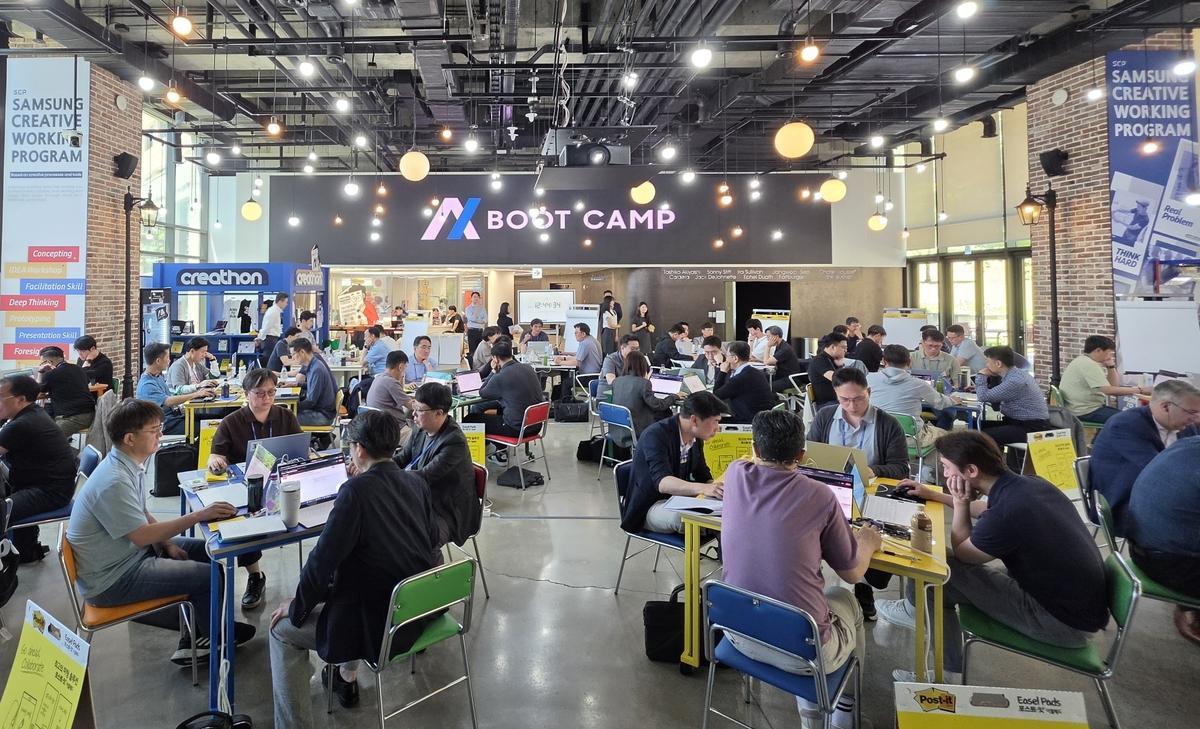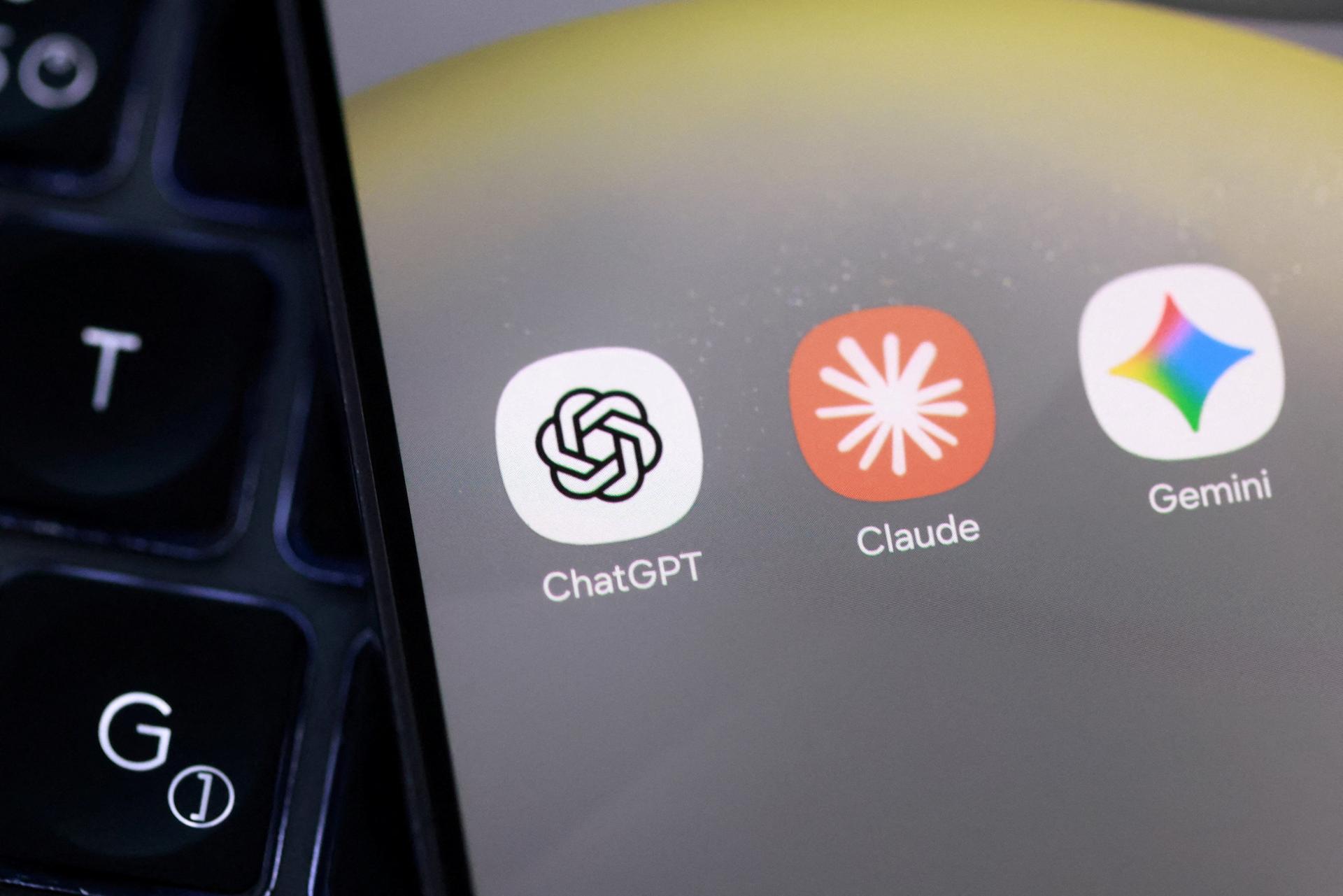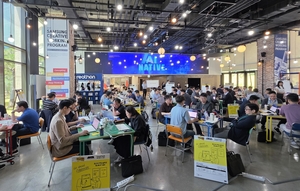
Employees to gain access to ChatGPT, Gemini, Claude as Samsung pushes AI across manufacturing, supply chains and management Executives from Samsung affiliates take part in an intensive AI training program at Samsung Human Resources Development Institute in Yongin, Gyeonggi Province. (Samsung Electronics) Samsung Group is launching a sweeping artificial intelligence initiative across its affiliates, allowing employees to use external generative AI tools such as ChatGPT, Gemini and Claude as the conglomerate seeks to overhaul the way it operates.The group said Tuesday that the tools will be rolled out this month to boost productivity in areas including software development and marketing. But for Samsung, whose businesses span semiconductors, smartphones, displays, home appliances and consumer electronics, the push extends far beyond office automation.The company aims to embed AI across its entire value chain in what it describes as the first step toward becoming an “AI-native company.”Samsung Electronics Chair Lee Jae-yong foreshadowed the shift in his New Year’s message.“We need to completely change the way we work and our organizational DNA,” Lee said. “AI should be applied across the entire business value chain, from research and development to production, marketing and support functions.”The initiative marks one of Samsung’s most comprehensive internal AI drives to date, reflecting a growing trend among global manufacturers to use AI not only to improve employee productivity but also to transform factory operations, logistics networks and business decision-making.Samsung compared the effort to its digital transformation in the 1990s, when the company leveraged emerging technologies to expand beyond the domestic market and establish itself as a global technology powerhouse. This time, it said AI will be the catalyst that reshapes management practices and identifies new growth opportunities.A key part of the initiative is training Samsung’s leadership to incorporate AI into strategic decision-making.The group will hold an “AX Boot Camp” this month for about 50 presidents of its affiliates, marking the first intensive AI program conducted for Samsung’s entire leadership group. AX stands for AI transformation.Rather than attending a general technology seminar, executives will be expected to work directly with AI tools and develop practical plans for redesigning business processes. During the program, affiliate heads are expected to announce a joint AI transformation vision and present strategies for applying AI within their organizations.Samsung is also conducting AI training for approximately 2,300 executives across its affiliates through Aug. 12 and plans to provide AI education to all employees by the end of the year.To support the effort, dedicated AI organizations will be established at every affiliate. These teams will be responsible for AI transformation strategies, data governance, model management and talent development.The company said chief executives will directly oversee the application of AI across eight core business functions: development, procurement, manufacturing, logistics, marketing, sales, customer service and corporate support.The broader adoption of external AI tools comes with challenges, particularly for a manufacturing group that handles large volumes of sensitive product, process and customer data. Samsung said it will strengthen its security framework while expanding access to outside generative AI services.The move also builds on Samsung’s broader AI strategy in products. The company began aggressively promoting AI through the Galaxy S24 series, marketed as its first AI smartphone lineup, and has since expanded AI features across home appliances and connected devices.The latest initiative brings that focus inward. Rather than limiting AI to products sold to customers, Samsung is seeking to make AI a core part of how the organization itself operates.“AI transformation is no longer just about automating office work,” an industry source said. “For a company like Samsung, the bigger challenge is how quickly it can apply AI to manufacturing, supply chains and customer operations while keeping pace with rapid changes in the AI market.”
Samsung bets on AI to reinvent how it works
Samsung Group is launching a sweeping artificial intelligence initiative across its affiliates, allowing employees to use external generative AI tools such as C
614 words~3 min read