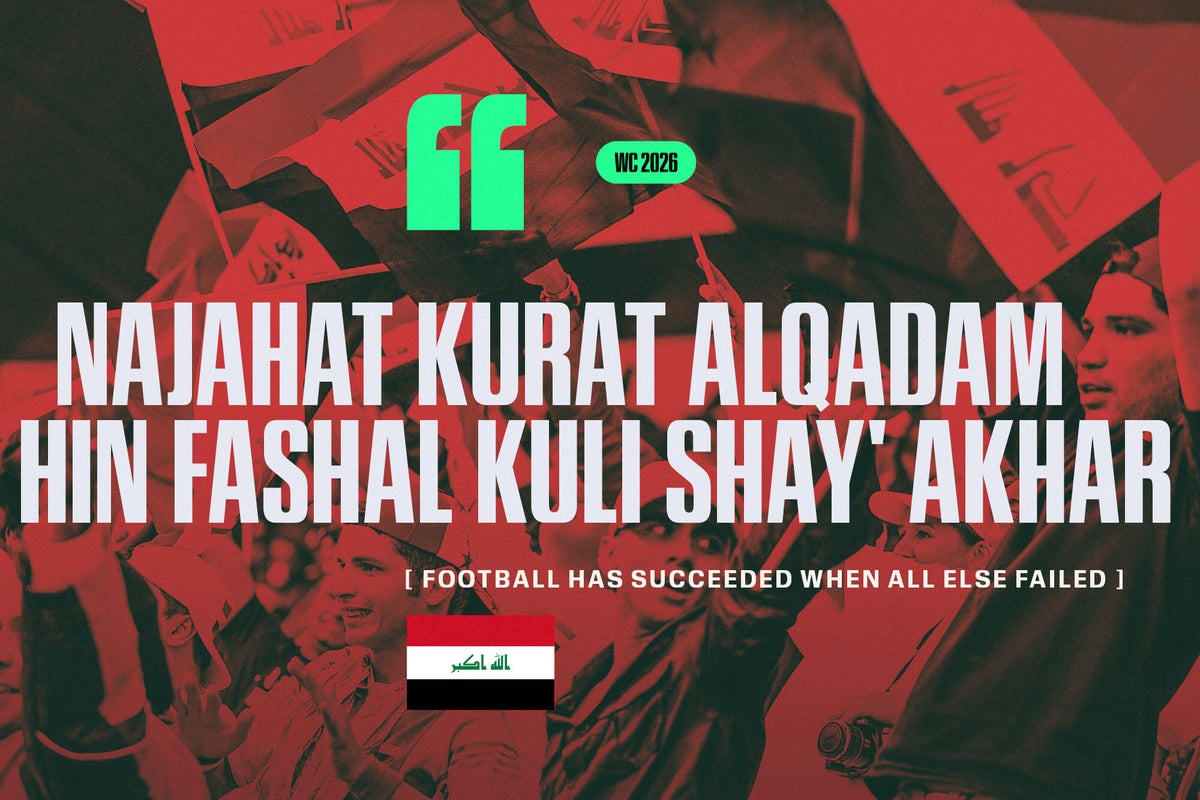
As part of our Language of Soccer World Cup series, The Athletic is speaking to supporters of all 48 nations competing at the 2026 edition to capture their unique football culture, distilled into a single phrase. You can read the articles in one place here.“Najahat kurat alqadam hin fashal kuli shay’ akhar” — Football has succeeded when all else failed.It was the morning after the night before, and most onlookers inside Monterrey airport heard the Iraq fans before they saw them.The drum beat and the chanting, growing in volume. Perhaps a hundred or so of them, dancing through the departure hall with their country’s red-white-and-black flags in the air.For the first time in 40 years, Iraq had just qualified for a World Cup finals by beating Bolivia 2-1 in one of two inter-confederation play-offs finals and there was a stubborn refusal to call time on the celebrations while still on Mexican soil.It was hard to begrudge those supporters their extended party. A nation that has emerged through wars, bloodshed and suffering had found its biggest sporting moment for a generation and was determined to savour every minute. Prime Minister Mohammed Shia al-Sudani declared a two-day public holiday after Iraqis had risen early in the morning to see Aymen Hussein score the all-important winner in their 21st match of a marathon qualifying campaign.Iraq fans celebrate in Monterrey after beating Bolivia to reach the World Cup (Hector Vivas – FIFA via Getty Images)“The national team is the perfect reflection of the Iraqi spirit itself,” says Lana Al-Namee, an Iraqi now living in Chicago, who will attend the opening group game against Norway in Foxboro, near Boston, next Tuesday with her mother and two sisters.“It shows the resilience of a country and its imperfections, how emotional our people are. But despite all the history we’ve been through, we’re still standing. Being Iraqi means you’ve got a grit inside you. Nothing comes easy, but when things line up and when you persevere through the tough times, the beauty really shines through.”Iraq has known its tough times since last reaching a World Cup. The Gulf War and Iraq War, the latter leading to the downfall of dictator Saddam Hussein, brought two waves of turmoil and division.The more recent years have seen relative stability restored but the conflict across the eastern border in Iran this year has created fresh tension. The bombs that have fallen on Iraq since the end of February meant Graham Arnold’s squad had to travel by bus to western neighbour Jordan just to reach their all-important final qualifier in Mexico at the end of March.The national team, though, has come to be a source of inspiration for Iraqi people.“For those in Iraq, it’s an escape from the trauma they’ve experienced in their lifetime,” says Ali Shekarchi, who travelled to watch World Cup qualifiers against the United Arab Emirates and Saudi Arabia last year.
Football has succeeded in uniting Iraq fans when all else has failed
As part of a special World Cup series, The Athletic is speaking to fans of all 48 competing nations to capture their unique football culture
1,335 words~6 min read