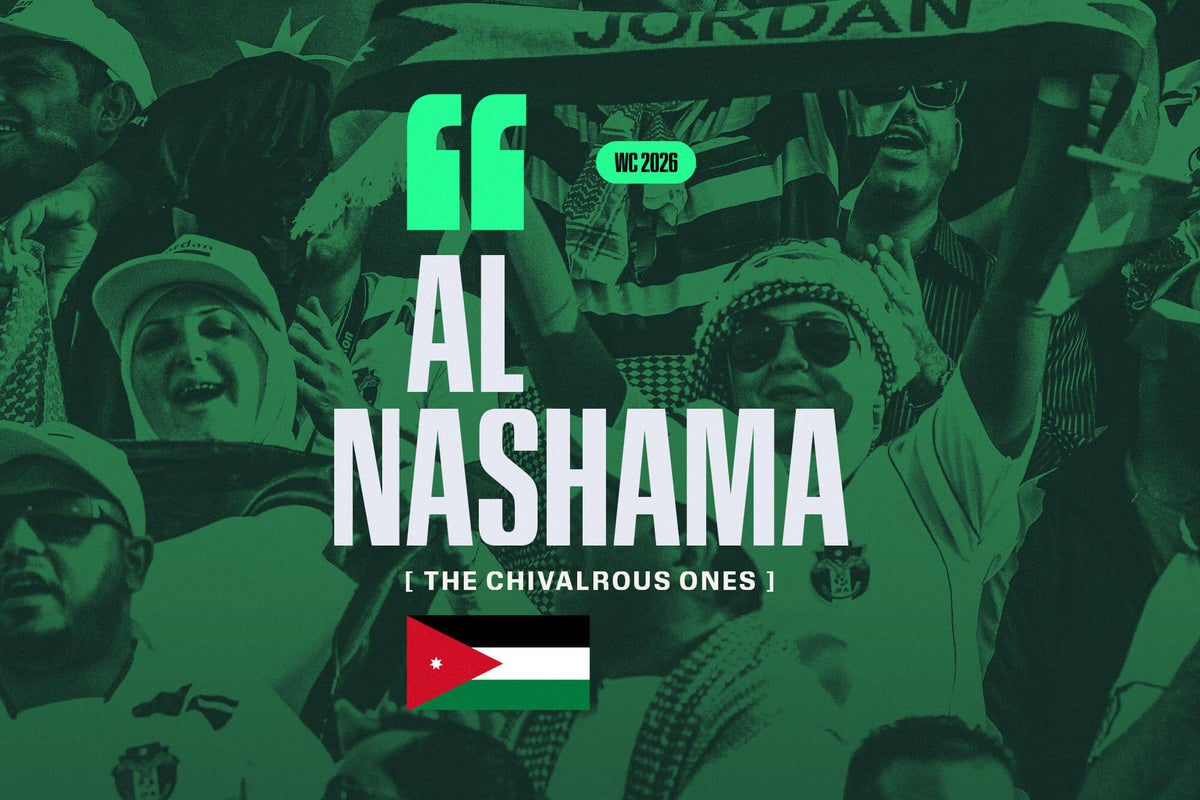
As part of our Language of Soccer World Cup series, The Athletic is speaking to supporters of all 48 nations competing at the 2026 edition to capture their unique football culture, distilled into a single phrase. You can read the articles in one place here.Al Nashama – The Chivalrous Ones“I play a lot of football here,” says Nasser Kalaji. “We usually play right after the youngsters finish, aged from maybe eight to 16. Over the past two years, they switched the (Cristiano) Ronaldo and (Lionel) Messi jerseys with the Jordan national team jerseys.“They used to come up and ask us questions like, ‘Who do you think is better, Messi or Ronaldo?’ And now they’re asking us, ‘Who do you think is better, Yazan (Al-Naimat) or Mousa (Al-Taamari)?’ You have that kind of change in the mentality, youngsters today look at the path and they’re like, ‘If he made it, why can’t I?’”Nasser has followed the Jordan national team since he was a boy, but has a slightly different role now: he is making a documentary about them. Some of it has already been shot, more will be filmed during this summer’s World Cup. “It’s an in-depth look at the personal lives of the coaches,” he says, “and the players themselves, because a lot of them come from really humble backgrounds.”It’s going to be called ‘Al Nashama’, which is the nickname back home for the team: it literally translates as ‘the chivalrous ones’, but is ultimately supposed to symbolise the bravery and fortitude of a team constantly fighting against the odds. It’s no surprise that this was the clear winner when we asked Jordan fans to identify one phrase that best encapsulated the experience of following the national team.It will also celebrate a side whose recent success — reaching the 2023 Asian Cup final and qualifying for the World Cup for the first time — has come when the country as a whole most needs it.The success of the Jordan side has not just been a source of joy for those who follow them, but it has come at an incredibly important time for the country in general, because of its proximity to Gaza.“In this period, people were not even going out for dinner or whatever,” says Nasser. “They were stuck at home, glued to their screens, just looking at the big events there. Everybody was suffering from depression around me. Everybody was so scared of what was going to happen and whatnot.“And the first time it was kind of OK to be OK, to return to normality, was when the team started doing well in the Asian Cup. We have a lot of Palestinians in Jordan, and the national team united everybody together, specifically at that critical moment.“As a culture, we are extremely compassionate and extremely emotional. So this success has brought an outlet for so many people.”Something else that has emerged over the past few years is the prominent role that the Jordanian royal family — broadly very popular in the country — has played in supporting the national team.
In Jordan, the social hierarchy collapses when it comes to watching the Chivalrous Ones
As part of a special World Cup series, The Athletic is speaking to fans of all 48 competing nations to capture their unique football culture
1,424 words~6 min read