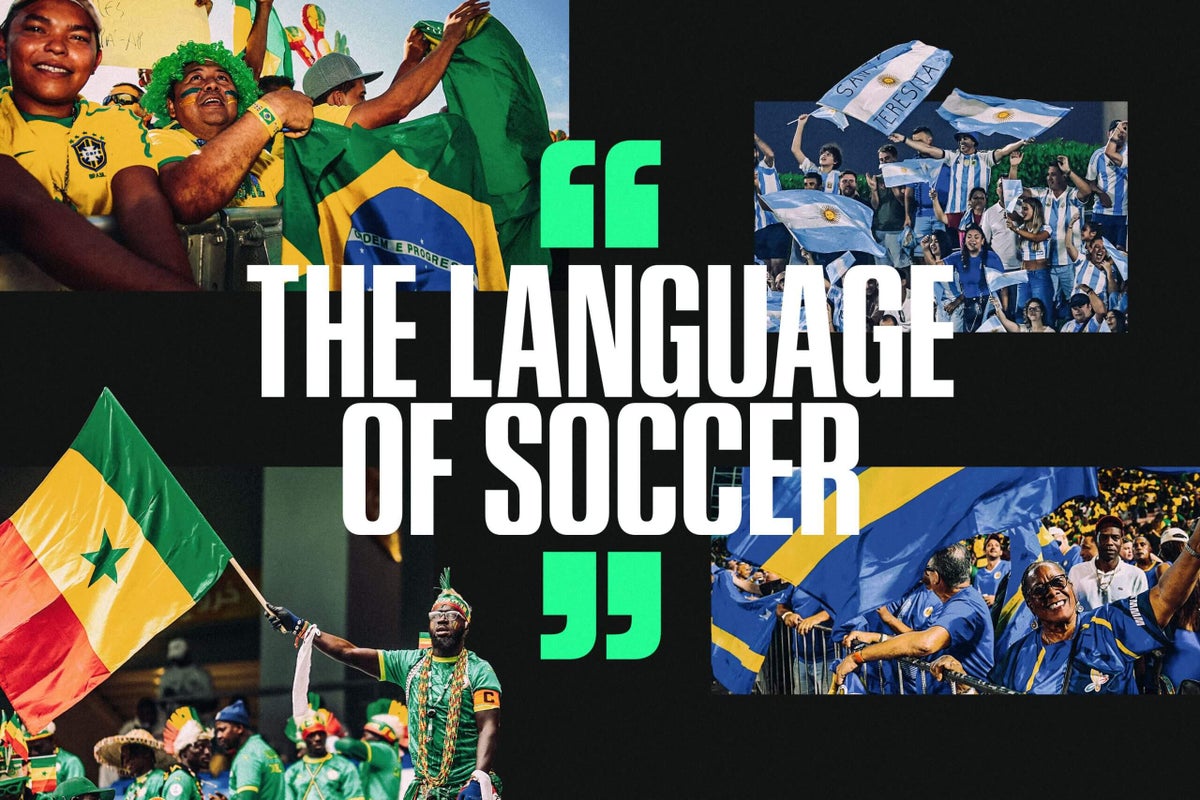
As part of our Language of Soccer World Cup series, The Athletic is speaking to supporters of all 48 nations competing at the 2026 edition to capture their unique football culture, distilled into a single phrase. You can read the articles in one place here.‘Allez les Rouges’ — Come on the RedsTheo Gauthier felt stranded from civilization in Foxboro, Massachusetts and could not stop shaking his head.It was July 2003, and Gauthier had woken up that bright summer morning anticipating happiness.Two days before, he had watched excitedly as Canada beat Costa Rica 1-0 at nearby Gillette Stadium in their Concacaf Gold Cup opener. Canada, Gauthier would boast, had won the Gold Cup in 2000 (then, as champions, made the semifinals in 2002 before losing on penalties to a title-bound USMNT). All they needed in their second and last group match that Monday evening was a draw against Cuba to advance to the knockout round.Life was supposed to be good, maybe even different, as a fan of Canada’s men’s team.But as day turned to night, Gauthier realized he had committed the cardinal sin of Canadian soccer fandom at the time.He had allowed himself to imagine.Two Cuban goals ended Canada’s Gold Cup hopes. They left the competition without an appearance in the knockout phase and would begin nearly a generation spent in the soccer wilderness.“You’ve put so much hope and money into this,” Gauthier said. “You believed. That was the worst part.”It’s only been within the past 10 years that the men’s national team has ascended to the global level. Everything before then?“False dawns,” Gauthier says.All along, there was a small but mighty contingent of fans who would travel far and wide to watch their team play, at a time when the sport had little to no buy-in from mainstream Canadian culture. Fans who had to explain their passion with shame. Fans who erred on the side of negativity because the losses came more frequently than the wins.“You’re always waiting for the other shoe to drop,” Gauthier says. “We have built up so many scars.”Quietly, though, those supporters maintained belief in brighter days ahead. Many belonged to a group called The Voyageurs, the largest Canadian supporters’ group. Maybe one day, the negativity surrounding Canadian soccer would give way to a World Cup win.Those who persevered will soon have a chance to see their dreams come to reality.For years, if you wanted to get into international soccer in Canada, ironically, you would rarely start in Canada.Generations of multiculturalism meant immigrants came to the country and brought allegiances to their place of birth with them. Owing to continued poor results and no inclusion in Canadian mainstream culture, the men’s national team were an afterthought in their own homeland. There were years when Canada Soccer had to actually pay domestic TV broadcasters to air national-team games.Doug Kavanaugh’s experience of those times is a pretty universal one. He grew up near a Canadian Forces Base in the central province of Manitoba. As a teenager, he recalls exchanges between the Canadian and German military personnel at the time of an influx of Germans living nearby. They brought their cultural attachments, including to the hugely successful German men’s national team.So Cavanaugh began following Germany.“I love my country,” Cavanaugh says. “But Germany was the only one that you’d ever see in international tournaments. It was easy to follow a country that’s playing all the time versus (Canada), where we had years where we didn’t even have regular friendlies.”
For years, Canadian soccer fandom was confined to message boards – not anymore
As part of a special World Cup series, The Athletic is speaking to fans of all 48 competing nations to capture their unique football culture
TL;DRAI
The Voyageurs, born on message boards, scaled Canada's soccer fandom as the team qualified for World Cups. Niche online communities that persist through failure signal how authentic engagement builds loyal audiences in emerging markets—a model for digital growth.
1,707 words~8 min read