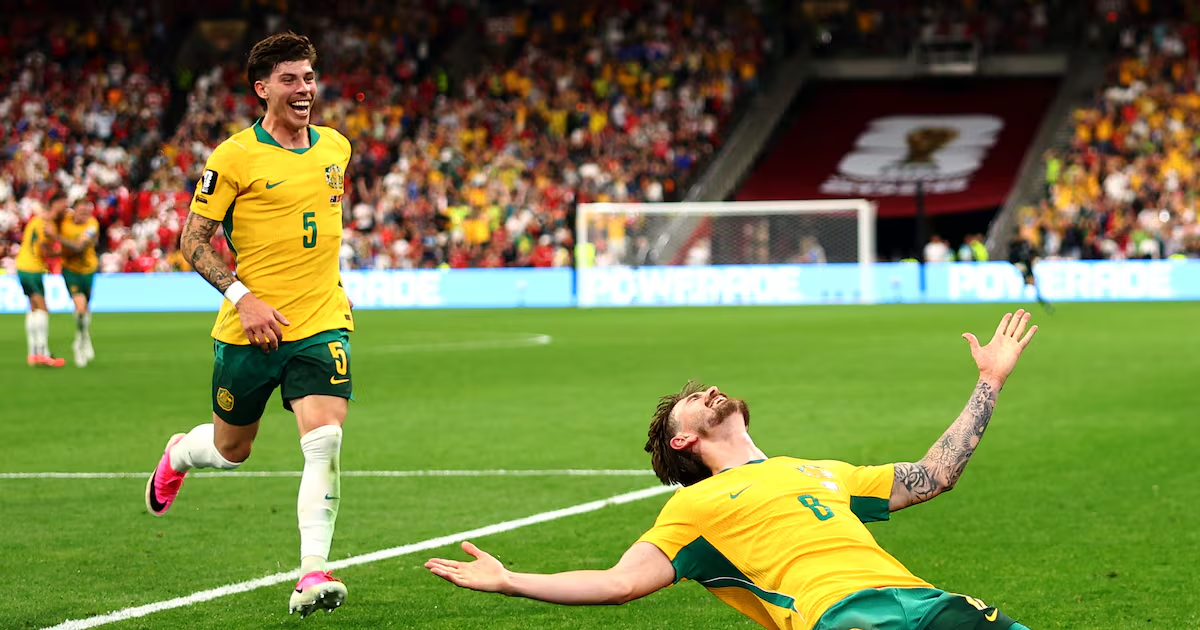
As part of our Language of Soccer World Cup series, The Athletic is speaking to supporters of all 48 nations competing at the 2026 edition to capture their unique football culture, distilled into a single phrase. You can read the articles in one place here.Green, gold, still hereAustralia’s love of sport is renowned across the world. But its relationship with soccer? That is a little more complicated.The global game’s British roots have always made it predisposed to rejection in a former colonial outpost. Other football codes have developed and been deeply embraced in the country’s culture.The perception of who played soccer in Australia came with entrenched prejudice, something perpetuated by heavy European migration following World War II.It created a difficult environment for unity behind Australia’s national teams and also took a post-war player-turned-TV broadcaster, Johnny Warren, to campaign and convince that soccer could break down its barriers, to become a mainstream sport in a country so reluctant to accept it.That is why every fan of the Socceroos — the nickname for Australia’s men’s national team — knows who is being referenced when you say, “he told you so”.“Football was embedded in racism when it first came to this country,” supporter Michelle Morris tells The Athletic. “People didn’t want a bar of it.”Warren’s book makes soccer’s history in the country abundantly clear: a derogatory preconception — and the use of offensive terms — to label it as an un-Australian sport, played solely by immigrants and those who would now be described as members of the LGBTQ+ community.“That still plays a part in how certain Aussies might look at football today,” adds Morris.Despite those lingering hurdles, soccer has made huge strides forward in Australia, and the country’s love for cheering on sporting success does now include its national football teams. And those soccer fans who have followed the green and gold journey? They are still here, ready to embrace the growing popularity.But there is truth in soccer’s grassroots development across Australia owing everything to the country’s immigrant communities. There are examples of it everywhere.South Melbourne FC was founded by Greeks and provided the playing and coaching foundations for the career of former Australia and Tottenham Hotspur manager Ange Postecoglou, while European nicknames and identities run deep throughout amateur divisions across the continent — from Grange Thistle (Scottish) in Brisbane to Brunswick Juventus (Italian) and FC Melbourne Srbija (Serbia) in Victoria to Sydney Olympic (Greek) in New South Wales and Gwelup Croatia in Perth.That is just a flavour of a soccer scene that carried strong identities but limited opportunities for players from different backgrounds.Morris’ own love of football received a helping hand from her South American heritage, with her father from Chile and mother from Peru. She is now a staunch Sydney FC supporter, hosts her own podcast on the club and leads the cove — the most vociferous, atmosphere-generating fans — at women’s team games.Loyalties can be tenser during international matches.“Chile and Australia faced each other in the group stage at the 2014 World Cup — so yeah, sometimes it’s tough!” says Morris. “Football is about uniting people. I’ve met some of my closest friends through it and I want people to have the same connections I’ve had.”Perth Glory fan and futsal coach Alex Papalia, 22, finds things a little easier when the Socceroos play.“People assume I care more about Italian football or the Italian national team because that’s where my heritage is, but there’s something so special about being here in Australia, trying to do your best to help grow the sport and wanting to see it become what we all know it can be,” says Papalia.“The World Cup is always a fantastic time for Australian football when we do make it, but I can’t tell you the number of my friends who couldn’t give a stuff about the A-League or soccer. Then the moment they see soccer on TV, they’ve got the Australian flags out, the beers are popping. They don’t know the player names but they don’t care; they just want to see their country do well.”Australia fans celebrate during a World Cup qualifier against Japan (Paul Kane/Getty Images)Establishing Australia’s professional men’s competition — the A-League — in 2004 diminished some of the migrant identities tied to clubs at the top of the sport.However, soccer’s previous foundations in Australia muddy the water when it comes to the national team, and the Socceroos in particular.What’s more, say “football” to an Australian and two totally different sports will likely come to mind.
Australia’s fans are green, gold, still here. Even if the path to acceptance has been a difficult one
As part of a special World Cup series, The Athletic is speaking to fans of all 48 competing nations to capture their unique football culture
2,312 words~11 min read