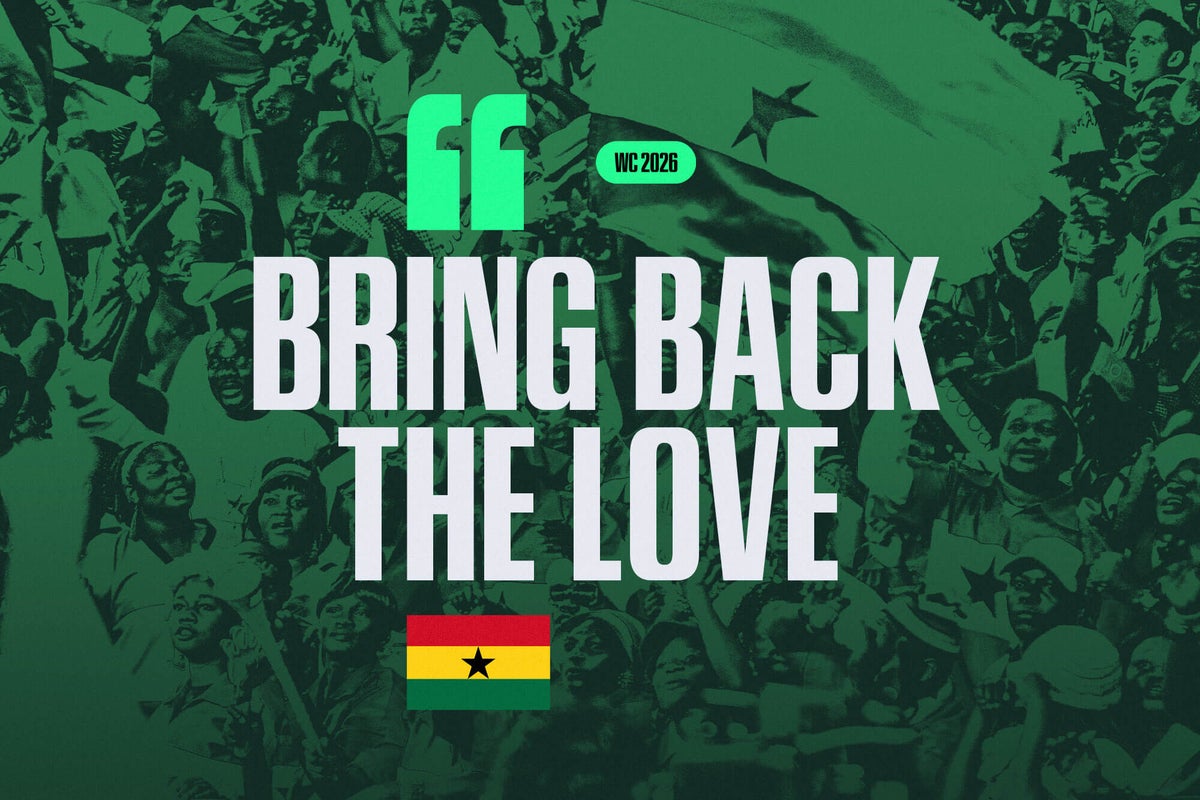
As part of our Language of Soccer World Cup series, The Athletic is speaking to supporters of all 48 nations competing at the 2026 edition to capture their unique football culture, distilled into a single phrase. You can read the articles in one place here.Bring back the love.In 2019, Ghana’s football association asked its fans to ‘bring back the love’. It was an attempt to rebuild a bond between the country and its national team, and to restore faith in the uplifting power of football.“We just came out of The Anas Expose: Number 12, when a lot of corruption, mismanagement and malpractice were prevalent in our football,” explains Ernest Addo, a Ghana fan based in capital city Accra. “Referees, match officials, players and top officials were indicted for their involvement in this, where Kwesi Nyantakyi was unceremoniously deposed as the (GFA — Ghana Football Association) president.”Football in Ghana is a powerful unifying force in a country of more than 30 million people, multiple languages, and dozens of distinct ethnic groups.From 2006 to 2015, Ghana’s national team were a formidable presence on the world stage. On their World Cup debut in 2006, they beat the Czech Republic and the United States en route to a loss to Brazil in the last 16.As the host nation of the 2008 Africa Cup of Nations (AFCON), they defeated fierce rivals Nigeria on their way to the semi-finals. In 2010, fans chanted “Let them come” as the world travelled to South Africa for the first World Cup on African soil, and Ghana were the only African nation to reach the round of 16. They played a barnstorming game against the Americans before falling to Uruguay in an infamous quarter-final that made Luis Suarez persona non grata across the nation. Ghana lost the final of the 2010 AFCON and were eliminated in the semi-finals of the 2012 edition.A near-decade of brilliance from the likes of Asamoah Gyan, Sulley Muntari, Stephen Appiah and Kwadwo Asamoah led to Ghana becoming the neutrals’ favourite across multiple tournaments, but their golden generation failed to win any senior silverware.The 2014 World Cup brought a third match-up with the United States but Ghana were unable to complete a trilogy of victories, and their tournament ended in chaotic fashion. Muntari and Kevin-Prince Boateng were kicked out of the playing squad before their final group game against Portugal; multiple players boycotted training in protest over late payment of World Cup bonuses; the country’s government flew $3million (£1.8m) in cash to Brazil to resolve things. The golden generation’s last chance came in early 2015, when they lost in the AFCON final to Ivory Coast, leading to a period of soul-searching.Fast forward to the present day, and the team are in a difficult, transitional phase. Ghana were knocked out in the group stage of the 2021 and 2023 AFCONs, then failed to qualify for the most recent edition at the turn of the year. They became set-piece juggernauts on their way to topping their group and qualifying for this World Cup, but disappointing performances during the March international break led the GFA to sack head coach Otto Addo with only 78 days until their opening World Cup match. Ghana will face Panama, England and Croatia in Group L over the coming weeks.Ghana fans get behind their team at an Africa Cup of Nations match in January 2024 (Issouf Sanogo/AFP via Getty Images)The sudden changes mean Ghanaians now approach the tournament with “a mix of indifference and optimism”, according to supporter Kwadwo Hemeng.
Can Ghana’s fans finally bring back the love for a team so used to heartbreak?
As part of a special World Cup series, The Athletic is speaking to fans of all 48 competing nations to capture their unique football culture
1,519 words~7 min read