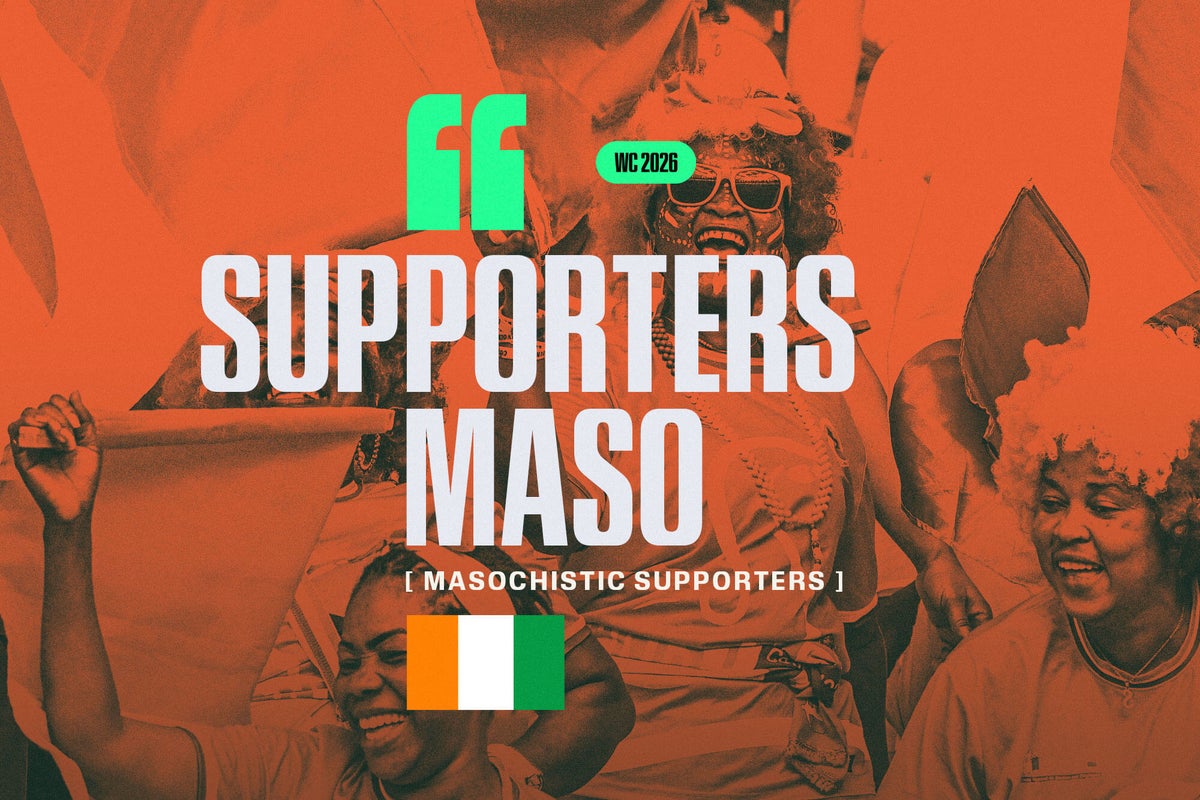
As part of our Language of Soccer World Cup series, The Athletic is speaking to supporters of all 48 nations competing at the 2026 edition to capture their unique football culture, distilled into a single phrase. You can read the articles in one place here.Supporters maso — Masochistic supporters“Once a supporter maso, always a supporter maso,” says Ivory Coast fan Saphira Silue. “Even when the team doesn’t play very well, we are still there. Whether we lose or win, we are there.”Silue is explaining to The Athletic the phrase that encapsulates what it means to be a fan of Ivory Coast’s national football team, who are about to make their first appearance at a World Cup since 2014.“We started using ‘supporter maso’ because we realised that when the Elephants (the team’s nickname) don’t perform well and don’t get good results, after the games people get discouraged,” fellow fan Silue Kolo says. “Some people even rip off their shirts, and say they don’t recognise the team anymore. But when the next match comes, we forget everything. The same people who tore their shirts buy new shirts and go back to support the same Elephants again.“So we realised that when things go badly, we get angry, but then we come back again. That’s why we say we are ‘supporters maso.’ It means we stay with the team in the worst moments but also in the best moments.”Located in West Africa, Ivory Coast is known for its cultural diversity.The country is home to around 32 million people, more than 60 ethnic groups and over 70 indigenous languages.“When people from different ethnic groups perform dances and songs to encourage and support the national team, it is beautiful to see and to feel the warmth of the people,” Silue says. “We tease each other because of ethnic alliances — even in the stadium. This is what makes us unique.”She says fans often communicate using ‘Nouchi’ — Ivorian slang that’s based on French, the country’s official language, but mashed up with grammar and vocabulary from local tongues. ‘Nouchi’ started on the streets of Abidjan, the country’s largest city, in the late 1970s. It was originally used by gangs to try to avoid police detection, but has since become rooted in their national identity, AFP has reported.“Most of the fans use Nouchi to communicate,” explains supporter Wise Bogny. “It brings solidarity and shows our Ivorian identity.”In the stands at matches, Ivory Coast fans are known for their ebullience and spirited support.“Ivorians are different,” Kolo says. “In this region, we are known for our joy. When things go badly, we joke about it. Sometimes we argue, but afterwards we reconcile. Whatever happens, even bad things, we turn it into humour.
Meet Ivory Coast’s masochistic supporters: They might disown their team – but they always come back for more
As part of a special World Cup series, The Athletic is speaking to fans of all 48 competing nations to capture their unique football culture
1,310 words~6 min read