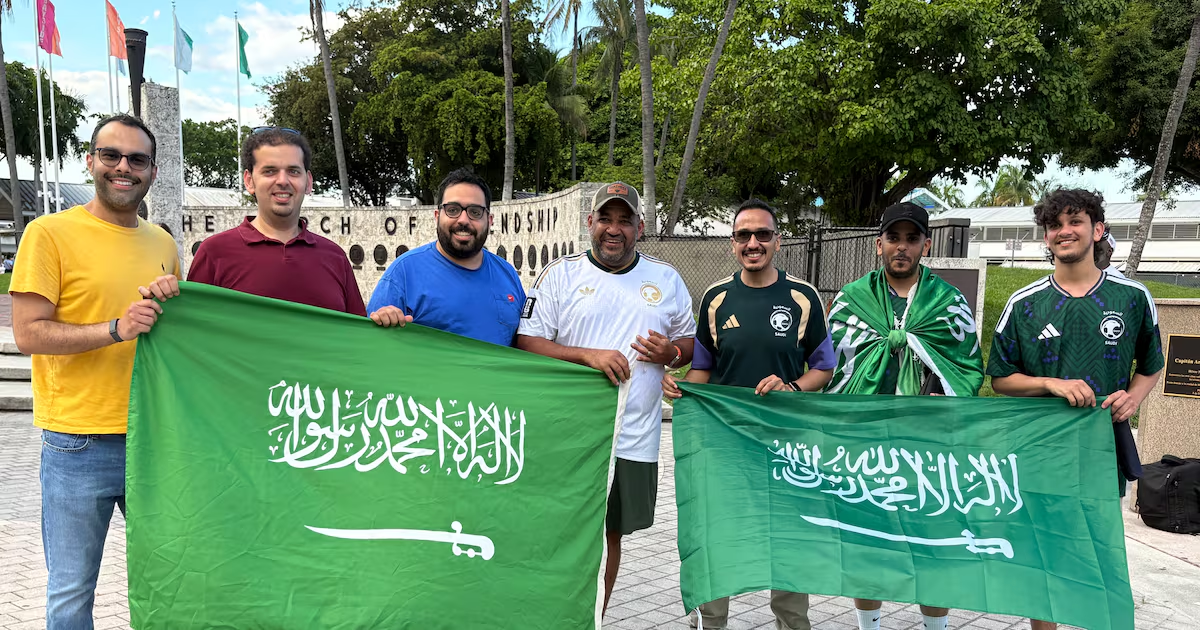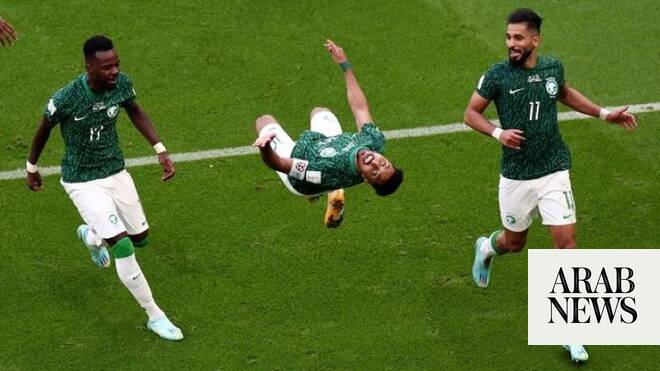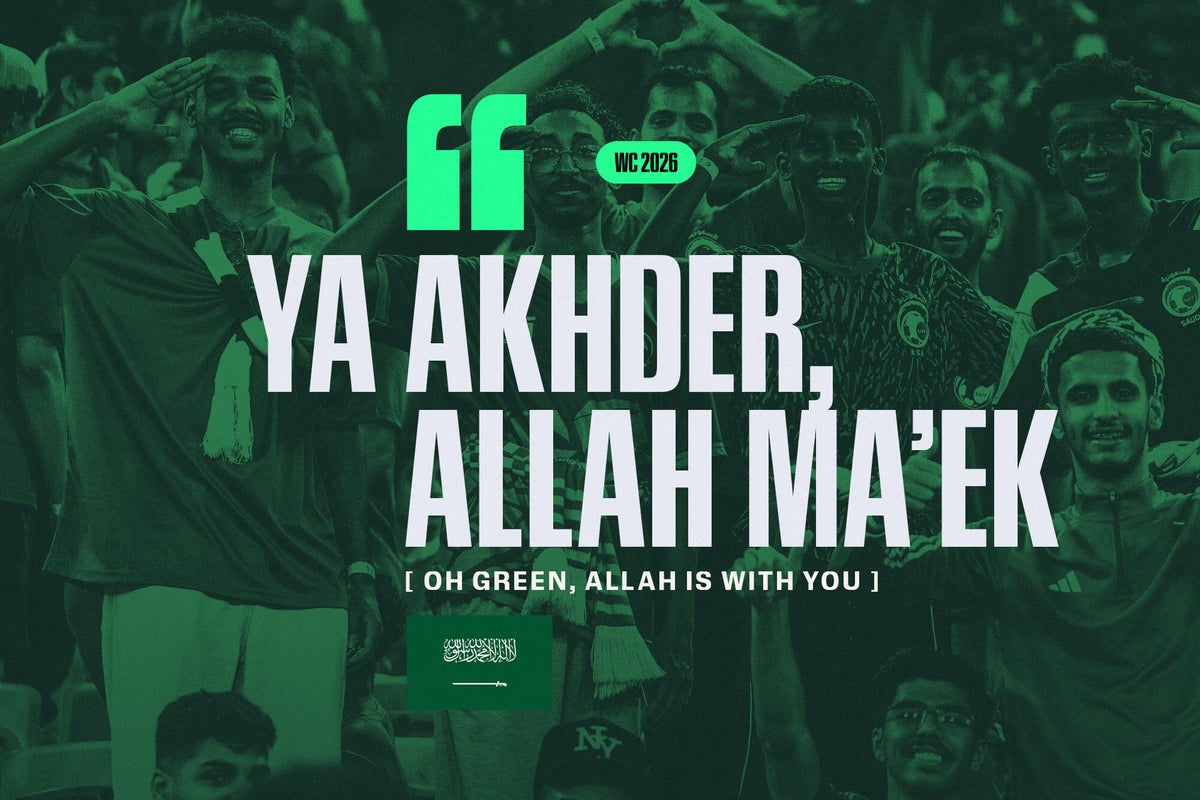
As part of our Language of Soccer World Cup series, The Athletic is speaking to supporters of all 48 nations competing at the 2026 edition to capture their unique football culture, distilled into a single phrase. You can read the articles in one place here.Ya akhder, Allah ma’ek — Oh Green, Allah is with youRenowned for an abundance of natural oil, Saudi Arabia is a nation that plays a major part in fuelling the global economy.Sport has been a significant — and controversial — component of its increased international standing. There has been heavy investment, ranging from the Public Investment Fund’s takeover of Premier League team Newcastle United to its LIV Golf operation, Formula One grands prix, high-profile boxing bouts and plenty besides.That has brought with it accusations of “sportswashing”, something the country’s sports minister has previously described as “very shallow”. Mohammed bin Salman, the Crown Prince of Saudi Arabia, said in 2023 he “doesn’t care” about such claims.Whatever the motivation, the beautiful game is central to driving change in a country that will host the World Cup in 2034.The Saudi team, nicknamed The Green Falcons, will arrive in North America this summer 32 years after making their World Cup debut in the United States.And although many fans in the country associate first with one of the clubs in the increasingly popular Saudi Pro League, excitement is building for the wider stage. Attention is turning towards the national team’s attempt to build on the last World Cup, when they delivered one of the all-time great upsets by defeating Argentina.Despite that iconic result in 2022, Saudi Arabia did not get out of their group at the tournament in Qatar, and have not made it to the knockout stages of a World Cup since that debut appearance (when they reached the last 16).Saudi Arabia fans celebrate their team’s shock victory against Argentina at the 2022 World Cup (Odd Andersen/AFP via Getty Images)For Riyadh-based supporter Galaway Aladdani, that victory — only the fourth win across the six World Cups they have competed in — was a turning point. Humbling Lionel Messi and the eventual world champions, even in a group match, propelled the Falcons back into being a symbol of pride for Saudis.“For Saudis, football is emotional fuel,” says the 46-year-old. “It is happiness.“Unfortunately, fans tend to support their local clubs more than the national side. That’s largely due to the national team’s performances over the past 15 years on the global stage.“Their poor results have shifted passion towards club football, especially with the arrival of global stars who deliver a much higher level of performance.“There’s also been a lack of strong marketing and media support for the national team, which has affected fan engagement. You can see it clearly — club loyalty and even tribalism are stronger than national-team support. Kids wear club shirts more than national-team shirts.“Then there’s also a problem with the excessive club rivalry, which has created a gap when it comes to backing the national team. Only a smaller segment of fans still have that strong sense of belonging and passion for the national side.“But I was at the Argentina match at the World Cup in Qatar. It was historic — but also exceptional. The whole world, including us, was shocked by the Saudi team’s performance.“After beating a team that hadn’t lost for three years, expectations and excitement skyrocketed. That match created a real shockwave in the sporting scene.”It certainly tapped into an already deeply embedded love for football in the kingdom, according to Manar Al-Ghamdi, 38, a university lecturer in statistics from Riyadh.Her household is immersed in that club rivalry Aladdani describes. “I have been a fan for many years,” she says. “Football is part of my daily life. I watch matches constantly and follow all the football programmes.
Understanding Saudi Arabia fan culture – ‘Football is emotional fuel’
As part of a special World Cup series, The Athletic is speaking to fans of all 48 competing nations to capture their unique football culture
1,803 words~8 min read