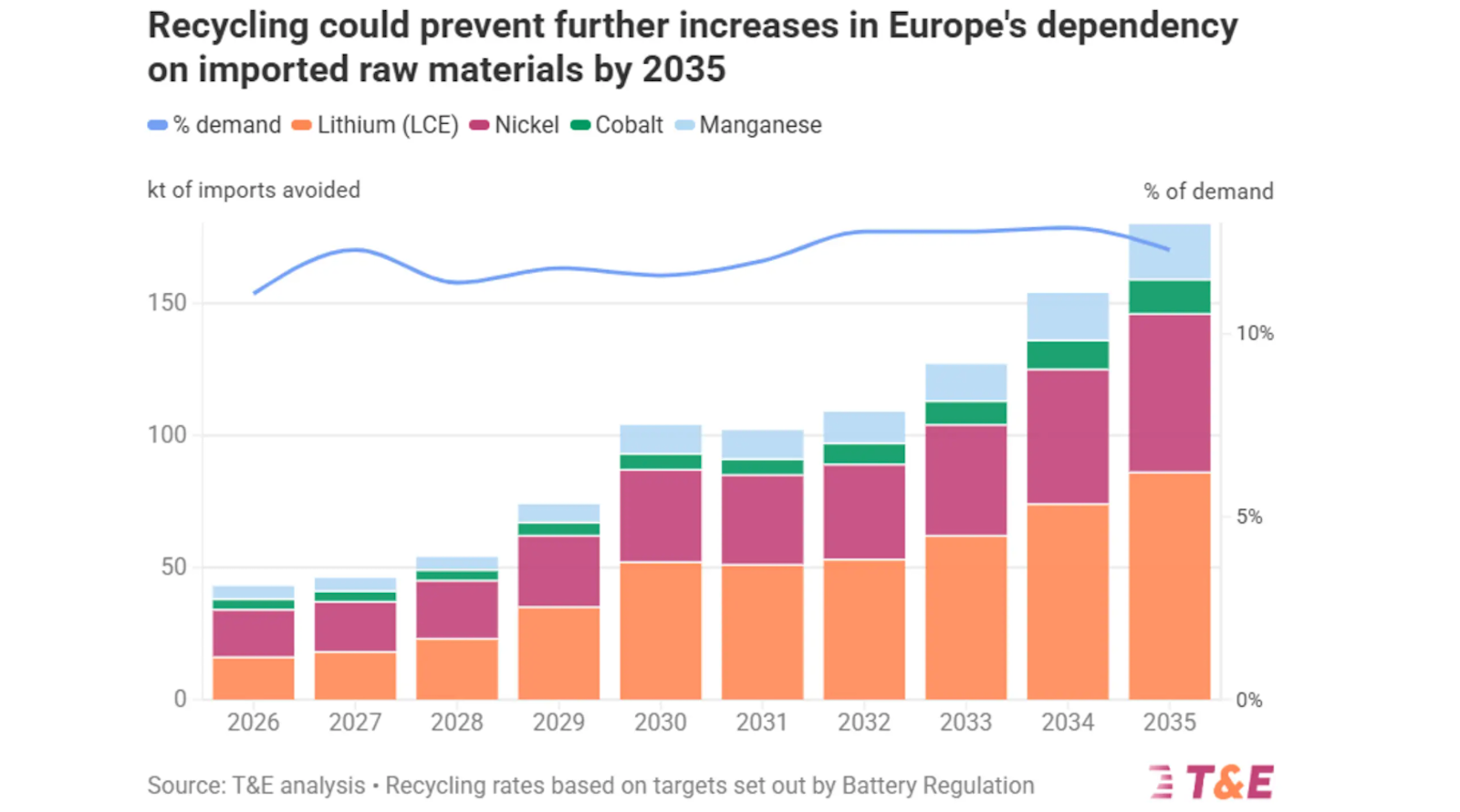
Electric vehicle batteries depend on many critical metals, and their recycling must be made as efficient as possible in Europe. A new research report examines the key challenges and new opportunities that either hinder or enable improved battery recycling in Europe. The study, conducted by the Environmental Policy Research Group at the University of Eastern Finland, highlights the importance of European battery and automotive industry stakeholders and the need for stronger corporate cooperation, particularly in building recycling facilities.
Overall, the study emphasizes stronger EU policy action and effective implementation of existing regulations, the need for efficient collection systems in all member states, and the importance of eco-design, standardization and battery passports.
According to Professor Rauno Sairinen, who led the project, this concerns both a sustainable materials policy for climate solutions and ensuring Europe's self-sufficiency and strategic autonomy.
"Existing recycling policies alone are not sufficient to meet the growing demand for critical battery materials. The challenge is the long wait for a sufficient volume of batteries to be decommissioned, as well as changes in battery chemistry. More effective collaboration among many actors is needed to enable recycling and to catch up with China's lead."