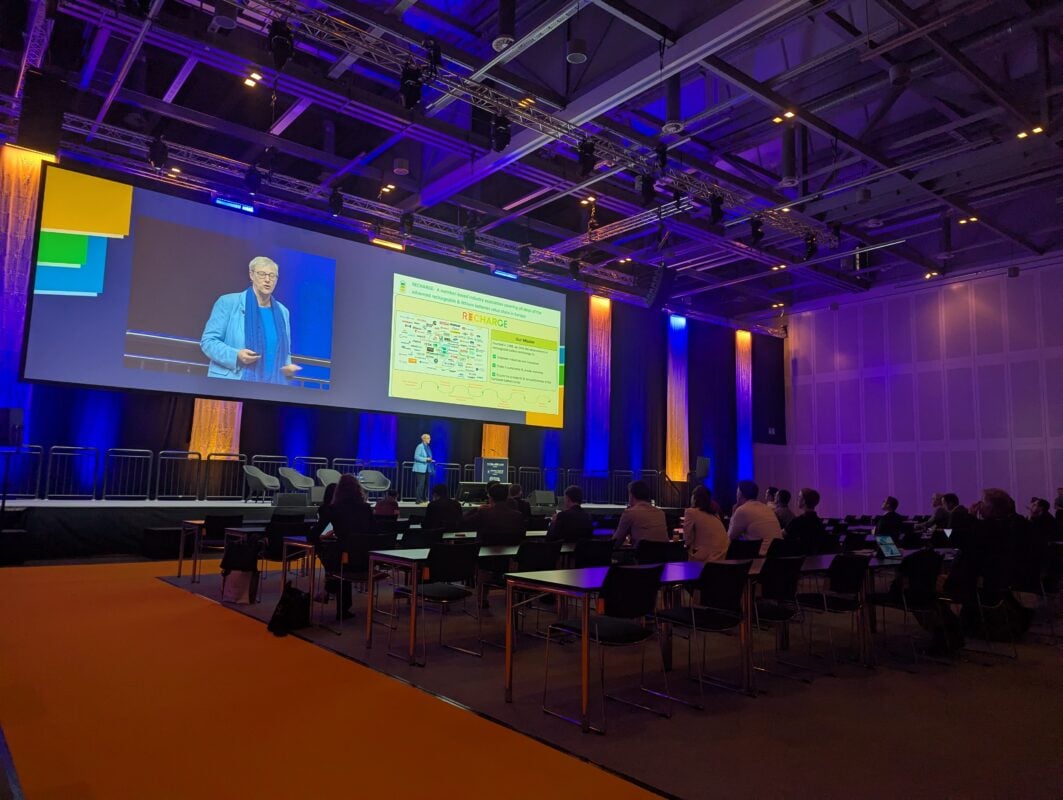
This separation of upstream and downstream components is important, as von Dalwigk noted that Europe is currently reliant on overseas imports for both: “we have some cell capacity in Europe but the mid- and upstream are still lagging behind,” she said.
Von Dalwigk said that Europe is likely to need to import more “cells and cars” from China into Europe to meet its battery demands, suggesting that the future of the European battery supply chain could be described as either uncertain, or reliant on overseas imports.
In response, von Dalwigk discussed a proposal currently under development by ReCharge that is “a more holistic approach to establishing a battery industry in Europe,” which includes four components: innovating, producing buying and securing batteries
These components require greater attention in Europe and von Dalgwick noted that each component needs to be considered alongside the others, and in relation to other legislation that is currently in effect in Europe.
The potential of more local manufacturing to help Europe to achieve its BESS deployment targets in light of market uncertainty came up as a theme during the morning’s discussions.