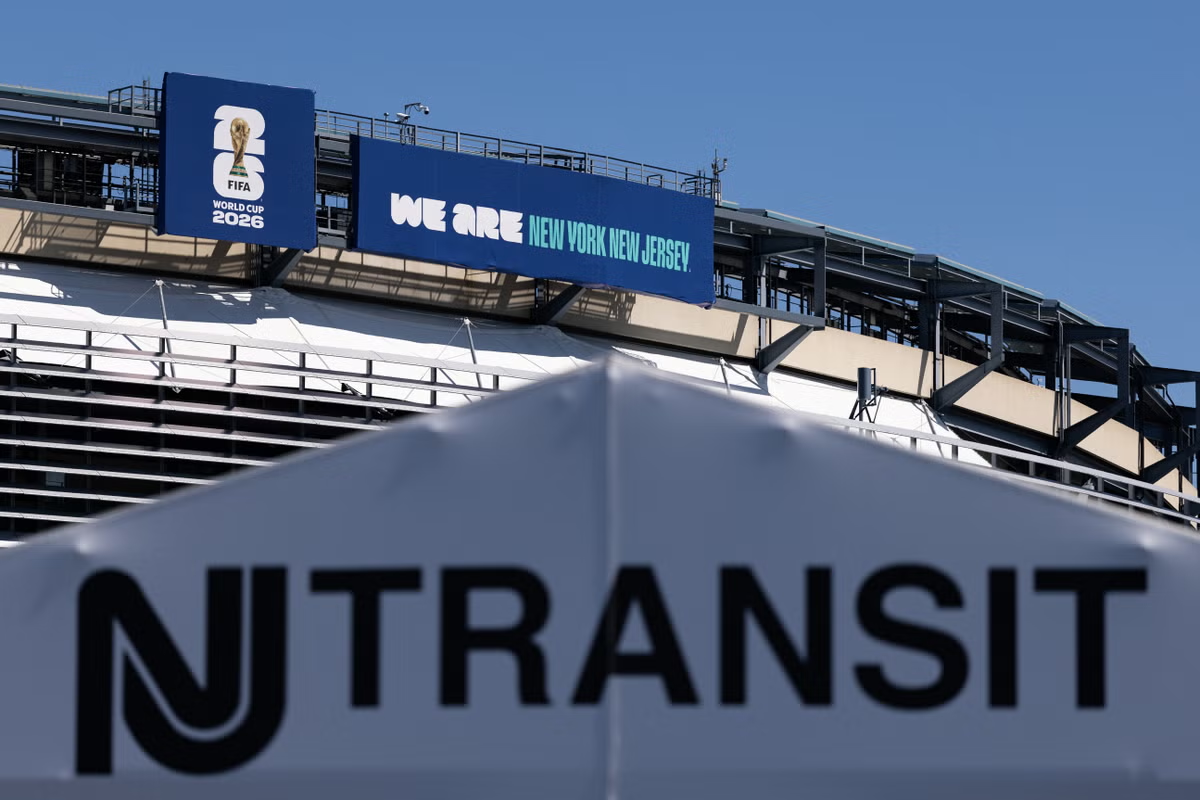
The World Cup kicks off this week across the U.S., Canada, and Mexico. Millions of people are expected to travel from across the world for games, but for people who live and work in the tournament’s 11 host cities, the influx of visitors could complicate their commutes. The U.S. federal government has said agencies can let employees work from home, and some private employers are doing the same.Nearly a million people commute into New York City every day, many from neighboring New Jersey — which is hosting eight World Cup matches, including the final.“Those same routes are the ones that people will need to take back and forth to the World Cup games, which will be happening at the same time,” said Sarah Kaufman, executive director of New York University’s Rudin Center for Transportation.She said the city has issued gridlock alert days.“(For) discouraging people from driving, and has increased the availability of subways and buses,” Kaufman said. “Overall, people are encouraged to work from home.”That’s both to reduce traffic and so they don’t spend their whole day commuting. But not everyone can do their job from home.Houston is a car-centric city. Robyn Egbert, transportation demand management supervisor at the Houston-Galveston Area Council, said she’s been working with employers and public transit officials on ways to make commutes less of a nightmare when half a million soccer fans arrive.“Encouraging carpool if you're a shift worker… People are also flexing their schedules, starting their day earlier or ending earlier or vice versa,” she said.Metro has also added more frequent buses and park-and-ride options in Houston.Johann Weber, program administrator at the Atlanta Regional Commission, said his city is doing similar things — running trains every five minutes and encouraging employers to offer flexible work.“There's a lot of concern, oh you know, how busy is it going to be? What's it going to be like?” he said. “But the mirror side of that is, it's going to be busy because it's going to be a lot of fun.”Weber and many of his colleagues are excited to go to work downtown on matchdays, even though they’ve been told they don’t have to. Just maybe not by car.
World Cup host cities promoting WFH ahead of matchday gridlock
With millions of visitors descending on 11 cities in the U.S., Mexico and Canada, employers and transportation agencies are looking for ways to avoid traffic and complications with those commuting to and from work.
362 words~2 min read