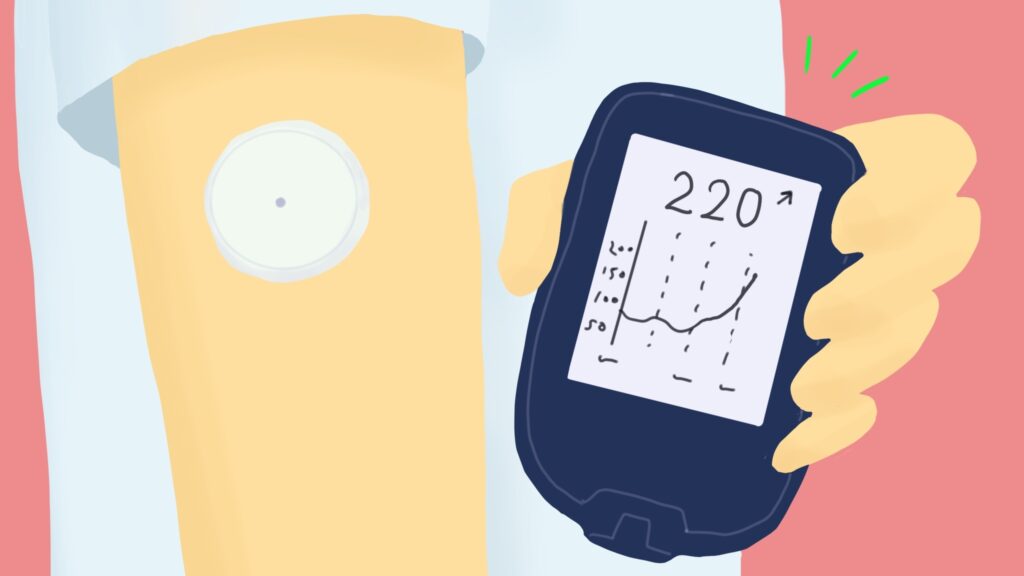
Managing metabolic health is often a game of "catch up." If you've ever used a Continuous Glucose Monitoring (CGM) device, you know the frustration: by the time your sensor alerts you to a blood sugar spike or a dangerous hypoglycemic dip, the physiological process is already well underway. This "sensor lag" is a major hurdle in personalized medicine.
In this guide, we’re going to tackle Time-series forecasting head-on. We will build a high-performance predictive model using PyTorch and a Transformer-based architecture (specifically inspired by the Informer model) to predict glucose levels 30 minutes into the future. By the end of this post, you'll understand how to transform raw, noisy bio-signals into actionable health insights using state-of-the-art deep learning and predictive analytics.
The Challenge: Why Transformers for CGM?
Traditional models like ARIMA or simple LSTMs often struggle with the long-range dependencies and non-linear "shocks" (like a high-carb meal or a sudden sprint) found in glucose data. Transformers, with their self-attention mechanism, are uniquely suited to identify patterns across different time scales.
System Architecture 🏗️