Show Caption
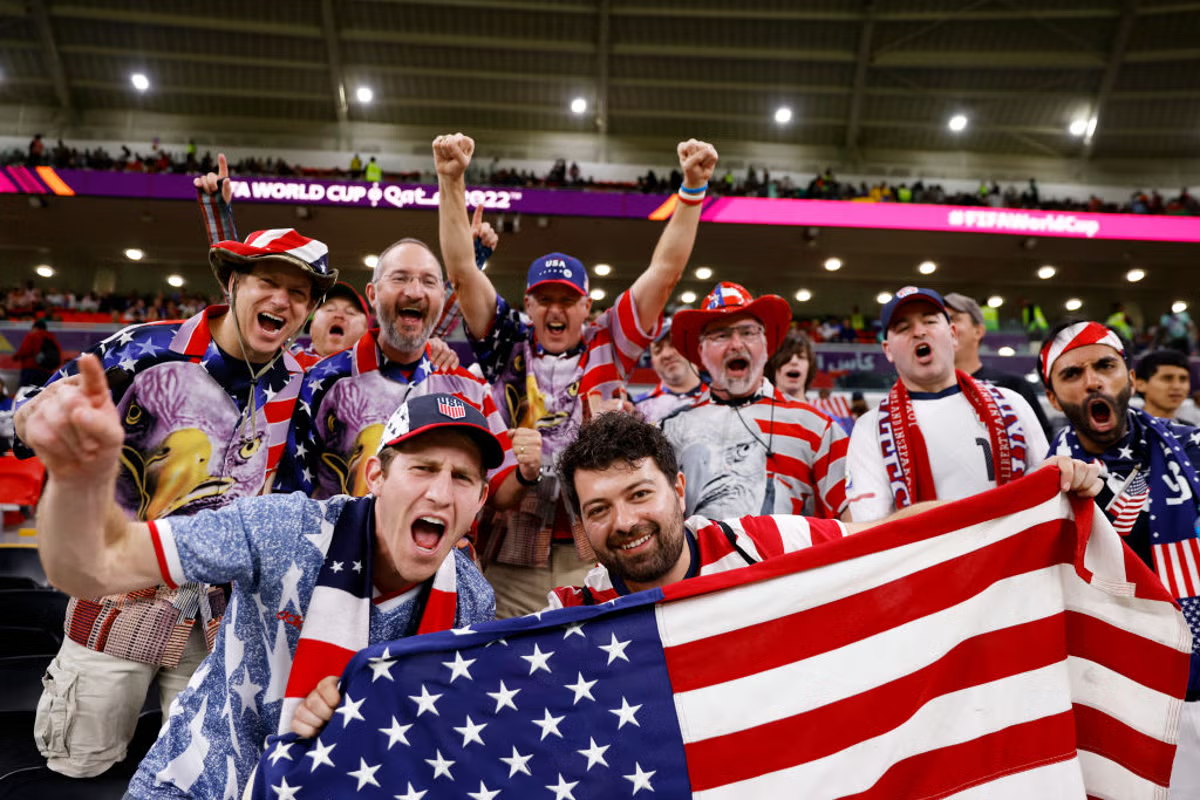
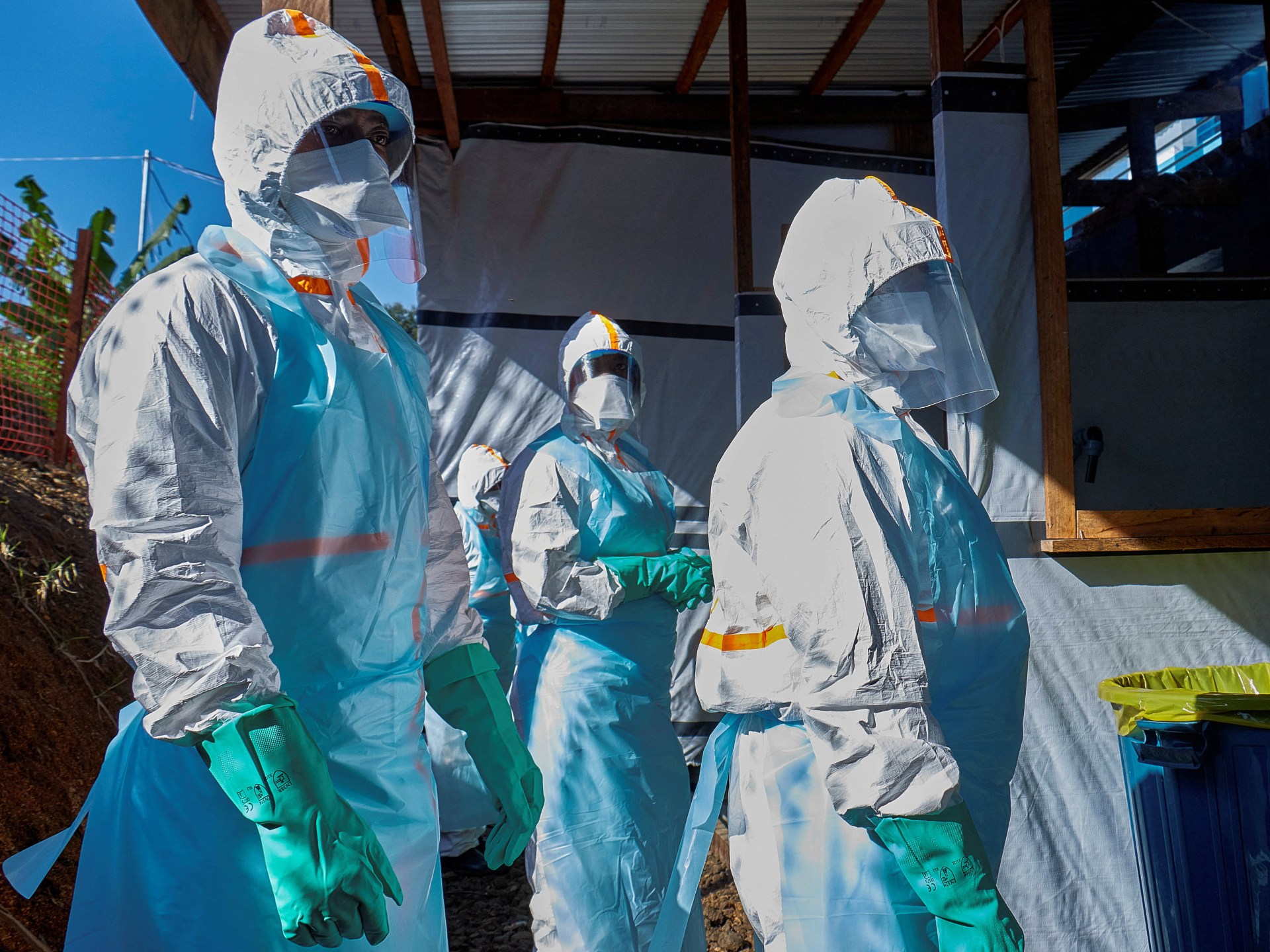
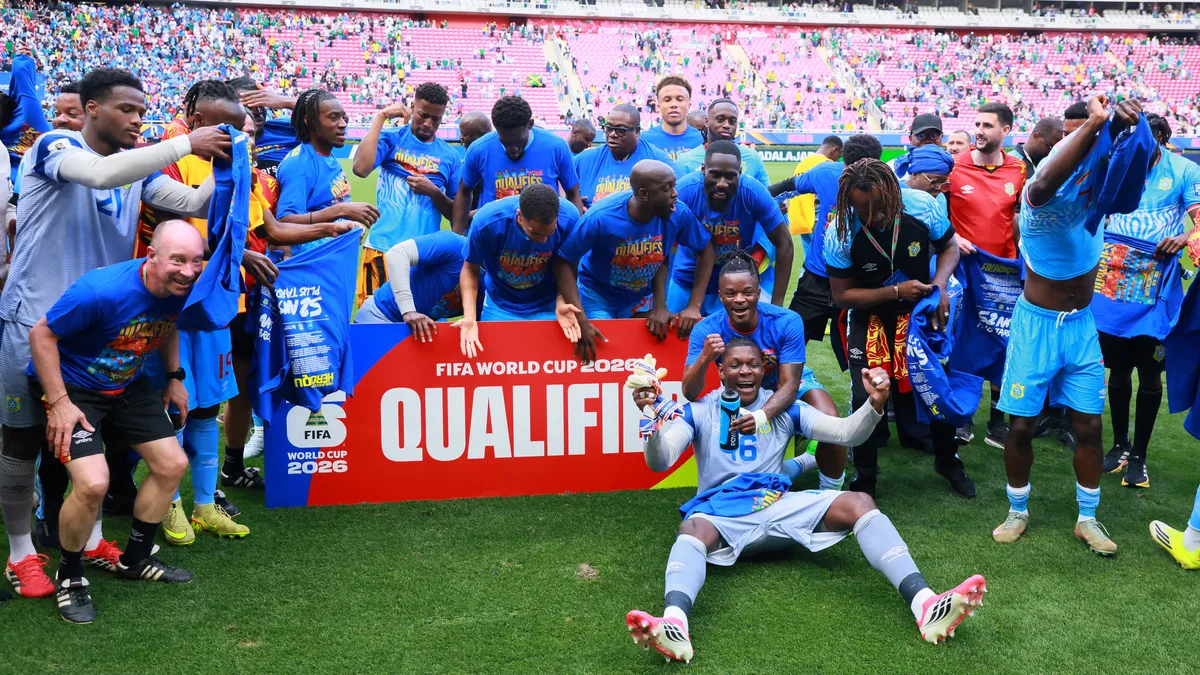
With millions of soccer fans and tourists set to travel to 11 U.S. cities hosting the World Cup in the coming weeks, public health officials are wary of potential risks from infectious diseases, such as the Ebola outbreak racing through Central Africa.The sporting event comes after the United States exited the World Health Organization and dismantled the U.S. Agency for International Development, or USAID, which helped monitor infectious diseases and supplied personal protective gear to health workers around the globe.Federal, state and local public health officials emphasized the U.S. public’s risk to Ebola is low. But the United States' retreat from the worldwide public health stage amid the outbreak in Africa and a worldwide measles outbreak has some experts concerned any weakening of public health makes the America susceptible to infectious diseases.Of the 48 teams participating in the 2026 World Cup, 39 will train in the United States and their fans will follow. The international travelers arrive as the nation's public health backbone, the Centers for Disease Control and Prevention, doesn't have a full-time leader and has faced devastating cuts. The Trump administration's sweeping cuts in the federal workforce have reduced the agency's staff by nearly 30% since last year .The federal cuts make preparing for the World Cup a daunting task for federal, state and local public health agencies, said Jennifer Nuzzo, a professor of epidemiology and director of the pandemic center at Brown University School of Public Health."When you have a lot of people coming from all over the world gathering for extended periods of time, that is really ripe for health emergencies," Nuzzo said. "So it takes resources and a plan to be able to handle that. It takes resources to make sure hospitals are ready for an influx of patients above what they normally see."In an emailed response to USA TODAY, Andrew Nixon, a spokesperson for the Department of Health and Human Services, pushed back against the idea that staff cuts were having an impact on CDC response."Within hours of notification, the CDC mobilized resources, activated response operations, deployed personnel and resources to Africa, imposed travel restrictions, expanded traveler screening and contact tracing, enhanced hospital readiness and laboratory capacity, and supported the evacuation and care of exposed Americans," he wrote.Nixon said the CDC is developing a dedicated World Cup data dashboard "to give state and local health departments enhanced visibility into disease trends both within and beyond their jurisdictions."Public health workers plan for mass gatheringIn preparation for the World Cup, staff at New York City Department of Health are working closely with their CDC partners, said Chantal Gomez, spokesperson for the agency.While funding cuts at the CDC have left the federal agency “under-resourced at a critical time, there are some incredible staff at the CDC who are doing their best under difficult circumstances,” Gomez said.Andew Lemos, associate communications director for the Boston Public Health Commission, said the agency has been coordinating with both state and federal agencies (including the CDC) ahead of the World Cup.However, Dr. Bisola Ojikutu, commissioner of public health for the City of Boston, was critical of the Trump administration’s withdrawal of the United States from the World Health Organization.“The current federal administration has made many misguided policy changes in recent years that have made our country less prepared to combat emerging public health threats and ultimately less safe,” said Ojikutu. “The decision to leave the World Health Organization isolates our country and leaves us less equipped to protect the health and well-being of people in communities everywhere.” In Houston, where the Democratic Republic of Congo's team will play Portugal on June 17, public health officials are prepared for an influx of visitors.The nation's attention was squarely focused on Texas in 2014 when a man in Dallas died from Ebola and infected two of his nurses. With guidance from the CDC, Texas state health officials have developed safeguards to protect against a repeat of the incident."We have a whole plan in place that I'm hoping we never get to use," said Dr. Luis Ostrosky, chief of infectious diseases at UT Health Houston.The CDC imposed a 30-day travel restriction on visitors from regions with an Ebola outbreak, including Congo, Uganda and South Sudan. On May 22, HHS issued a directive temporarily preventing lawful permanent residents returning from Ebola-afflicted areas within the last 21 days. Returning visitors will be screened at U.S. airports in metro Houston, Atlanta, New York City or Washington DC.U.S. officials instructed players from Congo, who have been training in Europe, to isolate for 21 days before entering the United States. The travel restriction could mean fans from Congo might not be able to attend their team's matches in the United States."It's very unlikely we'll truly have people from the (Ebola outbreak) region here in Houston, unless they are U.S. nationals or permanent residents," said Ostrosky.Other than Ebola, public health guarding against these threatsA more likely health threat when mass travelers congregate are illnesses such as COVID-19, the flu, RSV and norovirus, Ostrosky said.Another potential threat − measles. West Texas was the epicenter of measles cases in the United States in 2025. And U.S. measles cases this year have surpassed the number of infections in 2025, which was the largest, deadliest outbreak since measles was declared eliminated in the U.S. in 2000.Measles infections can strain public health agencies. For example, public health workers had to contact and follow up with more than 40 people in Rhode Island tied to one measles case.Tracking down a measles case linked to soccer matches, hotels or practice facilities at any of the U.S. World Cup host cities would be a logistical nightmare, Nuzzo said.While Ebola is unlikely to be a threat during the World Cup, Ostrosky said the outbreak underscores the importance of investing in public health to protect U.S. residents.CDC lacks leader, loses experts amid cutsWhile state and local health departments remain in close contact with CDC staff, those who work at the nation's top public health body described an agency in flux.On a recent all-hands call with employees at the CDC, Jay Bhattacharya, the current director of the National Institutes of Health and the most recent among a rotating cast of leadership fill-ins, said he could no longer serve as an acting director.The reason? President Donald Trump had not formally nominated a permanent pick to the Senate and according to federal law, an official can only serve for 210 days in an acting capacity. Therefore, “he would be acting in the capacity of the director or some weird legal term like that,” an employee, who was on the call and granted anonymity to speak freely, told USA TODAY. Bhattacharya, the person said, compared the situation to an episode of “The Office,” the satirical television series making light of cringeworthy office moments.The lack of a permanent leadership comes at a time when the country is trying to keep two diseases at bay: hantavirus and Ebola.Asked if the CDC is prepared for another pandemic-like event, a senior employee said while the agency is better prepared than during the Covid-19 pandemic (for example, with tech in place to scale rapidly), they said the “lack of staff and loss of experience” continues to be an issue.Still, the actual response by the CDC will remain unchanged, the senior employee said, adding, “Our process is our process regardless of who is on top.”Another CDC employee echoed that sentiment.“In some ways, I think CDC is better prepared now — at least in terms of infrastructure and processes,” the employee said. “People is a different question. We’ve lost key experts, and many of those remaining are burned out. And we don’t have the same levels of ties for strong international coordination and cooperation.””Former CDC Director Tom Frieden, who oversaw the agency during the 2014-2016 Ebola outbreak, said lacking a full-time director during an Ebola outbreak can "without a doubt" weigh on rank-and-file workers."This has obviously been an enormously difficult time for the agency," Frieden said. "CDC staff have been vilified by their own secretary. CDC staff have been fired, or have seen unscientific ideological opinions overrule scientific expertise."Split from the World Health OrganizationThe United States withdrew from the WHO in January, ending a partnership that began in 1948.Although the WHO is comprised of 194 member states, the United States has for decades carried a disproportionate share of the organization’s financial burden, HHS said in its announcement, among other reasons. Instead, the HHS said it would “engage partners directly and deploy resources efficiently.”The State Department told USA TODAY that as of June 5, it had signed 32 bilateral global health memorandums of understanding with Angola, Bolivia, Botswana, Burkina Faso, Burundi, Cambodia, Cameroon, Côte d’Ivoire, the Democratic Republic of the Congo, the Dominican Republic, El Salvador, Eswatini, Ethiopia, Guatemala, Guinea, Honduras, Kenya, Lesotho, Liberia, Madagascar, Malawi, Mozambique, Niger, Nigeria, Panama, Papua New Guinea, the Philippines, Rwanda, Senegal, Sierra Leone, Tajikistan and Uganda.The signed MOUs include provisions for real-time sharing of global health security and disease surveillance data, which is “exactly what's needed to track emerging threats like hantavirus and Ebola,” said a State Department spokesperson.The MOU with Rwanda, for instance, includes $10 million to expand disease outbreak surveillance and establishing a biothreat radar system that monitors potential outbreaks in the broader East and Central Africa region. Frieden, the former CDC director, said the concept of individual countries taking more responsibility for their health and public health contracting is a good idea. But he said it's difficult to do amid an outbreak such as Ebola."You can't do it overnight and hope that it's going to succeed, because it won't," Frieden said. "It will just result in a massive disruption of services."