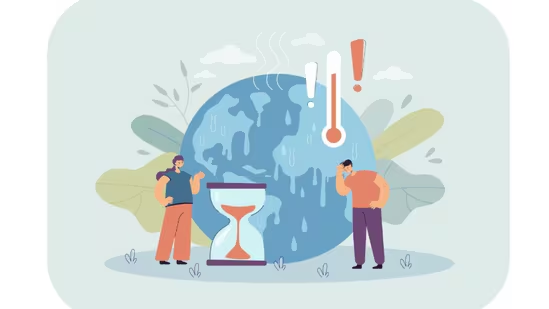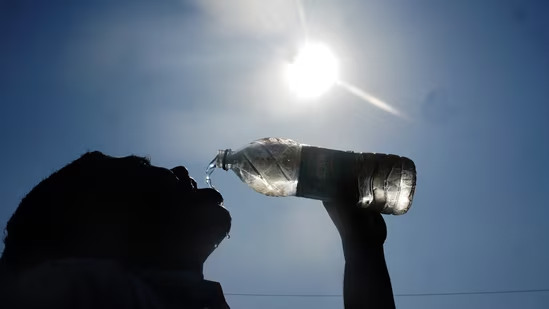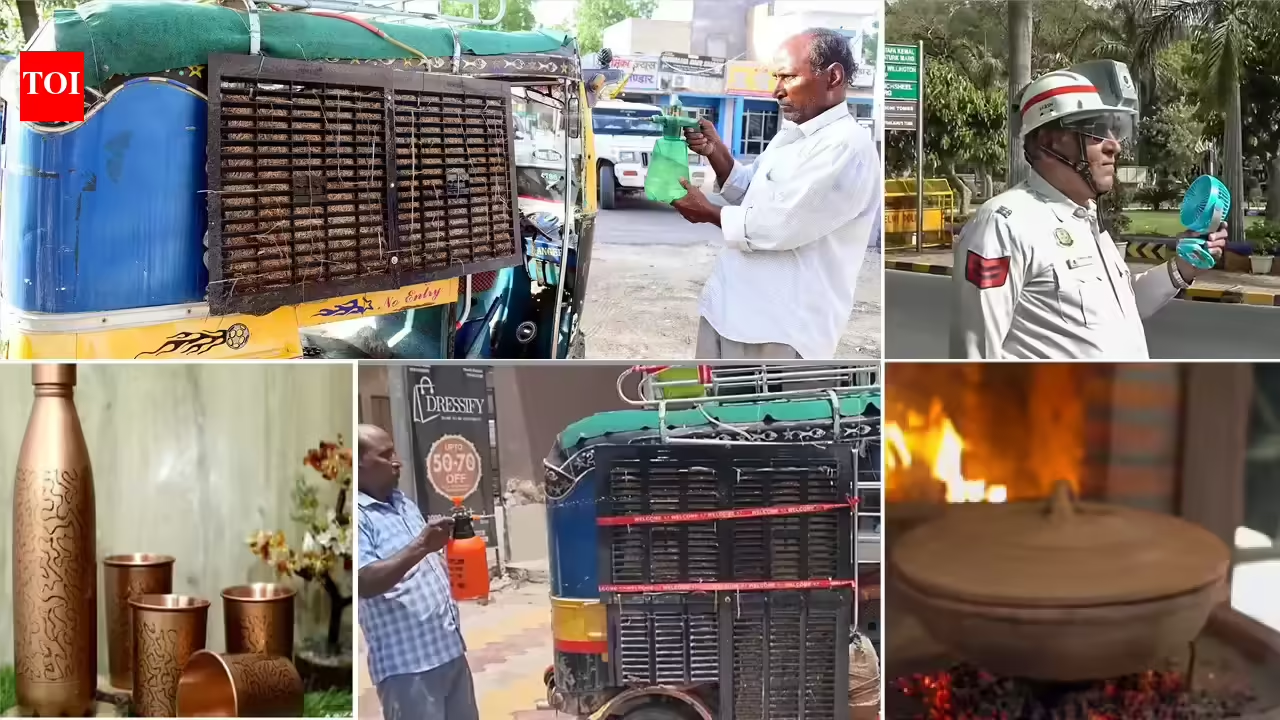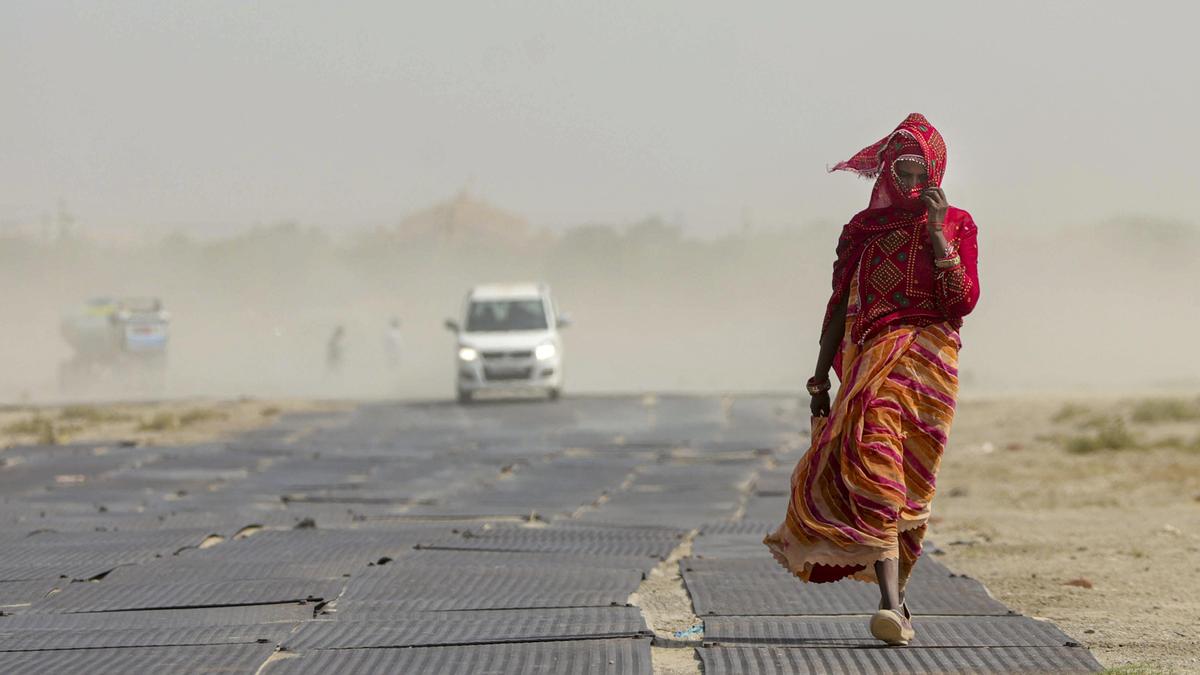
As summer intensifies, the country’s environmental stress is increasingly evident. The India Meteorological Department has warned of above-normal temperatures and a higher number of heatwave days. Urban heat is rising rapidly due to concretisation, declining green cover, and the urban heat island effect.World Environment Day (Freepik)Water stress is also deepening. Reservoir storage is below 40% in several states, with multiple river basins under pressure ahead of peak summer. Cities such as Mumbai have announced water cuts due to falling lake levels and weak pre-monsoon inflows, exposing the fragility of municipal water systems under climate variability. Rivers are polluted by untreated sewage and industrial waste. Groundwater, which sustains nearly two-thirds of our agriculture, is depleting rapidly.Air pollution has become a year-round public health crisis rather than a seasonal problem. Several cities continue to record poor and hazardous air quality due to vehicular emissions, industrial activity, construction dust, waste burning, and fossil fuel dependence.These pressures are compounded by ecological degradation. India lost more than 18,000 hectares of primary forest in 2025. Many areas classified as forest land on paper have little actual tree cover.In cities, waste management remains inadequate, with landfills such as Ghazipur and Deonar standing as reminders of collective neglect. In rural India, declining soil health, water stress, and climate variability are putting pressure on agriculture, incomes, and food security.These are not abstract failures. They have direct human consequences: worsening public health, rising economic costs, and growing inequality. Air pollution causes over 1.6 million deaths annually, disproportionately affecting children, the elderly, and the poor.We are in a state of deep environmental neglect. Despite growing awareness, environmental concerns remain largely absent from national political priorities. To accept this as normal is a collective failure. India needs decisive political will and a mass movement to change course.To achieve Viksit Bharat by 2047, environmental leadership must move from the margins of policy discourse to the centre of the development agenda. Environmental conservation must be integrated with policy, planning and programmes. India’s natural capital—our air, water, forests, soil, and biodiversity—is not separate from development. It is the foundation of our health, economy, and future. Highways, data centres, and factories alone cannot build a truly developed nation.India does not need to look to the West for environmental inspiration. Our civilisational heritage is deeply rooted in ecological consciousness. Long before climate treaties or carbon budgets, India’s ancient texts offered a blueprint for ecological harmony. The Rig Veda speaks of the Prithvi Sukta, a hymn in praise of Mother Earth, while the Atharva Veda describes forests as sacred ecosystems. The Mahabharata warns against ecological excess, and Kautilya’s Arthashastra offers guidance on afforestation, water management, and animal protection.In this tradition, nature was revered, protected, and sustained. This is not only our legacy but also a pathway to a sustainable future. The Rig Veda reminds us: “Mata Bhumih Putro Aham Prithivyah”—(The Earth is my mother, and I am her son). This relationship must shape public policy and the design of government programmes.First, environmental regulations must be re-evaluated to signal a shift toward sustainable growth. The Bhagavad Gita emphasises balance between humans and nature. Environmental regulators should uphold their dharma free of fear or favour.Second, clean air should become a constitutional promise and be treated as a fundamental right. The National Clean Air Programme (NCAP) should be expanded with legally binding targets and public accountability. City-level air quality plans must include health-based indicators, independent audits, and real-time emissions monitoring.Third, rivers must be treated as lifelines, not drainage channels. India needs a national mission to restore degraded ecosystems and revive biodiversity corridors, alongside a commitment to rejuvenate rivers, lakes, and water bodies. A nationwide platform should track real-time water quality across major rivers and lakes.Fourth, the Urban Challenge Fund should be pursued through dedicated city-level sustainability cells. One important initiative could be a Superfund to clean up dumpsites and landfills. An Urban Nature Mission should target the revival of 10,000 lakes and wetlands by 2030.Fifth, forest governance must shift toward transparency and measurable outcomes. The Atharva Veda reveres forests as divine ecosystems; today, they must be protected through policy and budgeting. Tree cover should be verified through satellite monitoring, supported by annual state green balance sheets. Community-led afforestation, rooted in the wisdom of the Varaha Purana, should be incentivised through direct benefit transfers and carbon markets. Ek Ped Maa Ke Naam should be expanded with a target of planting 100 million trees by 2030.Sixth, energy efficiency—the cheapest lever for climate mitigation—must be prioritised. Repositioning the Bureau of Energy Efficiency under the ministry of environment, forest and climate change would reinforce climate responsibility as a national imperative.Finally, ecological literacy must begin in the classroom. The values of Ahimsa, Dharma, and Vasudhaiva Kutumbakam—the world as one family—should be embedded in curricula grounded in both science and tradition.India once led the world in spiritual ecology. It can lead again through bold policy, credible regulation, and ancient wisdom reborn in modern governance. A Viksit Bharat must include breathable air, living rivers, healthy forests, and thriving biodiversity. The time to act is now.World Environment Day offers an opportunity to make a national commitment—not only through slogans, but through legislation, resources, and action. Imagine a ₹140 billion green regeneration package, ₹1,000 for every Indian, focused on restoring forests, cleaning rivers, tackling legacy waste, and funding clean-air innovation. Such a move, combined with the seven steps above, would align intent with impact and vision with accountability.(The views expressed are personal)This article is authored by Gaurav Bhatiani, senior fellow, Ashoka Centre for a People-centric Energy Transition ACPET), Ashoka University, Delhi-NCR and S Padmanabhan, senior energy specialist, World Bank, Washington DC and Former Program Director & Energy Advisor, USAID India.
India’s ecological heritage as pathway to Viksit Bharat
This article is authored by Gaurav Bhatiani and S Padmanabhan.
940 words~4 min read