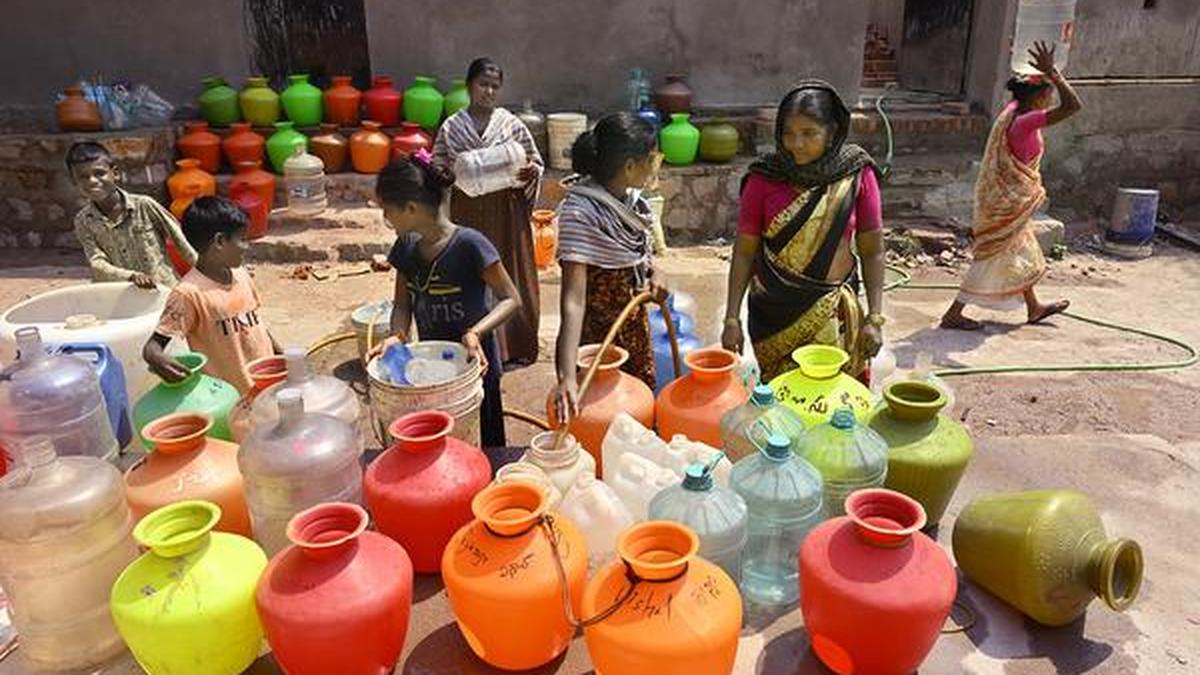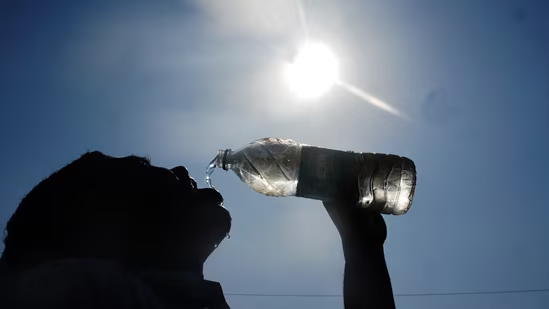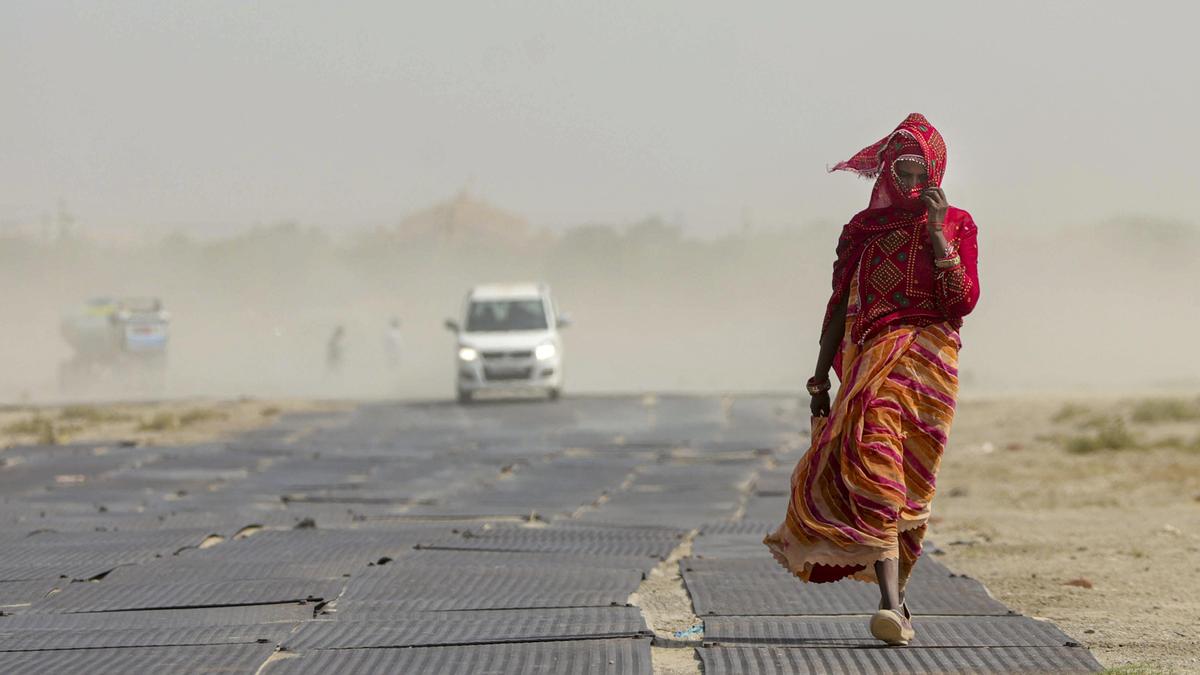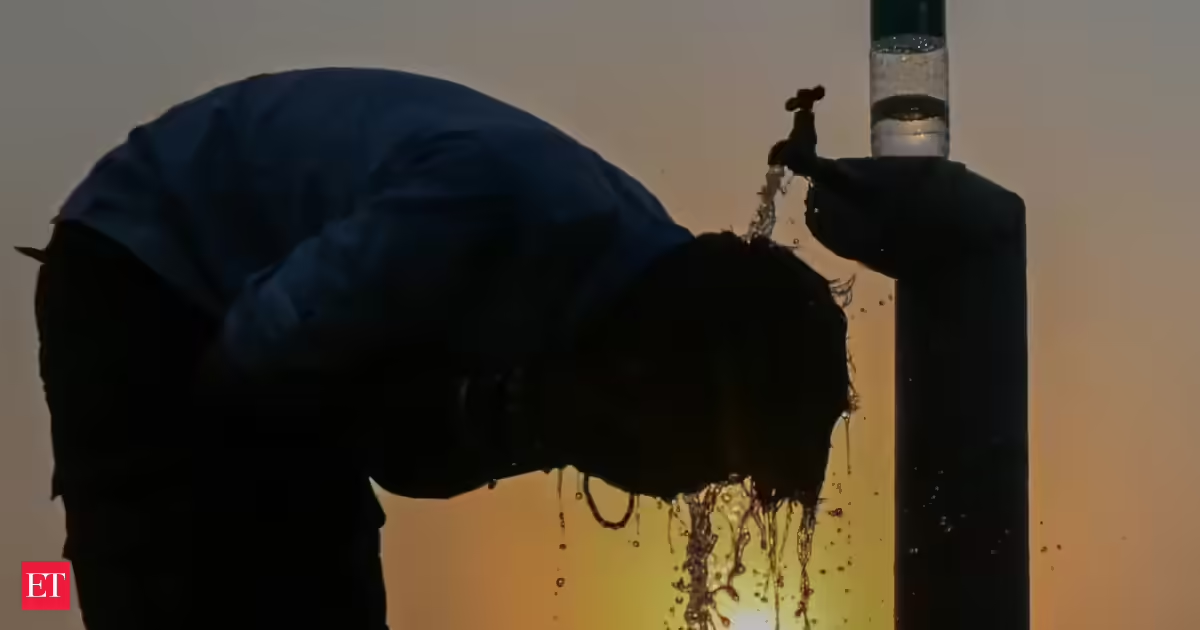
Every summer now arrives with a familiar warning, and every summer the warning gets louder. India recorded some of its most punishing heat in recent years, with large parts of the country enduring weeks of temperatures that strained power grids, public health and, most quietly but most dangerously, water supply. Heat and water scarcity are not two separate crises. They are the same crisis, accelerating together--and India is more exposed to it than almost any large economy on earth.Heatwave (Praful Gangurde /HT Photo)The arithmetic is unforgiving. India is home to roughly 18% of the world's population but holds only about 4% of its freshwater resources. We have built our cities, our agriculture and our industry on the assumption that water would arrive--through the monsoon, through rivers, through groundwater pumped from beneath our feet. The climate crisis is steadily dismantling each of those assumptions.Consider what heatwaves actually do to the water system. They increase evaporation from reservoirs and lakes precisely when demand peaks. They intensify the rate at which soil and crops lose moisture, driving farmers to extract still more groundwater. And they arrive against a backdrop of a monsoon that is becoming more erratic, not necessarily less rain overall, but rain that falls in shorter, more violent bursts that run off rather than recharge. The result is a paradox we are only beginning to confront: More extreme rainfall and more severe water scarcity, often in the same region within the same year.Bengaluru offered a stark preview. A city long considered relatively water-secure found itself rationing supply, drilling ever-deeper borewells that came up dry, and trucking in water at considerable cost. It was not an isolated failure of one city's planning. It was a glimpse of what happens when a centralised water model--pipe it in from far away, pump it up from below--meets a climate that no longer behaves the way the model assumed.So, what do we do? Part of the answer is conventional and non-negotiable: protect watersheds, fix leaking distribution networks that lose enormous volumes before water ever reaches a tap, restore lakes and wetlands, and treat and reuse far more wastewater than we currently do. These are essential, and no technology replaces them.But there is a deeper shift required, one that mirrors what has already happened in energy. A decade ago, the idea that buildings and communities would generate their own power through rooftop solar seemed marginal. Today it is mainstream policy. Water needs the same conceptual leap--from a centralised resource we extract and transport, to a distributed one we can generate closer to where it is consumed.This is where decentralised water sourcing becomes strategically important. Atmospheric water generation--drawing potable water from humidity in the air--is one such approach. The relevant point for policy is broader than any single technology: The atmosphere holds a vast, renewable reservoir of moisture, and tapping it at the point of use reduces the strain on aquifers and pipelines that climate stress is pushing past their limits.It is not a silver bullet, and honesty matters here. Atmospheric generation works best in humid conditions and is less efficient in genuinely arid zones, where output falls and energy costs rise. Its real value is as one resilient layer in a diversified water portfolio--alongside rainwater harvesting, wastewater reuse and conventional supply--rather than as a replacement for any of them. The principle that should guide us is diversification. A water system that depends on a single source is fragile by design; a system with multiple independent sources can absorb shocks that would otherwise cause collapse.For this to scale, urban planning has to change. Future building codes should treat on-site water generation and reuse the way they increasingly treat energy efficiency, as a design requirement, not an afterthought. Campuses, commercial complexes, transit hubs and public institutions are natural early adopters. And critically, any decentralised technology must be paired with renewable energy, or we simply trade a water problem for a carbon one.The hardest part is psychological. We are accustomed to thinking of water as a problem for the government to solve and the monsoon to deliver. Climate change is forcing a more uncomfortable and more empowering truth: water resilience will increasingly be built locally, by cities, businesses and communities that stop waiting for supply to arrive and start generating their own.The heatwaves will keep coming, and they will keep getting hotter. The question is no longer whether India's water systems will be tested. It is whether we will have diversified them enough, and early enough, to withstand the test.(The views expressed are personal)This article is authored by Navkaran Singh Bagga, CEO & founder, Akvo Atmospheric Water Systems.
Climate, heatwaves and India’s growing water vulnerability
This article is authored by Navkaran Singh Bagga, CEO & founder, Akvo Atmospheric Water Systems.
768 words~3 min read