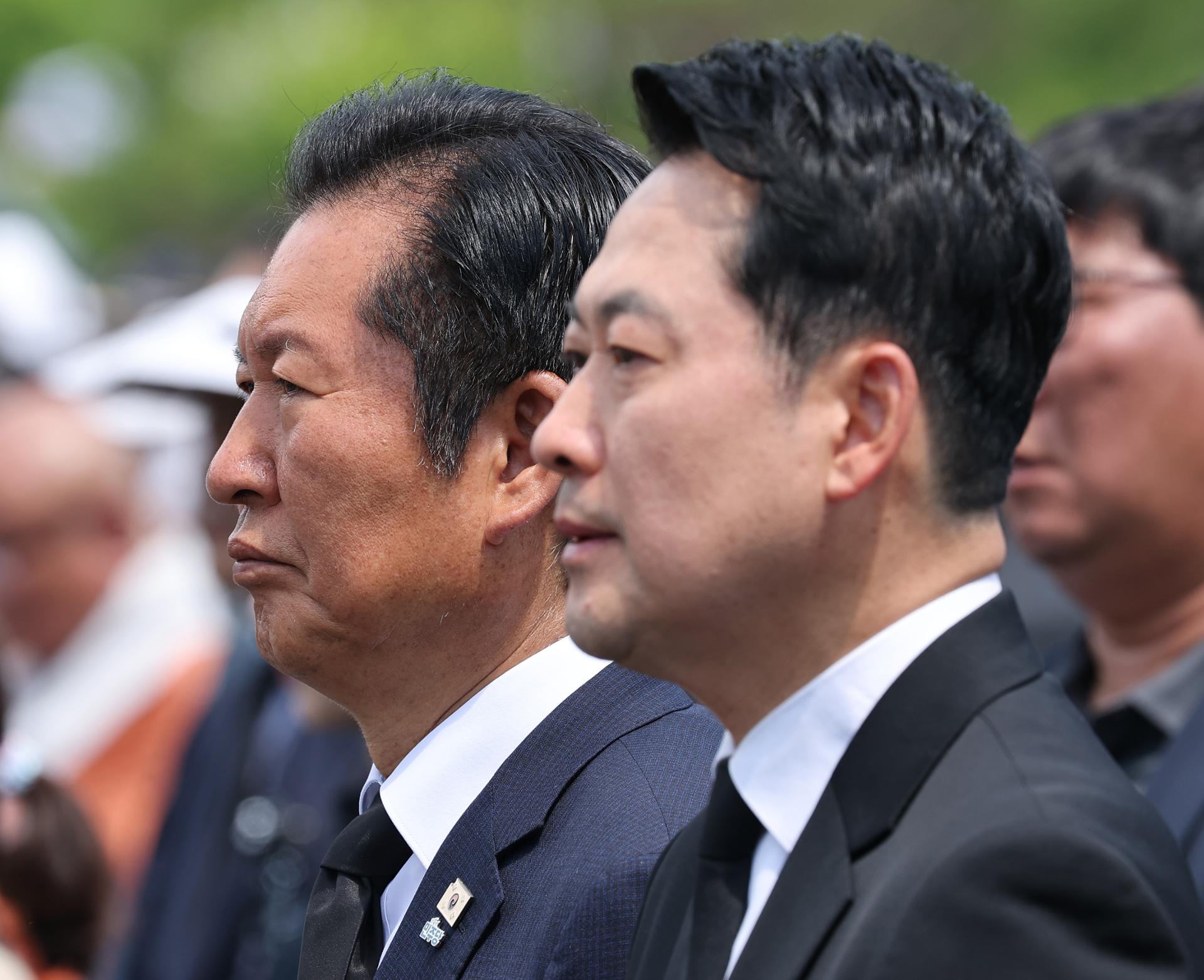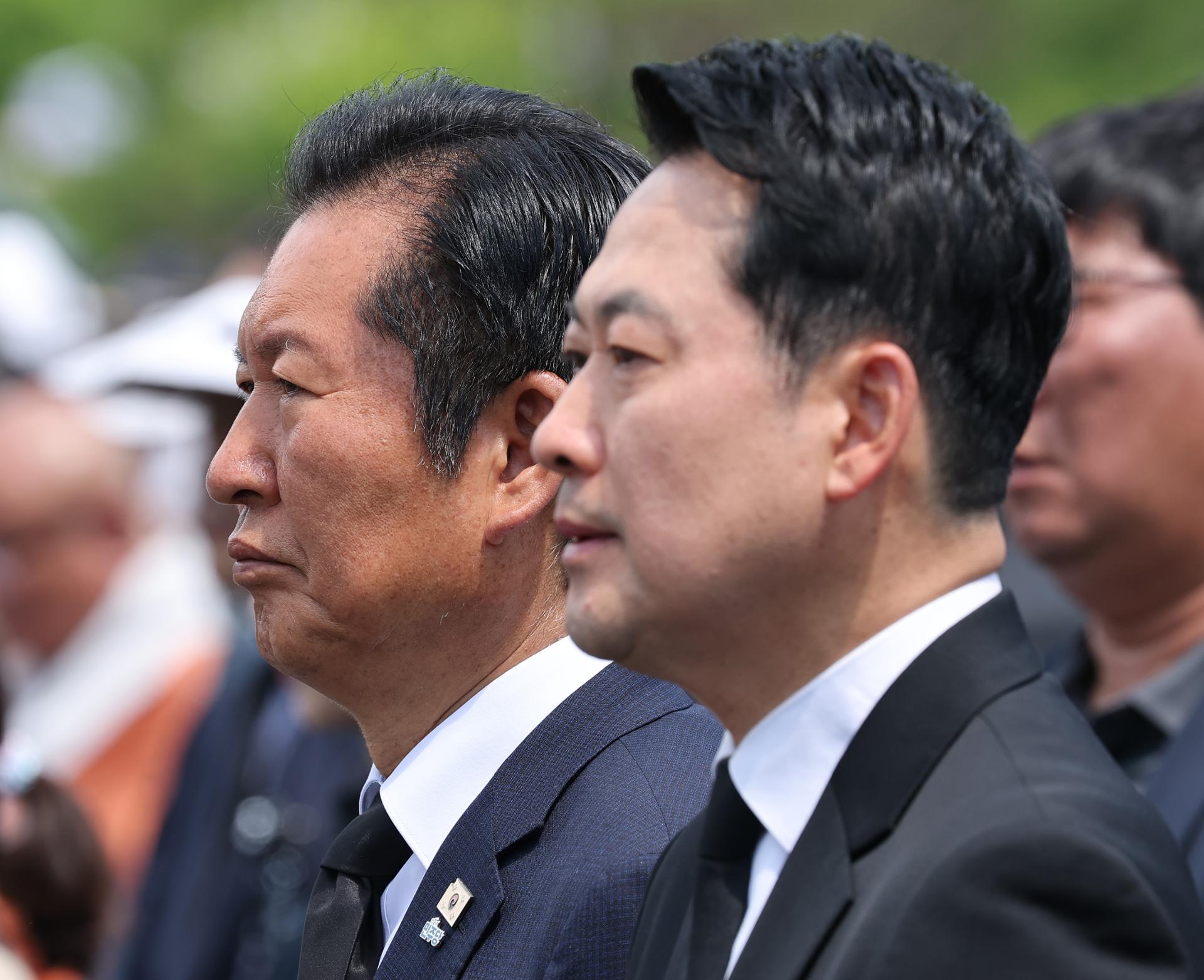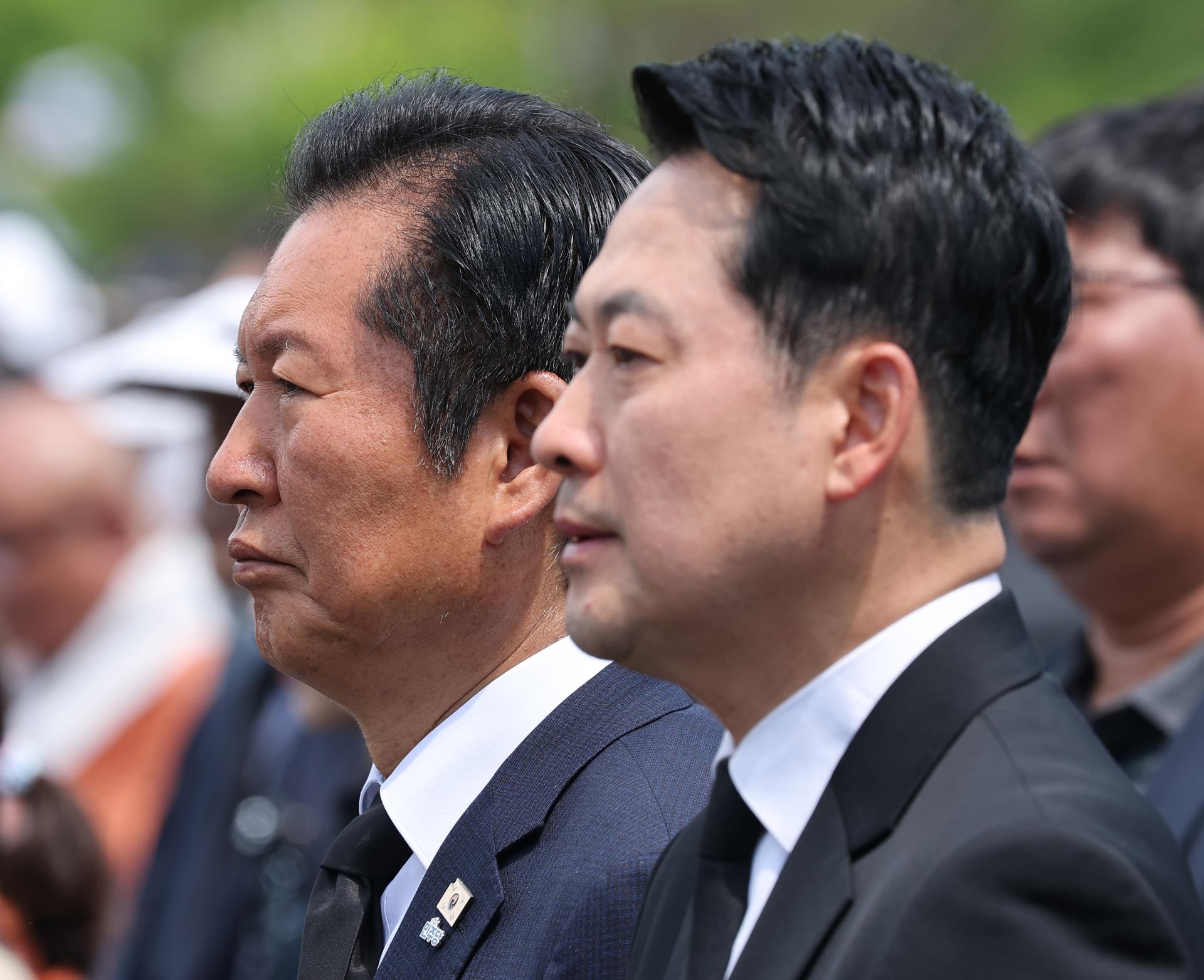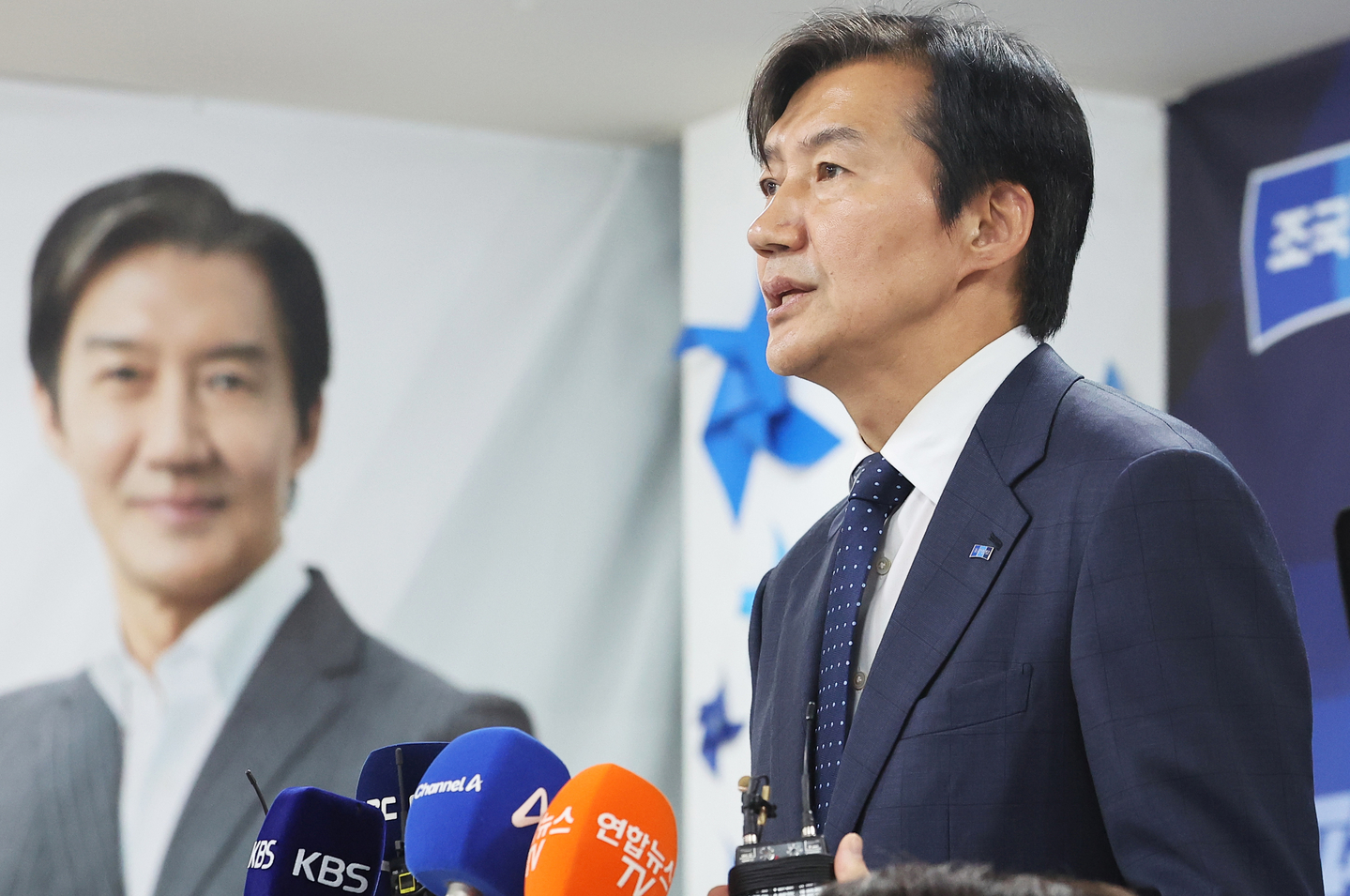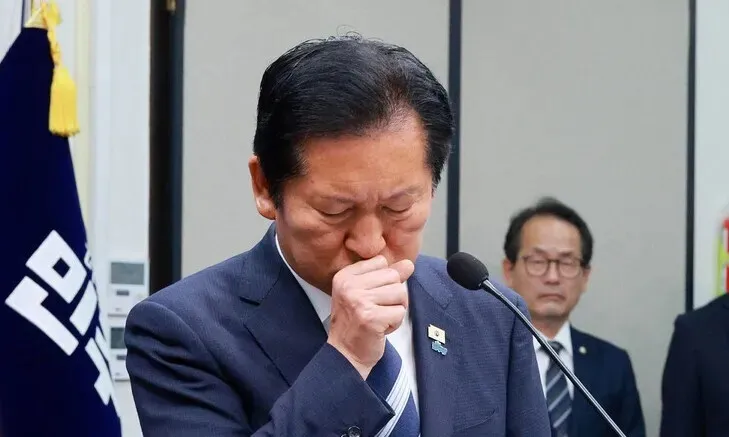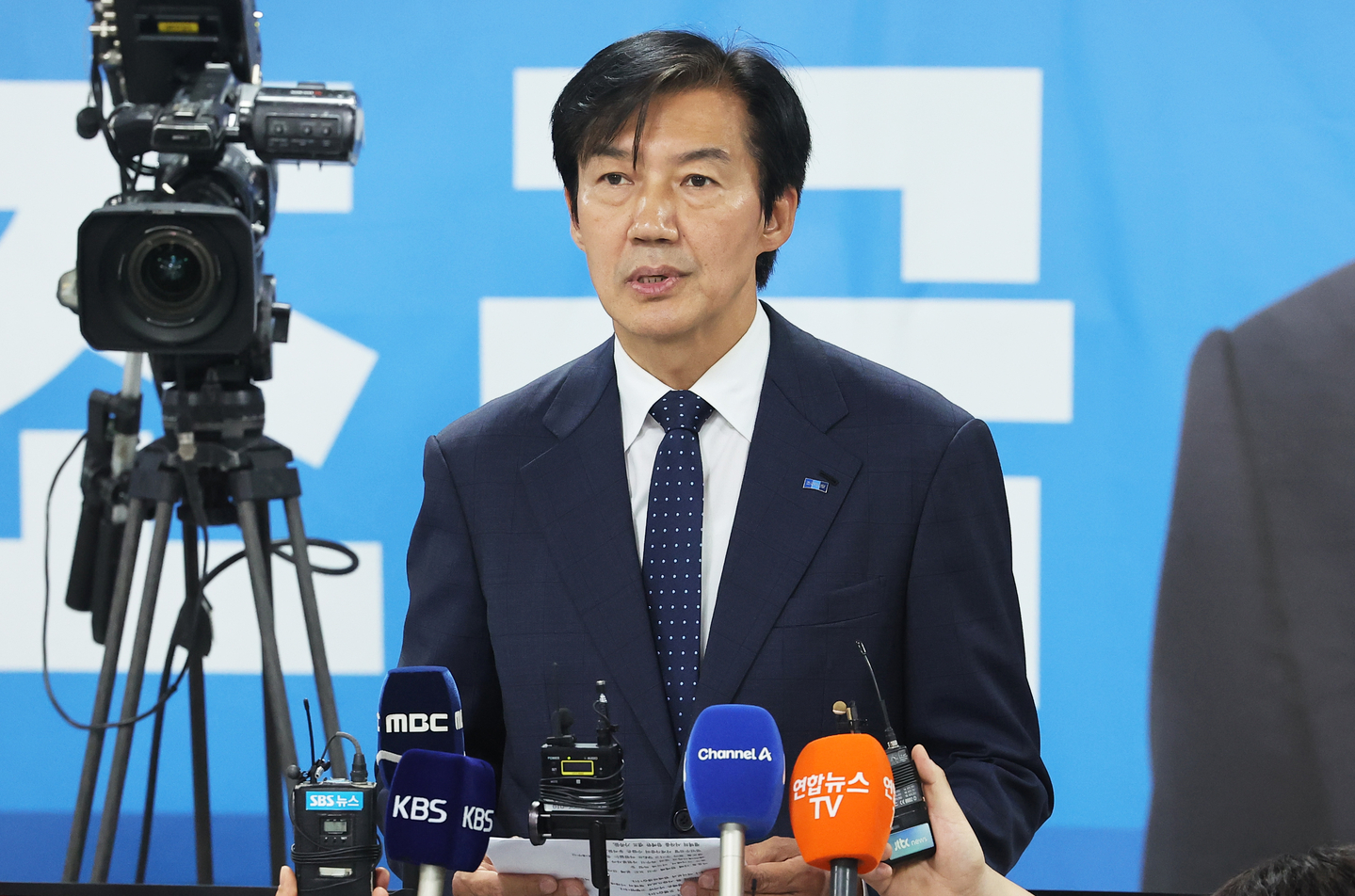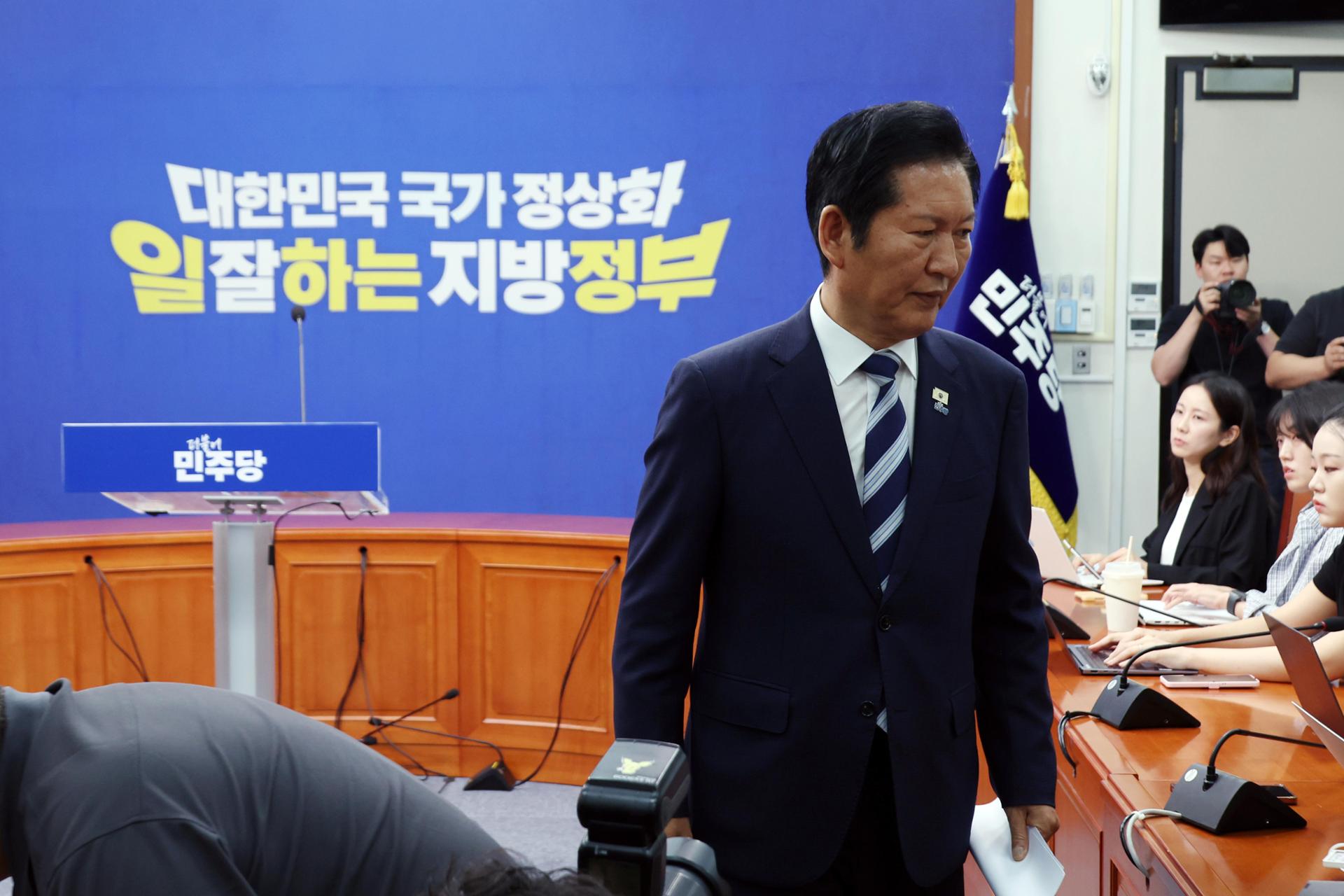
Ruling Democratic Party of Korea Chairman Jung Chung-rae leaves the office after a press conference at the National Assembly in Seoul, Thursday. Newsis
Korea’s June 3 local elections have left both the ruling and opposition parties with wounded leaders who are politically weakened yet unwilling to step aside.
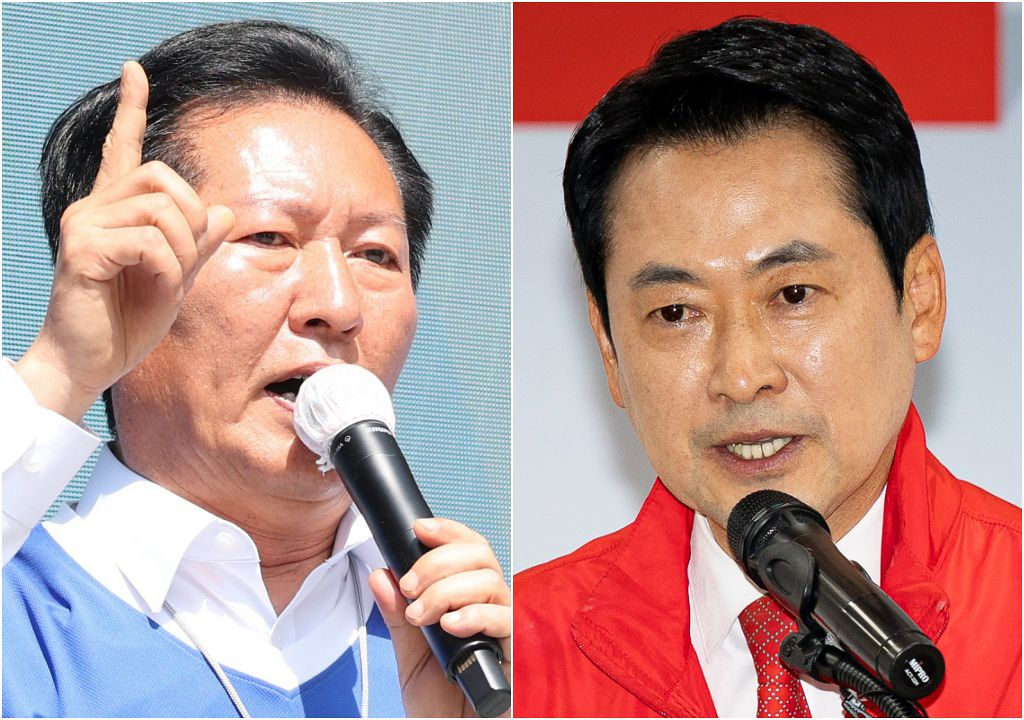
Traditionally, a heavy electoral setback prompts party leaders to offer an apology and resign, paving the way for an emergency interim leadership. This time, neither side followed that script. Instead, the chairmen of the Democratic Party of Korea (DPK) and the People Power Party (PPP) insist they preserved “hope” or “victory,” even as their leadership and authority are being increasingly questioned by party members.
On the surface, the ruling liberal party can claim victory, as Chairman Jung Chung-rae did on Thursday, given that it captured 12 of the 16 top posts of the nation’s metropolitan and provincial offices. But key, symbolic losses have forced insiders to acknowledge that the outcome looks far less reassuring.
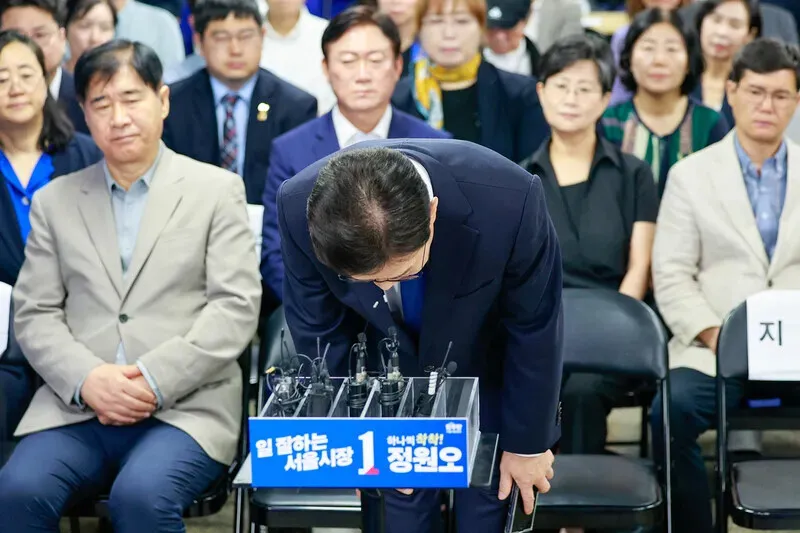
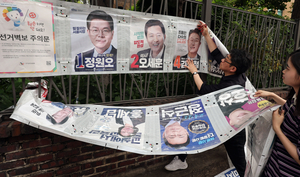
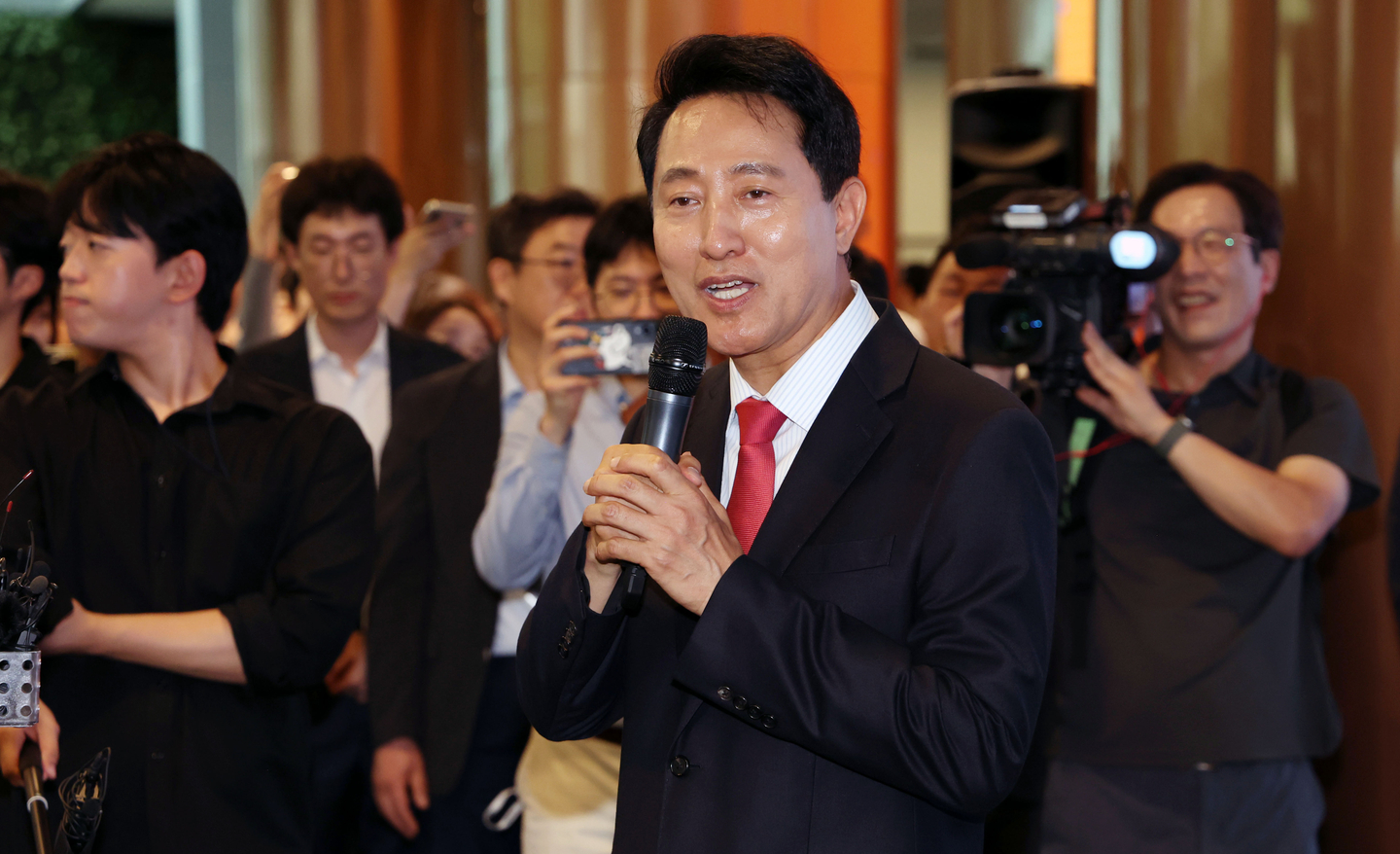
The most painful blow came in Seoul, where incumbent PPP Mayor Oh Se-hoon defeated DPK candidate Chong Won-o, despite early polls showing Chong’s substantial lead and President Lee Jae Myung’s approval rating hovering around 60 percent.