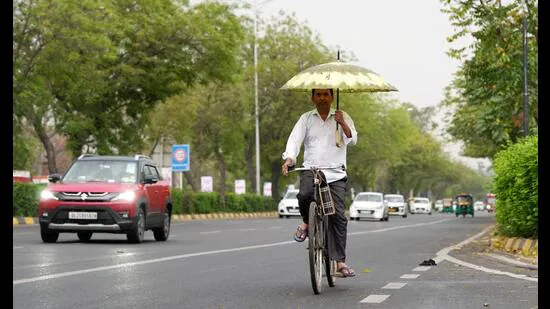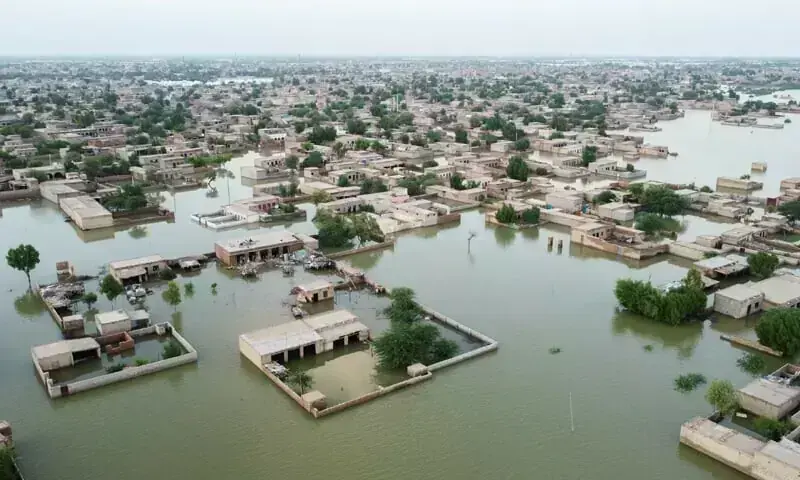
Anthropologist Anna Tsing writes, “Anthropocene, <is> the epoch in which human disturbance outranks other geological forces…..although some interpreters see the name as implying the triumph of humans, the opposite seems more accurate: without planning or intention, humans have made a mess of our planet.” It is in this precise predicament that India finds itself: environmental damage has slipped beyond intention and control, belonging to no one entirely and to everyone at once.An unfolding crisisA survey by the Yale School of the Environment of 10,751 Indians (December 2024-February 2025) found that most respondents had experienced at least one extreme event, including heat waves (71%), agricultural pests and diseases (60%), power outages (59%), water pollution (53%), droughts and water shortages (52%), and air pollution (52%). Based on Indian meteorological department and State of India’s Environment findings, nearly half of the 37% of 870 river-monitoring stations recorded alarming levels of toxic heavy metals. Air pollution in 2022 reduced average life expectancy by about three years, while some parts of the country experienced extreme weather for nearly 88% of the year. The Desertification and Land Degradation Atlas of India estimates that 29.7% of the country’s land is degraded. Yet, despite this mounting environmental crisis, India still lacks a comprehensive understanding of the state of its environment.In India, the environment sits on the back bench — starved of funds, with only 0.07% of the annual budget allocated to the Ministry of Environment, Forest and Climate Change (MoEFCC), understaffed, and intellectually neglected. Its custodians often work in silos with overlapping jurisdictions. The result is ignorance masquerading as knowledge. The MoEFCC’s annual reports outline forest-restoration initiatives such as the National Afforestation Programme (NAP) and REDD+ (reducing emissions from deforestation and forest degradation in developing countries ‘+’ additional forest-related activities that protect the climate), yet say little about the scale of State-wise deforestation, its impact on biodiversity and livelihoods, or the country’s preparedness for future environmental challenges. Beyond these omissions, the reports often obscure the nuances behind impressive plantation figures, sidestep scrutiny of fund utilisation and environmental compliance, and overlook findings from global assessments.The case for EnvSIMuch of this information is already measured by governments, think tanks, educational institutions and private actors, but it remains fragmented. What is missing is not data, but a system that brings it together. The remedy is to have an Annual Environmental Survey of India (EnvSI): a unified platform that aggregates evidence, conducts independent audits, issues actionable assessments and grades performance. EnvSI must provide an unsparing account of environmental reality — however uncomfortable. The objective is not merely to document what has been lost, but to identify what can still be protected.Drafting an EnvSI would require a clear statutory mandate, functional autonomy and protected tenure for an expert-led body. It should integrate data from government agencies, independent researchers, the private sector and field-based evidence. Its methodology must combine quantitative indicators with livelihood assessments, using cross-verified datasets and rigorous analysis. Some may question the cost.The answer is simple: the cost of not doing it is far greater, and doing it would bring some reason to the redundancy of surveying efforts. An EnvSI could deliver four key benefits. First, it would help prevent further environmental degradation, temper climate-driven disasters, and build resilient responses through coordinated action and better resource use. Second, it would support the timely achievement of climate targets, enhance credibility and unlock climate finance. Third, it would better align economic development with conservation, while protecting tribal rights, traditional livelihoods and the interests of displaced communities. Finally, it would strengthen the commons by recognising and safeguarding the interdependence between ecosystems, species and human societies.Finally, the template for an EnvSI already exists. The Economic Survey of India offers the Environment Ministry its clearest model: an integrated report prepared by experts under the Chief Economic Adviser, independent enough to present inconvenient truths. It draws on multiple sources, rigorously scrutinises evidence, rejects comforting narratives, and alerts policymakers to emerging challenges and necessary reforms. India constantly faces difficult trade-offs between development and conservation.Keeping nature in sightHome to one-sixth of humanity on just 4% of the earth’s land area, India must pursue growth while meeting climate commitments. In such circumstances, environmental concerns are often pushed to the margins. An independent and audacious EnvSI can help balance growth, sustainability, livelihoods and justice. Without India’s full commitment, global climate goals will remain elusive. More importantly, an EnvSI can make visible the environmental changes that have become normalised, helping build the awareness needed to protect what remains.Saumya Gupta is a Doctoral researcher, Anthropology Department,University of Amsterdam. Thirunavukarasu S. is Junior Research fellow, Department of Defence and Strategic Studies, University of Madras
A national environmental survey whose time came
An Annual Environmental Survey of India, or EnvSI, can make visible the environmental changes that have become normalised, helping build the awareness needed to protect what remains
769 words~3 min read