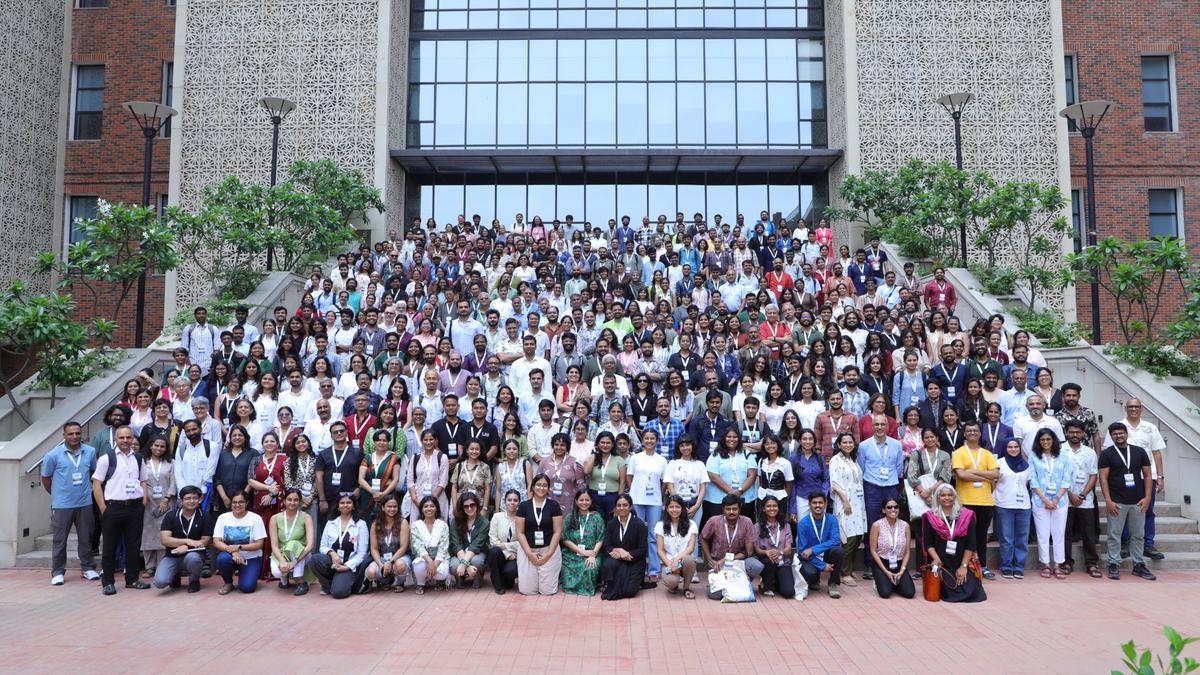
Wildlife ecology in India looks different today than it did a decade ago. Climate change, habitat fragmentation, invasive species, and rapid development are all reshaping ecosystems faster than scholars can document them. Thus, ecologists are interested in how biodiversity has changed as well as how it is likely to change next.Just these questions shaped the second Indian Wildlife Ecology Conference (IWEC), at Ashoka University in Sonepat, Haryana, on July 10-12, where researchers from across India came together to discuss the future of wildlife ecology in the country. Conceived by the late wildlife biologist Ajith Kumar as a national platform for India’s wildlife ecologists to exchange ideas, IWEC has grown into a forum where researchers from universities, government agencies, NGOs, and field stations together figure out where the discipline is heading — using insights into evolutionary history, long-term monitoring, public policy, technology, and public health.The inaugural conference, held in 2024, demonstrated the breadth of this community. At the second conference, this year, the participants repeatedly returned to the same question: how can ecologists anticipate ecological change? As Indian ecology reaches towards prediction across biological scales, disciplines, and even the divide between science and policy, much of that ambition still depends on staying close to the ground, to fieldwork and local institutions.Biodiversity at scale
A new era of Indian ecology looks to its horizons, and to the ground
Discover how India's wildlife ecology is evolving amidst climate change, habitat loss, and innovative research at the second IWEC conference.
1,546 words~7 min read