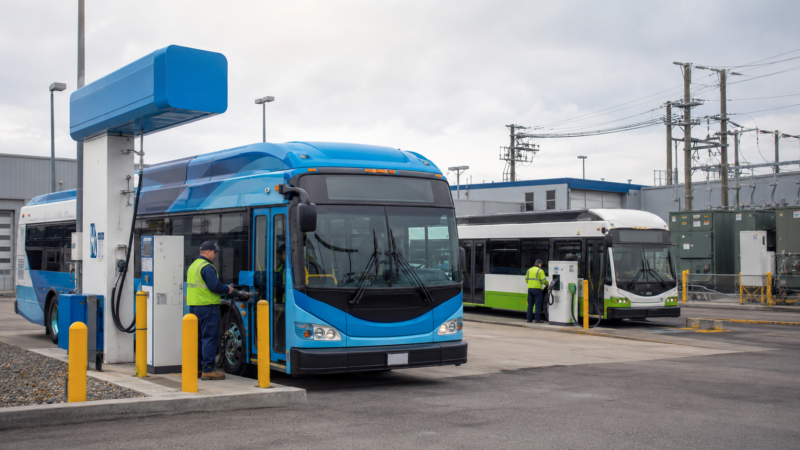
Hydrogen buses may look operationally familiar, but the procurement risk sits in the fuel supply, depot infrastructure, maintenance depth, uptime, and long-term cost.
Support CleanTechnica's work through a Substack subscription or on Stripe.
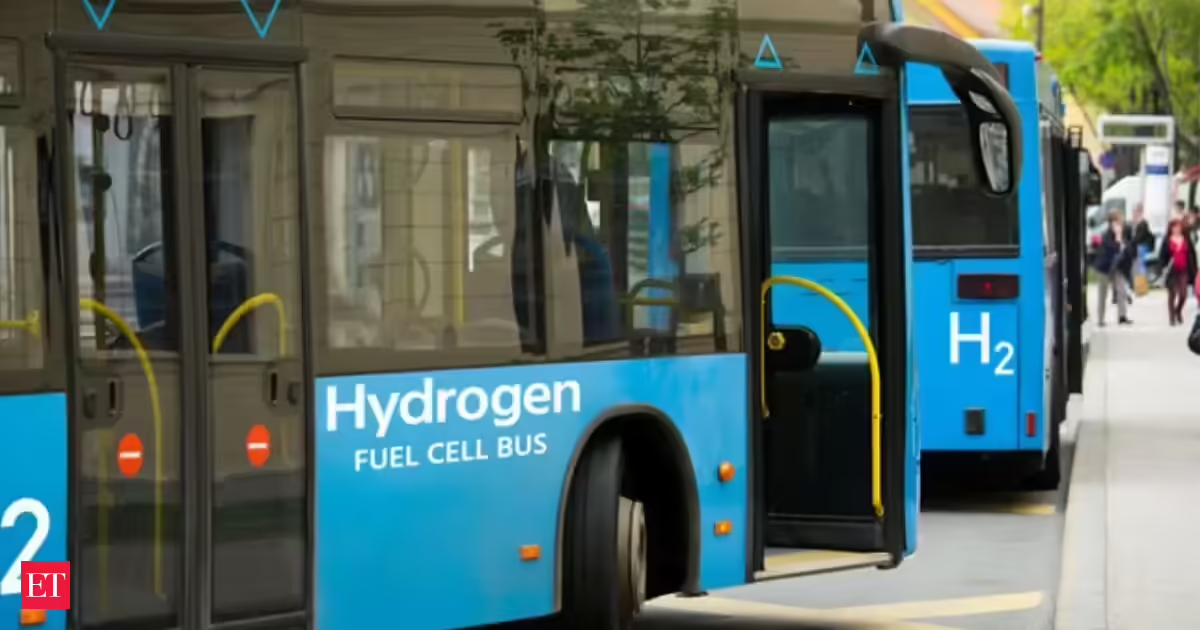
Hydrogen buses are real. They can carry passengers, complete routes, refuel, and operate in public transit fleets. That much has been demonstrated often enough that it is no longer the useful question. The useful question for transit agencies is whether hydrogen is a better procurement choice than battery-electric buses once the full system around the vehicle is included.
A transit agency is not buying a demonstration route, a technology press release, or a zero-emissions label on the side of a bus. It is buying 12 to 15 years of service reliability under operating-budget pressure, political scrutiny, maintenance constraints, and rider expectations. That is why the relevant comparison is not fuel-cell bus versus diesel bus in isolation, but hydrogen bus system versus battery-electric bus system over the life of the fleet.
That is the core of my deeper TFIE Strategy Briefing assessment of hydrogen bus procurement risk. The vehicle is the visible part of the decision, but the risk sits in the operating model around it. Hydrogen has to be made or sourced, compressed or liquefied, delivered, stored, and dispensed safely. The agency also has to deal with fuel quality, station maintenance, technician capability, stack warranties, parts supply, supplier durability, emergency procedures, contract terms, fuel carbon intensity, and eventual decommissioning. None of those are theoretical concerns, and all of them matter when buses are expected to be available every day.