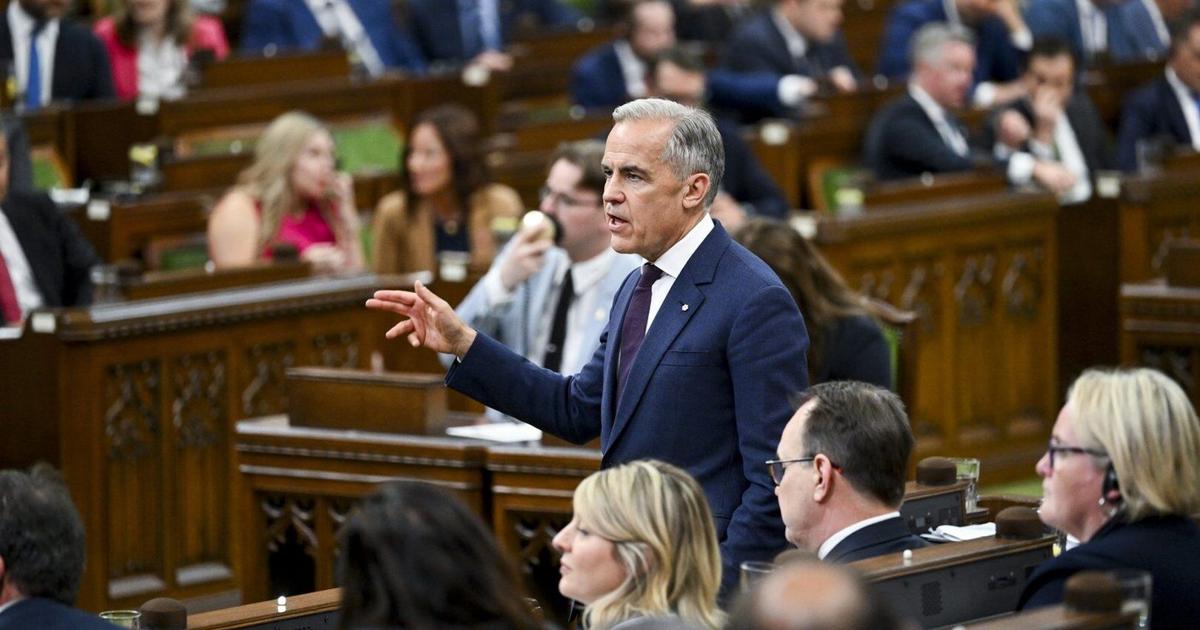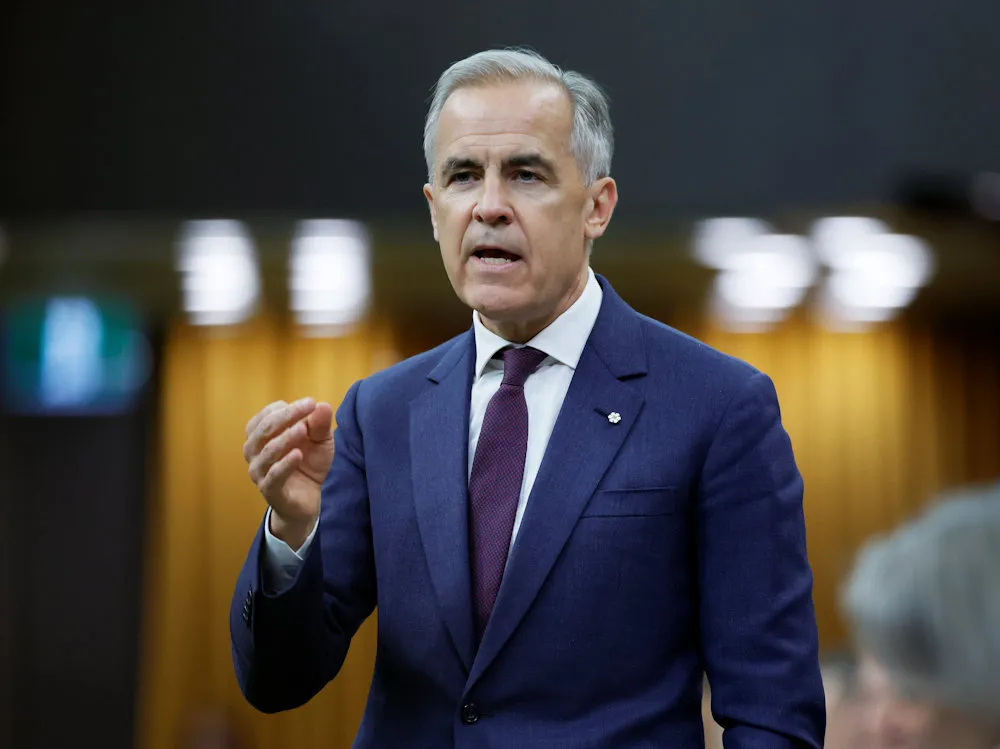
Skip to Content Subscribe Our Offers My Account Manage My Subscriptions FAQ Newsletters Canada Canadian True Crime Canadian Politics Health World Israel & Middle East Financial Post NP Comment Longreads Puzzmo Diversions Comics NP News Quiz New York Times Crossword Horoscopes Life Eating & Drinking Style Sponsored Play for Ontario Travel Travel Canada Travel USA Travel International Cruises Travel Essentials Culture Books Celebrity Movies Music Theatre Television Business Essentials Advice Lives Told Tails Told Shopping Buy Canadian Home Living Outdoor Living Tech Style & Beauty Kitchen & Dining Personal Care Entertainment & Hobbies Gift Guide Travel Guide Deals Savings National Post Store More Sports Hockey Baseball Basketball Football Soccer Golf Tennis Driving Vehicle Research Reviews News Gear Guide Obituaries Place an Obituary Place an In Memoriam Classifieds Place an Ad Celebrations Working Business Ads Archives Healthing Epaper Manage Print Subscription Profile Settings My Subscriptions Saved Articles My Offers Newsletters Customer Service FAQ Newsletters Canada World Financial Post NP Comment Longreads Puzzmo Diversions Life Shopping Epaper Manage Print Subscription HomeNP CommentFIRST READING: Immigration has been artificially juicing Canadian GDP the whole timeMark Carney recently declared that lower immigration has likely precipitated Canada's slide into recession You can save this article by registering for free here. Or sign-in if you have an account.Prime Minister Mark Carney speaks during Question Period in the House of Commons on Parliament Hill in Ottawa June 3, 2026. Photo by Photo by Blair Gable/PostmediaFirst Reading is a Canadian politics newsletter curated by the National Post’s own Tristin Hopper. To get an early version sent directly to your inbox, sign up here.Enjoy the latest local, national and international news.Exclusive articles by Conrad Black, Barbara Kay and others. Plus, special edition NP Platformed and First Reading newsletters and virtual events.Unlimited online access to National Post.National Post ePaper, an electronic replica of the print edition to view on any device, share and comment on.Daily puzzles including the New York Times Crossword.Support local journalism.Enjoy the latest local, national and international news.Exclusive articles by Conrad Black, Barbara Kay and others. Plus, special edition NP Platformed and First Reading newsletters and virtual events.Unlimited online access to National Post.National Post ePaper, an electronic replica of the print edition to view on any device, share and comment on.Daily puzzles including the New York Times Crossword.Support local journalism.Create an account or sign in to continue with your reading experience.Access articles from across Canada with one account.Share your thoughts and join the conversation in the comments.Enjoy additional articles per month.Get email updates from your favourite authors.Create an account or sign in to continue with your reading experience.Access articles from across Canada with one accountShare your thoughts and join the conversation in the commentsEnjoy additional articles per monthGet email updates from your favourite authorsSign In or Create an AccountorWhen asked about Canada’s official slide into recession, Prime Minister Mark Carney attributed it in part to his government’s dial down of immigration.“We see some weakness, in part because of clear decisions by the government,” he told reporters on Tuesday, before noting his government’s lowered immigration targets.The comment reveals something about the Canadian economy that analysts and critics have been warning about for years.This newsletter from NP Comment tackles the topics you care about. (Subscriber-exclusive edition on Fridays)By signing up you consent to receive the above newsletter from Postmedia Network Inc.We encountered an issue signing you up. Please try againNamely, that Canada’s post-COVID economic growth has been predominantly based on packing unprecedented numbers of new consumers into the country.As such, when weighing the growth of the Canadian economy against the outsized growth of the Canadian population, the country has already been in a “per-capita recession” for much of the last four years.It’s a term that CIBC Deputy Chief Economist Benjamin Tal used in October, telling a conference in Ottawa that Canada was already in recession. “If it’s not a formal recession, it’s a per-capita recession,” he said.GDP is a measure of total economic activity. So while it can track whether a country is becoming richer and more productive, it can also increase simply if the number of consumers in an economy is getting larger.Every migrant to Canada consumes shelter, food and services in some capacity, all of which gets added to total GDP figures without necessarily signaling a growth in overall economic health.In 2024, for instance, Canadian GDP grew by 1.6 per cent. But population grew by 1.8 per cent, fuelled by record-breaking surges in everything from temporary foreign workers to asylum seekers to foreign students to permanent residents.The net result was a year in which per-capita GDP went down, which is generally an indicator that overall living standards are on the decline.“Our GDP per capita has been on the decline for two years,” Jasraj Singh Hallan, the Conservatives’ shadow finance minister, told the House of Commons in November 2024. He added, “in simple terms, Canadians are getting poorer.”The Bank of Canada would admit as much in 2025. After a year that saw GDP grow by 1.7 per cent, the central bank concluded in a monetary policy report that the growth in wealth was “essentially flat on a per-person basis.”The Fraser Institute has called this phenomenon Canada’s “ugly” growth experience.Across 2020 and 2024, the institute calculated in a 2025 report that Canada’s aggregate GDP growth was 1.5 per cent per year, working out to total growth of about six per cent over the four years.Population, meanwhile, went from 39 million to 41.5 million, an increase of 6.4 per cent.By living in a country where the population was growing faster than the economy, Canadians over this period suffered a two per cent reduction to their share of GDP, which the Fraser Institute called “the worst five-year decline since the Great Depression.”A new Abacus Data poll has just charted Liberal support at highs not seen since the 1990s. The government of Prime Minister Mark Carney posted an approval rating of 59 per cent, with 47 per cent of respondents expressing their intention to vote Liberal against, against 35 per cent for the Conservatives.“This is the highest approval rating we have ever registered for the federal government,” read an accompanying note.And it’s notable that the figures are from Abacus Data, which has generally been more bullish on Tory prospects. As recently as January, Abacus was putting the Liberals and Conservatives in a statistical tie.A new Postmedia-Leger poll, meanwhile, found Liberal support at 50 per cent against 34 per cent for the Conservatives. It’s the highest level of Liberal support tracked by Leger since 2003, just after then prime minister Jean Chrétien announced Canada would not be joining the U.S.-led invasion of Iraq.The whole phenomenon is what National Post columnist Kelly McParland has called the “Carney paradox.” On the basic metrics, Carney’s government is not doing particularly well, including on some things he very explicitly said would be better.As one example, despite Carney’s electoral promise to make Canada the “the fastest growing economy in the G7,” a year later it is now the only G7 country in recession.“A year and a bit into the job, the bulk of Carney’s accomplishments remain the Trudeau policies and posturing he’s jettisoned, rather than the results he’s produced,” wrote McParland.And yet, none of these metrics have prevented Carney from becoming the most popular prime minister of the last 50 years, with his level of sustained personal popularity close to eclipsing anything experienced by his last three predecessors.First Reading is a Canadian politics newsletter curated by the National Post’s own Tristin Hopper. To get an early version sent directly to your inbox, sign up here. Get the latest from Tristin Hopper straight to your inbox Join the Conversation This website uses cookies to personalize your content (including ads), and allows us to analyze our traffic. Read more about cookies here. By continuing to use our site, you agree to our Terms of Use and Privacy Policy.
FIRST READING: Immigration has been artificially juicing Canadian GDP the whole time
Mark Carney recently declared that lower immigration has likely precipitated Canada's slide into recession.
1,307 words~6 min read