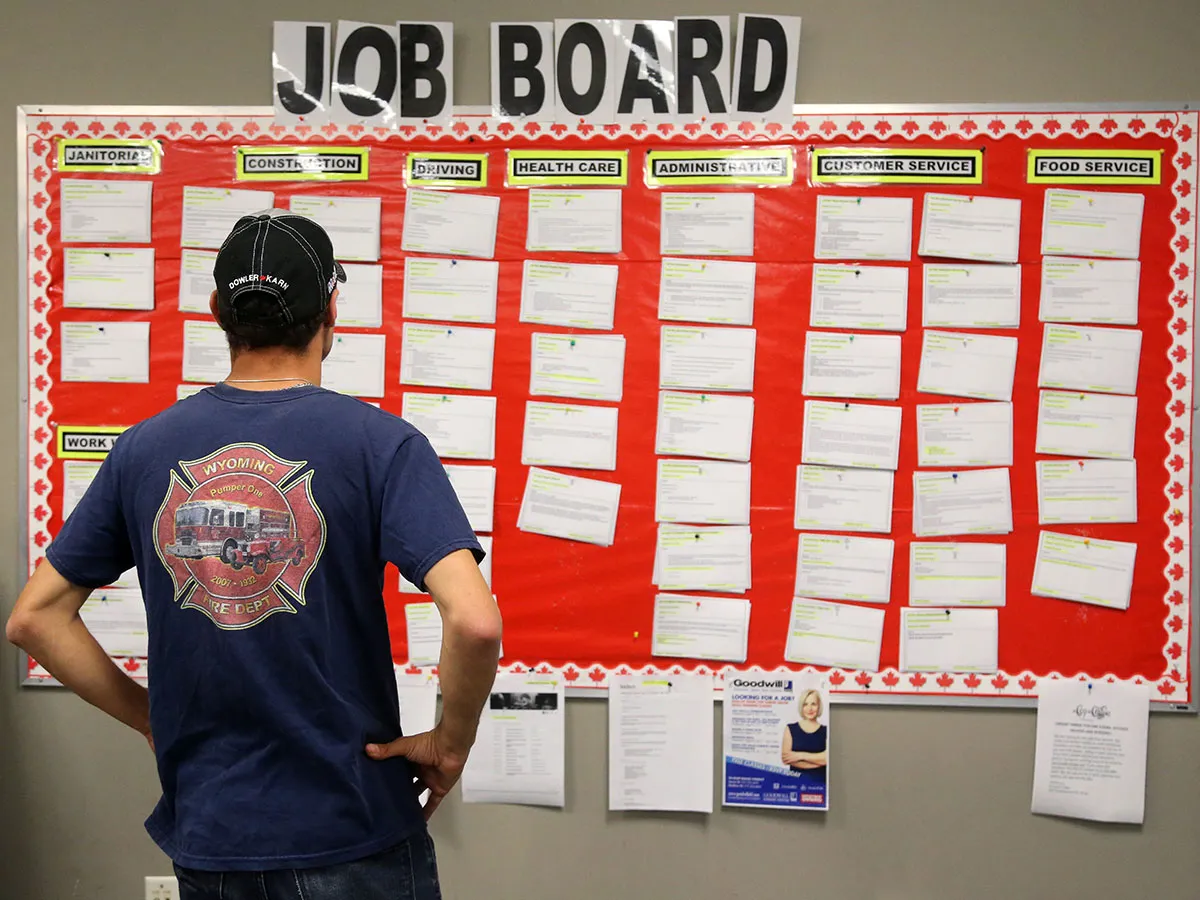
Skip to Content News Archives Economy Energy Oil & Gas Renewables Electric Vehicles Mining Commodities Agriculture Real Estate Mortgages Mortgage Rates Finance Banking Insurance Fintech Cryptocurrency Work Wealth Smart Money Wealth Management Investor Personal Finance Family Finance Retirement Taxes High Net Worth FP Comment Executive Women Puzzmo Newsletters Financial Times Business Essentials More Innovation Information Technology FP500 Podcasts Small Business Lives Told Tails Told Shopping Financial Post Store Obituaries Place a Notice Advertising Advertising With Us Advertising Solutions Postmedia Ad Manager Sponsorship Requests Classifieds Place a Classifieds ad Working Profile Settings My Subscriptions Saved Articles My Offers Newsletters Customer Service FAQ News Economy Energy Mining Real Estate Finance Work Wealth Investor FP Comment Executive Women Puzzmo Newsletters Financial Times Business Essentials HomeNewsPosthaste: Canada's in a 'demographic recession.' Should we be worried?Actually, things aren't as bad as they lookLast updated 52 minutes ago You can save this article by registering for free here. Or sign-in if you have an account.Canada's population is declining for the first time since the 1950s. Photo by Peter J Thompson/National PostSubscribe now to read the latest news in your city and across Canada.Exclusive articles from Barbara Shecter, Joe O'Connor, Gabriel Friedman, and others.Daily content from Financial Times, the world's leading global business publication.Unlimited online access to read articles from Financial Post, National Post and 15 news sites across Canada with one account.National Post ePaper, an electronic replica of the print edition to view on any device, share and comment on.Daily puzzles, including the New York Times Crossword.Subscribe now to read the latest news in your city and across Canada.Exclusive articles from Barbara Shecter, Joe O'Connor, Gabriel Friedman and others.Daily content from Financial Times, the world's leading global business publication.Unlimited online access to read articles from Financial Post, National Post and 15 news sites across Canada with one account.National Post ePaper, an electronic replica of the print edition to view on any device, share and comment on.Daily puzzles, including the New York Times Crossword.Create an account or sign in to continue with your reading experience.Access articles from across Canada with one account.Share your thoughts and join the conversation in the comments.Enjoy additional articles per month.Get email updates from your favourite authors.Create an account or sign in to continue with your reading experience.Access articles from across Canada with one accountShare your thoughts and join the conversation in the commentsEnjoy additional articles per monthGet email updates from your favourite authorsSign In or Create an AccountorCanada’s headcount is getting smaller, Statistic Canada has confirmed. Data out yesterday showed that the population has now fallen for a third straight quarter — the first declines on record since the 1950s — bringing the national headcount down by 0.5 per cent from a year ago.It’s a big change from the population boom following the pandemic and marks the federal government’s efforts to put a brake on the runaway growth that was straining the nation’s resources.But what does this “demographic recession” mean for the economy?Breaking business news, incisive views, must-reads and market signals. Weekdays by 9 a.m.By signing up you consent to receive the above newsletter from Postmedia Network Inc.A welcome email is on its way. If you don't see it, please check your junk folder.The next issue of Posthaste will soon be in your inbox.We encountered an issue signing you up. Please try againAccording to National Bank of Canada strategist Taylor Schleich and economist Daren King, declining population changes Canada’s “macro math” and could influence the outlook for the Bank of Canada. The biggest change is that economic growth is stronger than it appears, they said.While real gross domestic product has now contracted for two straight quarters, raising fears of recession, GDP per person has turned positive, expanding by almost 1 per cent in the first quarter.With growth expected to pick up in the second quarter, GDP per capita could rise by almost 3 per cent, the fastest rate since 2022, said the National Bank team.Economists with the Royal Bank of Canada explain that swings in population growth have disrupted traditional interpretations of data.Between 2023 and 2024, GDP per capita swooned while headline GDP “was overstating economic health.”“Now the opposite is true: Headline GDP looks worse than reality, while Canada’s in early-stage recovery from a soft patch that began in early 2023,” said senior economist Claire Fan.Job numbers are also heavily distorted by population growth, say economists. And again when you account for the unprecedented slowing in population growth, the numbers look more positive.“Fewer residents mean fewer potential workers so flat monthly job readings no longer deserve an immediate negative assessment,” said Schleich and King.Breakeven job growth — the pace of hiring needed to keep the unemployment rate steady — is now below 10,000 new positions, based on the latest Labour Force Survey, and this explains why sluggish hiring has not pushed the jobless rate higher over the past year.“To be sure, flatlining employment is nothing to get excited about, but it does mean that job market slack has stopped accumulating,” they said.Lastly — and this is where the Bank of Canada comes in — declining population is disinflationary because it lowers demand. Fewer people buying homes or renting apartments has contributed to the slump in home prices and rents that will eventually show up in the consumer price index.“It means more core inflation relief is coming and that the odds of a quick pivot [by the Bank of Canada] to tighter monetary policy are low as trade uncertainty continues to weigh,” said Schleich and King.Sign up here to get Posthaste delivered straight to your inbox. BofA Global ResearchMarket peak, take profit or panic?According to the BofA Global Fund Manager Survey, 56 per cent of panellists said AI stocks are in the “Boom” stage where prices gain momentum and fear of missing out brings in more participants.More than 20 per cent, however, thought they had already reached “Euphoria,” where prices and valuations “skyrocket to extremes.”Much smaller shares saw AI stocks in the profit-taking stage — where institutional investors start to sell in anticipation of the bubble pop — and the displacement stage where “new trend or innovation attracts investor interest.”Panic — a loss of confidence that sparks plummeting prices and widespread selling — attracted zero votes.Strategist Michael Hartnett’s report entitled Frozen bulls said investors remain steadfastly bullish though a “tad less” so than in May as cash levels have climbed to 4.1 per cent from 3.9.The BofA survey polls 198 panellists with US$540 billion assets under management.Today’s Data: Canada industrial product and raw materials price indicesEarnings: Empire Co. Ltd., Kroger Co.Thinking of hitching a free ride on the corporate jet this weekend? Be forewarned – unless you’re travelling for work, the Canada Revenue Agency’s view is that you’ve enjoyed a taxable benefit, either as a shareholder (if you own the company) or as an employee. But how should that benefit be valued for tax purposes? Tax expert Jamie Golombek dives into a recent Quebec tax case that dealt with exactly that question. Find out more.Interested in energy? The subscriber-only FP West: Energy Insider newsletter brings you exclusive reporting and in-depth analysis on one of the country’s most important sectors.Are you worried about having enough for retirement? Do you need to adjust your portfolio? Are you starting out or making a change and wondering how to build wealth? Are you trying to make ends meet? Drop us a line at wealth@postmedia.com with your contact info and the gist of your problem and we’ll find some experts to help you out while writing a Family Finance story about it (we’ll keep your name out of it, of course).Want to learn more about mortgages? Mortgage strategist Robert McLister’s Financial Post column can help navigate the complex sector, from the latest trends to financing opportunities you won’t want to miss. Plus check his mortgage rate page for Canada’s lowest national mortgage rates, updated daily.Visit the Financial Post’s YouTube channel for interviews with Canada’s leading experts in business, economics, housing, the energy sector and more.Today’s Posthaste was written by Pamela Heaven with additional reporting from Financial Post staff and Bloomberg.Have a story idea, pitch, embargoed report, or a suggestion for this newsletter? Email us at posthaste@postmedia.com.Bookmark our website and support our journalism: Don’t miss the business news you need to know — add financialpost.com to your bookmarks and sign up for our newsletters here Join the Conversation This website uses cookies to personalize your content (including ads), and allows us to analyze our traffic. Read more about cookies here. By continuing to use our site, you agree to our Terms of Use and Privacy Policy.
Posthaste: Canada's in a 'demographic recession.' Should we be worried?
Canada's population has now fallen for a third straight quarter, but economists say the impact on the economy might surprise you. Read more
1,427 words~6 min read