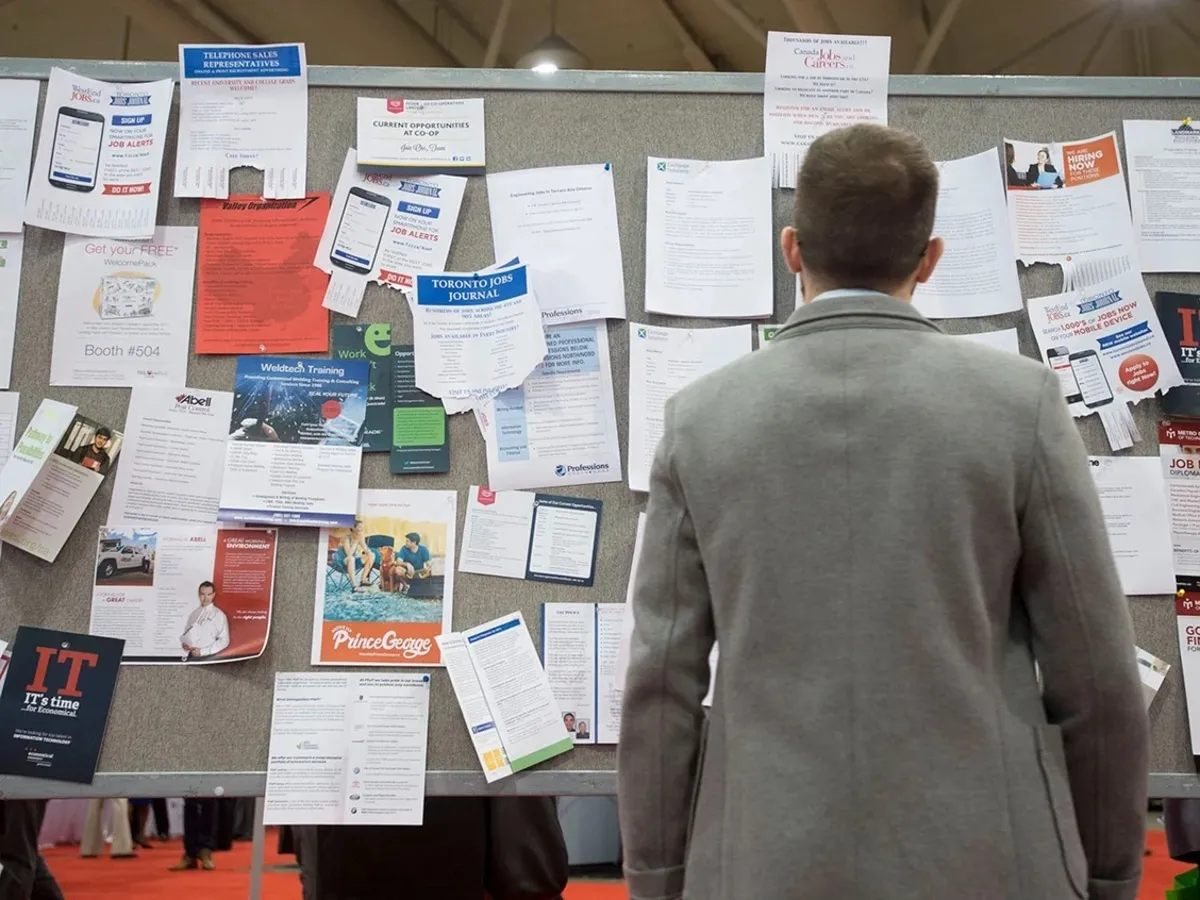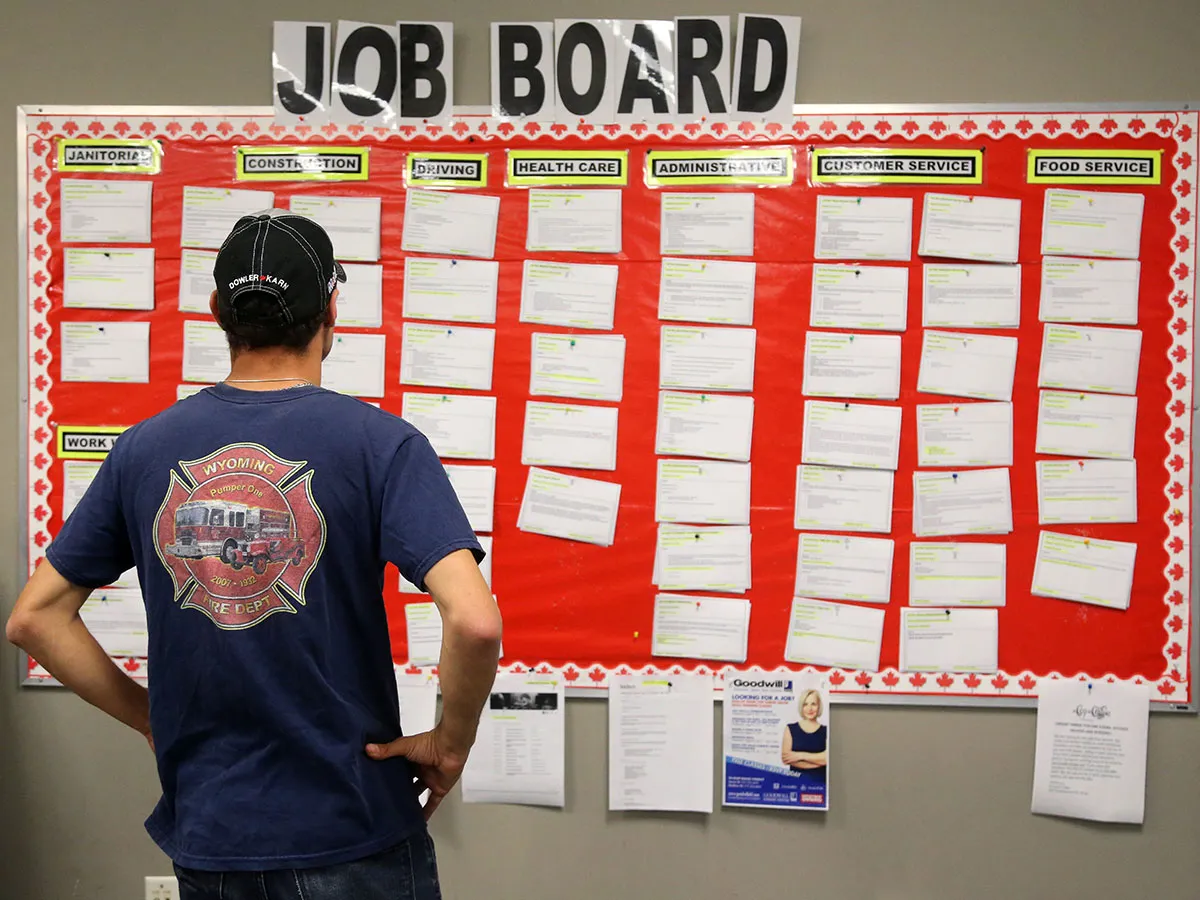
Skip to Content News Archives Economy Energy Oil & Gas Renewables Electric Vehicles Mining Commodities Agriculture Real Estate Mortgages Mortgage Rates Finance Banking Insurance Fintech Cryptocurrency Work Wealth Smart Money Wealth Management Investor Personal Finance Family Finance Retirement Taxes High Net Worth FP Comment Executive Women Puzzmo Newsletters Financial Times Business Essentials More Innovation Information Technology FP500 Podcasts Small Business Lives Told Tails Told Shopping Financial Post Store Obituaries Place a Notice Advertising Advertising With Us Advertising Solutions Postmedia Ad Manager Sponsorship Requests Classifieds Place a Classifieds ad Working Profile Settings My Subscriptions Saved Articles My Offers Newsletters Customer Service FAQ News Economy Energy Mining Real Estate Finance Work Wealth Investor FP Comment Executive Women Puzzmo Newsletters Financial Times Business Essentials HomeNewsPosthaste: Brace for the coming labour squeeze as 25,500 Canadians retire every monthCanada's workforce will shrink more than its population for first time this year You can save this article by registering for free here. Or sign-in if you have an account.Already early signs of labour shortages have begun to emerge. Photo by Tim Boyle/Getty ImagesSubscribe now to read the latest news in your city and across Canada.Exclusive articles from Barbara Shecter, Joe O'Connor, Gabriel Friedman, and others.Daily content from Financial Times, the world's leading global business publication.Unlimited online access to read articles from Financial Post, National Post and 15 news sites across Canada with one account.National Post ePaper, an electronic replica of the print edition to view on any device, share and comment on.Daily puzzles, including the New York Times Crossword.Subscribe now to read the latest news in your city and across Canada.Exclusive articles from Barbara Shecter, Joe O'Connor, Gabriel Friedman and others.Daily content from Financial Times, the world's leading global business publication.Unlimited online access to read articles from Financial Post, National Post and 15 news sites across Canada with one account.National Post ePaper, an electronic replica of the print edition to view on any device, share and comment on.Daily puzzles, including the New York Times Crossword.Create an account or sign in to continue with your reading experience.Access articles from across Canada with one account.Share your thoughts and join the conversation in the comments.Enjoy additional articles per month.Get email updates from your favourite authors.Create an account or sign in to continue with your reading experience.Access articles from across Canada with one accountShare your thoughts and join the conversation in the commentsEnjoy additional articles per monthGet email updates from your favourite authorsSign In or Create an AccountorCanada’s workforce is shrinking, as record numbers of older Canadians retire and fewer younger workers step up to replace them.For the first time on record, outside the pandemic, the nation’s workforce will shrink more than the population this year, according to a new report from Royal Bank of Canada. As the last of that historically huge generation, the baby boomers, nears retirement age, the number of older Canadians leaving the workforce has hit record highs.Roughly 0.12 per cent of the workforce are retiring each month, about 25,500 workers, said RBC. That’s nearly double the number two decades ago.Breaking business news, incisive views, must-reads and market signals. Weekdays by 9 a.m.By signing up you consent to receive the above newsletter from Postmedia Network Inc.A welcome email is on its way. If you don't see it, please check your junk folder.The next issue of Posthaste will soon be in your inbox.We encountered an issue signing you up. Please try again“The youngest baby boomers will turn 65 in 2029 …, so the current wave of retirements has further room to run,” said RBC economists Nathan Janzen and Annie Zheng in the report. “That wave may have peaked, but it has not yet crested, and likely won’t into the 2030s.”The reality is these workers are not being replaced.Births have fallen sharply since the baby boom following the Second World War and have been below replacement rates for decades, said the report.Population aging has already reduced the labour force participation rate — the share of the population either working or looking for a job — by 4.5 percentage points from a decade ago.“It will continue to push the share of the population available to work lower in the decade ahead,” said the report.This won’t pose a challenge for businesses in the near term (see Leading Indicator below) because trade disruptions and the weaker economy have kept the unemployment rate high. But once this “unusually high level of unemployment is absorbed” labour shortages will loom.The RBC report highlights how much Canada, like other advanced nations, relies on immigration to feed its labour force.Government caps on newcomers initiated in 2024 have curbed population growth, and these restrictions are expected to be relaxed by 2027 as the number of temporary residents in the country approaches Ottawa’s targets.However, that’s “not likely enough to fully offset structural labour supply headwinds in the future,” said RBC.Already early signs of labour shortages have begun to emerge.About a fifth of businesses in the Bank of Canada’s quarterly outlook survey reported them and said they expected them to get worse.Canadian Federation of Independent Business surveys found that 17 per cent of businesses had trouble finding unskilled or semi-skilled workers, a rate that is nearing pre-pandemic norms even while the jobless rate remains high.Today’s high unemployment rate gives policy makers room to cap immigration for now, said the economists, “but under the surface, longer-run structural headwinds against labour supply are building.”Sign up here to get Posthaste delivered straight to your inbox.Behold the no-hire, no-fire job market.Today’s chart from BMO Capital Markets shows how labour demand in Canada has flatlined, with combined payrolls and job openings little changed from a year ago — even three years ago. BMO senior economist Robert Kavcic said Canada’s labour force growth has also been flat because of the drop in immigration, keeping the unemployment rate fairly steady.“Still, this just highlights the nature of the job market in Canada right now: Not a lot of hiring, not a lot of firing,” he said. “In this environment, firms will have to squeeze more productivity out of existing workforces.”Vancouver home salesEarnings: Dollar General Corp., Palo Alto Networks Inc.The tax-free savings account (TFSA) is a no-brainer for millions of Canadians looking to save money. The rules are seemingly straightforward: You make after-tax contributions annually within your contribution limit, the funds are invested tax-free, potentially forever, and if you withdraw them, or you die, they also come out tax-free. What can possibly go wrong? Tax expert Jamie Golombek explains how two taxpayers in trouble with CRA over TFSAs got their day in court. One went well, the other did not. Find out moreInterested in energy? The subscriber-only FP West: Energy Insider newsletter brings you exclusive reporting and in-depth analysis on one of the country’s most important sectors.Are you worried about having enough for retirement? Do you need to adjust your portfolio? Are you starting out or making a change and wondering how to build wealth? Are you trying to make ends meet? Drop us a line at wealth@postmedia.com with your contact info and the gist of your problem and we’ll find some experts to help you out while writing a Family Finance story about it (we’ll keep your name out of it, of course).Want to learn more about mortgages? Mortgage strategist Robert McLister’s Financial Post column can help navigate the complex sector, from the latest trends to financing opportunities you won’t want to miss. Plus check his mortgage rate page for Canada’s lowest national mortgage rates, updated daily.Visit the Financial Post’s YouTube channel for interviews with Canada’s leading experts in business, economics, housing, the energy sector and more.Today’s Posthaste was written by Pamela Heaven with additional reporting from Financial Post staff and Bloomberg.Have a story idea, pitch, embargoed report, or a suggestion for this newsletter? Email us at posthaste@postmedia.com.Bookmark our website and support our journalism: Don’t miss the business news you need to know — add financialpost.com to your bookmarks and sign up for our newsletters here Join the Conversation This website uses cookies to personalize your content (including ads), and allows us to analyze our traffic. Read more about cookies here. By continuing to use our site, you agree to our Terms of Use and Privacy Policy.
Posthaste: Brace for the coming labour squeeze as 25,500 Canadians retire every month
Canada's workforce will shrink more than the population this year, for the first time outside the pandemic, says RBC. Read more
TL;DRAI
Canada loses 25,500 workers monthly—double the 20-year rate. Workforce shrinks faster than population outside pandemic for the first time. Retirements peak through 2030s; labour shortage forces talent wars despite immigration curbs as unemployment clears.
1,360 words~6 min read