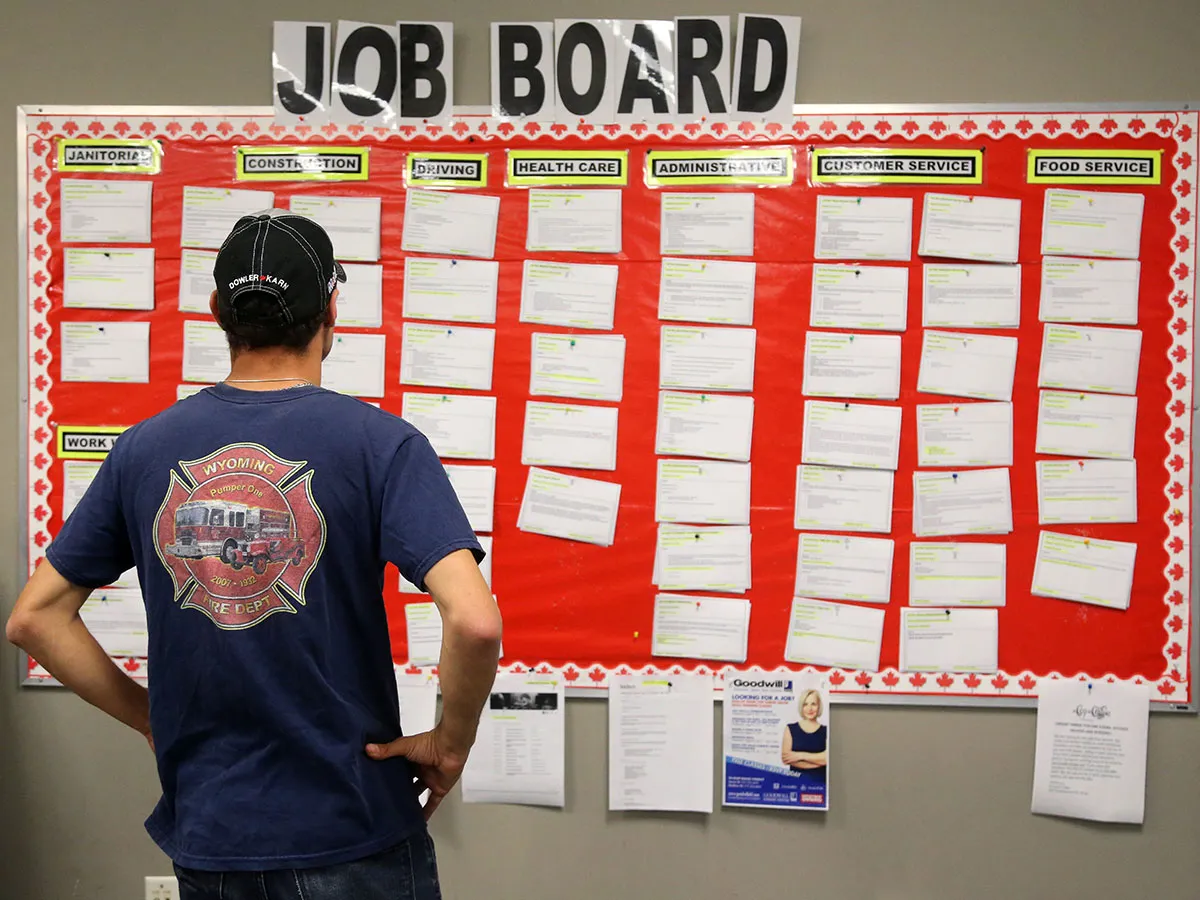
Skip to Content News Archives Economy Energy Oil & Gas Renewables Electric Vehicles Mining Commodities Agriculture Real Estate Mortgages Mortgage Rates Finance Banking Insurance Fintech Cryptocurrency Work Wealth Smart Money Wealth Management Investor Personal Finance Family Finance Retirement Taxes High Net Worth FP Comment Executive Women Puzzmo Newsletters Financial Times Business Essentials More Innovation Information Technology FP500 Podcasts Small Business Lives Told Tails Told Shopping Financial Post Store Obituaries Place a Notice Advertising Advertising With Us Advertising Solutions Postmedia Ad Manager Sponsorship Requests Classifieds Place a Classifieds ad Working Profile Settings My Subscriptions Saved Articles My Offers Newsletters Customer Service FAQ News Economy Energy Mining Real Estate Finance Work Wealth Investor FP Comment Executive Women Puzzmo Newsletters Financial Times Business Essentials HomeNewsWorkPosthaste: Why Canada's job market might not be as bad as it looksOur economy hasn't lost this many jobs in the first four months of the year since the Great Recession. Should we be worried?Last updated 3 days ago You can save this article by registering for free here. Or sign-in if you have an account."Low hire, low fire" best describes today's labour market, says RBC. Photo by Mike Hensen/Postmedia NetworkSubscribe now to read the latest news in your city and across Canada.Exclusive articles from Barbara Shecter, Joe O'Connor, Gabriel Friedman, and others.Daily content from Financial Times, the world's leading global business publication.Unlimited online access to read articles from Financial Post, National Post and 15 news sites across Canada with one account.National Post ePaper, an electronic replica of the print edition to view on any device, share and comment on.Daily puzzles, including the New York Times Crossword.Subscribe now to read the latest news in your city and across Canada.Exclusive articles from Barbara Shecter, Joe O'Connor, Gabriel Friedman and others.Daily content from Financial Times, the world's leading global business publication.Unlimited online access to read articles from Financial Post, National Post and 15 news sites across Canada with one account.National Post ePaper, an electronic replica of the print edition to view on any device, share and comment on.Daily puzzles, including the New York Times Crossword.Create an account or sign in to continue with your reading experience.Access articles from across Canada with one account.Share your thoughts and join the conversation in the comments.Enjoy additional articles per month.Get email updates from your favourite authors.Create an account or sign in to continue with your reading experience.Access articles from across Canada with one accountShare your thoughts and join the conversation in the commentsEnjoy additional articles per monthGet email updates from your favourite authorsSign In or Create an AccountorCanada’s labour market is off to the worst start since the Great Recession in 2009, (not counting the pandemic) – shedding 112,000 jobs in the first four months. Should we be worried?Not according to economists at Royal Bank of Canada, who say “key hidden trends” are signalling that the nation’s job market is in better shape than it looks.But first the bad news. There’s no denying that Donald Trump’s tariffs have cost jobs in Canada.U.S. demand accounted for 12 per cent of total employment in this country in 2024, said RBC, a percentage that rises to 41 per cent in manufacturing jobs. In the auto industry and aluminum production, the share tops two-thirds.FP Work touches on HR strategy, labour economics, office culture, technology and more.By signing up you consent to receive the above newsletter from Postmedia Network Inc.A welcome email is on its way. If you don't see it, please check your junk folder.The next issue of Work will soon be in your inbox.We encountered an issue signing you up. Please try againEmployment in these sectors has dropped two per cent since February 2025, but the weakness has not spread, said RBC senior economist Claire Fan. In other areas of the economy, employment grew by one per cent over the same period.RBC expects tariffs to continue to pressure these sectors, but believes increased spending by consumers, businesses and governments will support growth in the remaining 90 per cent of jobs that focus on domestic demand.Moreover, the job losses that raised eyebrows in three of the first four months of the year were not due to layoffs. These have fallen 10 per cent between October 2025 and this April.“Low hire, low fire” best describes today’s labour market, said Fan. It’s not so much that people are losing their jobs; it’s just harder to find them. Weak hiring has left many entrants to the job market, especially young Canadians, without work and pushed the share of new jobs to a near record low in April.One encouraging sign is that “hidden unemployment” appears contained. This is when people can only find part-time work or get discouraged and drop out of the workforce altogether.Analyzing the data, RBC found no signs that Canadians, even young job seekers, were giving up on their job searches “en masse.”“Longer job searches are concerning, but they do not flag the same kind of layoff-driven labour market weakness typically seen, for example, at the beginning of a recession,” said Fan.And hiring demand may be picking up, despite the recent uncertainty around the Iran war and rising fuel prices.A recent Canadian Federation of Independent Business survey showed that the number of small and medium-sized businesses expecting to add jobs over the next few months continued to rise in April.Whether that actually translates into job growth remains to be seen, she said, but there is another force at play — slower immigration and an aging population.After the federal government clamped down on the numbers coming into the country in 2025, Canada’s workforce began to age. This spring the labour force participation rate hit its lowest level since 1997, excluding the pandemic, as a record number of Canadians retired.This falling participation rate means that the economy actually needs fewer jobs to keep the unemployment rate steady or declining in the year to come.“Headline labour market data in Canada looks gloomy in 2026, but beneath that lies more encouraging details,” said Fan.RBC forecasts “a gradual downshift” in the jobless rate this year, as domestic demand remains resilient and the labour supply is constrained. Sign up here to get Posthaste delivered straight to your inbox.Canada’s TSX should continue to beat America’s S&P 500 this year, predicts Desjardins Group — though “the performance gap has narrowed.”The strategy team said Canadian equities’ “linkage to hard assets” has helped drive an unprecedented surge in buying, as their chart shows, and earnings expectations remain strong.Their expectations of the S&P 500, however, are “tempered” despite the revival of the artificial intelligence theme.Canada’s big telecom companies gather for The Canadian Telecom Summit today and tomorrowToday’s Data: United States inflation, NFIB Small Business OptimismEarnings: George Weston Ltd., Pet Valu Holdings Ltd., Peyto Exploration & Development, Denison Mines Corp., Finning International Inc., Power Corp of Canada, goeasy Ltd.The flaw in the house-as-retirement-piggy-bank plan is that you have to sell it or borrow against it to access the money. Financial Post columnist Garry Marr looks at whether falling house prices could delay your retirement. Read moreInterested in energy? The subscriber-only FP West: Energy Insider newsletter brings you exclusive reporting and in-depth analysis on one of the country’s most important sectors.Are you worried about having enough for retirement? Do you need to adjust your portfolio? Are you starting out or making a change and wondering how to build wealth? Are you trying to make ends meet? Drop us a line at wealth@postmedia.com with your contact info and the gist of your problem and we’ll find some experts to help you out while writing a Family Finance story about it (we’ll keep your name out of it, of course).Want to learn more about mortgages? Mortgage strategist Robert McLister’s Financial Post column can help navigate the complex sector, from the latest trends to financing opportunities you won’t want to miss. Plus check his mortgage rate page for Canada’s lowest national mortgage rates, updated daily.Visit the Financial Post’s YouTube channel for interviews with Canada’s leading experts in business, economics, housing, the energy sector and more.Today’s Posthaste was written by Pamela Heaven with additional reporting from Financial Post staff, The Canadian Press and Bloomberg.Have a story idea, pitch, embargoed report, or a suggestion for this newsletter? Email us at posthaste@postmedia.com.Bookmark our website and support our journalism: Don’t miss the business news you need to know — add financialpost.com to your bookmarks and sign up for our newsletters here Join the Conversation This website uses cookies to personalize your content (including ads), and allows us to analyze our traffic. Read more about cookies here. By continuing to use our site, you agree to our Terms of Use and Privacy Policy.
Posthaste: Why Canada's job market might not be as bad as it looks
Canada's labour market is off to the worst start since 2009, outside of the pandemic. Should we be worried?
1,432 words~7 min read