(Image/Midjourney)
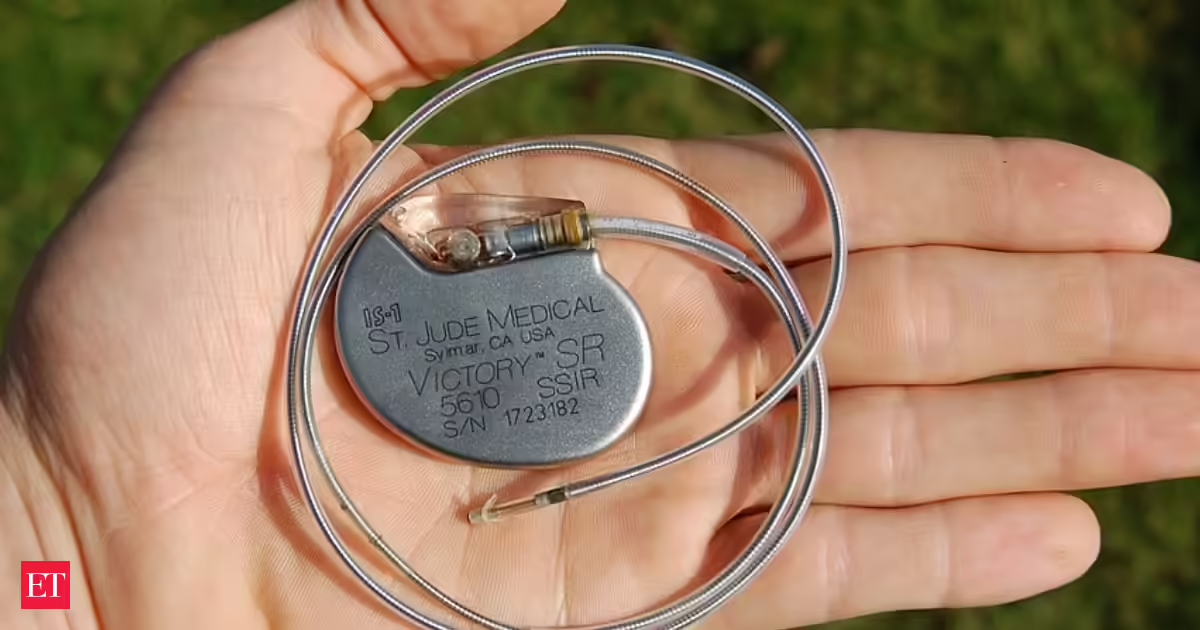
About 3 million Americans live with pacemakers today, and hundreds of thousands more receive them each year. These small, battery-powered devices save lives by keeping the heart beating in rhythm. But they come at a cost: surgery, risk of infection, wires threaded into the heart, and replacements every few years. For older or medically fragile patients, the procedure itself can be too dangerous to attempt.
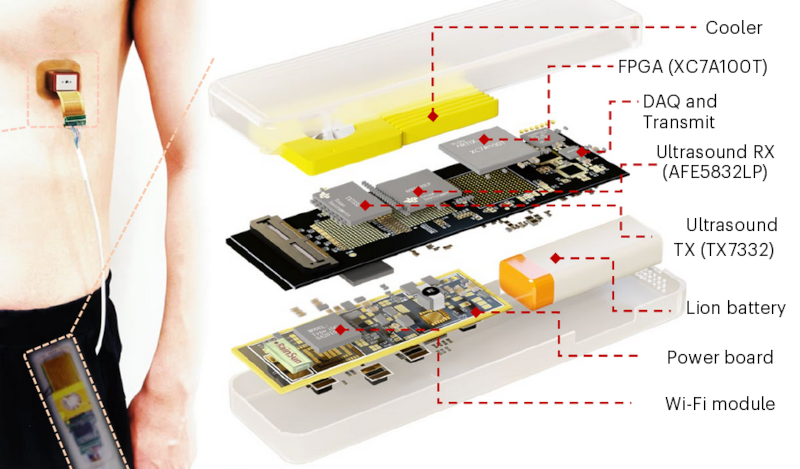
Now, a team led by. Chen Gong, a former USC Viterbi Ph.D. student and now an MIT postdoctoral researcher, has taken a major step toward that goal. Working with Qifa Zhou, his former adviser, and collaborators across MIT, UCLA, Harvard and Caltech, the researchers have developed a wearable, noninvasive pacemaker that uses ultrasound instead of implanted wires.
“Pacemakers have saved millions of lives, but the need for invasive surgery has always been a major limitation,” said Zhou, Zohrab A. Kaprielian Professor in the Alfred E. Mann Department of Biomedical Engineering and the Department of Ophthalmology. “What we are trying to do is remove that barrier entirely and make heart rhythm management safer and more accessible.”
Their findings are detailed in a paper titled “A Wearable Noninvasive Sonogenetic Pacemaker,” published in Nature Biomedical Engineering in June 2026. The study’s corresponding authors include Zhou, MIT professor Xuanhe Zhao and MIT researcher Gengxi Lu.