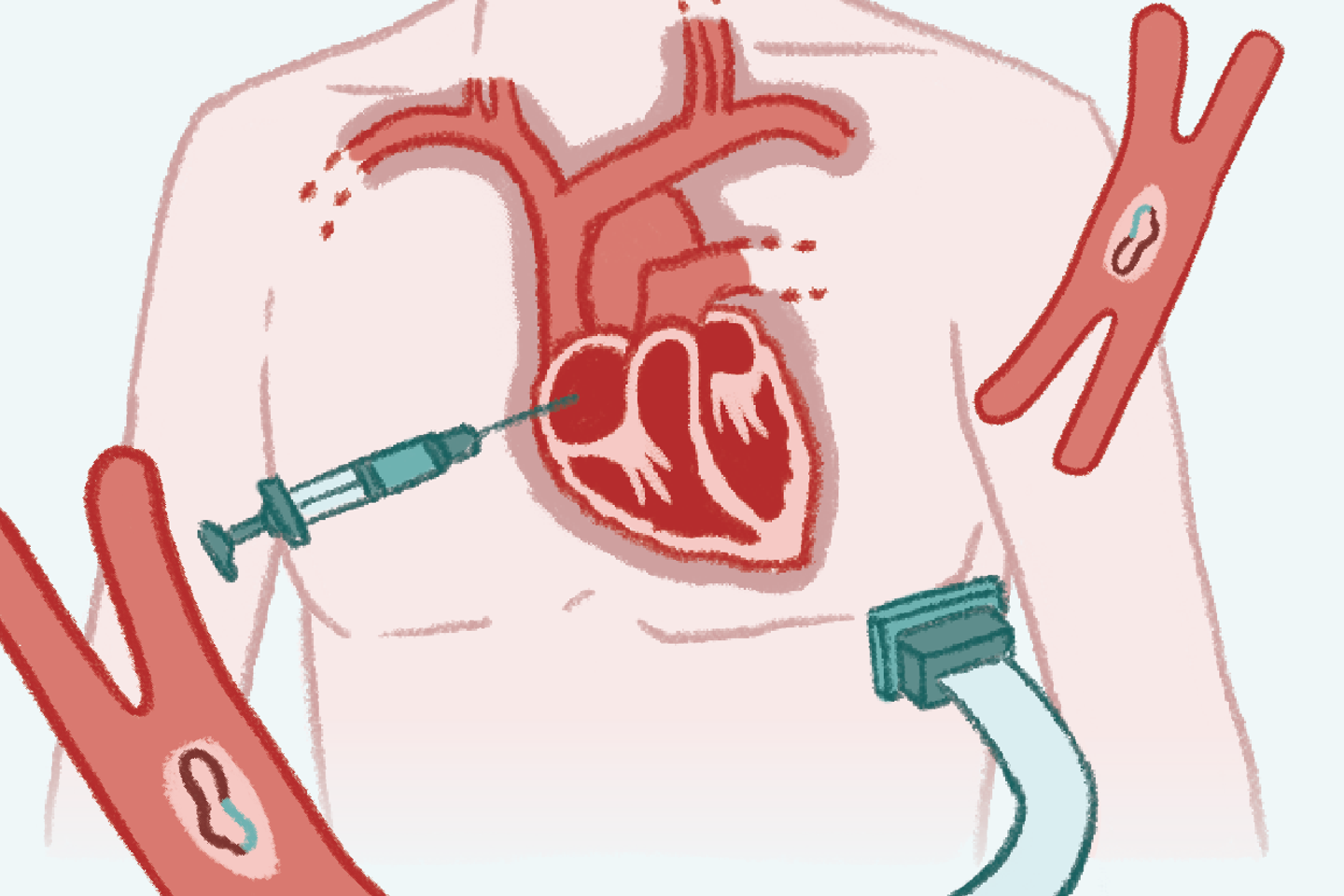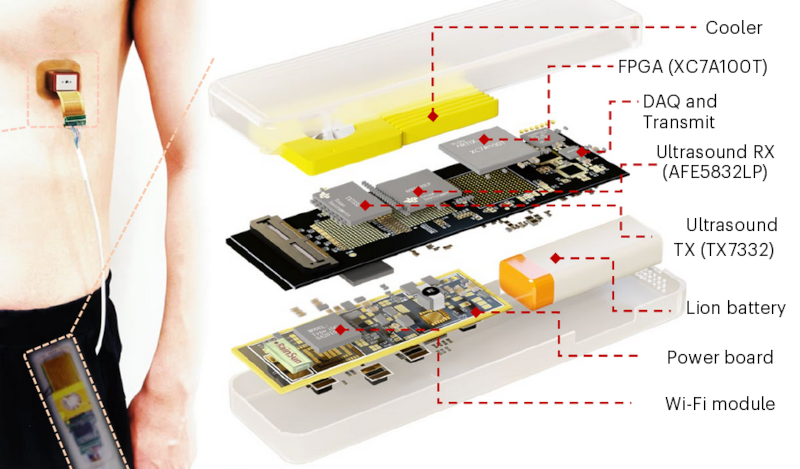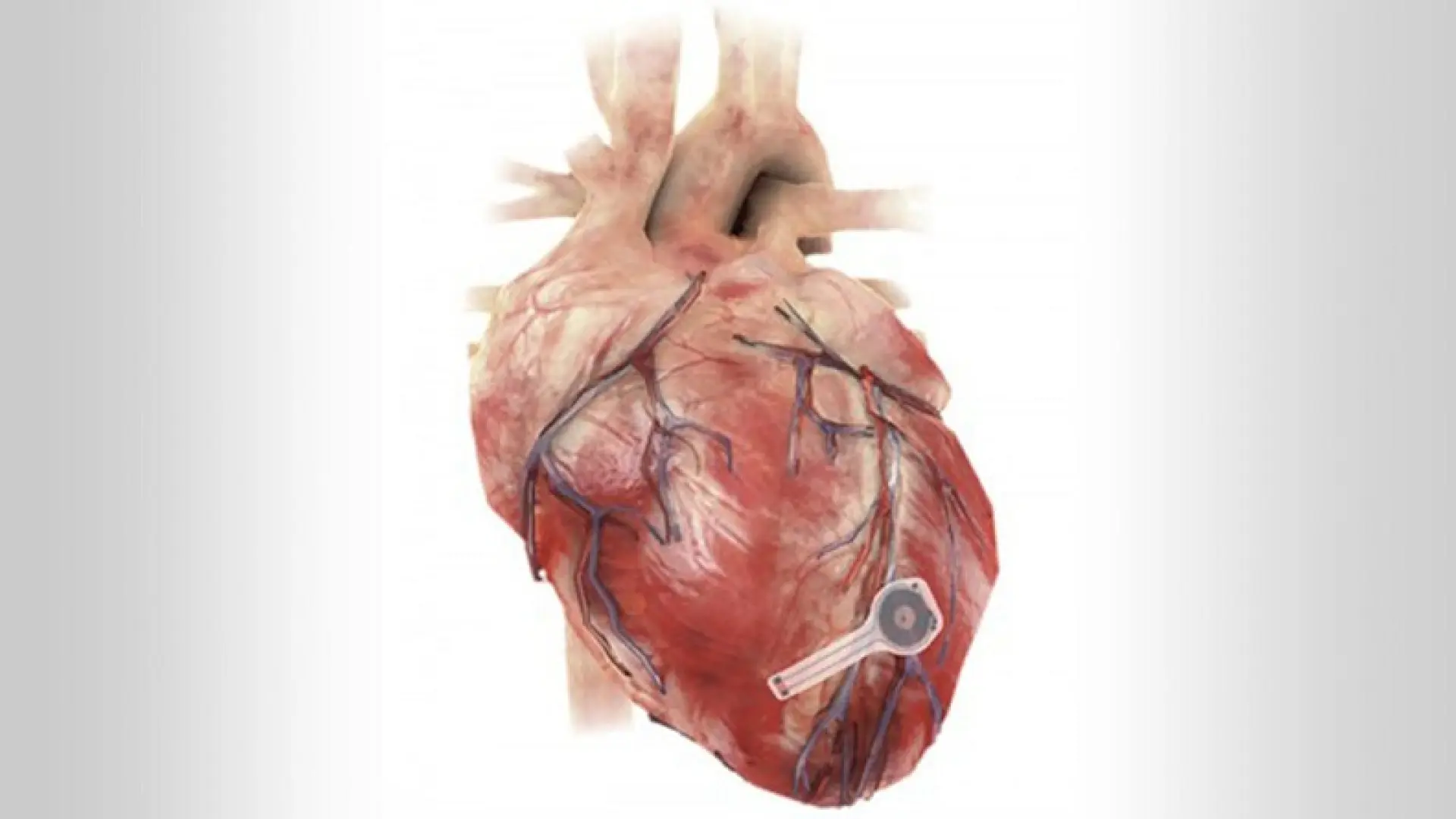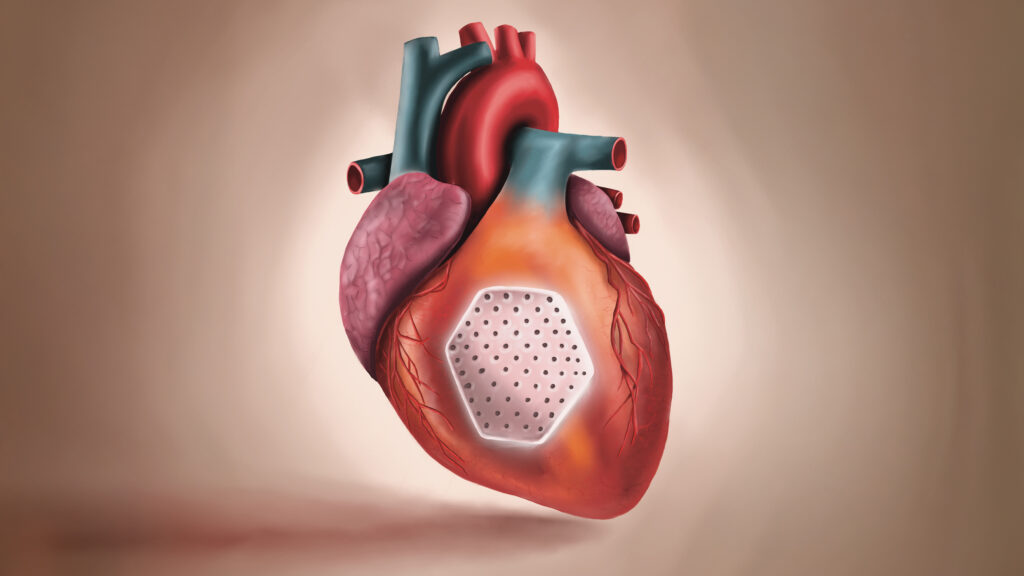
With the reliability of a quality wristwatch, pacemakers send out electric pulses to keep your heart beating at a steady rate. But unlike a watch, when the batteries need replacement, it’s a surgical affair—one that can be required as often as every five years. While the risks of having a pacemaker implanted are low, going under the knife always creates the potential for complications.A group of California and Massachusetts scientists have developed a pacemaker that works without requiring surgery, publishing their work last week in Nature Biomedical Engineering. Researchers developed a wearable alternative to the traditional pacemaker measuring in at about the size of an iPod Shuffle. The device sticks to the patient’s chest, putting out ultrasound waves that tell the heart to beat. But the ultrasound technology is only one component of what makes the noninvasive pacemaker work. Patients would undergo a gene therapy procedure to help heart cells react to the high frequency waves. Delivered by a simple injection, the treatment would work like a signal booster for the waves of the ultrasound device. The approach has proved effective in rats, pig hearts—used for their similarity to human hearts—and samples of human heart cells.“This is a very innovative and exciting study,” says Dr. Roger J. Hajjar, who heads the Gene and Cell Therapy Institute at Mass General Brigham and was not involved in the work. In terms of demonstrating that the technology could be safe and effective, he says, “the work is impressive.”How an ultrasound pacemaker would work for patientsIn a clinical setting, treatment would begin with a gene therapy injection that helps heart cells “hear” the ultrasound signals. It works by prompting the cells to produce a sound-sensitive protein in the ion channels that dot their membranes. The broad term for this type of therapy is “sonogenetics”— priming cells to respond to sound. It’s the same idea as a type of gene therapy that makes cells react to light, called optogenetics, which has been studied for treating hearing impairment and pain.Importantly, this gene therapy doesn’t alter DNA, says Gengxi Lu, who was a mechanical engineering postdoctoral researcher at MIT while working on the paper, and is now a senior ultrasound engineer at Meta. Rather, he says the treatment introduces RNA into cells that directs them to create the ultrasound-sensitive protein without altering their genetic code. A wearable device would then be stuck to the patient’s chest like a bandage. The device connects by wire to a data and power module that can be placed in a pants pocket. It would look similar to an insulin pump. The ultrasound patch is programmed to emit high frequency waves that the cell proteins receive. These signals stimulate the cells’ ion channels to let in calcium. This influx of calcium ions cues the heart to beat. Is sonogenetics a viable solution? In terms of future research, sonogenetics is ripe for solving health issues, says Chen Gong, who was a PhD student at the University of Southern California while conducting the research and is now a postdoctoral researcher at MIT. Researchers from Harvard; the University of California, Los Angeles; and CalTech also contributed to the research. Source images: Chen Gong, Qifa Zhou, et al.Using the sonogenetics technology, “we can modulate almost anywhere we want to stimulate, like in the inside of brains, eyes, other organs,” he says. But the ultrasound pacemaker still needs to prove itself, says Dr. Hajjar. He says for the device to be clinically practical, it would have to be comparably reliable to traditional pacemakers under limiting factors like exercise, long-term use, and anatomical differences. Additionally, gene therapy, though FDA approved in some contexts, is a hurdle in terms of costs, safety, and regulation.“The biggest question is not whether the ultrasound device works—it appears quite promising—but whether the benefits of a noninvasive pacing system are large enough to justify exposing patients to cardiac gene therapy when current pacemakers already have excellent safety and performance,” he says. “That will ultimately determine the size of the clinical opportunity.”
Gene Therapy and Sound Waves Team up to Steady Failing Hearts
A gene therapy trick called sonogenetics is the key
667 words~3 min read