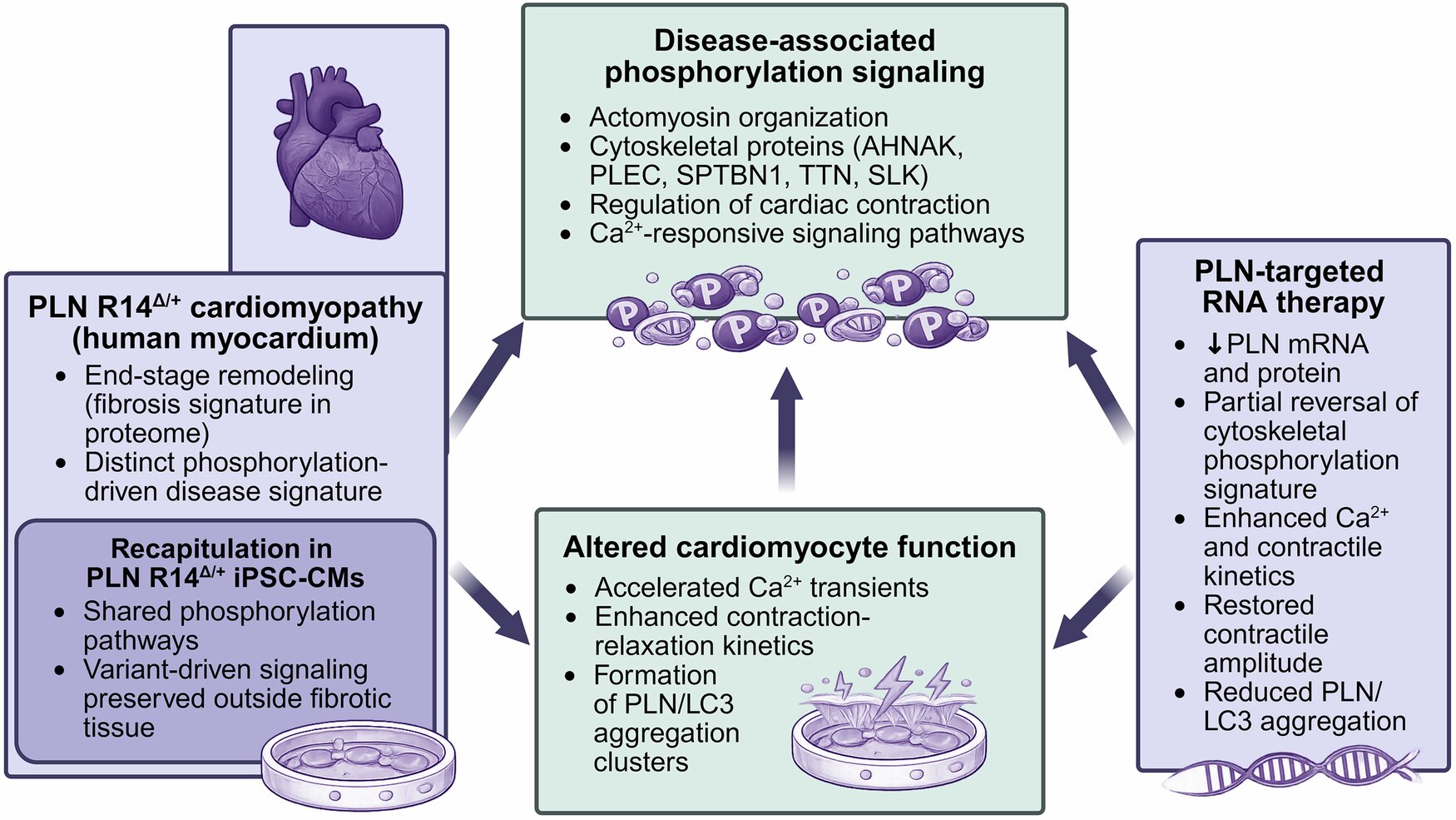
Using patient-derived cardiac tissue and stem cell-based models, the team of translational researchers demonstrated that targeting the genetic cause of disease improved cellular abnormalities and identified the biological pathways involved. The results of this study were published in Signal Transduction and Targeted Therapy.
A common inherited cause of heart failure in the Netherlands
PLN R14del is a Dutch founder pathogenic variant that originated in the province of Friesland several centuries ago and is therefore particularly common in the north of the Netherlands. Although rare in the general population, it is one of the most common genetic causes of inherited cardiomyopathy in the Netherlands and accounts for approximately 10%–15% of Dutch patients with dilated or arrhythmogenic cardiomyopathy. Due to this founder effect, many Dutch families carry the same genetic defect. As a result, the Netherlands has one of the largest known populations of PLN R14del carriers worldwide.
Treating the cause rather than the symptoms
Current treatments for PLN cardiomyopathy mainly focus on managing symptoms of heart failure and preventing complications. However, they do not address the underlying genetic cause of disease. As part of his Ph.D. research at UMCG, Dr. Frits Deiman investigated whether RNA therapy could provide a more targeted approach. RNA therapies can selectively reduce the production of disease-causing proteins. In PLN cardiomyopathy, the mutant PLN protein is known to form aggregates inside heart muscle cells, which are believed to contribute to disease development. Reducing PLN levels could therefore help target the disease process at its source.