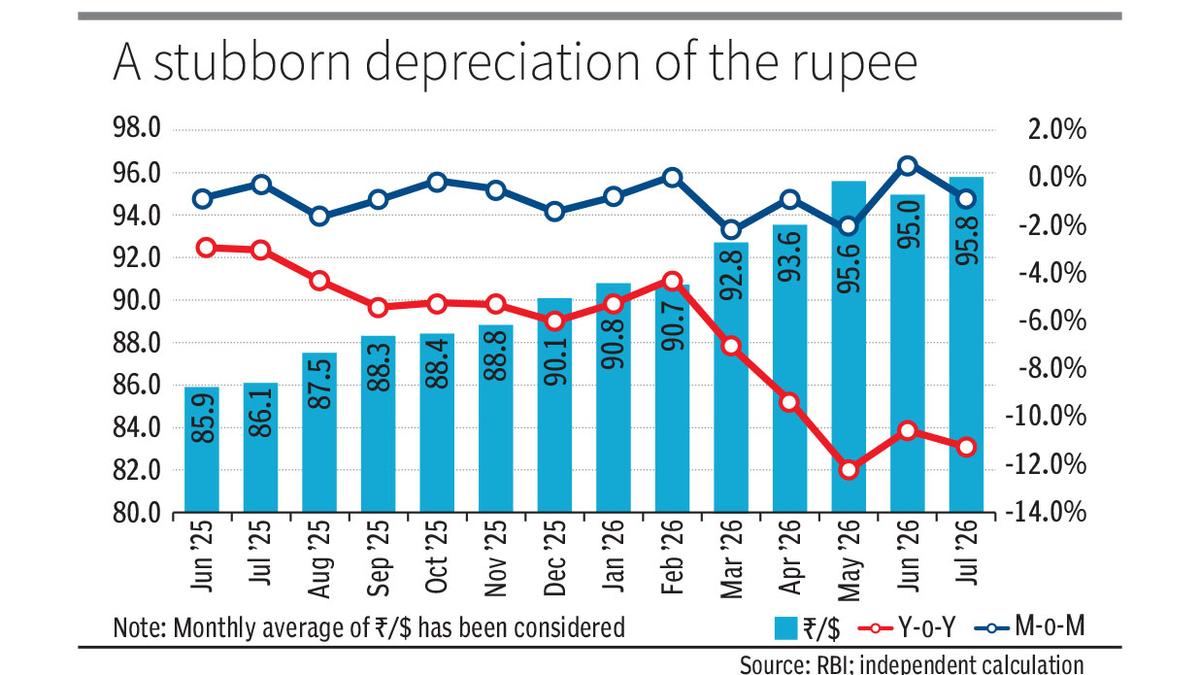
Imported inflation, fragile manufacturing and unequal burdens complicate textbook arguments supporting unrestricted currency depreciation across India.
A weakening rupee does not automatically generate an export boom. It often raises production costs. Wikimedia Commons, Creative Commons Attribution 4.0 International, CC-BY-4.0.
Imported inflation, fragile manufacturing and unequal burdens complicate textbook arguments supporting unrestricted currency depreciation across India.
India’s exchange-rate debates often proceed as though the price of the rupee were merely another financial price best left to market correction and macroeconomic adjustment. In theory, a weakening currency performs a useful balancing function.
Imports become costlier, domestic demand adjusts, exports become more competitive, and external imbalances gradually stabilise. It is a clean textbook mechanism, elegant in abstraction, and widely accepted within orthodox macroeconomics.