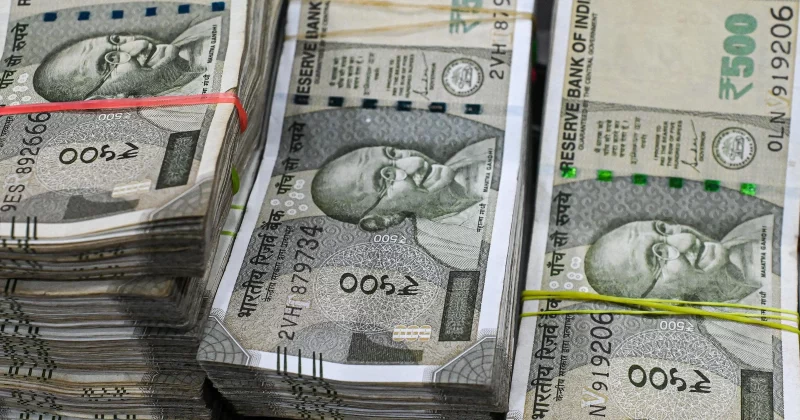
The Indian rupee is having a rough ride, and the reasons are stacking up fast. Naveen Mathur, Director of Commodities, Currencies and International Business at Anand Rathi Share, breaks down exactly what is hitting the currency, and why the Reserve Bank of India is already quietly stepping in.Crude oil is the biggest villainWith crude oil breaching $110 and touching $111 a barrel, the pressure on the rupee is intense. India imports nearly 85% of its oil needs, meaning every dollar rise in crude directly widens the current account deficit and puts fresh selling pressure on the rupee.But crude is not acting alone. Mathur points to a combination of factors creating a perfect storm for the currency; the dollar index strengthening globally, US 30-year bond yields hitting their highest levels since 2007, a widening current account deficit, and rising inflation concerns back home."It is more to do with fundamental and external vulnerabilities than something on the internal side," Mathur says, making clear this is not a crisis of India's own making but a consequence of global forces converging at once.How far has the Rupee fallen?The rupee has seen roughly a one-rupee movement over just two trading sessions, opening around 96.85 and hovering near 96.94. While that may sound modest, the trend is clearly one-way and the underlying pressures show no sign of easing quickly.You Might Also Like:RBI is already in the marketHere is what most retail investors may not realise — the RBI has been intervening actively, though its goal is not to defend a specific level but to manage volatility and prevent a disorderly fall.The numbers tell the story clearly. India's foreign exchange reserves stood at approximately $728 billion at the start of March, just before the war began. Today they sit around $696 billion, a drop of over $30 billion in a matter of weeks. Mathur estimates the RBI has deployed between $21 billion and $28 billion to support the rupee, with around $11 to $12 billion deployed in March alone.The central bank's strategy is deliberate. Rather than holding the rupee at a fixed rate, which would burn through reserves faster, the RBI is smoothing out sharp swings, giving markets a sense of stability without committing to an unsustainable defence.What this means for youFor importers and businesses with dollar liabilities, the message is clear — hedge your exposure now rather than hoping for a reversal. For exporters, a weaker rupee is a direct boost to competitiveness and realisation.You Might Also Like:The rupee's near-term direction will remain hostage to crude oil prices. If geopolitical tensions ease and crude cools, pressure on the currency will reduce meaningfully. Until then, expect the RBI to stay active in the background — cushioning the fall without trying to stop it entirely.You Might Also Like:
Rupee under pressure; crude oil, bond yields and dollar strength create perfect storm: Naveen Mathur
The Indian rupee is facing intense pressure due to rising crude oil prices, a strengthening dollar, and widening deficits. The Reserve Bank of India has actively intervened, depleting foreign exchange reserves to manage volatility rather than defend a specific level. Importers should hedge, while exporters benefit from the weaker currency.
460 words~2 min read