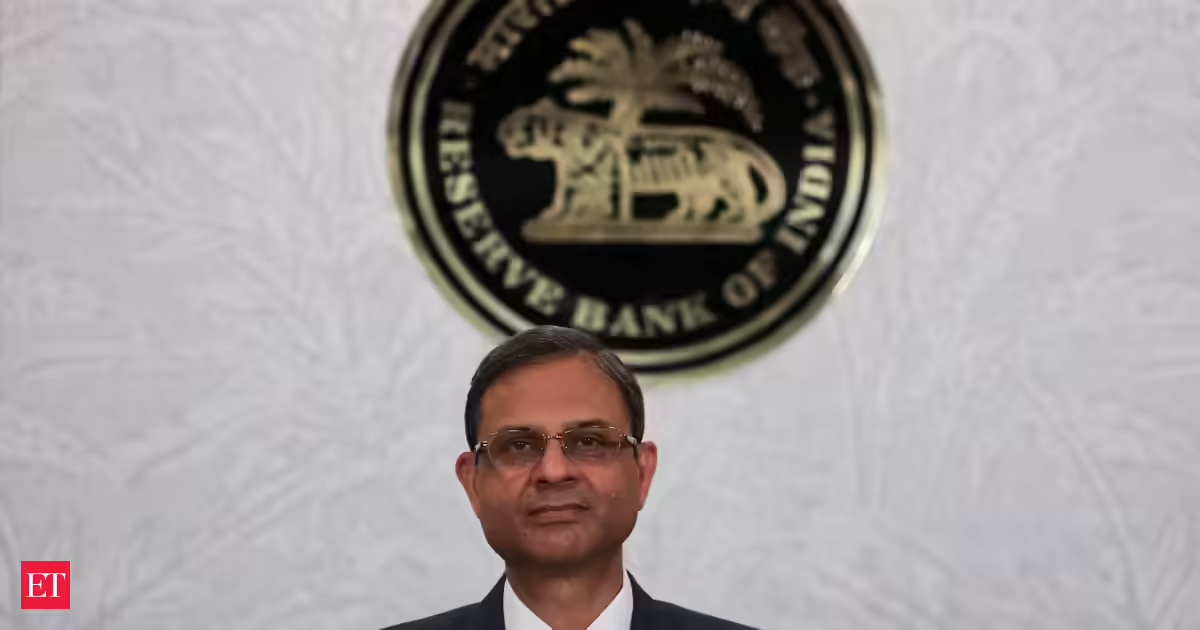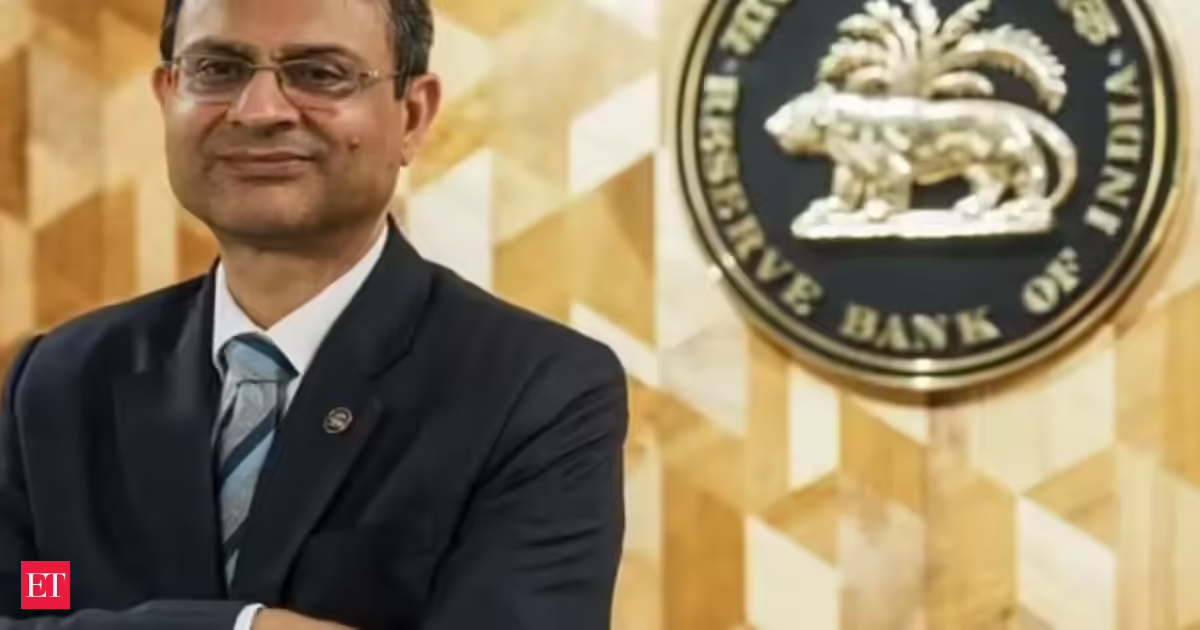
India is taking steps to bolster its currency without the need to hike interest rates, giving the central bank room to focus on supporting an economy hit by soaring oil prices.The cabinet is likely considering steps this week to make it more attractive for foreign investors to buy the nations bonds, Bloomberg News reported Wednesday, as authorities look to stem outflows that have pushed the rupee to record lows. That’s expected to take the pressure off the Reserve Bank of India to tighten monetary policy this week, with most of the economists — 29 out of 35 — surveyed by Bloomberg News expecting the RBI to keep the benchmark rate at 5.25% on Friday. However, inflation pressures triggered by an energy price shock means the RBI will likely adopt a hawkish stance and prepare markets for potential rate hikes later this year, economists said.What the RBI ultimately decides to do on Friday “is a topic that has gripped markets,” economists at HSBC Holdings Plc. led by Pranjul Bhandari wrote in a note. “There are two broad fronts being closely watched – a likely package to shore up the rupee, and the decision on policy rates.”Bhandari expects the central bank to hold, given inflation remains below the RBI’s 4% target and the central bank may not want to give an impression that it’s using rate hikes for currency defense. However, the decision will likely be a “close call,” she added.The RBI’s challenge is to keep inflation under control without damaging economic growth with interest rate hikes. Several economists have already downgraded their growth projections for the country as the Middle East conflict drags on.For now, high frequency data show India’s growth is holding up and inflation remains contained. The government has also maintained its growth forecast range of 6.8% to 7.2% for the fiscal year through March 2027, though the RBI will release updated numbers on Friday. Still, elevated oil prices may force the RBI’s hand later this year with most economists predicting hikes. Rates markets are more aggressive with overnight-index swaps pricing a 100 basis point of tightening in this cycle, according to IndusInd Bank Ltd. Central banks across Asia have adopted a more hawkish stance in recent weeks as the region finds itself caught between an energy crunch and an AI boom, a combination that threatens to keep inflation elevated. Japan may raise borrowing costs this month with South Korea seen following in July. Indonesia and Sri Lanka have already delivered jumbo hikes, while Australia has raised rates three times this year.Investors will keenly watch Governor Sanjay Malhotra’s televised statement at 10 a.m. for any potential announcements on measures to shore up the rupee. The currency is down about 6% this year and recently approached a record low of 97 per dollar. It has been hovering around 95-96 levels in recent days.Rupee depreciation raises the prospect of a flare-up in imported inflation through costlier crude, fertilizers and gold. “There is now a need to address concerns around the rupee through a comprehensive balance-of-payments package and other measures,” said Soumya Kanti Ghosh, chief economist at State Bank of India and a member of the Prime Minister’s Economic Advisory Council. That should include strong and focused RBI intervention in currency markets, he said.Ghosh said the RBI could consider capital-control measures and tax incentives to boost inflows. Rather than raising the repo rate, it could push up short-term market rates to make bets against the rupee more expensive.Authorities have already taken some steps to curb the slide. New Delhi has restricted gold and silver imports, while the RBI has capped lenders’ open position limits at $100 million.Other measures could include further forex intervention, liquidity management, incentivizing offshore borrowing, foreign-currency issuance by state-run banks and potentially a dedicated FX swap framework for oil companies, economists said.“Unlike 2013, the RBI is unlikely to weaponize interest rates purely to defend the currency,” said Sneha Pandey, fixed-income fund manager at Quantum Asset Management. “This is not a central bank cornered into emergency tightening.”More stories like this are available on bloomberg.comPublished on June 4, 2026
Rupee support measures likely to give RBI room to hold for now
India considers measures to support the rupee, allowing the RBI to maintain current interest rates amid inflation concerns.
678 words~3 min read