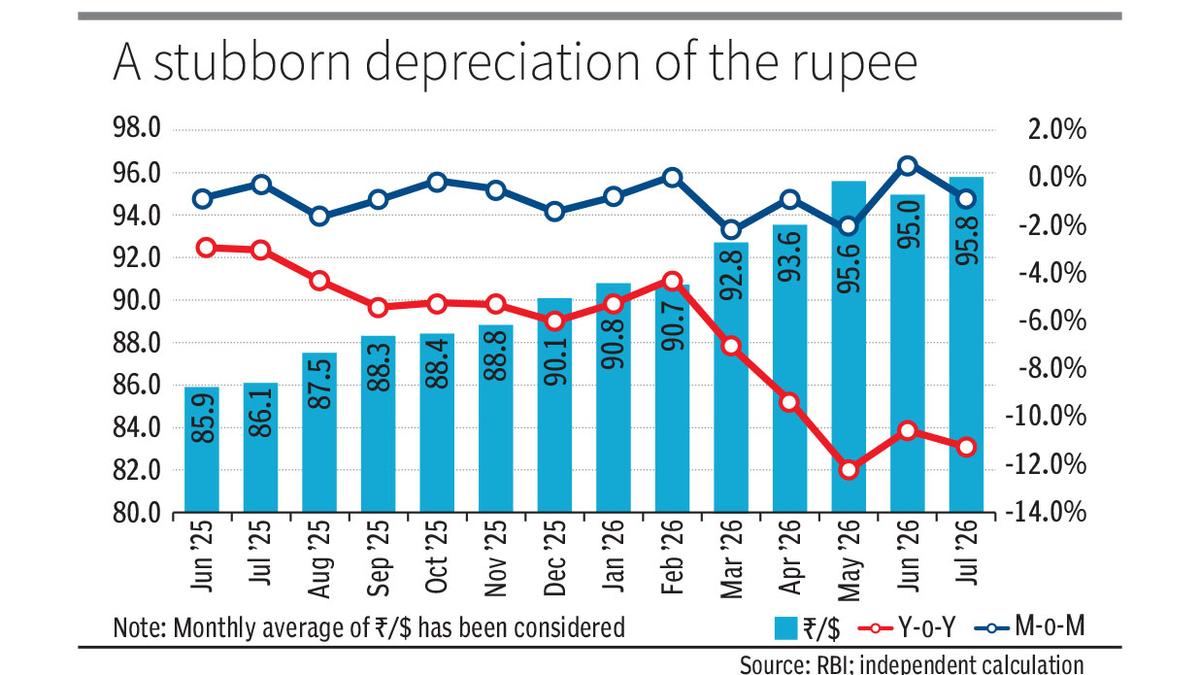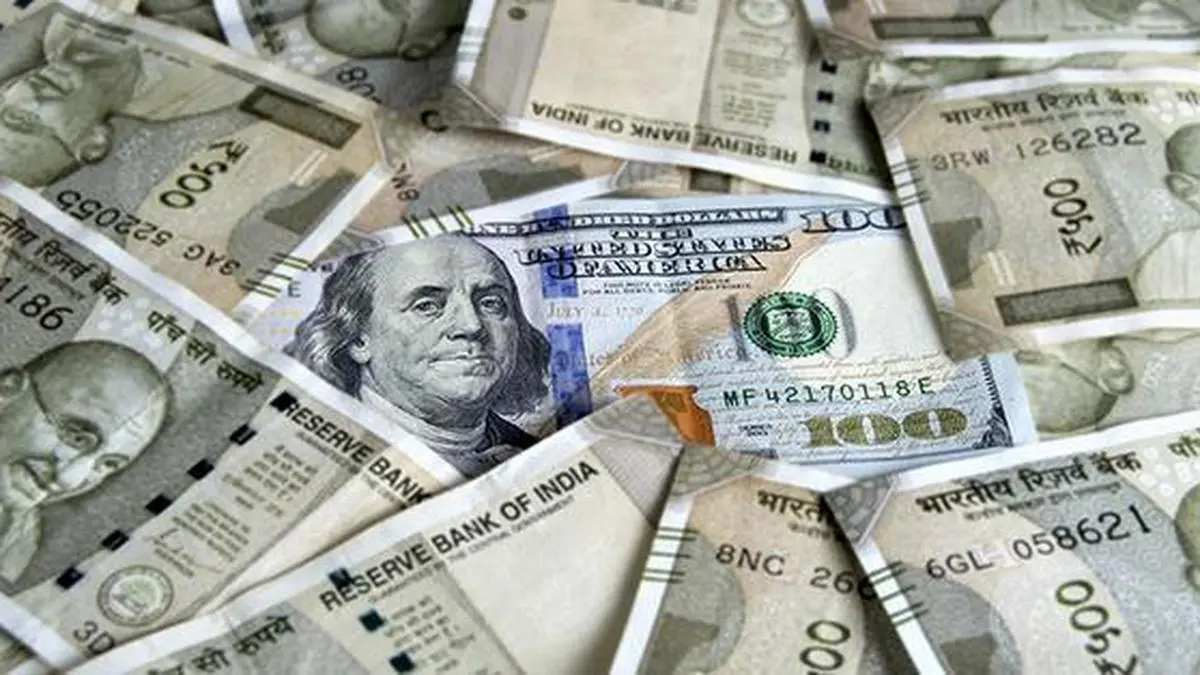
The rupee’s breach of the psychological 96-per-US Dollar mark has triggered familiar anxieties. Yet, this episode is less a reflection of weak domestic fundamentals and more about geopolitical tensions, elevated crude oil prices, and a structurally stronger US dollar.India is not alone. Several emerging market currencies are facing pressure as capital seeks safety in dollar-denominated assets amid heightened global uncertainty.The challenge before policymakers is therefore not to prevent every episode of depreciation. In a market-driven economy, currencies inevitably adjust to external shocks. The real policy objective must be to ensure that currency movements remain orderly, predictable, and non-disruptive to growth and investment.For industry, this distinction is critical. Businesses can adapt to a gradually adjusting exchange rate. What disrupts production cycles, investment planning, pricing decisions, and working capital management is abrupt and disorderly volatility.Anatomy of declineThe rupee’s current trajectory stems from three distinct external shocks:Geopolitical premium: The West Asia friction has escalated to a structural supply crisis with the near-closure of the Strait of Hormuz, through which 20 per cent of global energy supply transits. Consequently, the Indian crude oil basket surged from around $69/ bbl in February-2026 to $114.48/ bbl in April-2026 (PPAC). This primary energy shock accounted for over 70 per cent of India’s import cost-push inflation; widening the Current Account Deficit and exerting structural pressure on the rupee (Observer Research Foundation)Dollar imperative: Resilient US macroeconomic data, including an unemployment rate holding steady at 4.3 per cent (BLS), has reinforced a hawkish policy stance by the Federal Reserve. This has kept US yields elevated and sustained the strength of the Dollar Index (DXY), which continues to drive global capital into US assets.Regional rotation: Shift toward safe-haven assets, triggered by the West Asia crisis, has seen global investors move out capital and reduce exposure to emerging markets. In India, the Net FPI equity outflow stands at ₹2.85 lakh crore YTD in 2026 (up to June 19, 2026). In contrast, for year 2025, the annual aggregate figure is ₹1.66 lakh crore. March 2026 saw the highest-ever monthly outflows, with foreign investors pulling out ₹1.17 lakh crore from domestic equities (NSDL).Weak Re vs exportsConventional macroeconomics assumes that a weaker currency boosts exports and strengthens domestic manufacturing. That is now only partially true. India’s manufacturing ecosystem today is deeply integrated into global supply chains and remains significantly dependent on imported intermediate goods, machinery and components. Consequently, currency depreciation is no longer an unambiguous competitive advantage.For industries such as electronics, engineering goods, chemicals, pharmaceuticals, renewable energy equipment, and auto components, a weaker rupee raises input costs even as it improves export realisations. This trade-off is increasingly evident across sectors.An electronics exporter may benefit from higher export earnings, but imported semiconductor components become costlier. Renewable energy developers face rising expenses for solar modules, battery cells, and storage systems, while chemical manufacturers contend with higher feedstock costs. Infrastructure and EPC projects also experience cost pressures where imported equipment is involved. Even textile exporters now depend on imported synthetic fibres and specialised inputs, limiting the gains from currency depreciation.In an increasingly globalised economy, the traditional assumption that a weak rupee automatically boosts exports no longer holds true.Currency-growth linkFor industry, the larger concern today is imported production inflation and the resulting uncertainty across the investment cycle. India cannot sustainably aspire to become a global manufacturing hub if every external shock translates into rising industrial input costs, working-capital stress, and investment hesitation.A prolonged period of elevated crude prices combined with rupee weakness simultaneously raises logistics costs, electricity tariffs, imported machinery prices, raw material costs, and financing burdens. The result is widespread margin compression across sectors. The challenge is particularly severe for MSMEs operating on thin margins, where even modest exchange-rate swings can materially affect profitability and cash flows.This is why exchange-rate management can no longer be viewed solely as a monetary policy issue. Currency stability has now become a strategic industrial policy variable. True potential of Make in India, PLI, export-led manufacturing, and China+1 opportunity all depend on the ability of firms to operate within a reasonably predictable macroeconomic environment.One of India’s most powerful macroeconomic stabilisers is its global workforce. India received $135.4 billion in remittances in FY 2025 (Economic Survey 2025-26), making it the world’s largest remittance recipient and providing an important cushion against external shocks. Policymakers must now view labour mobility, global skilling, and overseas workforce deployment as core pillars of external-sector resilience.First, India should aggressively expand G2G skilled migration partnerships with labour-short economies. Much of the migration debate in India remains disproportionately focused on white-collar professionals in technology, finance, and consulting.While these sectors remain important, an equally important opportunity lies in blue-collar segment. Several countries — Japan, Germany, Israel, Italy, Australia, and Gulf nations — are facing acute shortages across construction workers, welders, electricians, plumbers, caregivers, hospitality workers, manufacturing technicians et al., due to ageing populations and shrinking domestic labour pools. India possesses a significant demographic advantage in this context.Second, India’s skilling architecture must be more closely aligned with global labour market demand. The next phase of Skill India should not focus only on domestic employability, but on export-ready workforce creation. Language training, international certifications, digital capabilities, mobility-readiness programs should become key.Finally, the policy ecosystem must support international talent integration through easier certification recognition, bilateral mobility frameworks, and digital trade facilitation. India must treat human capital mobility not as a peripheral labour issue, but as a central component of economic strategy and external-sector stability.There is a tendency during periods of depreciation to equate currency weakness with economic weakness. This is analytically flawed. Many major economies, including export-oriented Asian economies, have historically tolerated periods of currency depreciation during external shocks. Exchange rates are adjustment mechanisms, not national scorecards.India today enters this period from a position of significantly greater strength than in previous episodes of global stress. The task before policymakers now is to preserve macroeconomic stability, investment confidence, and growth momentum. At this moment of global uncertainty, stability and confidence may well be India’s greatest competitive advantage.The writer is Executive Director, Pahle India Foundation. With inputs from Kuntala Karkun, Senior Visiting Fellow, Pahle India FoundationPublished on July 10, 2026
Why currency stability is crucial
Given exporters’ reliance on imported intermediate goods, a weak rupee is not a competitive advantage
1,012 words~5 min read