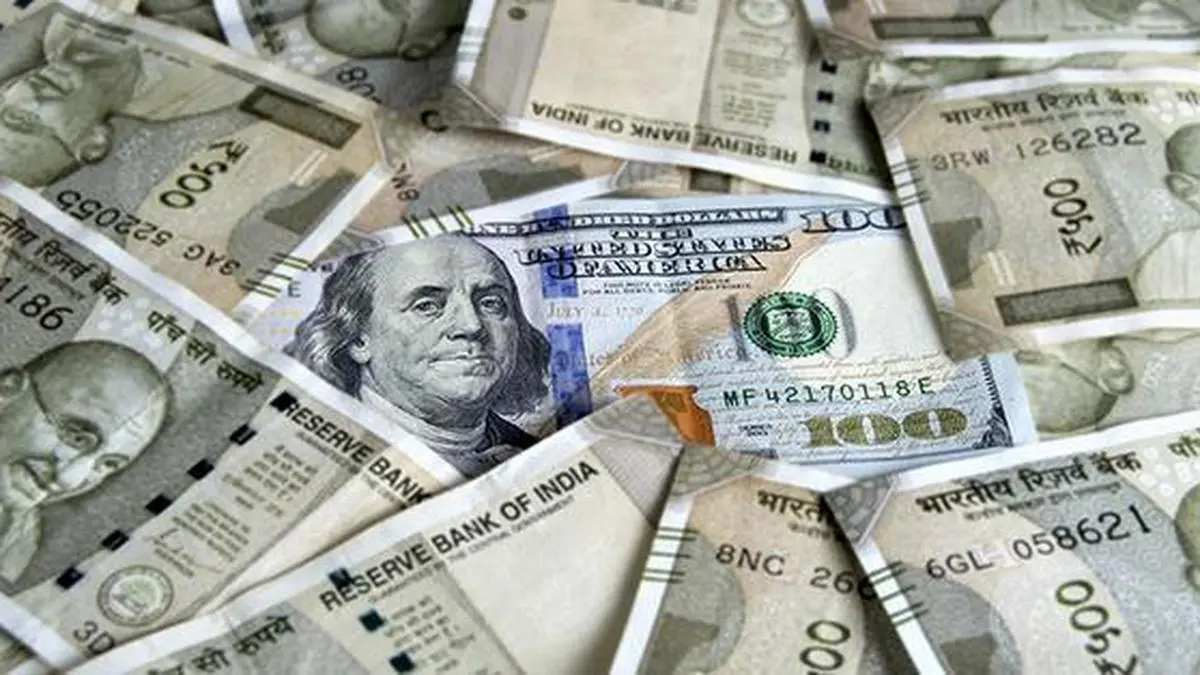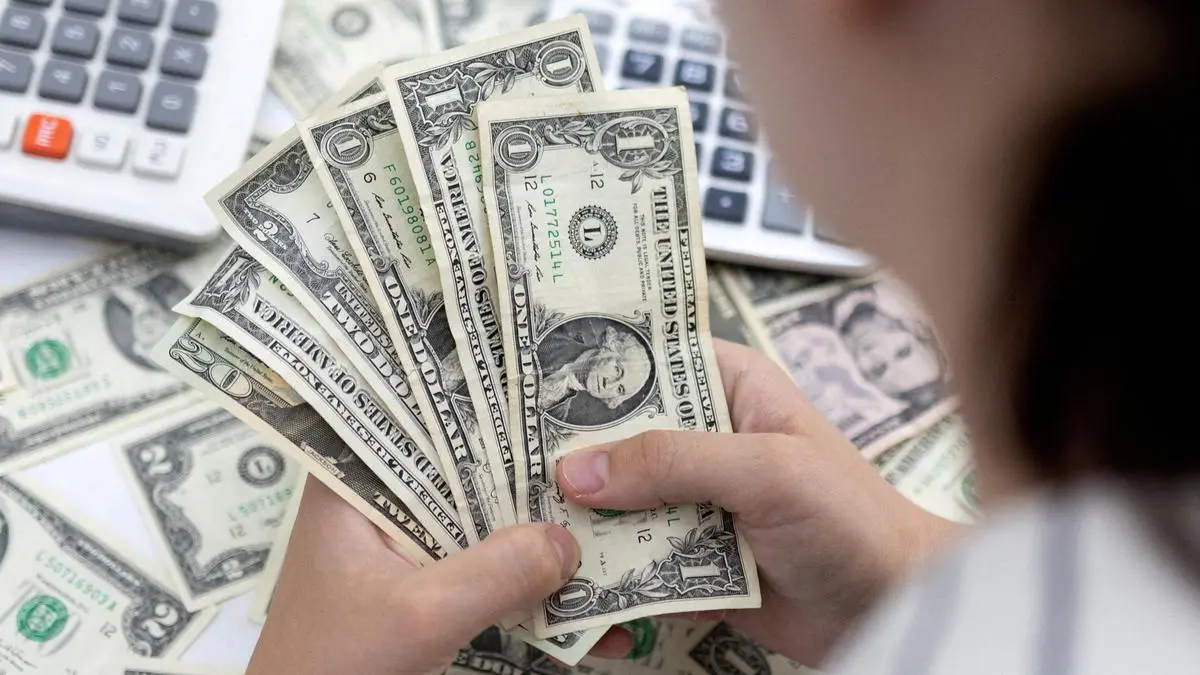
Higher US interest rates and global uncertainty have encouraged investors to move money towards dollar-denominated assets
| Photo Credit:
Dado Ruvic
The rupee has been slipping to fresh lows across successive trading sessions, pushing India’s external-sector vulnerabilities back into focus. Concerns around oil prices, capital outflows, and global financial tightening are once again shaping market sentiment. How serious are the pressures building around India’s external sector?The Dollar Index, which measures the strength of the US dollar against major global currencies, remained elevated around 99.3-99.4 on May 18, after hovering near 98 earlier in the week. Higher US Treasury yields, geopolitical tensions in West Asia, and investor preference for safer dollar assets have all strengthened the dollar’s appeal.Whenever the dollar rises sharply, emerging-market currencies are usually the first to come under pressure. For India, the challenge becomes sharper because of the economy’s dependence on imported energy.That combination — a stronger dollar and higher oil prices — creates a difficult economic environment. Import costs rise, demand for dollars increases, and pressure on the rupee intensifies. The impact is visible in trade data. India’s merchandise exports in April 2026 stood at $43.56 billion, while imports climbed to $71.94 billion, leaving a merchandise trade deficit of roughly $28.38 billion for the month.At the same time, capital flows have turned more volatile. Higher US interest rates and global uncertainty have encouraged investors to move money towards dollar-denominated assets and AI trade-driven equity markets of Japan, Korea and Taiwan. Between March and May 2026, foreign portfolio investors reportedly withdrew more than $23 billion from Indian equity and debt markets. Such outflows add to the rupee weakness.Where India divergesTaken together, these developments resemble the pressures that have destabilised several emerging economies in the past. Yet this is also where the Indian story begins to diverge from that of crisis economies such as Sri Lanka, Pakistan, and Argentina. India’s vulnerabilities are real, but so are its buffers. The country continues to hold one of the world’s largest foreign-exchange reserve cushions, with RBI reserves hovering around $700 billion. Those reserves give policymakers room to intervene when markets become disorderly and reassure investors that India can continue meeting its external obligations even during turbulence.Equally important is the way India manages its exchange rate. Unlike economies that rigidly defend fixed currency values, India operates under a managed-float regime. The rupee is allowed to depreciate gradually, while the RBI intervenes mainly to prevent disorderly market conditions. That flexibility matters because many currency crises become severe when governments exhaust reserves defending exchange rates, and markets no longer trust them.The current episode also reflects the classic “impossible trinity” in international economics — the idea that no country can simultaneously maintain a fixed exchange rate, free capital flows, and an independent monetary policy. India wants monetary policy flexibility to manage inflation and growth while remaining integrated with global capital markets. As a result, some of the pressure is inevitably absorbed through the exchange rate itself.The RBI, meanwhile, has moved beyond direct intervention alone. It has reportedly tightened daily limits on Net Open Positions in the onshore currency market and imposed restrictions on authorised dealers in the NDF market to curb arbitrage loopholes. Policymakers also retain the option of routing oil-marketing companies outside the spot FX market, reviving special FCNR(B) deposit schemes, and expanding rupee-based international trade settlements. These measures underline the adaptability of India’s central bank, which has historically shown considerable innovation during periods of external stress.The current environment does expose genuine vulnerabilities — high oil dependence, volatile capital flows, and rising sensitivity to global financial conditions. The rupee’s weakness should therefore be seen as a test of resilience in an increasingly uncertain global economy.The writer is Professor & Chairperson, Economics & Sustainability Area, IMT GhaziabadPublished on May 21, 2026