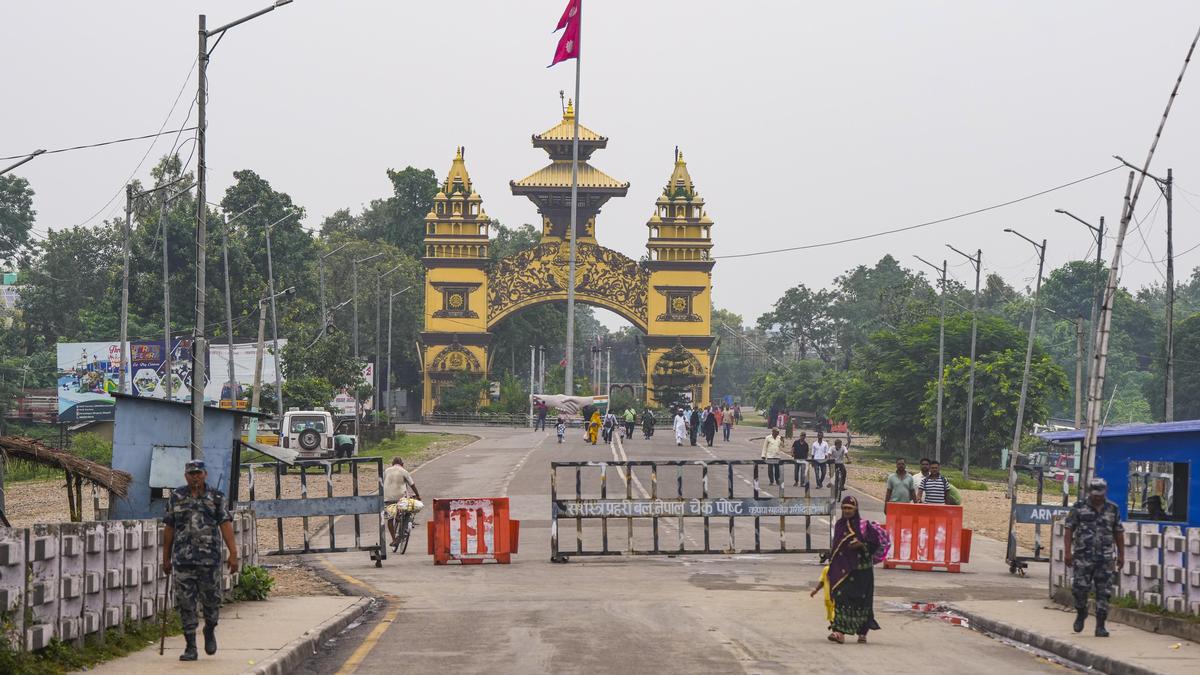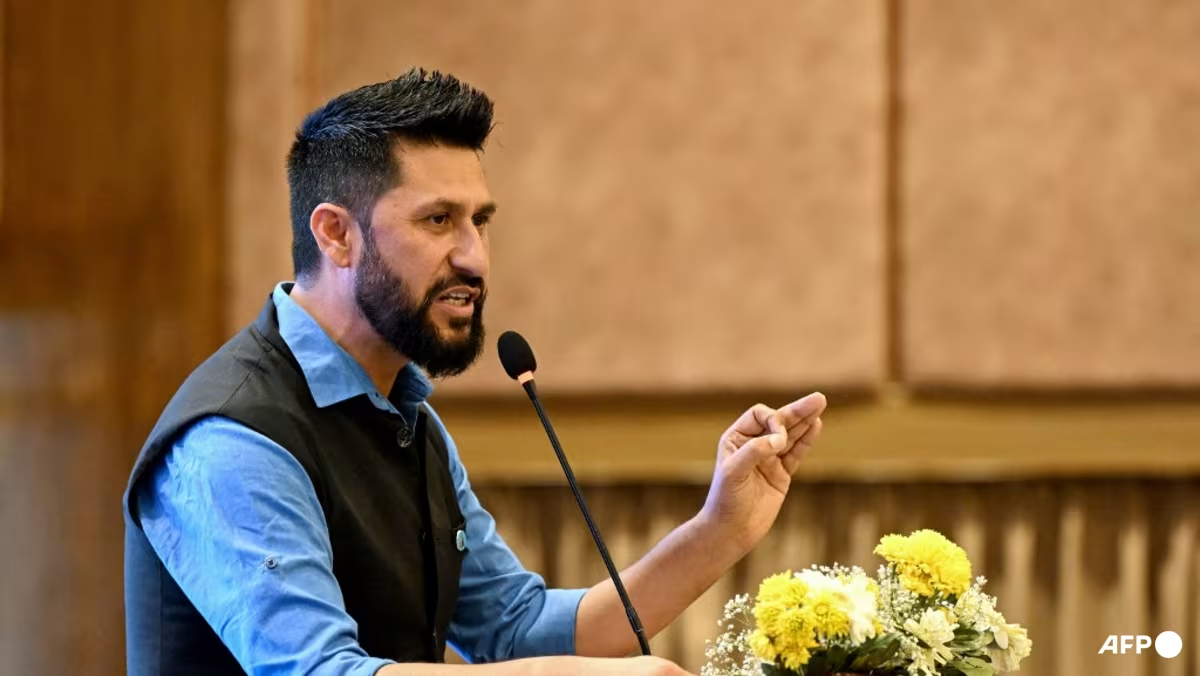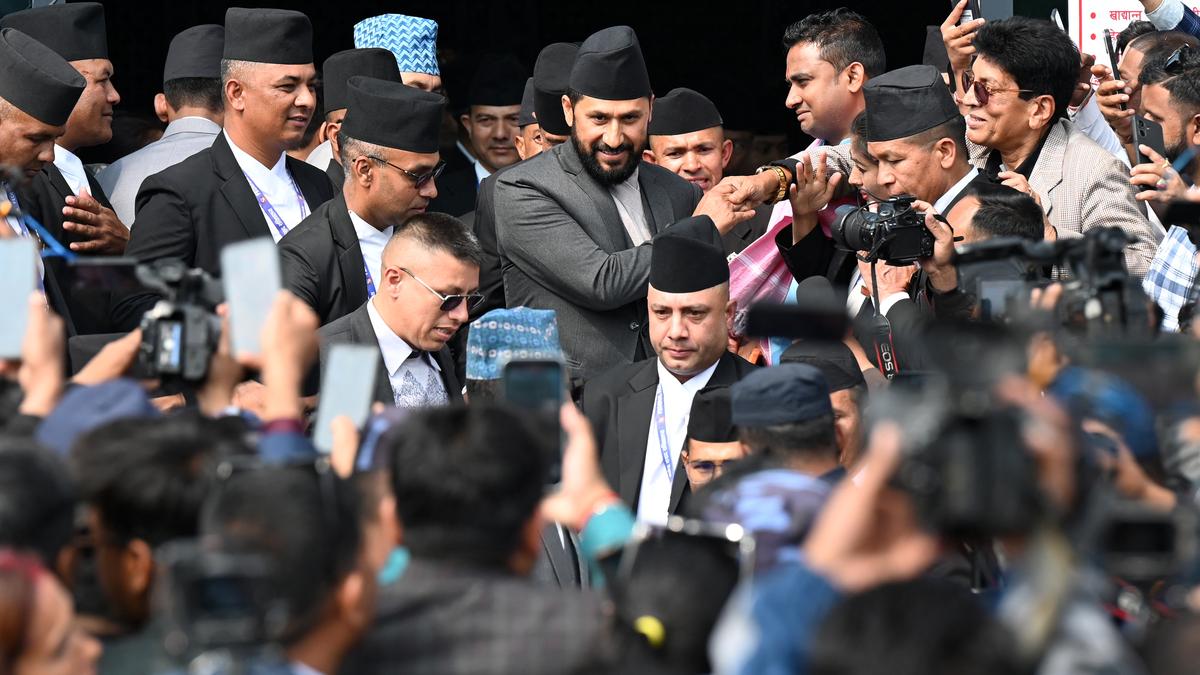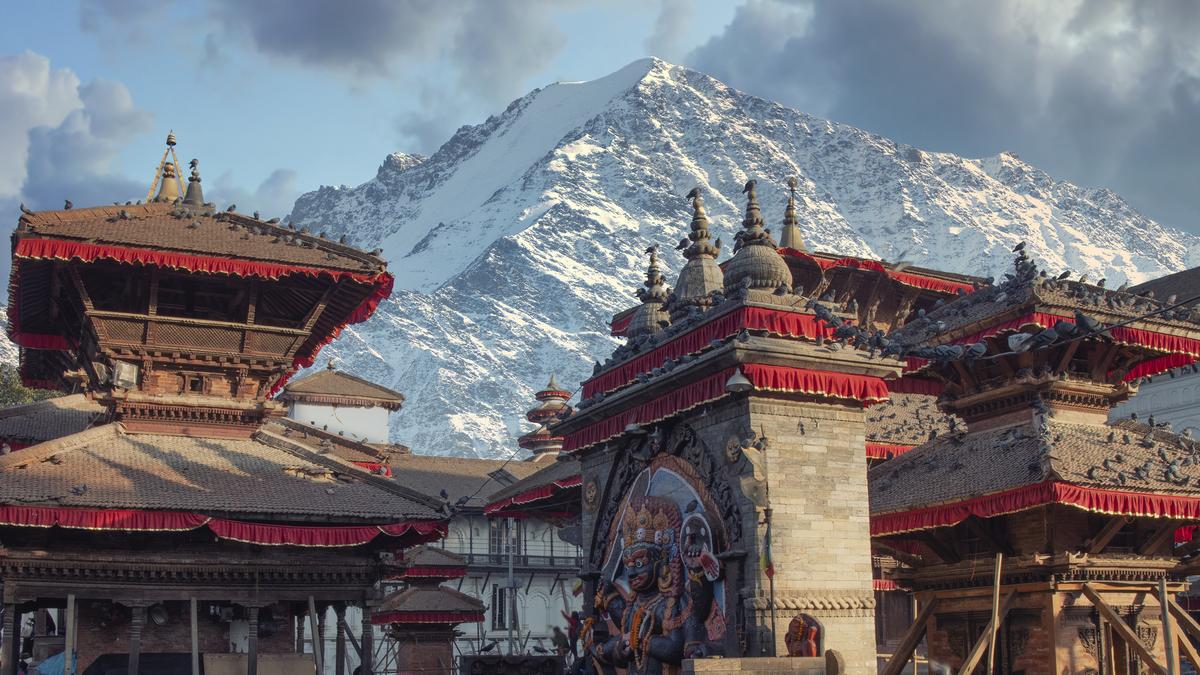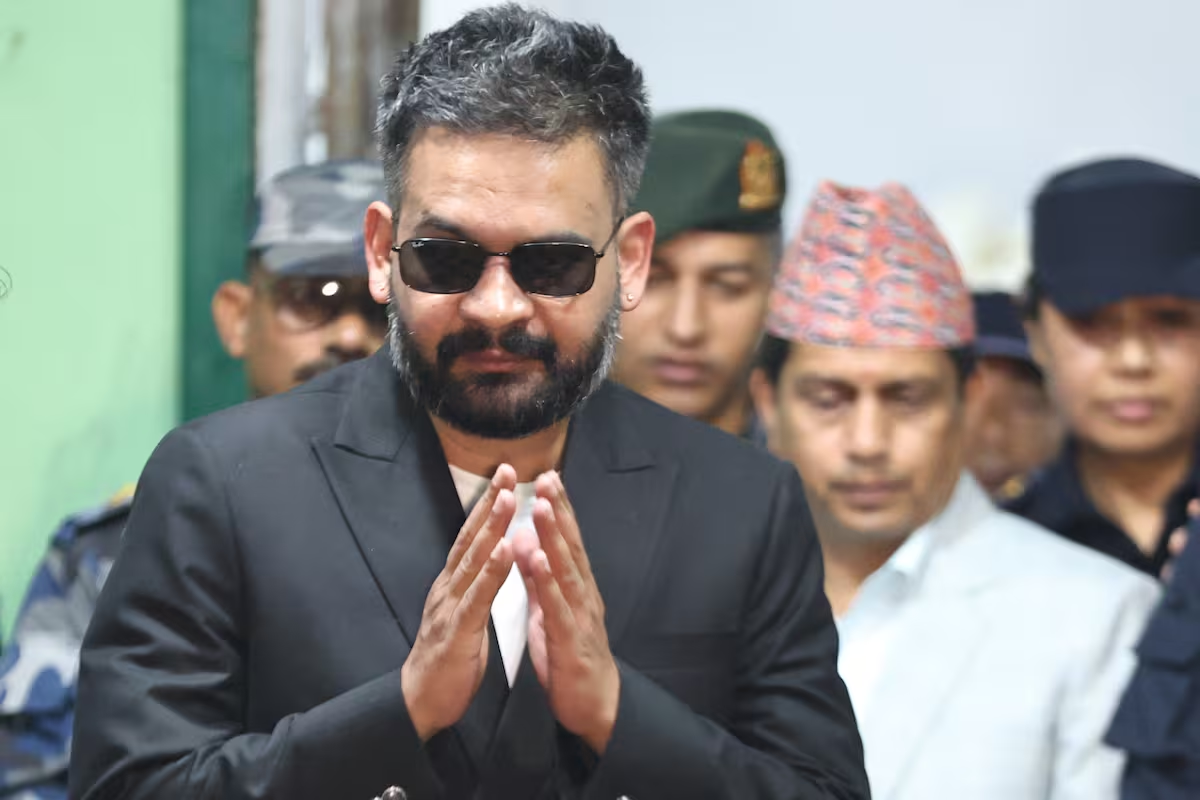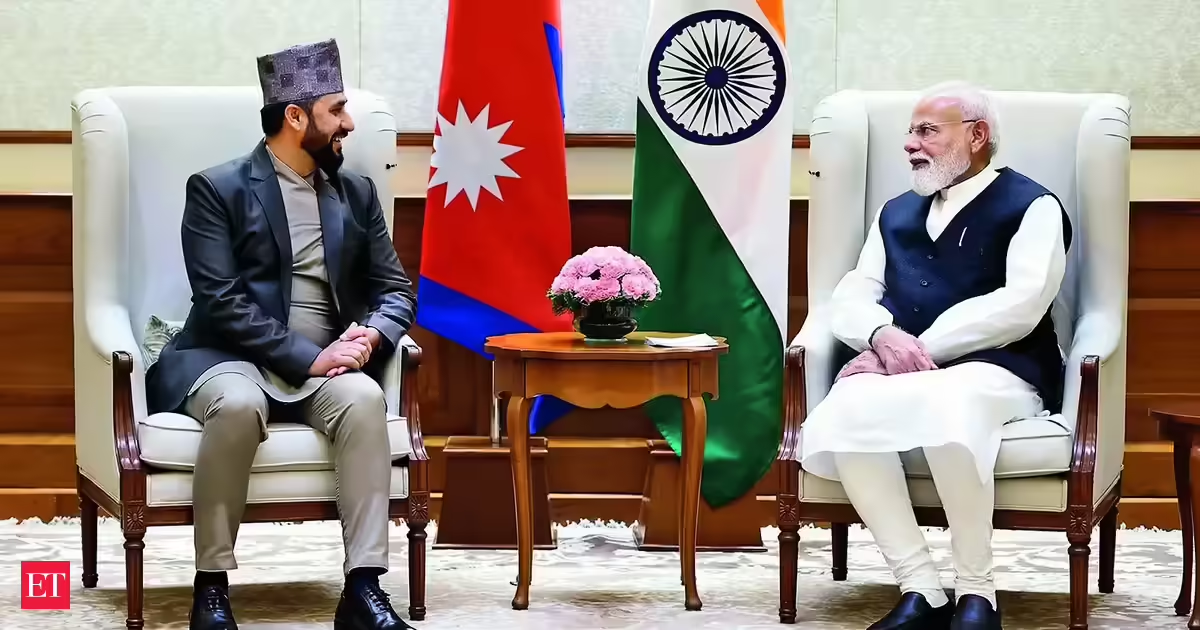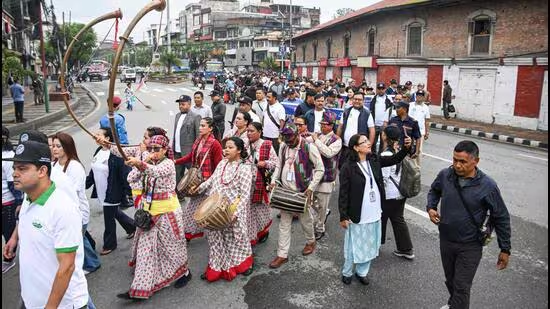
The ascent of a political party founded by non-partisan professionals and political novices—achieving a near-two-thirds parliamentary majority in under four years and electing the world’s youngest Prime Minister—is no routine event in political history. Therefore, global curiosity regarding what is happening in Nepal and where the nation is heading is entirely natural. As close neighbours with a shared border of over 1000 miles, this curiosity is even more natural in India.People take part in a procession to mark the 19th International Everest Day and the 73rd anniversary of the first ascent of Mount Everest in Kathmandu. (AFP)This story of Nepal’s transformation was written not by street violence, military coup, foreign meddling, or constitutional void. Rather, it is a peaceful and democratic “ballot-box revolution”. At a time when many societies are beset by polarisation, mistrust of authority, and corrupt politics, and are leaning toward non-democratic alternatives, Nepal has proven that democracy remains a potent vehicle for change in plural societies. Today’s Nepal is not heading toward an uncertain future; it is embracing a strikingly aspirational vision of a more prosperous, vibrant democracy. Our core principles are simple: iron-clad good governance and direct accountability to the people mediated by development.The new political realityThe Rastriya Swatantra Party (RSP) is Nepal’s new political reality, a young force that has irreversibly challenged an ossified polity. It has enrolled the younger generation into delivery-based politics, offering a different vision for the country. We are aware that the votes RSP received represent both outrage and hope, wrapped in an unprecedented mandate for change. That is what made youthful, inclusive and untainted talent electable.We now possess the greatest asset required to transform our foreign policy: we carry no baggage from the past. We are not restrained by old animosities. We are bound by sovereign treaties and informal bonds at the people’s level but not entangled in petty deals and tacit understandings of leaders past. We look at India and the world with an open heart, clear eyes, and a transparent agenda: the economic transformation of Nepal.Nepal and India are not just two countries, we are stakeholders of a proud, ancient civilization. The saga of Ram is complete only when Janakpur and Ayodhya are connected. Faith is fulfilled only when Pashupatinath and Kedarnath are brought together. The foundational womb of a great civilization is realized only by linking Lumbini and Bodhgaya.However, we neither have the luxury of self-indulgence, nor do we wish to hide our weaknesses behind worn-out phrases. Instead of looking solely at what our relationship has achieved, we want to make a fresh start by focusing on what it could have achieved—and what it can become.Linking economies, not just bordersWhen we look across the border, we see an India that has radically redefined itself. In recent decades, freeing itself from old bureaucratic shackles, India has successfully become one of the largest and fastest-growing economies on the planet. This is an achievement we respect, and, therefore, we want to be partners in development.While India is on track to become a global leader in metro rail expansion, laying nearly 15 kilometres of railway track per day, the proposed Raxaul-Kathmandu railway line is less than 150 kilometers. The day those 150 kilometers of track are connected, it will revolutionize trade, tourism, logistics, and regional connectivity between us. Nepal does not just want to connect borders; it wants these rails to boost an entire economy.We are not looking only toward New Delhi; we are observing the dynamic transformations of states across India.We have seen how India’s aviation sector has taken off; could we not have direct flights from Pokhara and Lumbini to shining hubs of Delhi, Mumbai and Bengaluru? We do not just want to understand how Andhra Pradesh and Telangana built thriving ecosystems in IT; could we not envision a Kathmandu–Bengaluru digital corridor? We draw inspiration from Gujarat’s industrial infrastructure; could it not inspire an immediate collaboration to set up a chemical fertilizer along our border?We want to host institutions like the IIT and AIIMS in Nepal. Today, Nepal can confidently say to India’s IT companies, startup ecosystems, and universities: “make us your partners in innovation by establishing innovation labs, incubation centres, and tech hubs.” We are proud of our highly-talented younger generation, abundant clean energy, and growing digital ecosystem, but they could transform with a little nudge from a more sophisticated tech ecosystem in India. We want to collaborate on digital payments, fintech and cross-border platforms that empower small entrepreneurs on both sides.The shift to development diplomacyThe Rastriya Swatantra Party wishes to shift the entire vocabulary of Nepal-India relations away from geopolitical friction and place it firmly on development diplomacy. Our core agenda is to transform diplomatic missions into engines of investment, trade, and economic partnership. We desire a relationship that delivers measurable results down to the daily lives of the ordinary citizens of both nations.Nepal’s hydropower potential is no longer just a domestic asset; it is a clean, green engine capable of powering the industrial corridors of a rising India. We need to move from fragmented cross-border trade toward a robustly integrated energy market.The price of tomatoes or the movement of machinery should no longer be dictated by bureaucratic bottlenecks. We need modern, digitized Integrated Check Posts (ICPs) and advanced transit corridors that transform rigid borders into seamless bridges.From Himalayan peaks to the sacred circuits of Janakpur, Lumbini, and Bodhgaya, our tourism potential is interdependent. We must build tourism circuits that allow global tourists to experience our shared heritage without administrative hurdles.We did not just watch the IPL final live in Ahmedabad recently; we have also been deeply contemplating how Nepali players and Nepali stadiums can be integrated into the IPL franchise.Building a foundation of mutual trustWhile the potential for cooperation spans countless fields — including agriculture, healthcare, cybersecurity, and disaster management—the very foundation upon which this must be built is precisely what we need to augment: trust.We cannot achieve true friendship by sweeping core issues under the rug. We are neighbours whose civilizational bonds predate man-made borders by thousands of years. Therefore, our disputes of recent making must not drag on. They can be resolved on the basis of historical facts and mutual understanding. We detest ultra-nationalist rhetoric used by traditional politicians. The alternative we offer is dialogue based on evidence and a pragmatic approach unencumbered by electoral considerations.A stable and prosperous Nepal is a natural guardrail along India’s northern border, whereas a politically fractured Nepal makes India nervous about instability in the neighbourhood. Nepal’s economic development is, therefore, a strategic necessity for India.Historic windowHistory never offers anyone unlimited opportunities; it presents brief openings. This moment—right now, in mid-2026—is the most favourable window seen in decades to completely reset and elevate Nepal-India relations.Nepal of the past 30 years characterized by instability and venality is now history. What else do we bring? The strong mandate of young conscious voters who have elected a professional leadership that speaks the language of corporate execution, not political patch-ups. We pledge policy continuity, transparency, and integrity. RSP leadership is ready because the people of Nepal are ready. Let us build a partnership defined not by anxieties of the past, but by the boundless possibilities of a shared future.As we look to reset and deepen ties, we have a chronological anchor: August 3, 2014. On that day, Prime Minister Narendra Modi did not just address the Parliament of Nepal; he stepped out onto the streets to interact directly with the Nepali public. He stated with fondness that the relationship between India and Nepal is as ancient as the Himalayas and the Ganges, reaching far beyond mere documents. It was he who emphasized a shared vision of our borders becoming bridges, not barriers.A lot of water has since flown down the Bagmati and the Ganges. These rivers do not negotiate with mountains; they simply find their way — and so shall we. We have no option but to return to the trust and warmth of that August day. And return we shall—with complete honesty, and the pragmatism of carrying the first stone to build the promised bridge that shall harness new possibilities and dissolve old differences.(Rabi Lamichhane is the founding chair of RSP, and a former deputy prime minister of Nepal. The views expressed are personal.)
How can an aspirational Nepal and a rising India reconnect?
Today’s Nepal is not heading toward an uncertain future; it is embracing a strikingly aspirational vision. | India News
1,372 words~6 min read