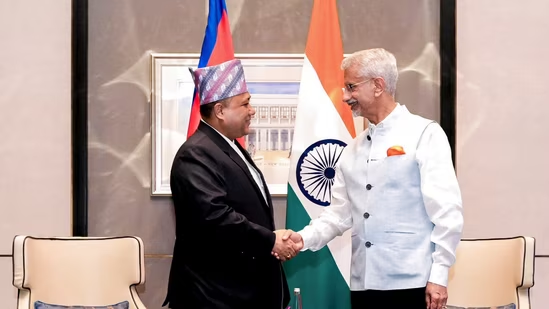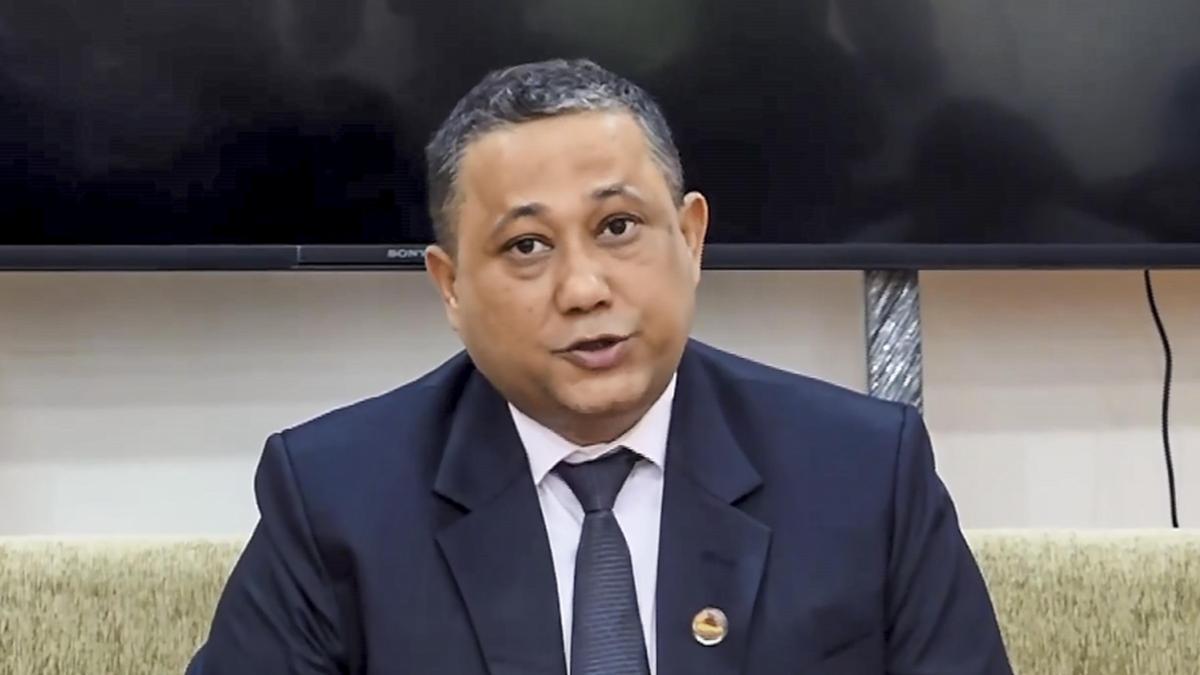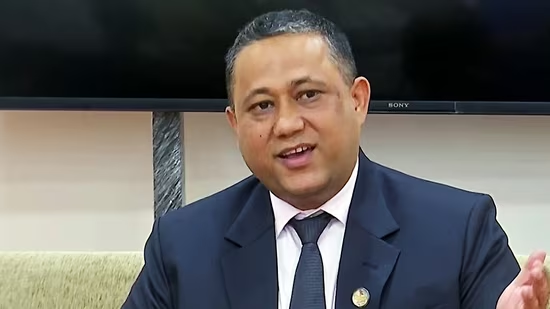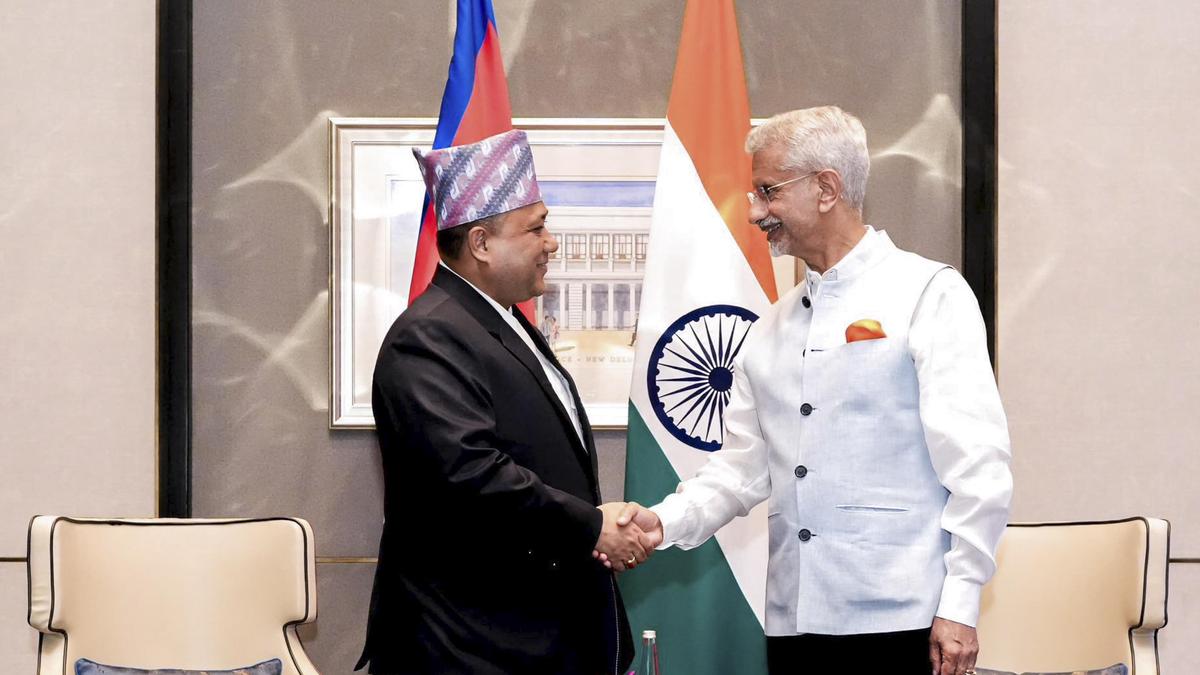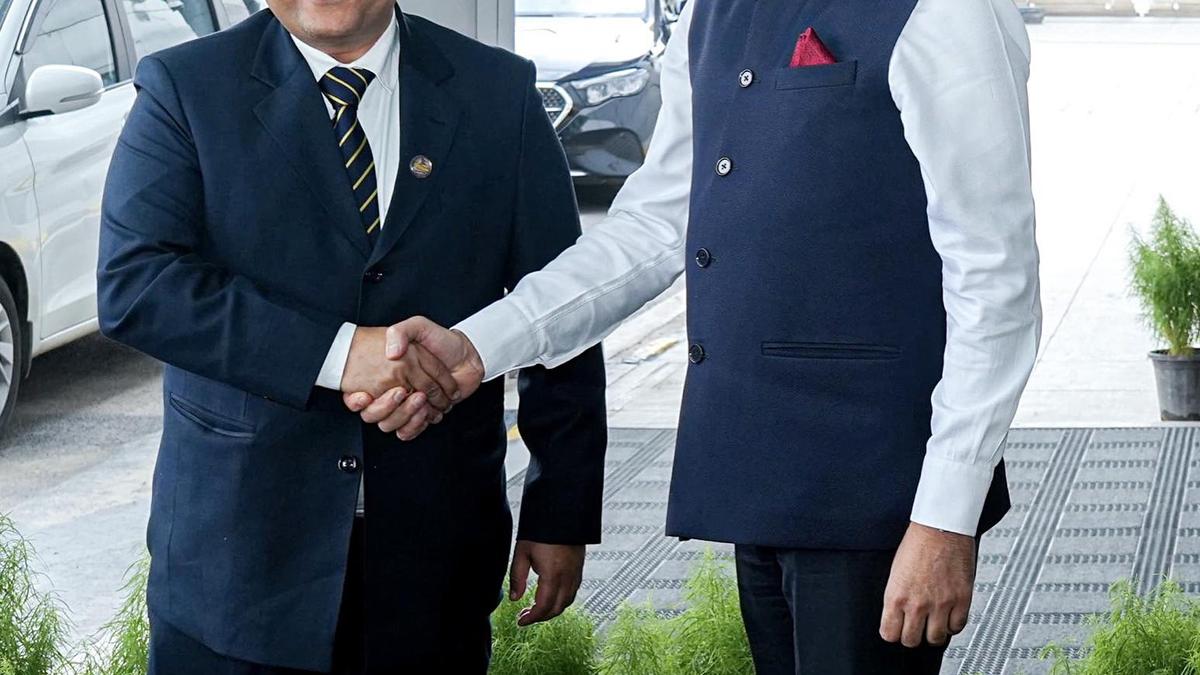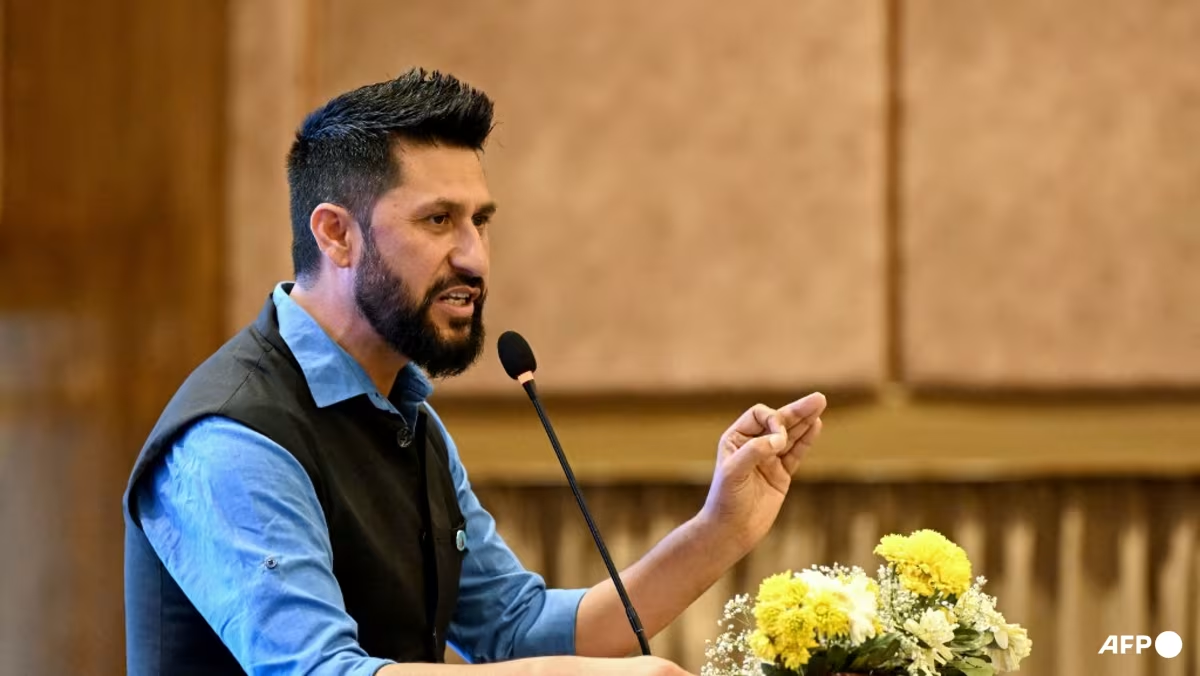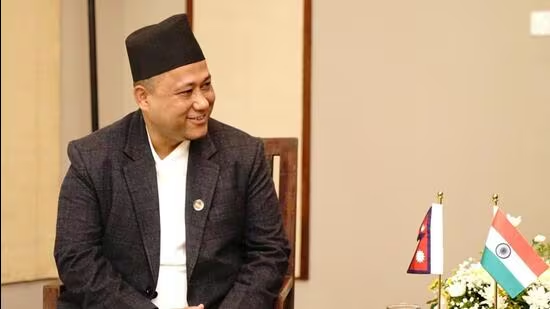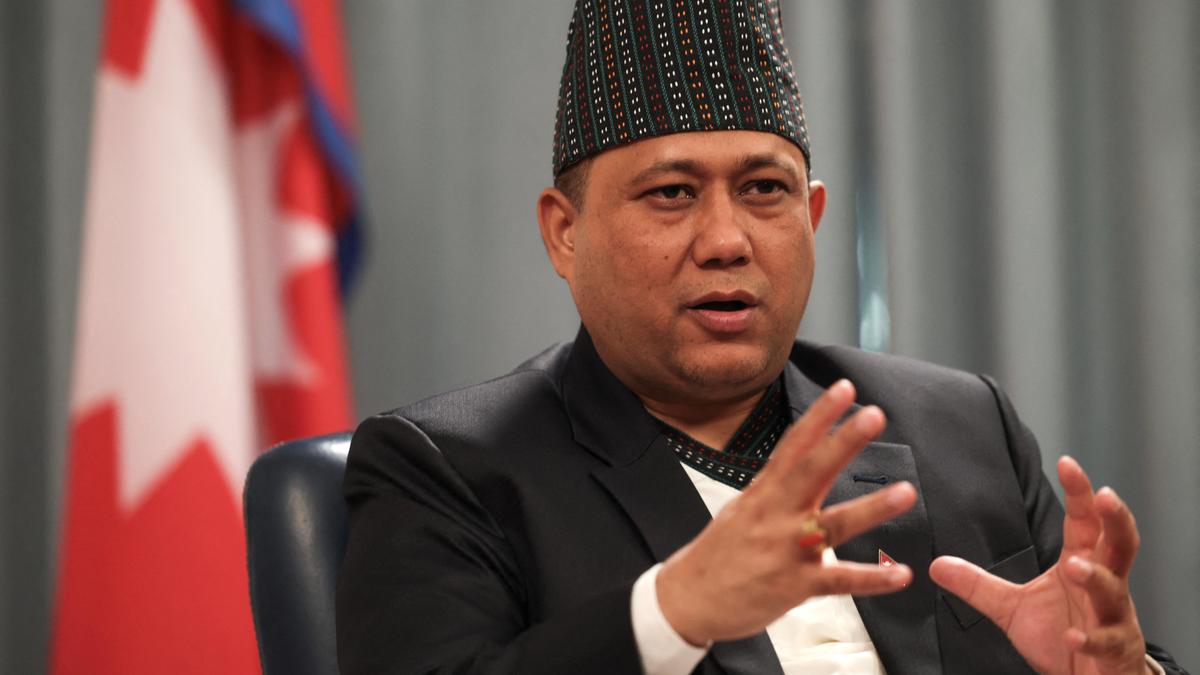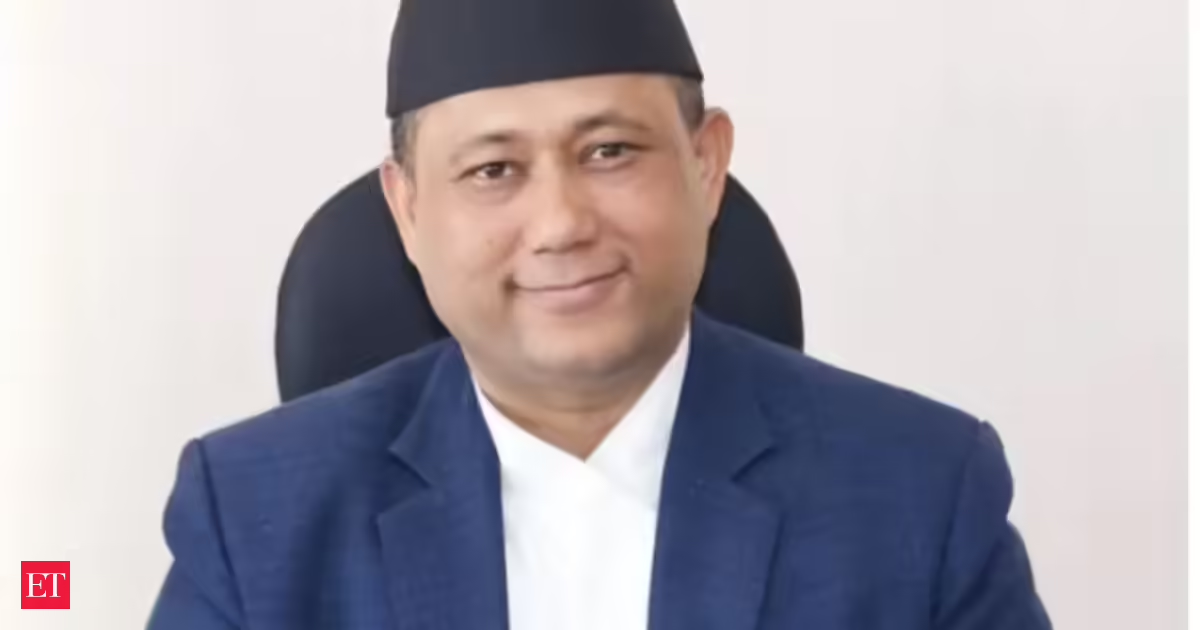
Nepal looks to India as a source of scale, inspiration and corporate partnership to build a double-digit growing economy with regulatory predictability, says Nepal foreign minister Shishir Khanal. Kathmandu advocates for calm, rational and evidence-based dialogues and, sitting across the table as equals, India and Nepal can resolve outstanding boundary disputes, Khanal, on his first visit to India in his official capacity, tells Dipanjan Roy Chaudhury. Excerpts:What are your expectations from this visit?It is about establishing official high-level engagement between the two governments. It's been about two years since such a visit has taken place. In between, Nepal has gone through a sea of change in terms of politics. A new political party, Rastriya Swatantra Party (RSP), established less than four years ago, has received a strong electoral mandate, through a very peaceful and democratic election held in March 2026. Therefore, I am taking this visit as an opportunity to communicate the RSP government's priorities to the government and people of India. In that sense, my expectation is to lay the groundwork for a bilateral relationship defined by actionable joint initiatives, timely execution of projects, and a framework that supports mutual growth.How does the RSP plan to govern differently?The March elections were a clear message from the Nepali people-particularly the youth-that status quo was no longer acceptable. Unlike previous administrations that often operated through fragile coalitions and compromises, the RSP has the mandate to be firm and decisive. We have two primary agenda: uncompromising stand on good governance and economic growth of Nepal. We see collaboration potential with India on digital public infrastructure (DPI). The other major push that we are making is on job creation. For job creation to happen, we need investment, businesses and industries. The Government of Nepal recently announced its first annual budget. Through the budget, we have announced a series of reforms that range from fiscal and tax reforms to simplification of FDI processes and strong tax incentives to startups. We are looking for investors and partners who will engage with us on trade, technology, energy, infrastructure and tourism.How Nepal plans to take a more collaborative approach with India?These sectors are highly prioritised as high-yield, early-harvest areas where immediate cross-border collaboration can deliver rapid results: Nepal wants to move away from piecemeal, seasonal power agreements. The goal is to establish a seamless, long-term regional energy market where Nepal's sustainable green energy directly powers India's industrial corridors.To maximise the tourism economy, friction-free circuits must be built. This includes connecting key spiritual hubs like Janakpur directly to Ayodhya, alongside establishing direct commercial flights from newly developed airports in Pokhara and Bhairahawa to tier-one and tier-two Indian cities to connect to Buddhist Circuit.The success of Nepali athletes in international platforms like the Indian Premier League (IPL) highlights the commercial potential of sports collaboration.What would be RSP government's specific approach to India?The specific approach to India is defined by an absolute clean slate. For the RSP government, India is viewed as a vital partner for economic scale, capital, and market depth. The approach is entirely transparent, market-oriented and focused on learning from the competitive transformations happening across various Indian states. We want to focus on translating the promises that have been made in the past to results. Our day-to-day engagement will be overwhelmingly focused on economic integration, cross-border investments, and shared prosperity.What are your views on boundary issues with India?As close neighbours with a long, shared border, it is natural that certain boundary issues exist. Boundary and transit bottlenecks are operational friction points that can be systematically managed. On the ground, technical teams are working together and boundary-related mechanisms are active between the two countries. We hope to resolve our differences through forward-looking discussions. We advocate for calm, rational, data-driven, and evidence-based dialogues. By sitting across the table as equals and working in good faith, both nations can resolve boundary disputes.What sectors is Nepal prioritising to deepen economic ties with India?Historically, there has been an under-realisation of the benefits of India's rapid growth. To capture missed opportunities, Nepal is focusing on four key verticals: Nepal looks to India as a source of scale, inspiration and corporate partnership to build a double-digit growing economy with regulatory predictability. Transitioning to a seamless, long-term cross-border green energy market and positioning Nepal as a regional green energy hub leveraging potential power supply to India as well as Bangladesh. Eliminating bureaucratic bottlenecks through fully digitised Integrated Check Posts and highly modern transport corridors.Actively collaborating on fintech solutions, UPI-linked cross-border digital payments, and shared tech platforms to empower grassroots entrepreneurs. We would like to connect big and small cities, religious towns, and tourist destinations via road, train and air. Additionally, observing the innovation hubs in cities like Bangalore or Hyderabad needs to be connected to Kathmandu. We have an excellent young tech-savvy population in Nepal and are building innovative businesses who need the scale and capital depth that India can provide.
'Our India policy starts with a clean slate and shared economic goals'
Nepal's Foreign Minister Shishir Khanal is visiting India to foster stronger ties. The new Nepali government prioritizes good governance and economic growth. Nepal looks to India for investment and collaboration in energy, tourism, and technology. Both nations aim to resolve boundary issues through calm, evidence-based discussions. Nepal seeks to build a double-digit growing economy with India's support.
816 words~4 min read