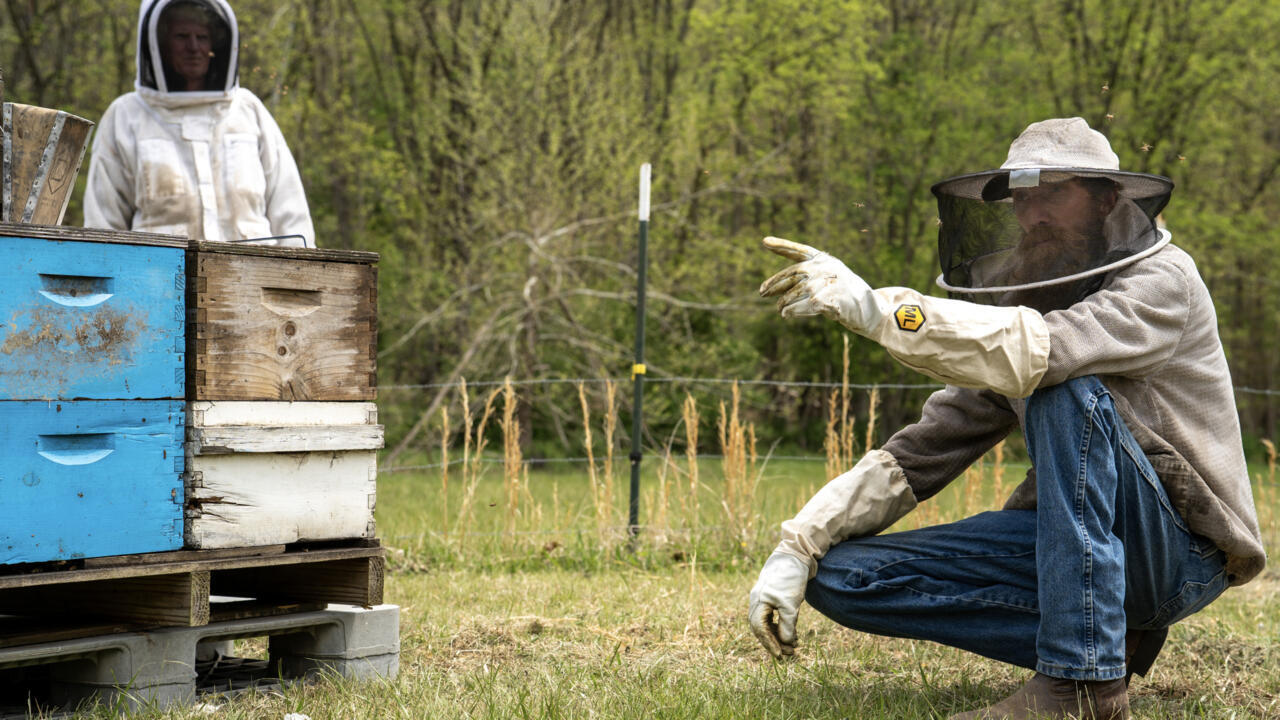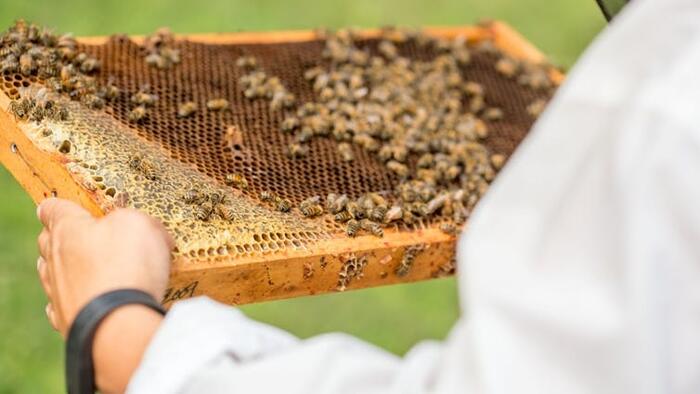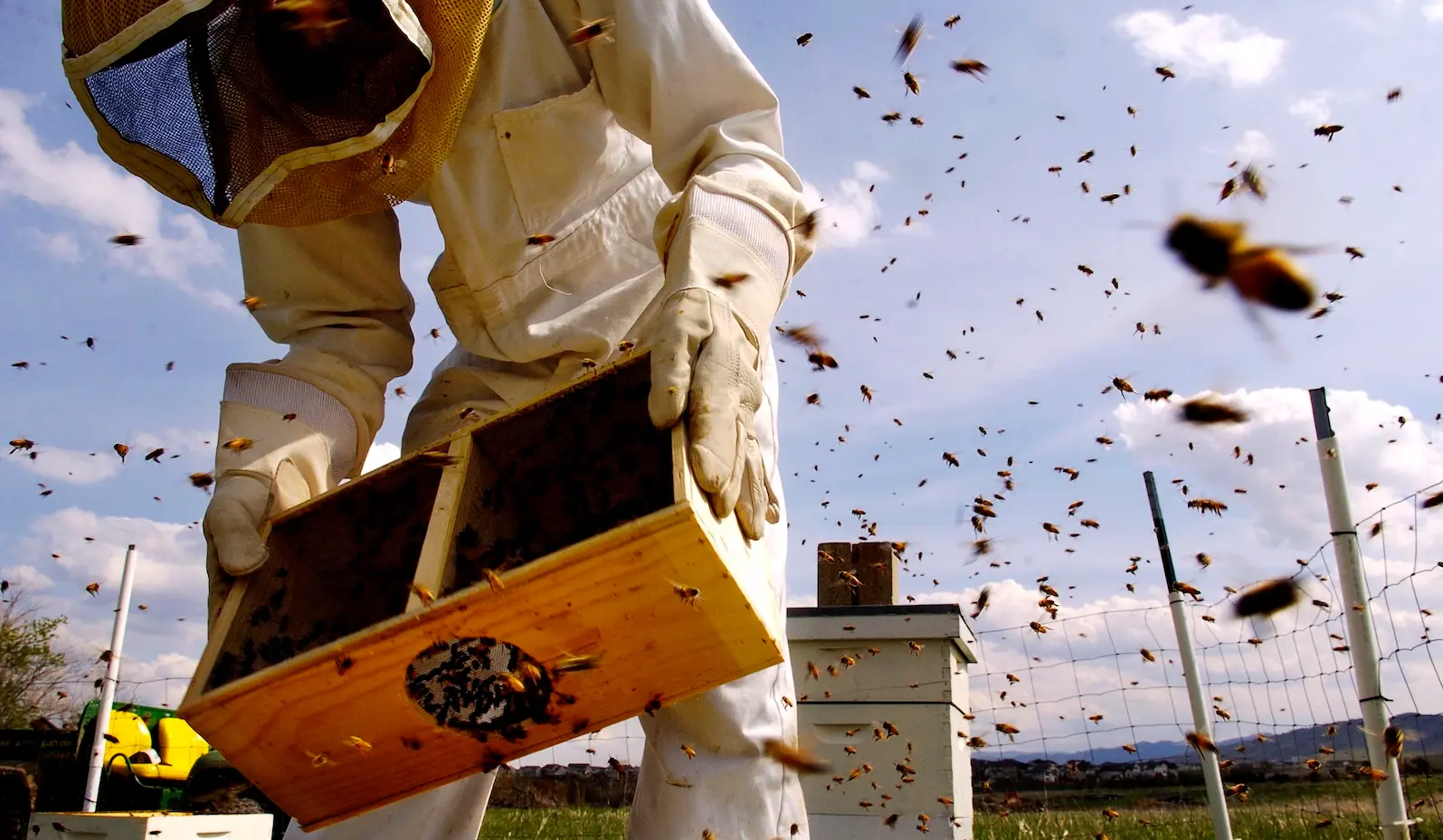
Born and raised in Colorado, Cory Kreft began working on a honey farm at 15 years old. He returned to beekeeping after college, eventually buying the business from his former boss. But in 2021, his bees suddenly began dying. He lost 85 percent of his hives. The losses continued the next year, and the next. After extensive testing, he identified the culprit: a relatively new class of pesticides called neonicotinoids, often shortened to neonics.
These chemicals are commonly used to coat crop seeds before planting, ostensibly to protect the plant from pests and insects during early growth. Thanks in part to a federal regulatory loophole, the use of neonic-treated seed has quietly exploded in recent years, with little regulation or oversight. Almost all conventional corn and more than half of soy seed in the U.S. is now treated with neonics.
A legal loophole called the treated article exemption allows companies to apply these toxic chemicals to products like seeds without registering them separately as pesticide products. The seeds then fall into the same class as antimicrobial toothbrush coatings or treated lumber sold at major home improvement stores, with few legal limitations around how they are monitored, used, or disposed of. “Anyone can legally go buy this pesticide-treated seed, dump it in a river, and then contaminate the entire water system,” Kreft said.