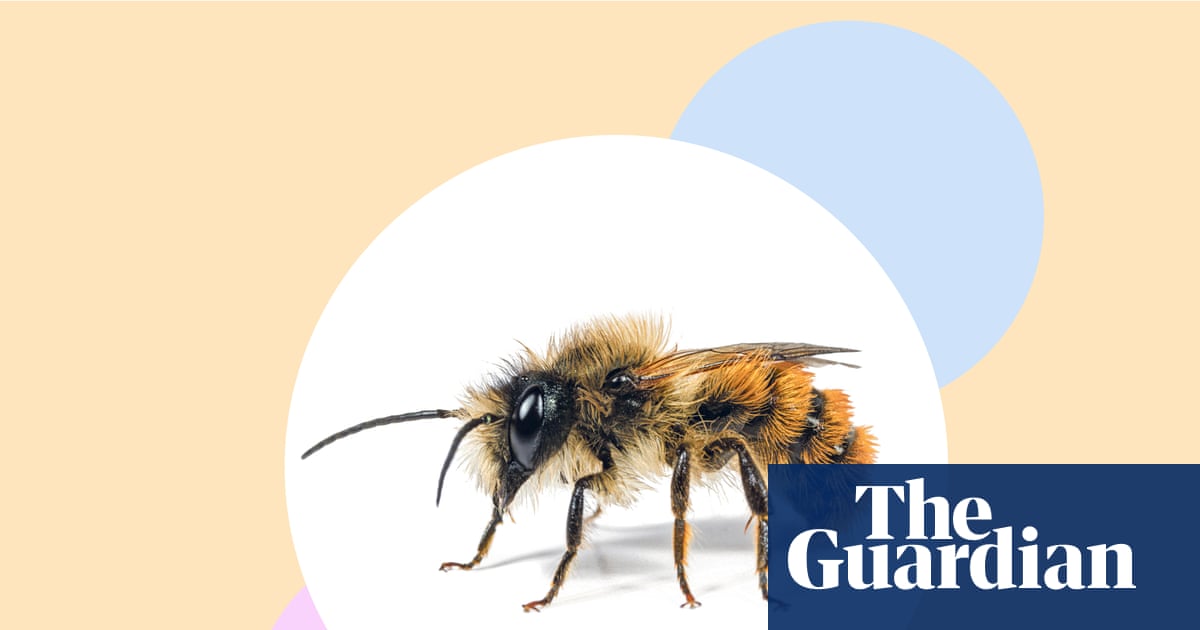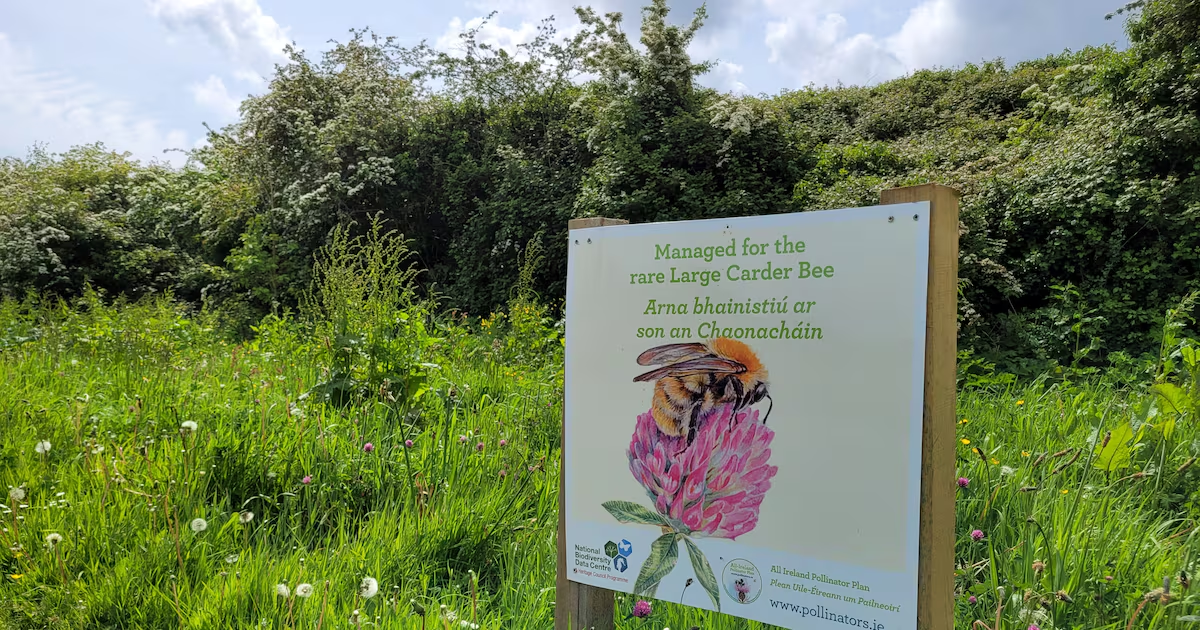
With nature in trouble nearly everywhere, for those who want to take action, knowing where to start can be a daunting task. For the community of Skerries in north Co Dublin the answer was the large carder bee Bombus muscorum, a type of bumblebee that is among the one third of wild Irish bee species threatened with extinction. This ginger-haired pollinator is found in flower-rich grasslands across Europe and northern Asia but, unusually in Ireland, it is known to do well in urban environments.Since 2019, the Sustainable Skerries community group, along with Fingal County Council, have been managing meadows in public areas to promote the natural diversity and abundance of wild plants for the large carder bee. The bee will feed on a range of flowers, including brambles, thistles, clovers and dandelions, which are quite common; but also kidney vetch, knapweed and bird’s-foot trefoil, which tend to be more restricted to grasslands that have not been overly fertilised or grazed.The queen of the large carder bee hibernates over the winter in a nest under rough grassland. When she emerges in the summer, she lays eggs that hatch into worker bees, which will feed her and tend to her, as she will never again leave her underground burrow.Studies have shown that the worker bees rarely travel more than 100m from the nest in their quest for food. So, not only do they need an abundance and diversity of native flowers but healthy populations of the bee also need large areas of suitable habitat if they are to sustain themselves – features that are in short supply.In 2021 Sustainable Skerries produced an action plan, the main aim of which was to create a corridor through the town to allow the insect “to move through the town, joining up the main existing populations and ensuring a viable local population of large carder bees into the future”. The plan has been a success, with the National Biodiversity Data Centre (NBDC) confirming that since its implementation the bee has expanded its range within the town. It is confirmation of the important role that local communities can play in addressing the biodiversity crisis.Ten years ago we knew we had a problem and we knew we could do something about itThe 2024 report of the all-Ireland bumblebee monitoring scheme published by the NBDC heralds the work in Skerries and elsewhere, proclaiming that “while it is clear that we need to greatly step up our efforts, this does bring hope for the future of those species currently struggling”.Nevertheless, the wider news for the large carder bee remains bleak. The NBDC report also states that it remains “in serious decline nationally”.Bees, of which there are about 100 species in Ireland, are increasingly starving and homeless. Publication of the first scientific analysis of the state of our bee population in what is known as a “red list” in 2006 showed only 38 of the 102 species examined fell into the safe category of “least concern”. Three were declared extinct and six were “critically endangered”.Since then, one, the tawny mining bee, which was thought extinct, was rediscovered in Co Kilkenny and another, the tree bumblebee, has colonised the country.Wild flowers at the Community Garden at Skerries Mills. Photograph: Alan Betson But the overall trends remain miserable. The report of the bumblebee monitoring programme, which is limited to bumblebees and so is not representative of the majority of bees – or other pollinators, show that since records began in 2012 there has been a year-on-year decline of 3.5 per cent.That leaves them, in the words of the report, “in a precarious position”. They were further imperilled in 2024, which was “dreadful” for them due to the weather.It is not like action has not been taken. In 2015, spurred by the stark findings of the red list, concerned scientists, including those within the NBDC, launched the first All-Ireland Pollinator Plan.Úna Fitzpatrick is the chief scientific officer of the NBDC, co-author of the 2006 red list and among the founders of the process that led to the first pollinator plan.Looking back, she says: “Ten years ago we knew we had a problem and we knew we could do something about it.”Although this process was not funded, she says they were “totally overwhelmed” with the report they received.“I’ll never forget the day we were about to launch, and we didn’t know if there was going to be any pickup in the media at all,” she says. “But it was huge, and so many organisations wanted to be involved.”[ Secret pesticide ingredients ‘may pose risk to people, pollinators and environment’Opens in new window ]This broad support has been maintained. In its summation of the two plans over the 10 years the figures are impressive: 172 actions completed (nearly all), 100 per cent of local councils (North and South) are partners and more than 5,000 sites are registered as pollinator-friendly.The process has also produced evidence-based guidance specific to schools, gardens, businesses and community groups, and an academic research network has formed that has published 76 (and counting) scientific papers related to pollinators. And last year a record number of volunteer “citizen scientists” participated in the bumblebee monitoring programme. The final review report, published at the end of 2025, is rightly proud of these achievements, noting that it is recognised internationally and that it has “evolved into a widespread and successful biodiversity conservation initiative that has a large public profile across the island of Ireland”.Despite this, Fitzpatrick says there is “a long, long way to go” and that, in the medium to long term, success will depend on changing how the landscape is managed.As a scientist, she emphasises the need for strong evidence to guide the advice that is being delivered but also feels that, with good communication, people, whether they’re farmers or Tidy Towns groups, understand what needs to be done. “Probably what I’m most proud of is that people are still willing to go with it. Now that we’re working on the third phase [of the plan] there is still massive support.”That popular support was quickly noticed by the corporate sector. Dublin Airport, one of the single biggest sources of greenhouse gases in the country, says on its website that it “actively takes part” in the plan. Approaches to the departure gates are festooned with “bee hotels” (a largely ineffective intervention) and exotic plants that are in place as part of its “sustainability strategy”.Perhaps even more worrying was a partnership with An Bord Bia, the State body that promotes Irish food and drink exports with more than €60 million of taxpayers’ money. The Pollinator Plan lent its name to marketing material supporting the Origin Green label, which has been widely discredited as industry greenwashing. An Bord Bia provided funding to support business participation.Ireland’s agriculture model, with its monocultures of rye grass and neatly clipped hedges isn’t the only reason why bees struggle to find food, but it is the primary one. The last round of the Common Agricultural Policy acknowledged the need for action for pollinators by paying farmers to install heaps of sand in a yard; an action that left farmers and ecologists alike scratching their heads.Fitzpatrick defends the participation of business in the pollinator plan, insisting they have to commit to completing evidence-based actions and reporting back. “I can tell you straight off that we throw out about 90 companies a year who don’t report back to us,” she says. Some of the 400 companies currently on the books are “doing amazing things”, she says.As the plan enters its third phase, allocations under the Shared Island Fund as well as other Government bodies will allow for an increase on the three full-time officers.Regarding farmland, Fitzpatrick points to a recent project in collaboration with the Department of Agriculture on protecting farmland pollinators. “I hope that this third phase is going to have a big farmland focus. We’ve always known it’s the most important sector and I feel it’s taken us to this point to be in a position where we can start to make real change,” she says.The next pollinator plan will be published shortly and will build on all that has been achieved in the past decade. What started off as a voluntary effort from concerned scientists has developed into a substantial programme that has engaged thousands of people across the island. The next decade will be critical in translating this success to real improvements for pollinator populations.
Bees in big trouble as the lie of the land worsens
The next five-year National Pollinator Plan will be critical for arresting further decline, driven by threats to habitat
1,404 words~6 min read