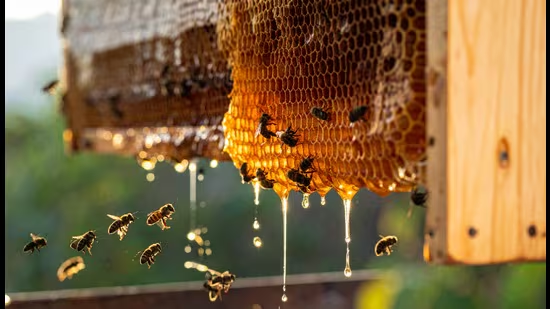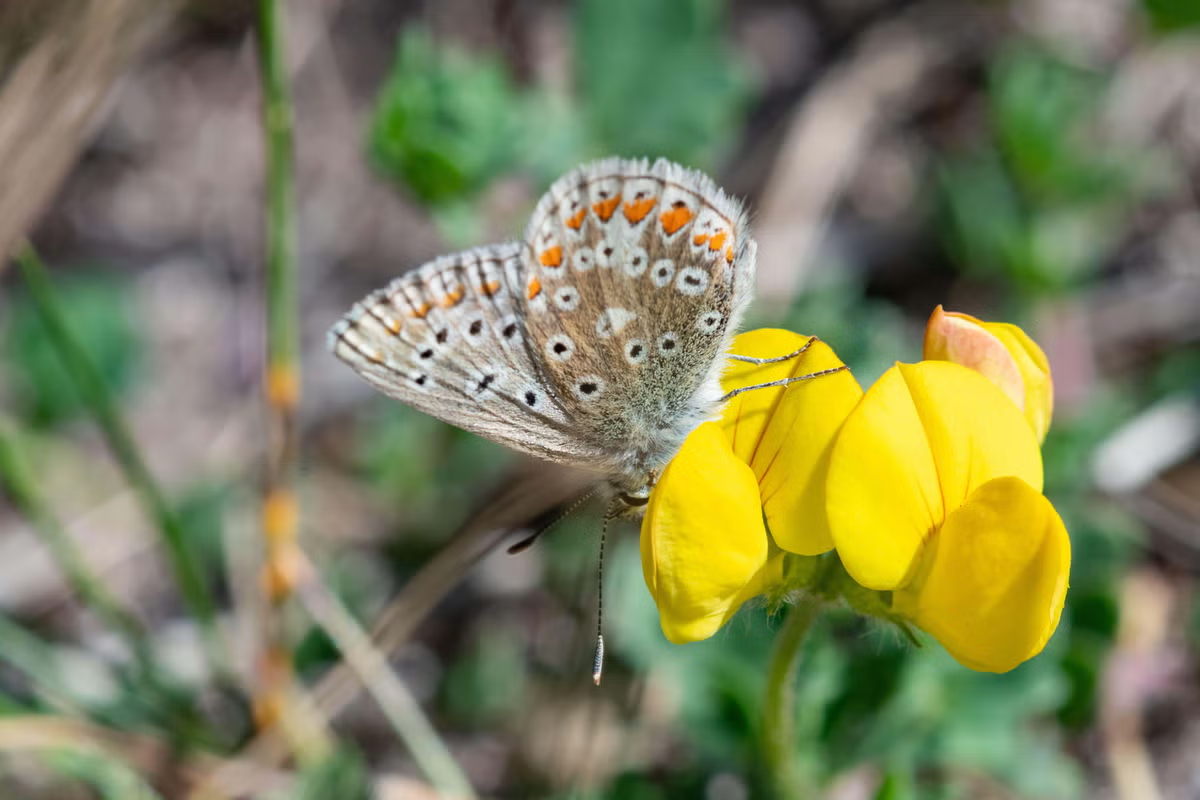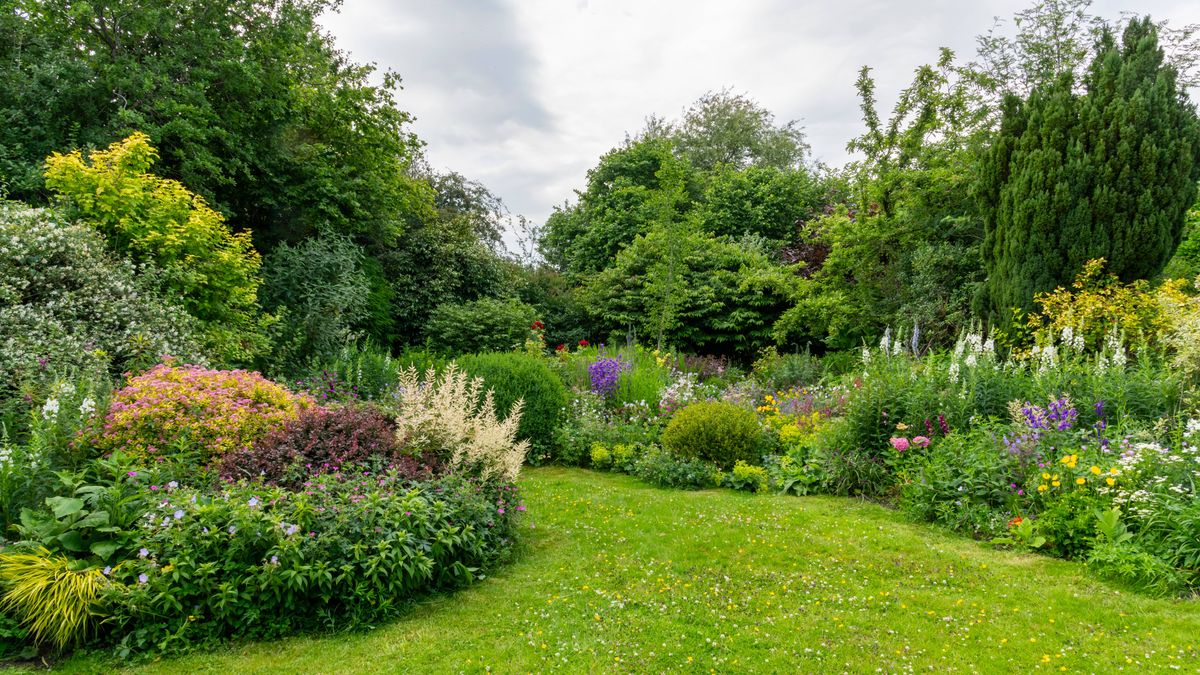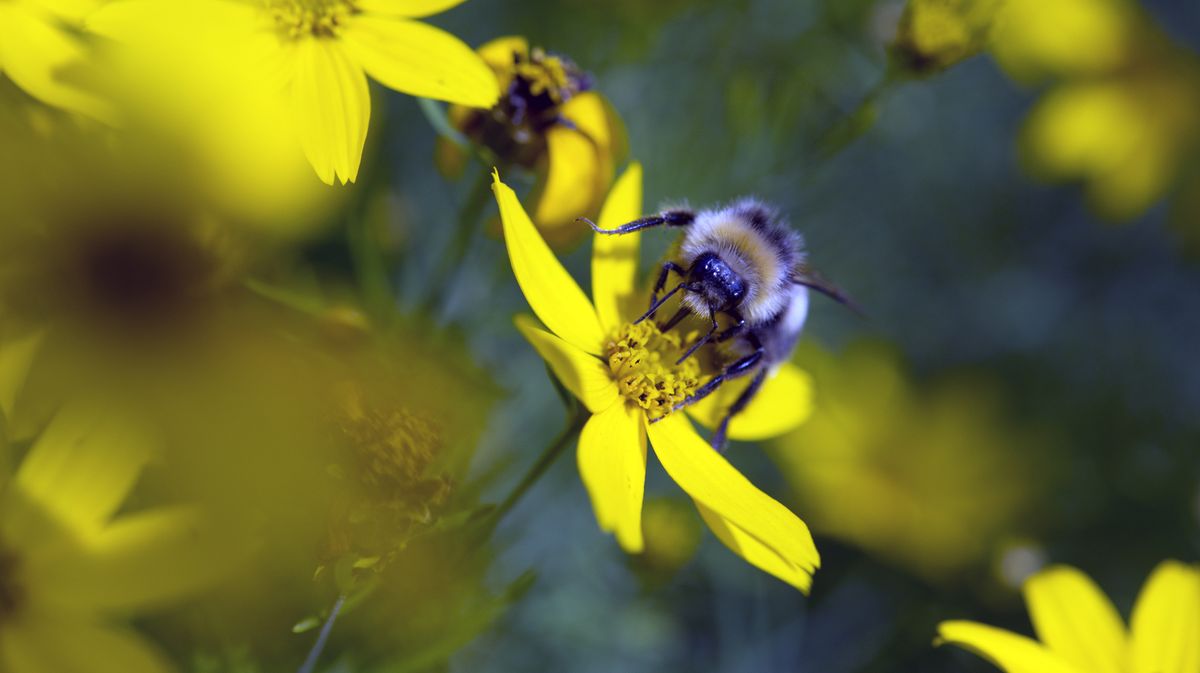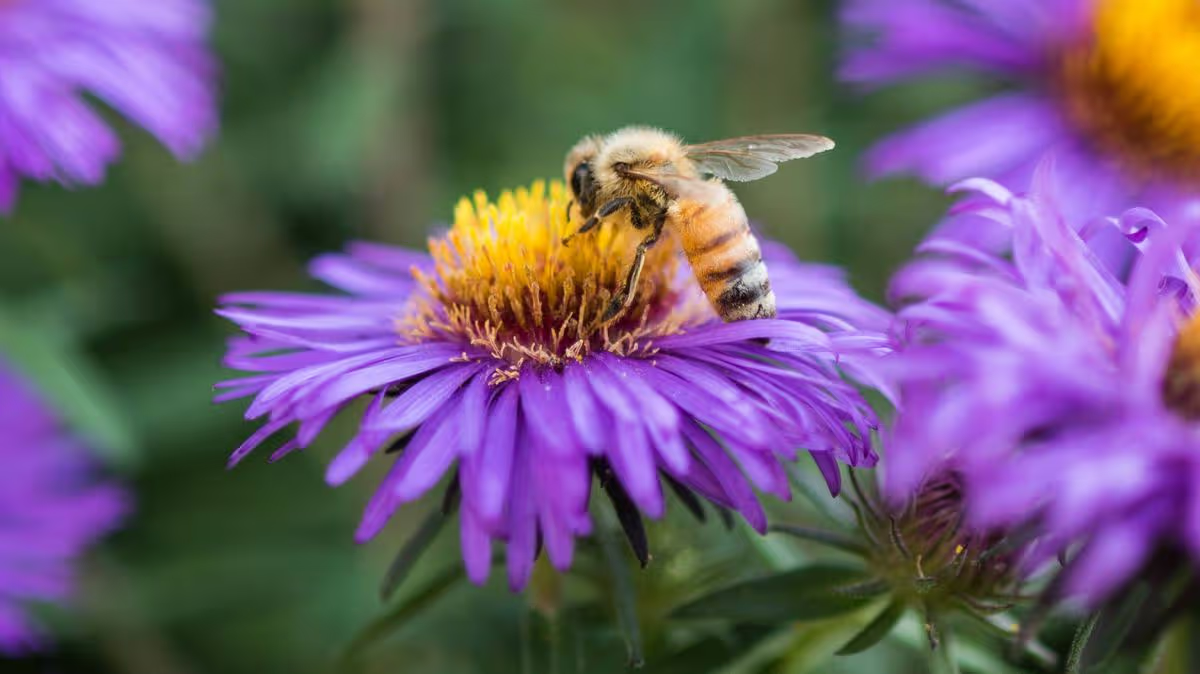
Bees are essential for pollinating many of our food crops and wild flowers, and a horticulturist says there is a specific flower you should propagate to help attract more bees to your garden15:31, 28 Jun 2026Updated 15:34, 28 Jun 2026Bees are incredible creatures. Not only do they produce delicious honey, but they play a vital role in pollinating much of our food and wildflowers. Across the UK, there are more than 230 species of wild bees. Sadly, though, UK bee populations have declined by around a third over the past 30 years.As a result, households are constantly urged to introduce certain plants and flowers into their gardens to draw more bees to the area, creating a vital safe haven for pollinators including bumblebees, honeybees, wasps, drone flies, ladybirds, beetles and others. For birds and creatures such as hedgehogs, our gardens can act as crucial rest stops, food sources and sheltered retreats.With the right mix of flowers, plants and trees, homeowners can transform their outdoor areas into flourishing habitats, regardless of size. However, if you're short on space or time to dedicate to your garden, there's one particular flower you should consider adding this July that bees absolutely adore.In a video posted to their TikTok account, Royal Horticultural Society (RHS) Horticulturist Paul Atkinson shared how you can propagate lavender to eventually plant in your garden.Content cannot be displayed without consent"Lavenders are super plants for the garden and great for the bees," he explained.Why does it help?Bees are attracted to lavender because its vivid blooms are highly visible to their UV-sensitive vision, while the plant emits a powerful scent that serves as a natural signal. Although both honey bees and bumblebees are visitors, bumblebees have a particular affinity for lavender.Beyond this, lavender offers an abundant, readily available nectar source throughout an extended period, perfectly suited to a bee's dietary requirements.While lavender is ideally planted during mid-to-late spring, once soil temperatures rise and the threat of severe frost subsides, July presents an excellent opportunity to propagate the plant.How do you do it?"So with lavenders, we're looking to take semi-ripe cuttings. So using a sharp knife, we're going to cut just below a leaf node," Paul explained. "This is actually where we have a lot of rooting hormones, which is going to help the cutting to take root."He proceeds to overfill a plant pot with soil, before tapping it down to achieve a compact consistency and scraping away the excess with his hand. Paul then places several lavender cuttings into the pot, ensuring adequate spacing between each one."So now our cuttings are inserted, we'll water those in," he explained. "And that will help the compost settle around the cutting."Article continues belowFinally, Paul suggests positioning the freshly planted pot of lavender cuttings within an enclosed space, covering it with a plastic bag secured using an elastic band. He continued: "So to care for your cuttings, you want to take the bag off on a regular basis, and that just replenishes the air around them, and stops any rotting off."It's good to take between four and six weeks for any roots to develop," he added. "And I would generally say for potting these individually, you're looking at an eight week time frame."By taking cuttings in July, they'll be ready for individual planting come early autumn, giving the roots time to establish themselves before winter sets in.
Bees will visit your garden regularly if key plant is placed outdoors in July
Bees are essential for pollinating many of our food crops and wild flowers, and a horticulturist says there is a specific flower you should propagate to help attract more bees to your garden
TL;DRAI
Questo articolo non è in scope per Warptech Tech News. È un pezzo di giardinaggio/naturale (coltivazione lavanda, api) senza alcun collegamento a tech, AI, business o decisioni di stack/infrastructure che interessino un manager IT o CTO. Se stai testando il sistema di riassunto, ti consiglio di fornire un articolo tech-relevant (es. funding round, product launch, M&A, security, cloud infra, AI governance, ecc.).
560 words~3 min read