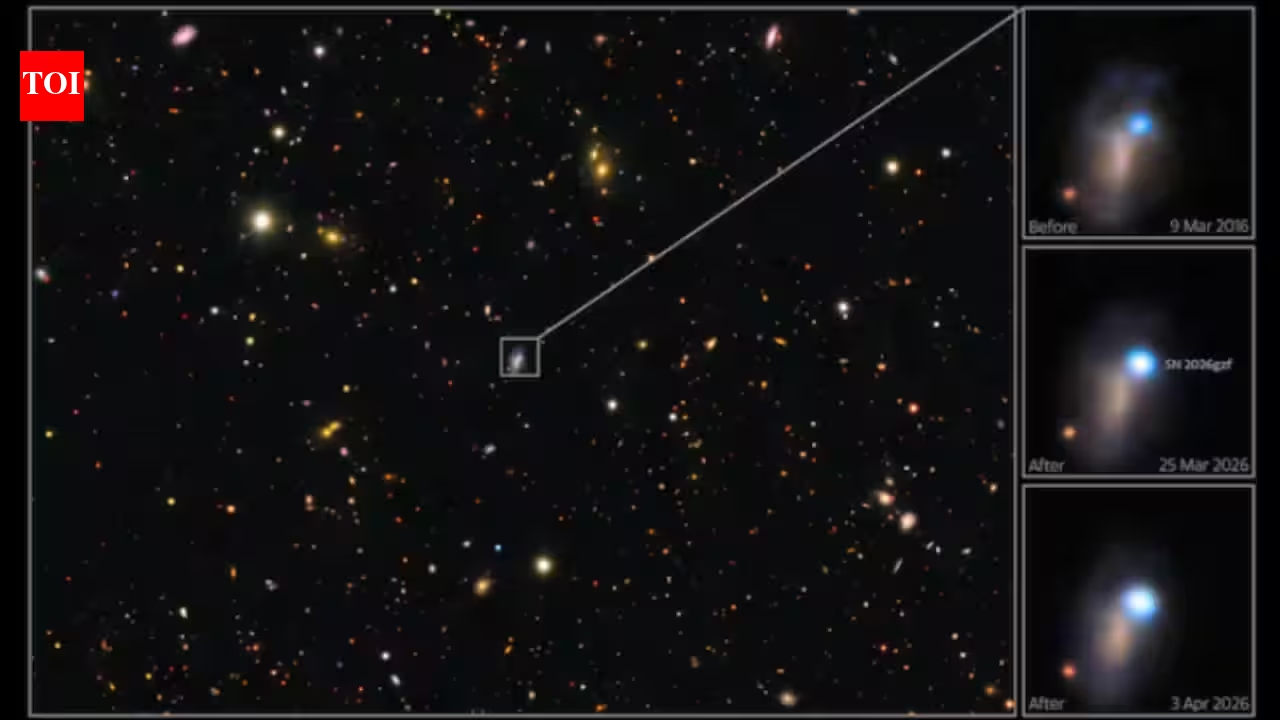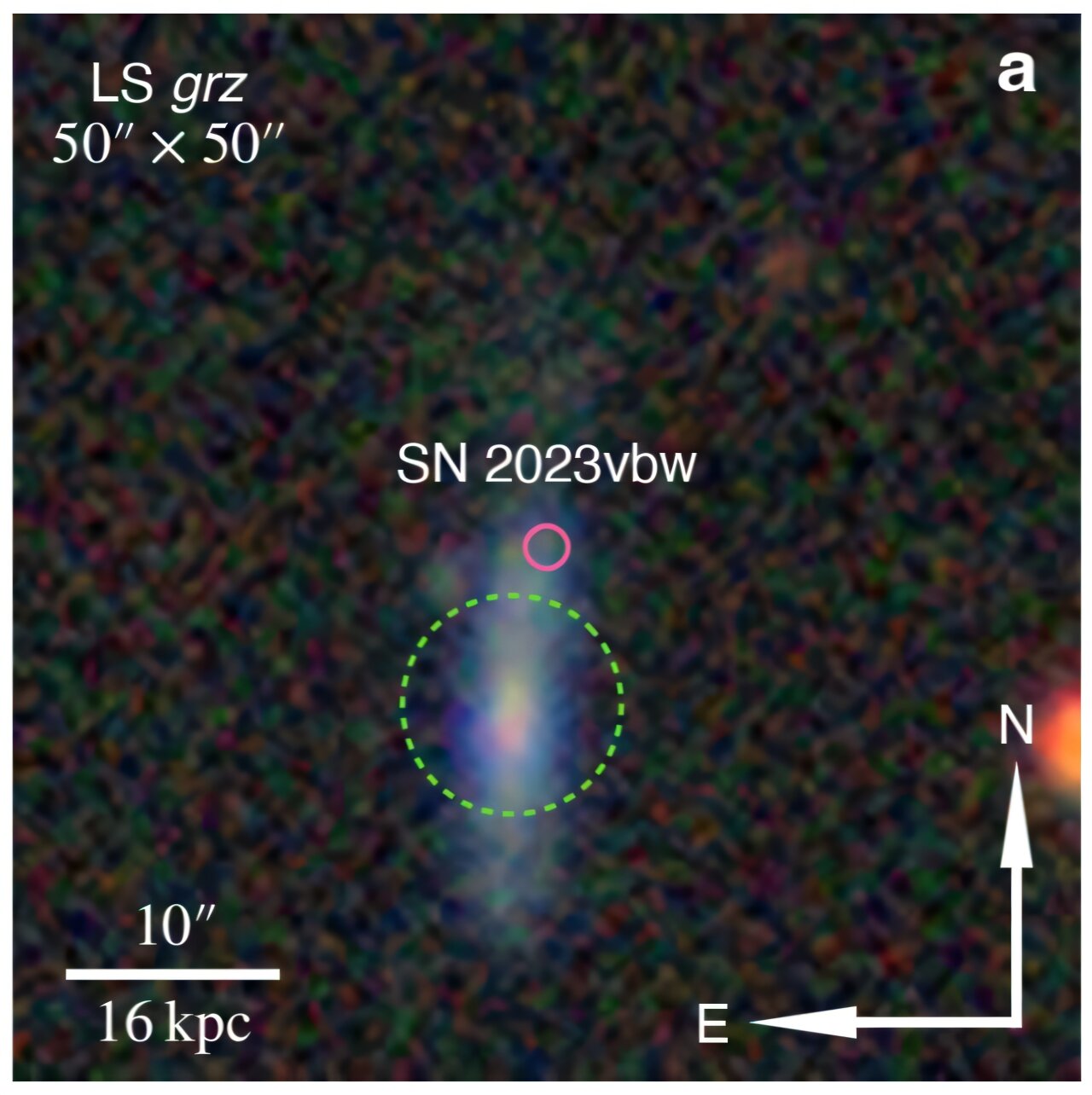
The location of SN 2023vbw (magenta circle) in the outskirts of its dwarf host galaxy (green circle). Credit: arXiv (2026). DOI: 10.48550/arxiv.2605.16487
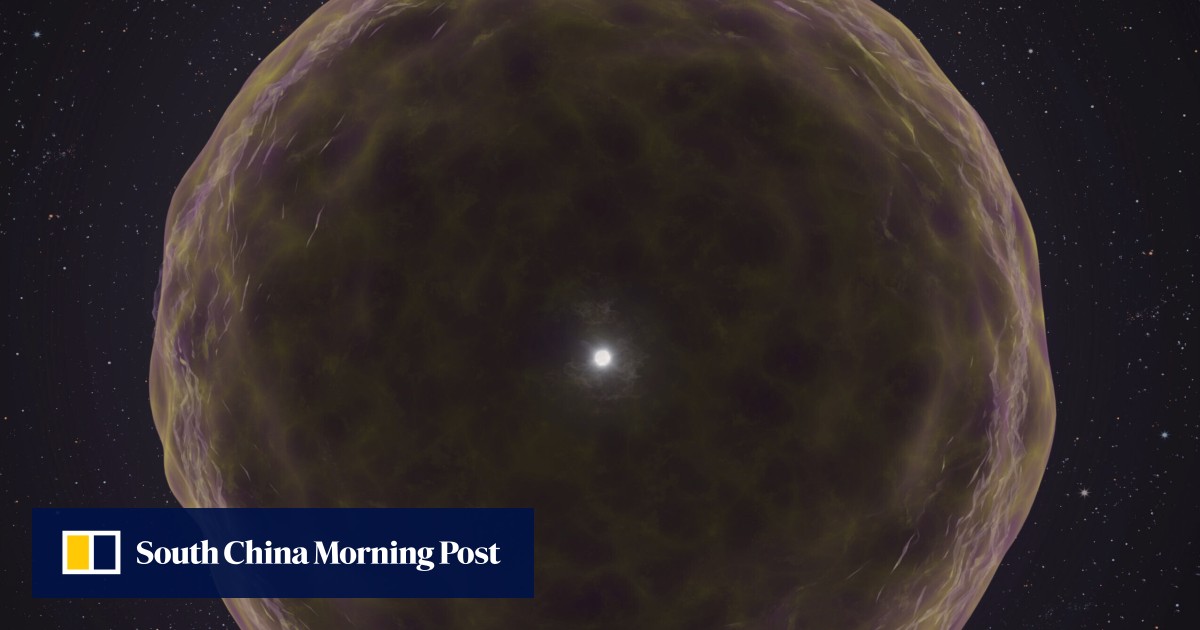
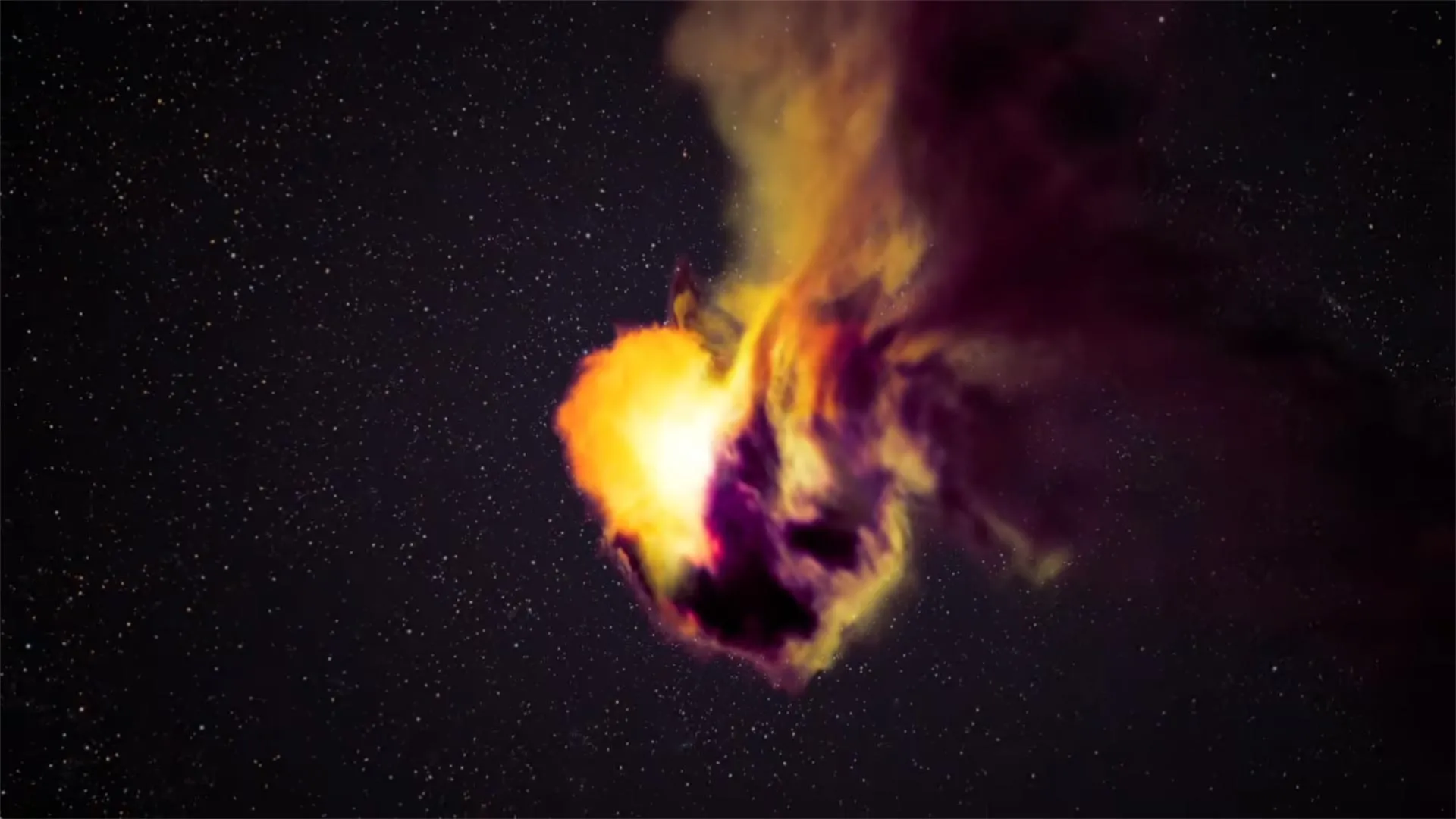
Astronomers may have discovered one of the clearest examples yet of a rare "pair-instability" supernova. It is a catastrophic explosion thought to completely destroy some of the most massive stars in the universe, leaving behind no remnant. The paper outlining the properties of this rare explosion was posted to the arXiv preprint server on May 15.
The event, SN 2023vbw, was first detected by the Zwicky Transient Facility in October 2023 in the outskirts of a small, metal-poor dwarf galaxy about 1.3 billion light-years away. It was tentatively classified as a Type II supernova—the kind produced when a massive star exhausts its nuclear fuel, collapses under gravity, and explodes. But several of its properties refused to fit that picture.
An outlier
In a new study, astronomers conducted detailed observations and modeling of SN 2023vbw to pin down its true nature. The first clue that something unusual was happening came from its light curve—how its brightness changed over time. Rather than the plateau-like rise typical of a Type II supernova, after an initial cooling phase, SN 2023vbw rose steadily to a bright peak at around 190 days.