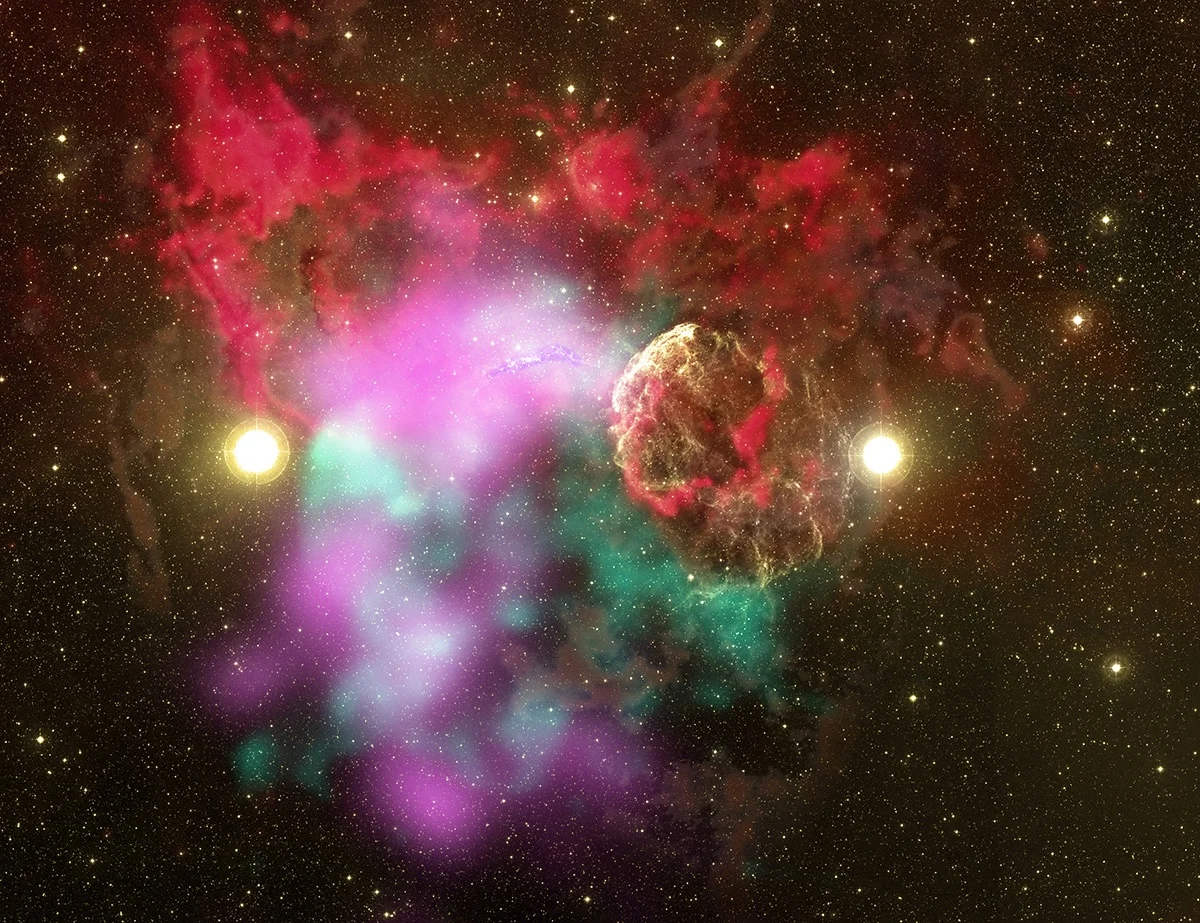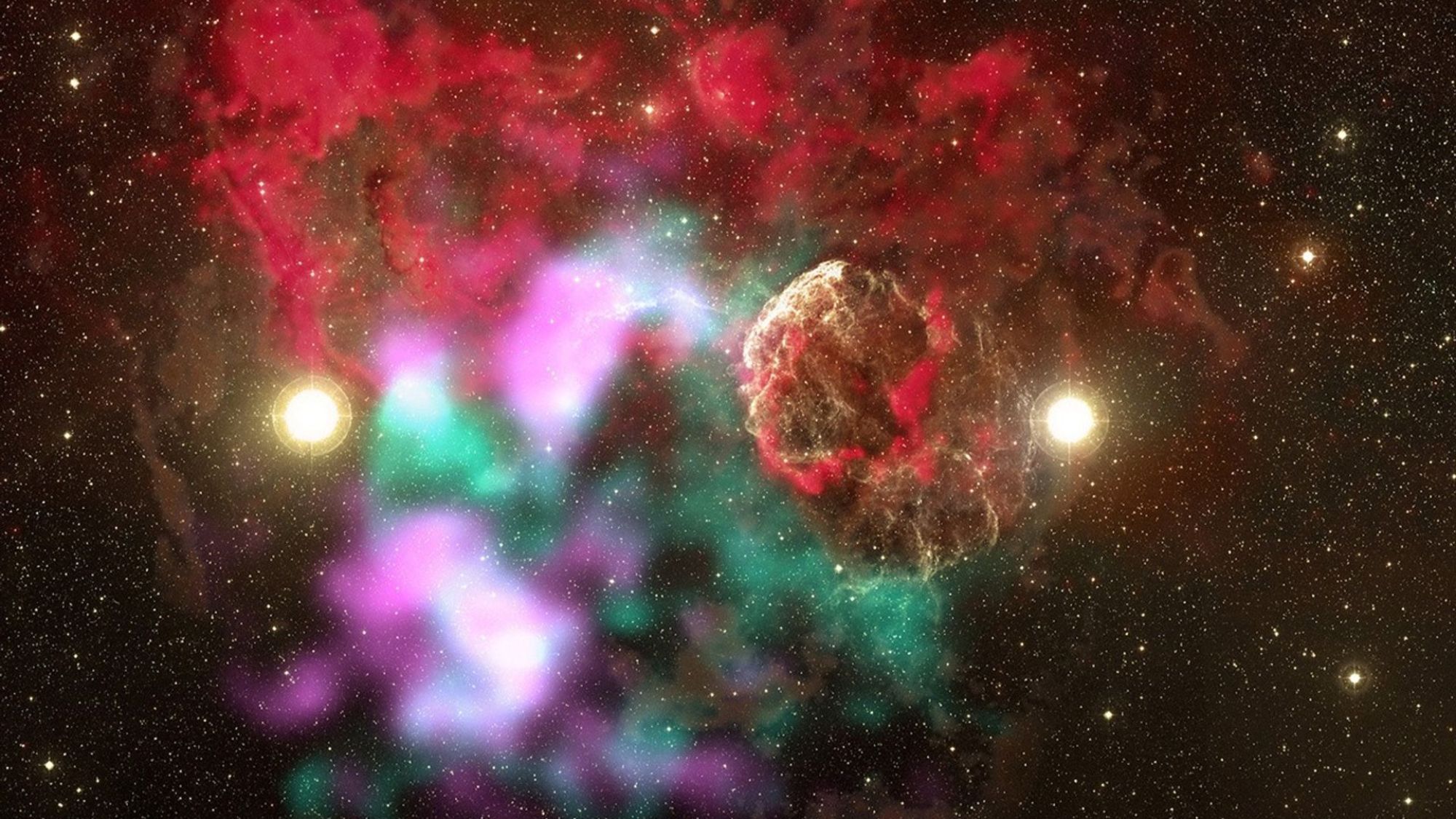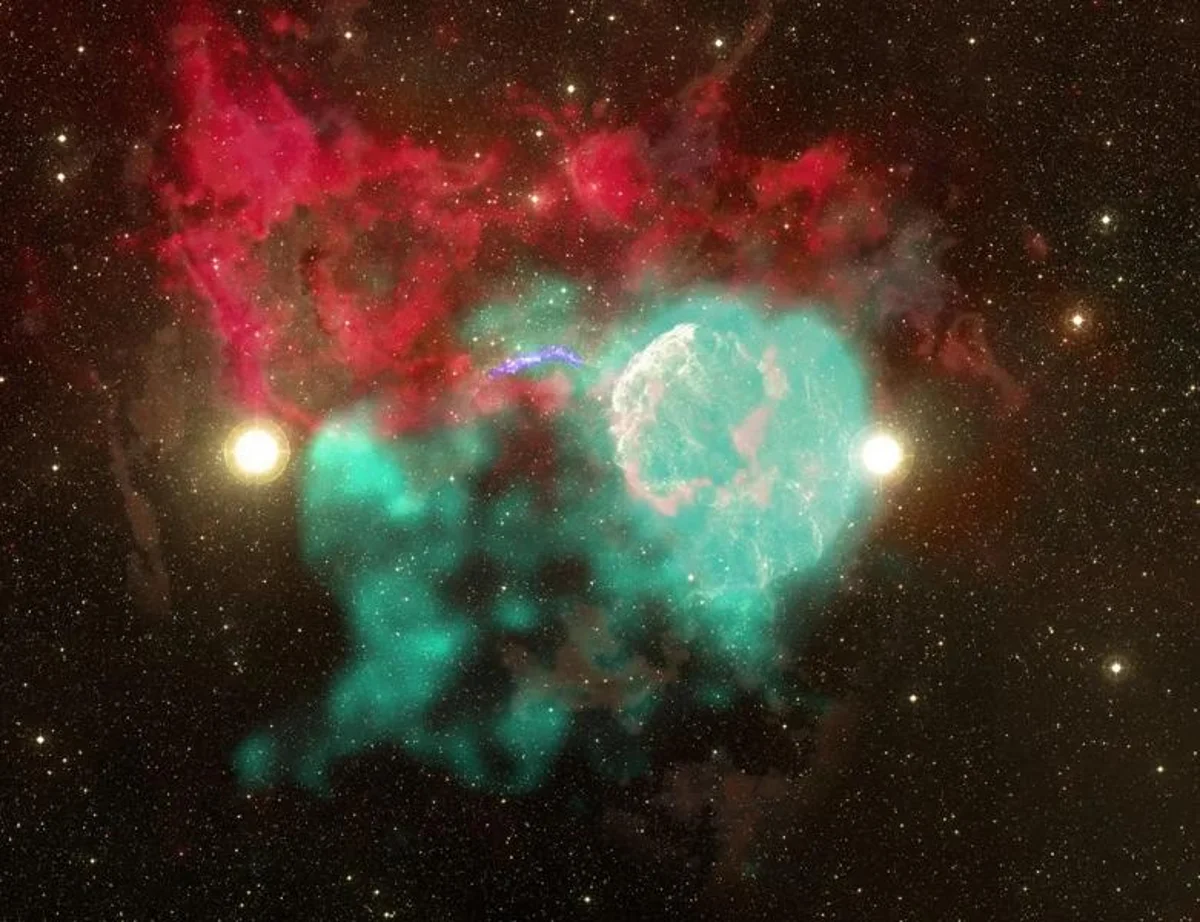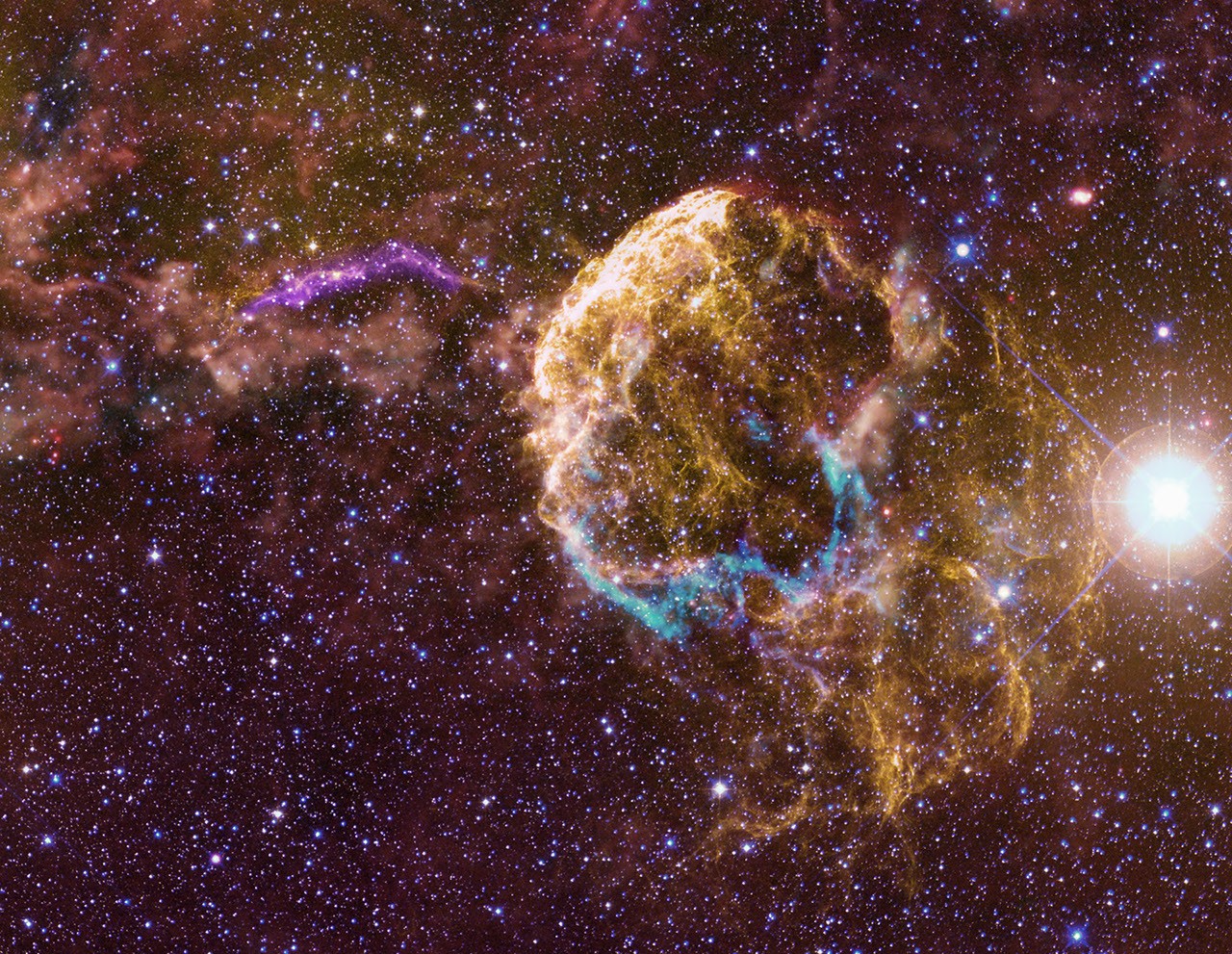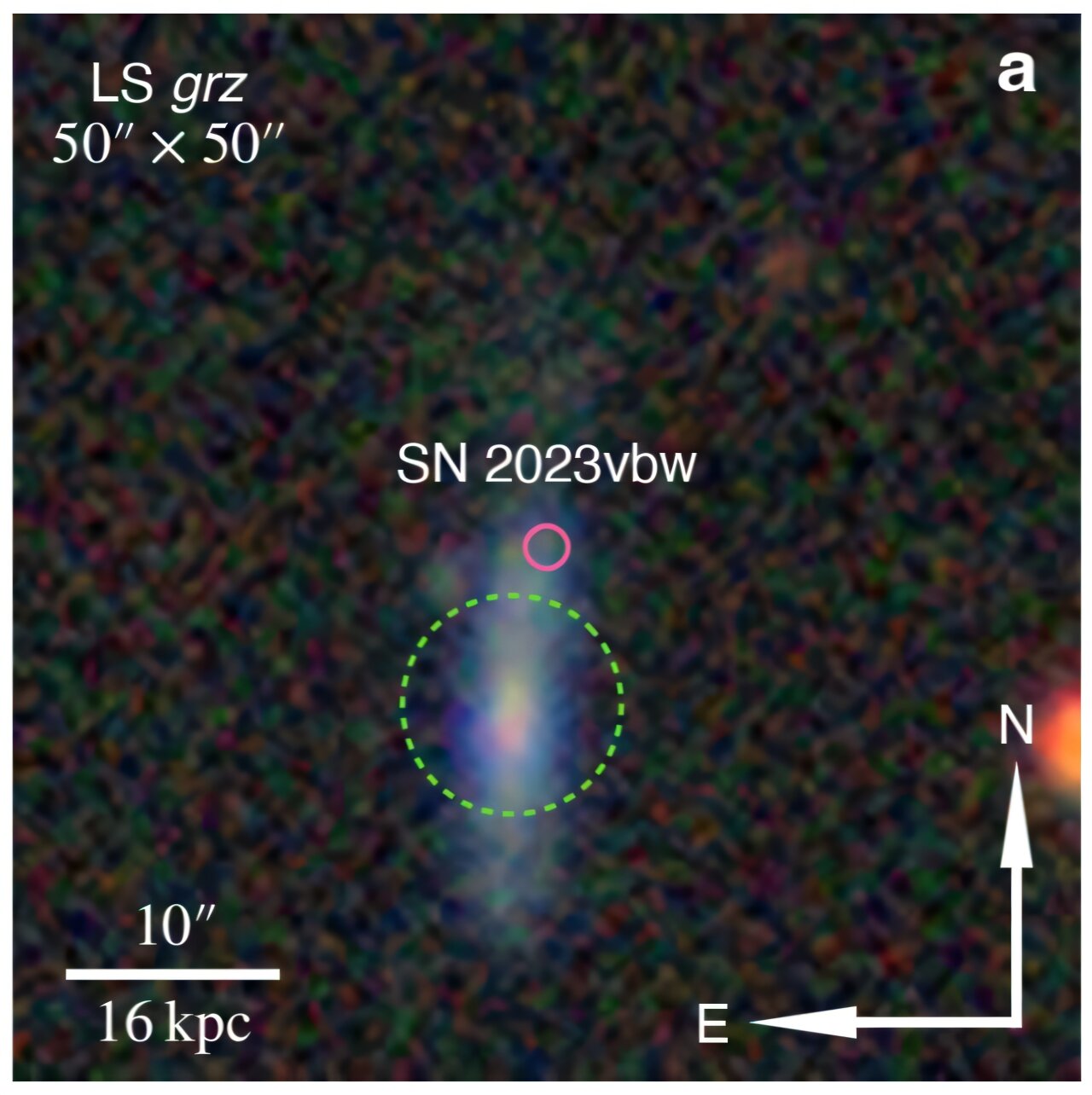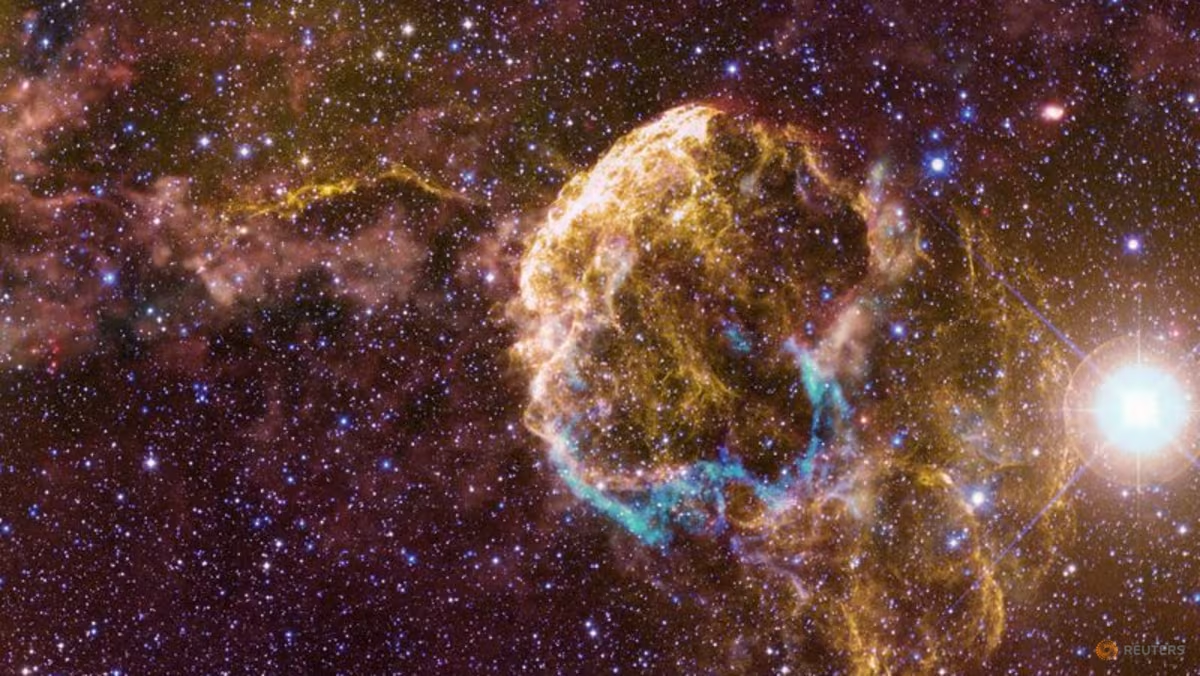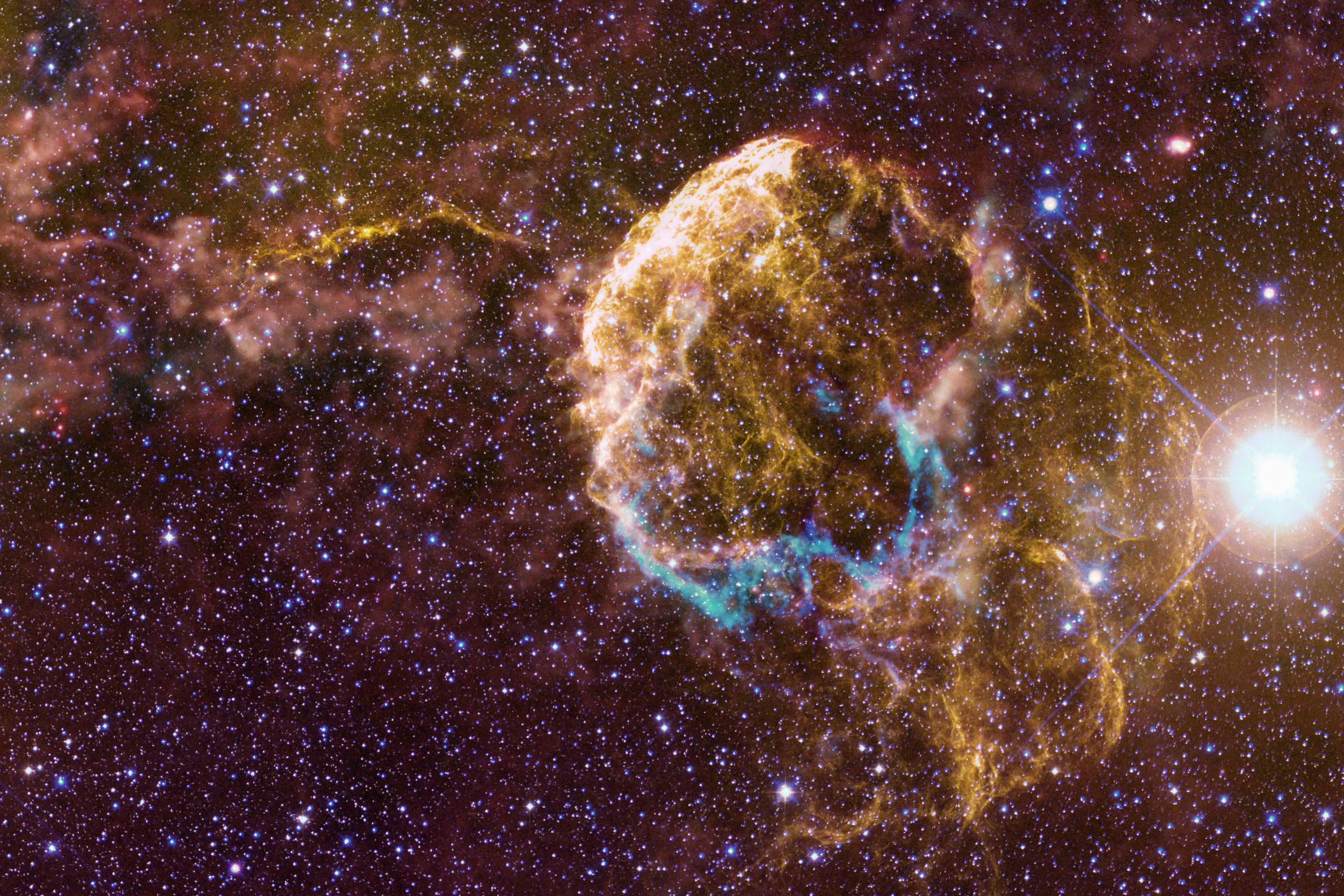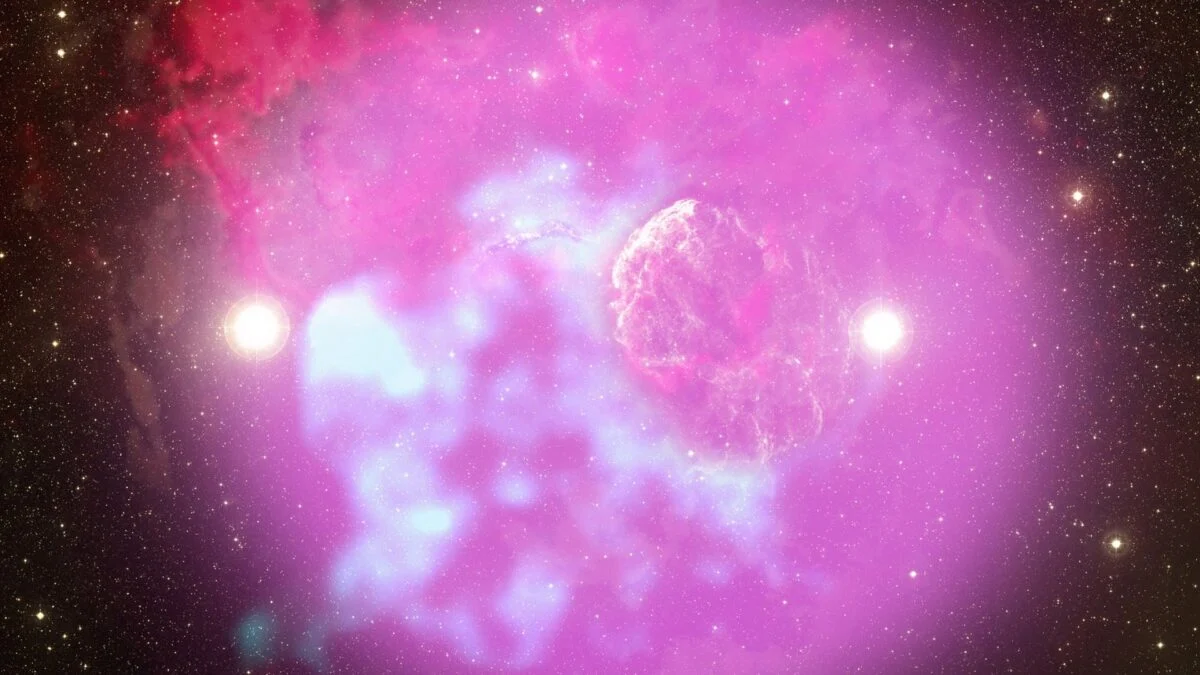
Scientists believe nearly all massive stars destined to explode as supernovae exist in binary or multi-star systems. Despite this, no one had ever detected a binary pair of supernovae—until now, perhaps. According to new research, one of the best-studied supernova remnants in our galaxy—IC 443, also known as the Jellyfish Nebula—may have been hiding a sibling this whole time. The findings, published today in the journal Nature Communications, describe supernova remnant G189.6+3.3, which has long been obscured by the glare of IC 443. Using 16 years of observations from NASA’s Fermi Large Area Telescope combined with X-ray and multiwavelength data, the researchers uncovered G189.6+3.3 and determined that it and IC 443 are likely the ghosts of a binary star system. “Although we are as conservative as possible and we use the word ‘candidate’ because we can’t be 100% sure, it is very unlikely that this is a chance alignment,” lead author Miltiadis Michailidis, a postdoctoral scholar of physics at Stanford University, told Gizmodo. Based on multiple lines of evidence, he and his colleagues believe it is “very likely” that they have made the first detection of supernova remnants that originated from a stellar binary. Confirming the nature of G189.6+3.3 IC 443 is a bright supernova remnant in the constellation Gemini, located about 6,000 light-years from Earth. It lies in a complex environment that includes the S249 H II region—a vast cloud of ionized hydrogen gas—and several neighboring astronomical structures.
Astronomers May Have Found the First Pair of Stars to Explode Together
The Jellyfish Nebula, one of the best-studied supernova remnants in our galaxy, may have been hiding a sibling this whole time.
814 words~4 min read