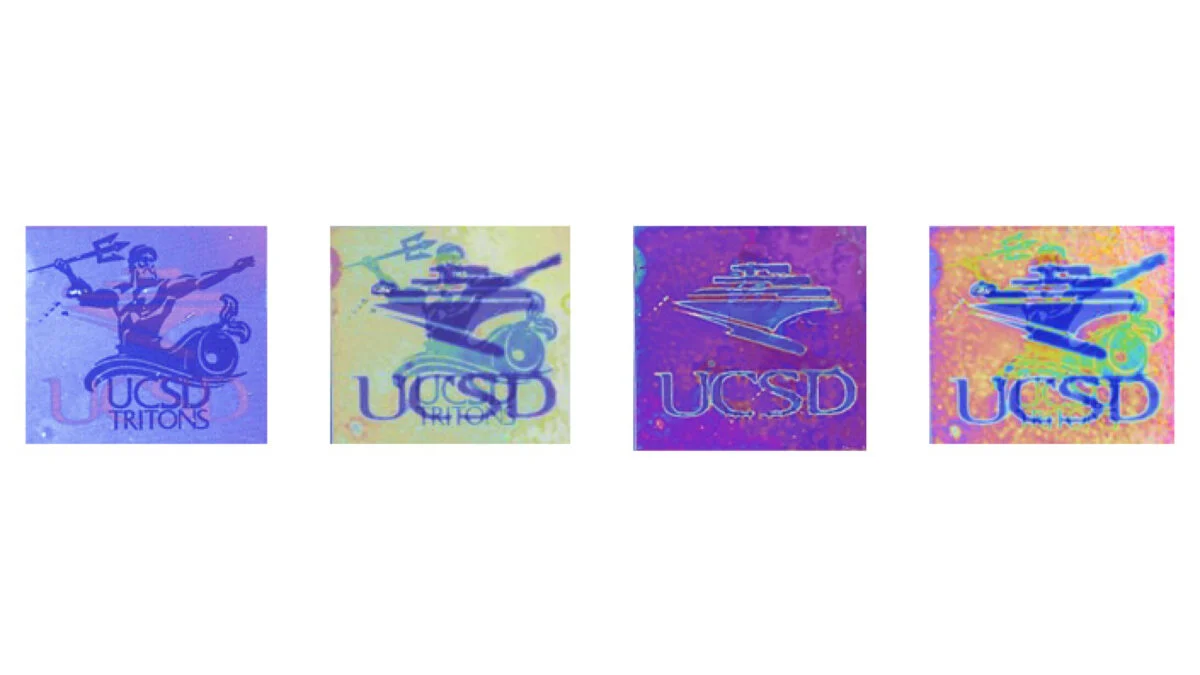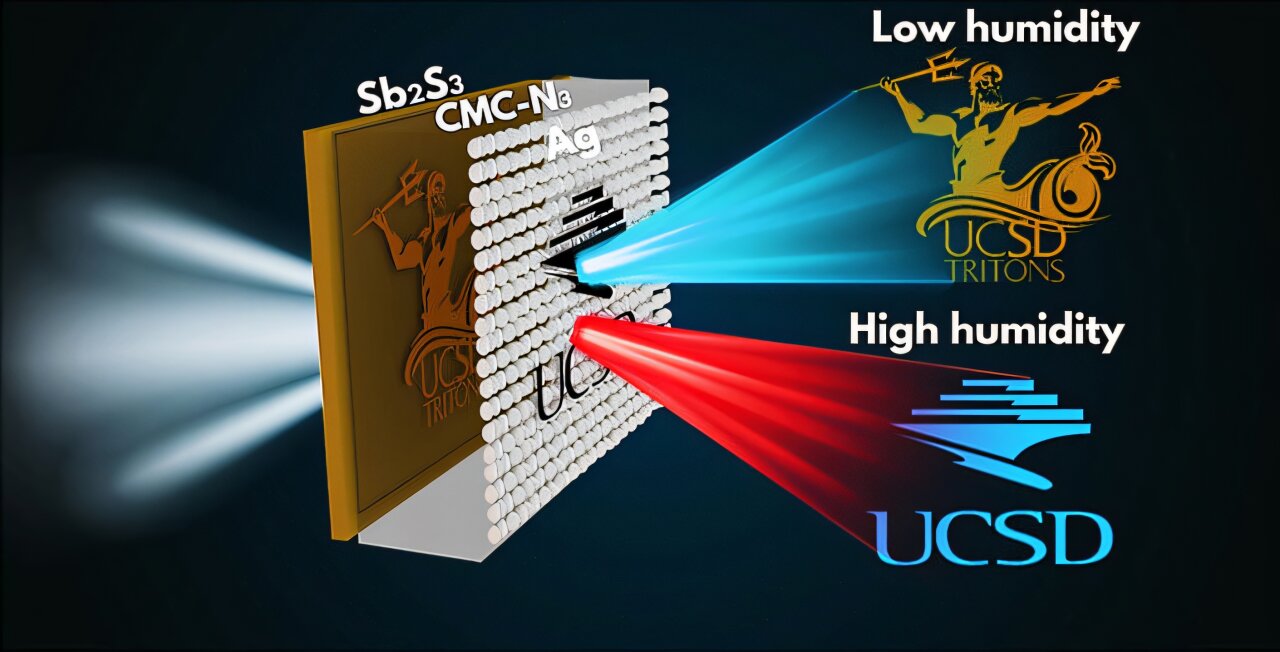
Illustration of the optical device with the bottom layer of antimony trisulfide and top layer of azido-grafted carboxymethyl cellulose. The UCSD Tritons logo appears at low humidity levels, while the UCSD library logo appears at high humidity levels. Credit: University of California - San Diego
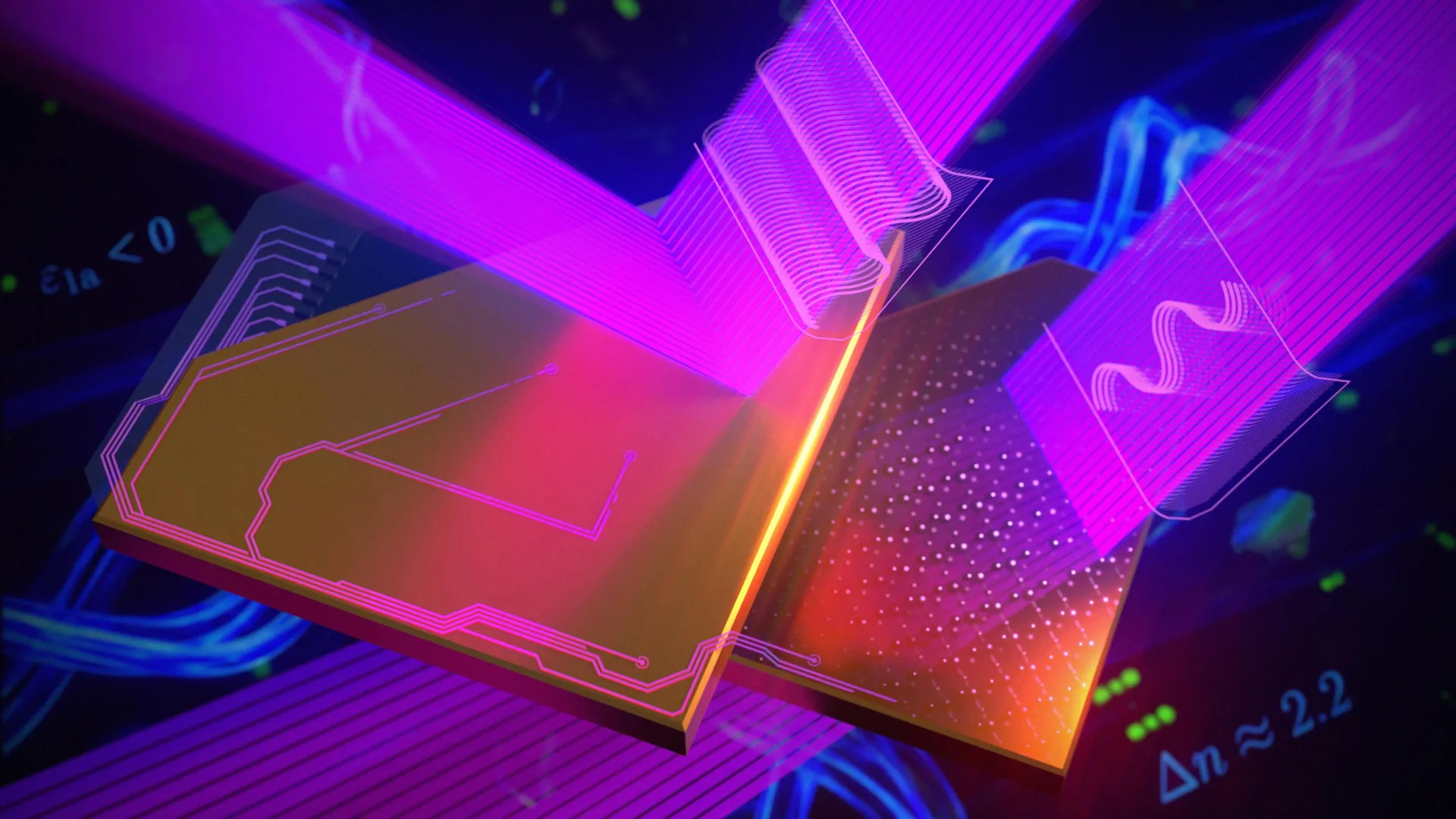
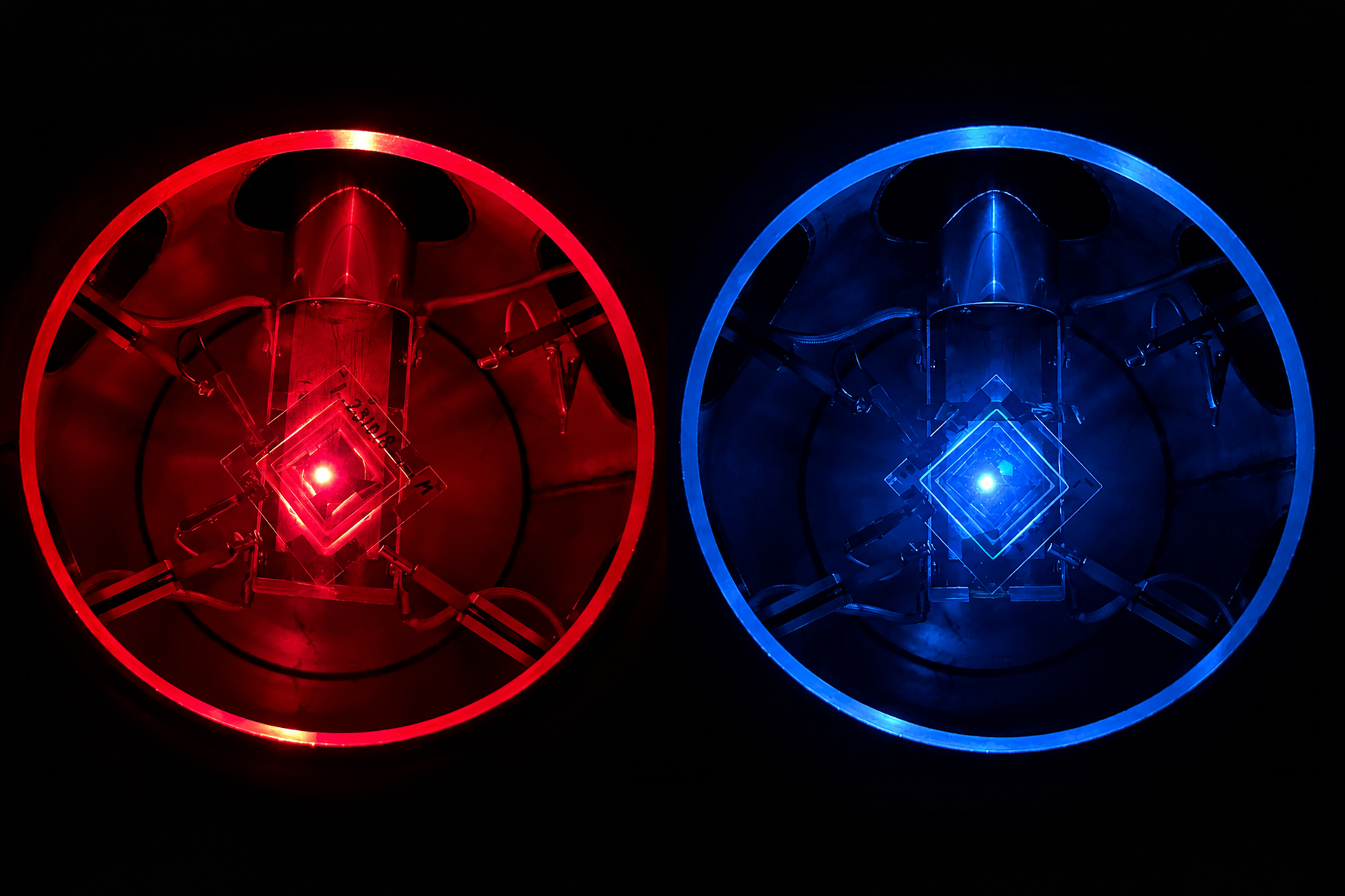
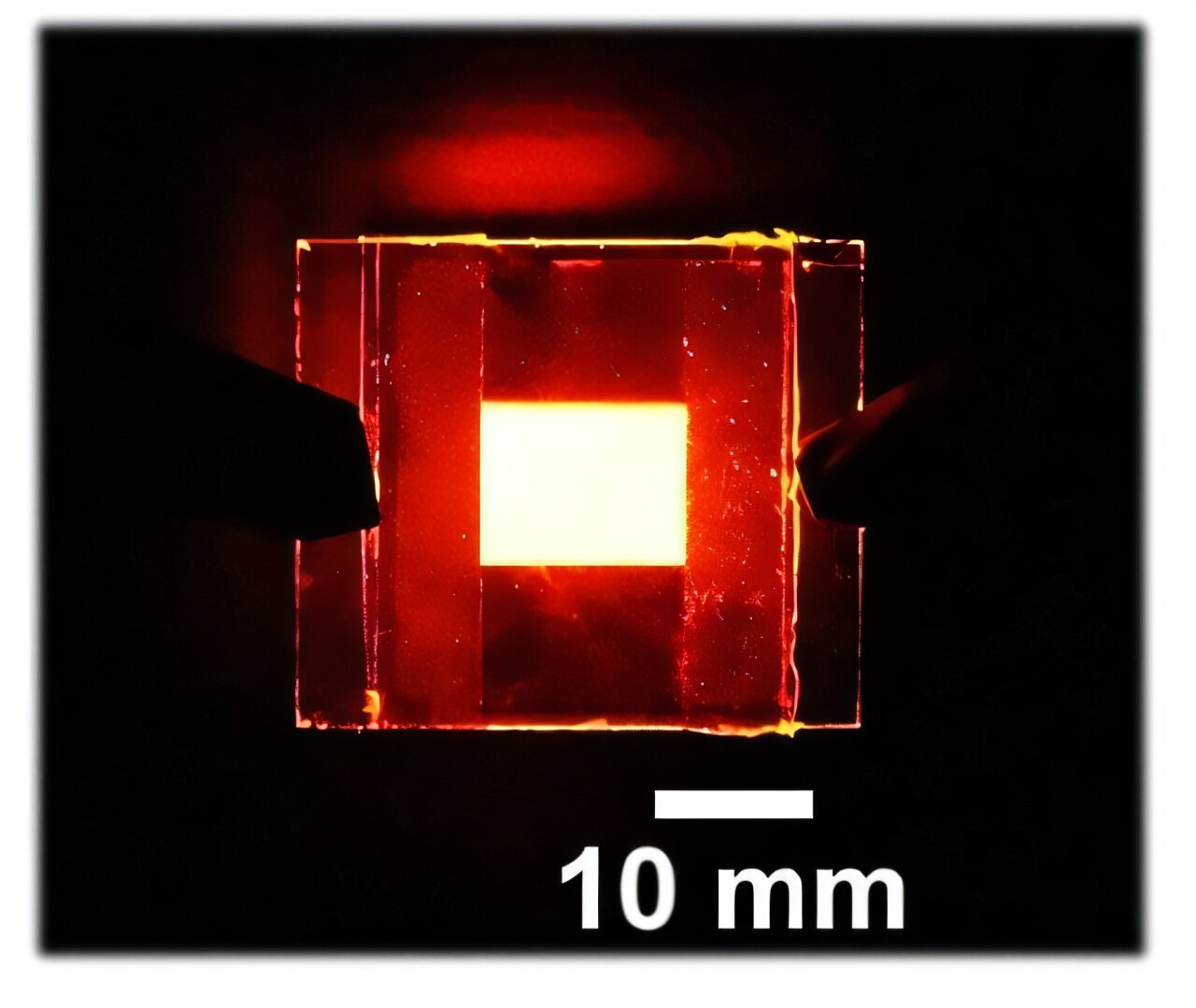
Engineers at the University of California San Diego have developed an optical device that reveals hidden images and changes colors in response to different levels of humidity. The technology, published in Light: Science & Applications, could lead to the development of new anti-counterfeiting labels, secure data storage, interactive displays, and environmental sensors.
The device works by displaying different images depending on moisture levels in the air. Under normal conditions or low humidity levels, one image (UC San Diego Triton logo) is visible. When humidity increases, a second image (UC San Diego library logo) emerges and conceals the first. This transition can be triggered even when a person breathes on the device. It happens in a fraction of a second and can be repeated many times.
"You can imagine using this as a built-in security feature with the environment acting like a key that unlocks different pieces of information," said study first author Asad Nauman, an electrical and computer engineering postdoctoral researcher at UC San Diego. "One example would be something like a credit card security tag, where you can blow on it and reveal a hidden code. Another application would be an environmental sensor that changes color as the humidity changes."