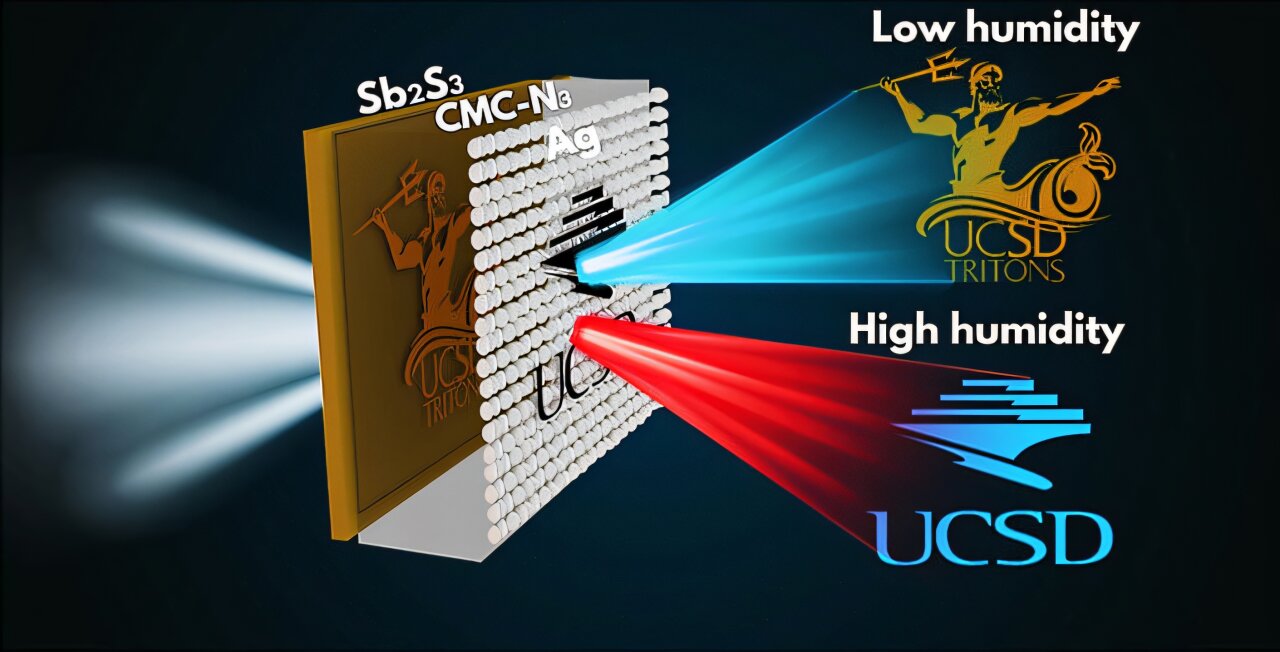
Researchers have been hard at work coming up with new ways to safely store information than traditional magnetic disks and optical storage, and that’s led to some uncanny ways to unlock hidden data. One such method has been developed by engineers at the University of California San Diego (UCSD), an optical device that responds to changes in humidity. In practice, this means that breathing on the device could trigger the reveal of hidden images and information within a fraction of a second. The technical details of the new invention were published last month in the journal Light: Science & Applications. According to the team, information can be inscribed onto the two-layered chip, about the size of a postage stamp, across different humidity levels. “You could encode different pieces of information in different layers stacked on a single space and choose which one to access based on the humidity,” Abdoulaye Ndao, the study’s senior author and an engineer at UCSD, said in a statement.
Costly storage Optical storage typically refers to physical devices that encode data via light sources. According to the study, these represent a “compelling” alternative to electronic approaches, and recent advances have allowed researchers to more freely control different surfaces and their interactions with light sources. That said, many are inherently costly and difficult to scale, the paper added.