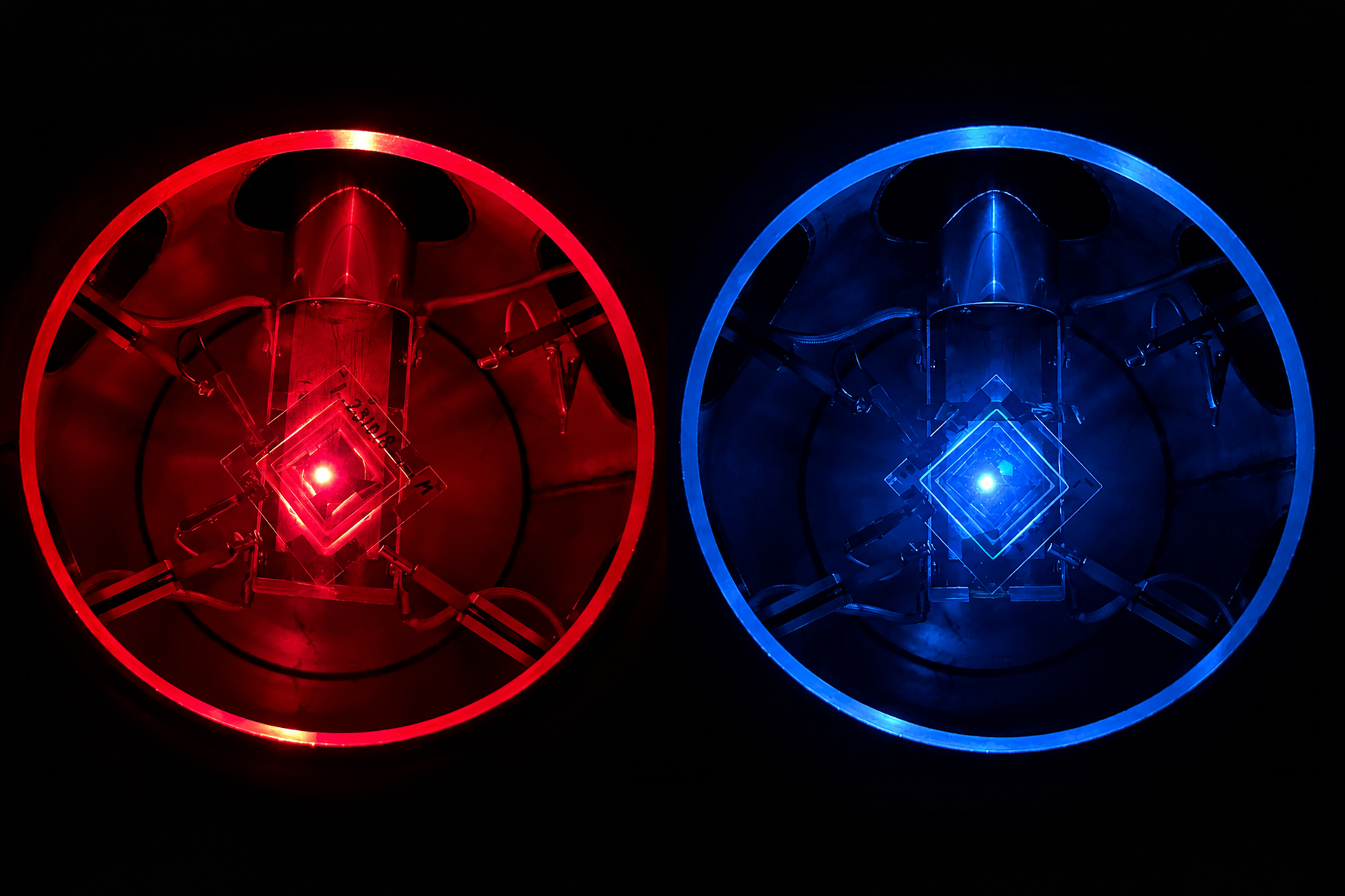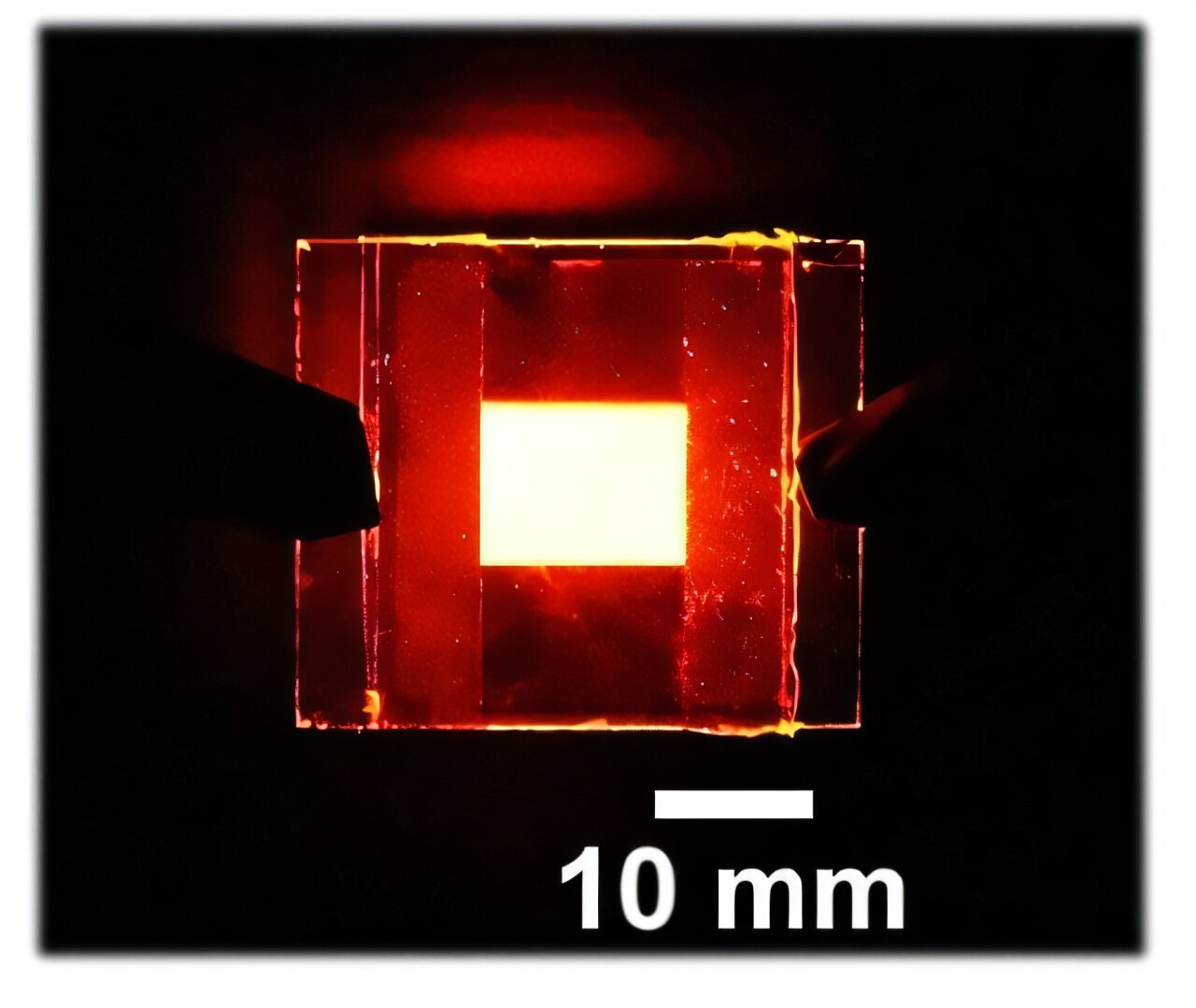
An ultra-bright ECL device operating at ±3.5 V, 90 Hz. Credit: National University of Singapore
From a skin patch that changes color to flag abnormal blood sugar to a diver's sleeve display that stays readable underwater, the need for bright, flexible screens is growing, but no existing technology delivers the combination of simplicity, low power and robustness these applications need. Existing organic light-emitting diodes require complex multilayer structures that are difficult to bend reliably. Light-emitting capacitors are simpler, but they demand hundreds or even thousands of volts, ruling out anything worn on the body.
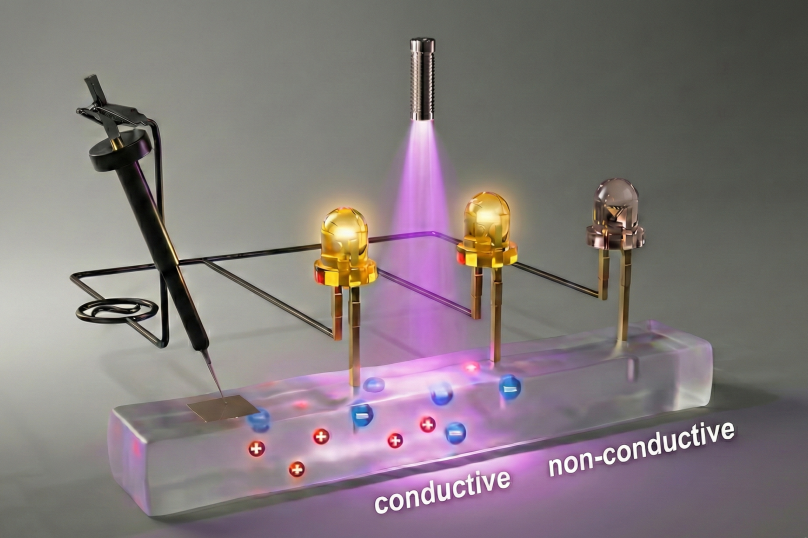
Electrochemiluminescent (ECL) devices offer a more viable solution. They generate light through electrically triggered chemical reactions inside a liquid layer sandwiched between two electrodes and are inherently thin, flexible and energy-efficient. Their persistent shortcoming, however, has been dimness: too faint for a user to easily read and too unstable for anything beyond a brief lab demonstration.
A team led by Assistant Professor Tan Yu Jun from the Department of Mechanical Engineering at the College of Design and Engineering, National University of Singapore (NUS CDE), working in partnership with researchers at the Institute of Materials Research and Engineering (IMRE) and the Institute of High Performance Computing (IHPC), under the Agency for Science, Technology and Research, has now overcome that barrier.