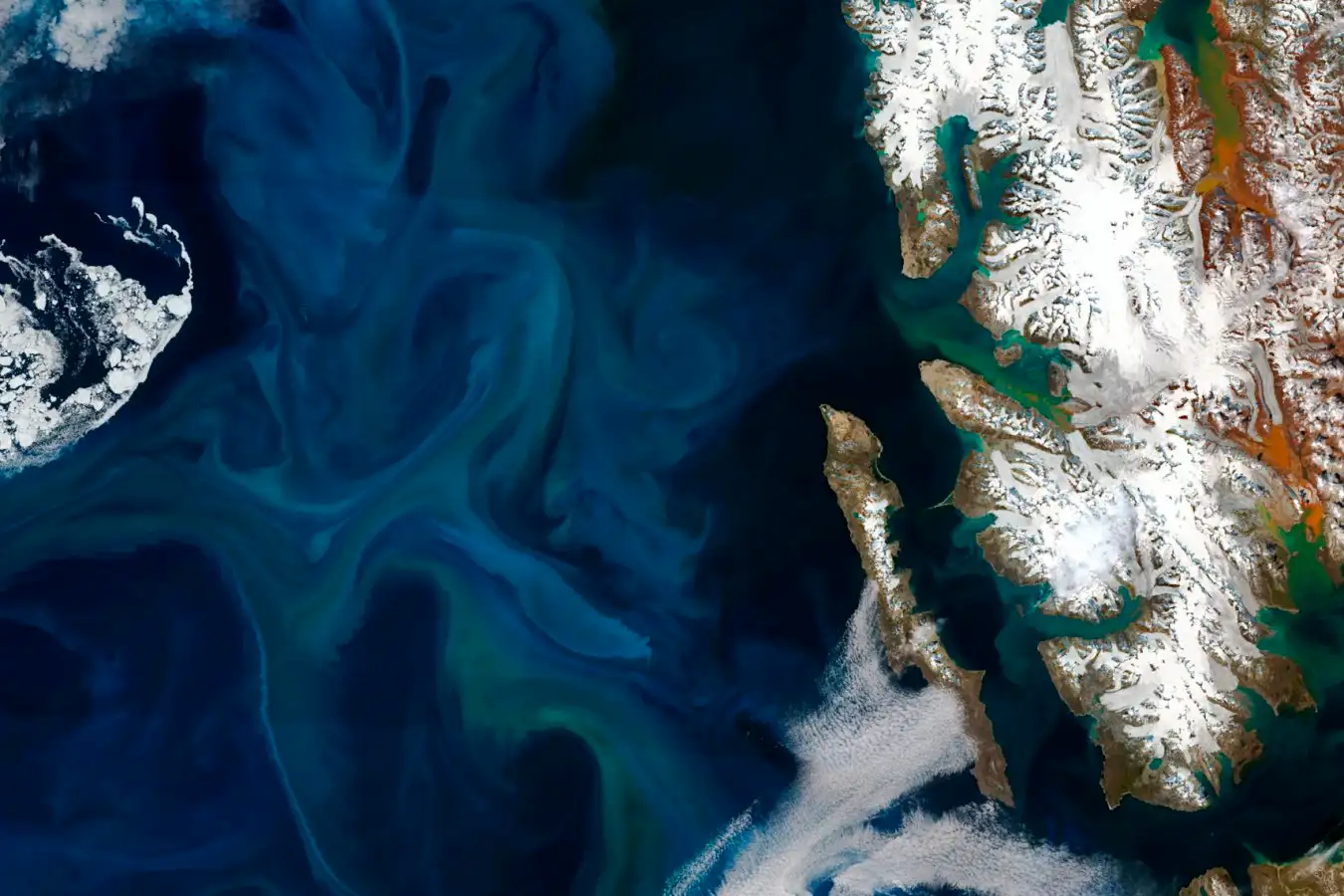
MOSCOW, May 29. /TASS/. Russian ocean studies experts made a year-round map of vortex activity in the Barents Sea's shallow part to understand better how warm and cold waters mixing up in the Arctic affect melting of the region's ice cover, press service of the Russian Science Foundation (RSF) said.
"The Arctic is warming up faster than other regions of the planet. The Barents Sea's ice cover has been shrinking at a record pace. Results of recent work show it is small vortices that are responsible for delivering heat from the depths to the ice sheet area. Determining their number is critically important for predicting the sea ice disappearance in summer," the press service quoted head of the Marine Polar Research Laboratory at the Marine Hydrophysical Institute of the Russian Academy of Sciences (Sevastopol) Igor Kozlov as saying.
According to the scientists, marine vortices in shallow waters of the northwestern Barents Sea mix water intensively, raising warm and salty Atlantic waters to the surface, accelerating ice melting and redistributing nutrients. For this reason, they have a huge impact on the climate of the Arctic and the entire planet as well as on various processes related to the functioning of local ecosystems.