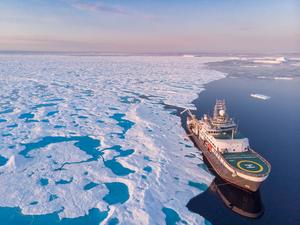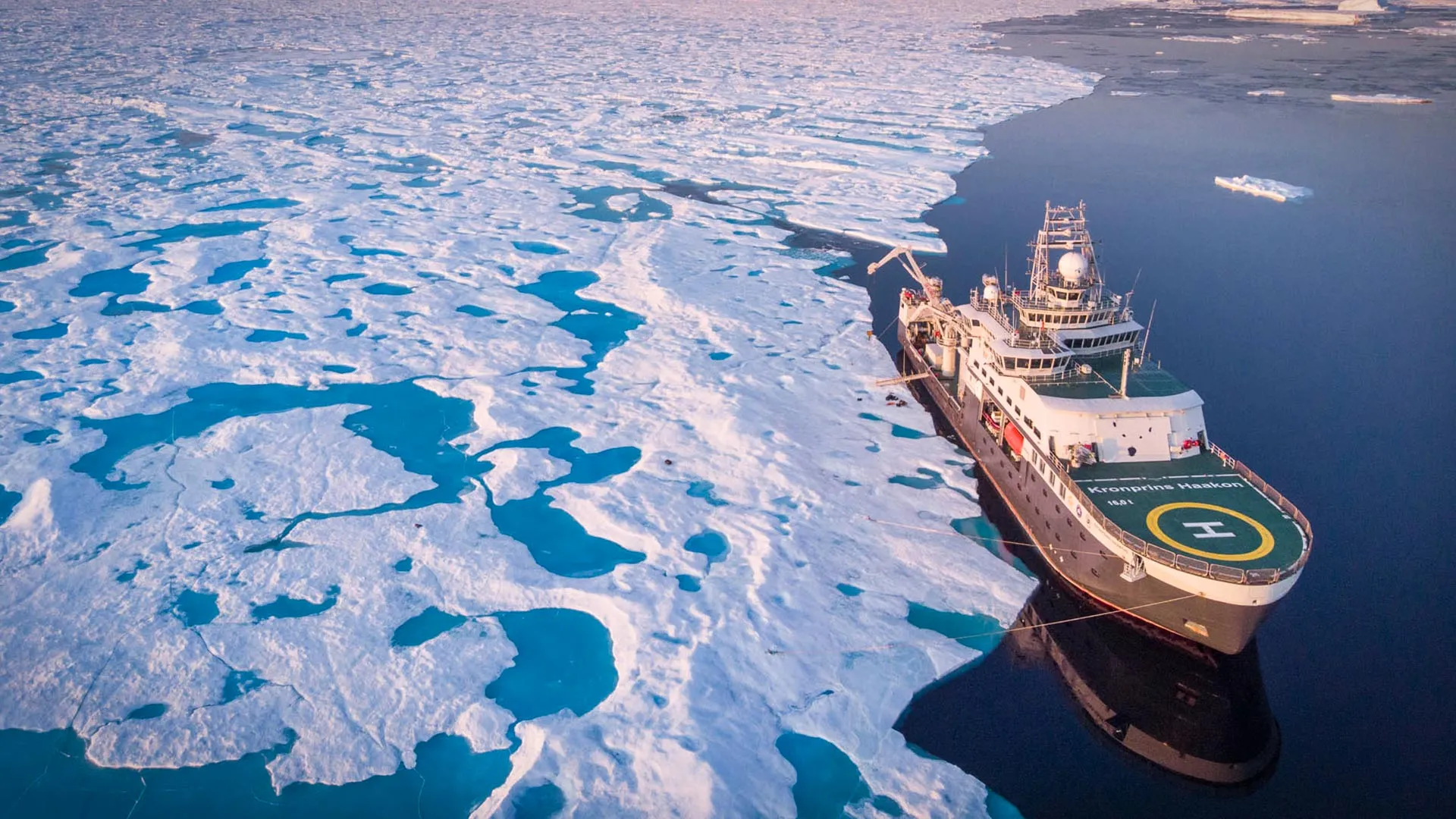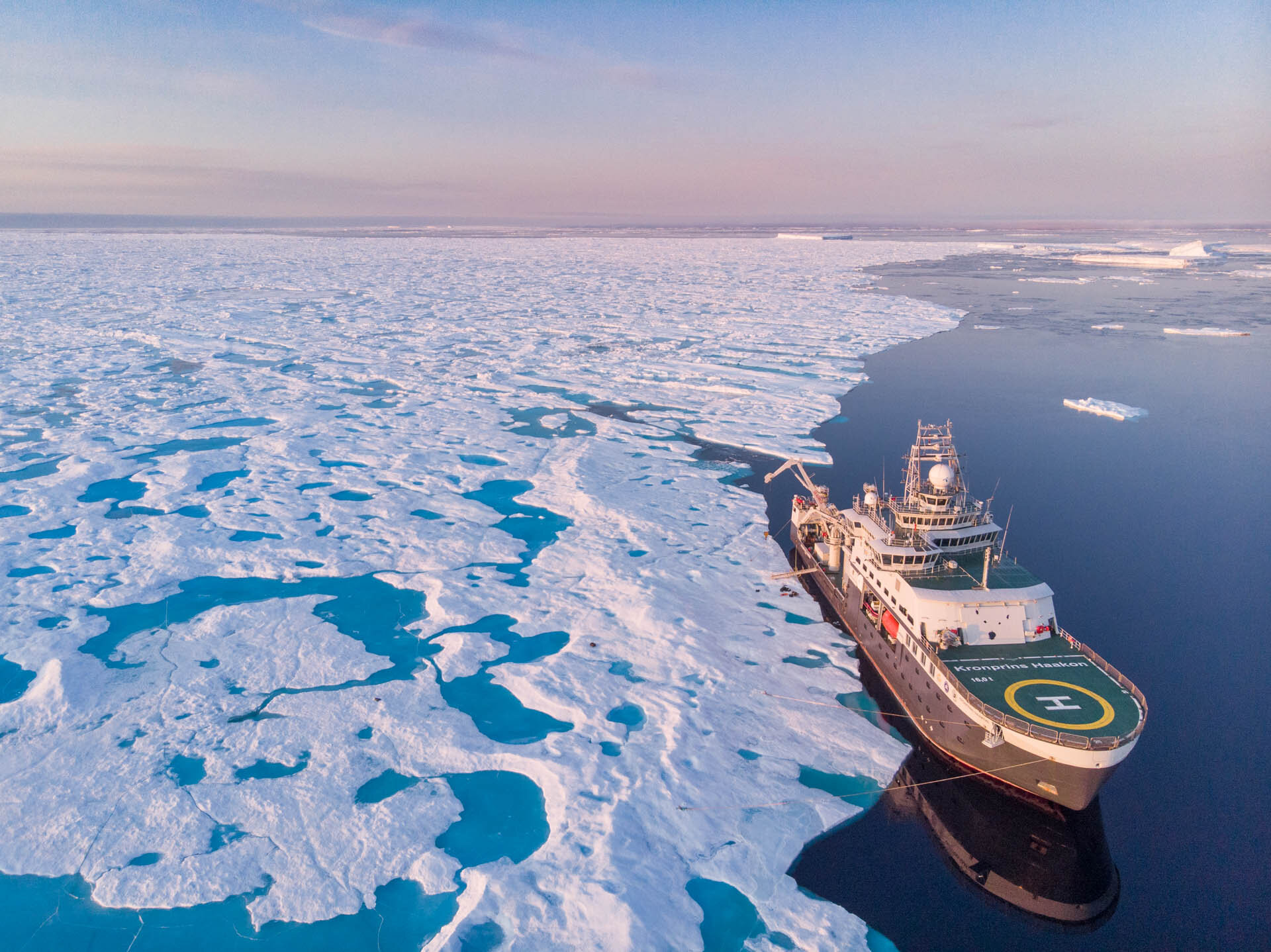
The polar research vessel RV Kronprins Haakon in Fram Strait, Arctic Ocean. Credit: Lawrence Hislop / Norwegian Polar Institute
An irreversible shift in the chemical makeup of the Arctic Ocean driven by climate change is disrupting the region's food chain, a study suggests. Widespread loss of Arctic sea ice has led to a sharp fall in levels of a key nutrient, affecting populations of plankton, fish, seabirds and marine mammals, say researchers. Their analysis reveals that exposure to sunlight of vast shallow regions of the ocean previously covered by ice fuels a process that breaks down the nutrient—nitrate—and removes it from seawater. The study appears in Communications Earth & Environment.
Falling nitrate reshapes Arctic ecosystems
Nitrate is vital for the growth of plankton at the base of the Arctic food chain, and reduced levels of the nutrient limit the amount of life the ecosystem can support. Dwindling levels of nitrate could also reduce the Arctic Ocean's capacity to store carbon, as plankton play a key role in capturing it from the atmosphere through photosynthesis, says the team.
While recent studies have reported changes in animal populations in Arctic waters, the causes were poorly understood, as there have been few in-depth analyses of the ocean's chemical makeup.