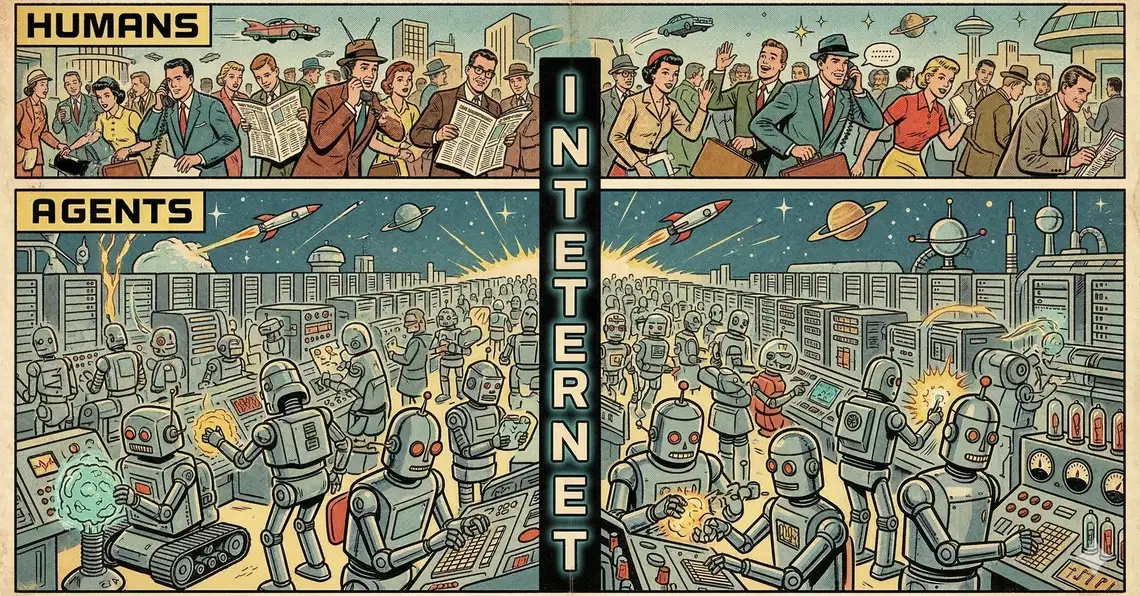
Cloud infrastructure has long been designed around humans who search, click, scroll, and stream in a steady and predictable fashion. AI agents behave differently. They can unleash a swell of activity, spinning up multiple sub-agents that query hundreds of databases, search documents, and call APIs in seconds and then disappear as quickly as they arrived.
Under that premise, Amazon is redesigning a core piece of its cloud infrastructure. On Thursday, AWS launched its next generation of OpenSearch Serverless, a fully managed search and vector database — essentially a system for storing and retrieving information at scale — that’s designed specifically for agentic workloads. AWS says the new system can instantly scale up when agents trigger tasks and scale back down to zero when idle.
The launch reflects a growing realization across the tech industry: infrastructure originally designed for a human-driven internet doesn’t work as well in a world increasingly populated by agents.
While AI agents still represent a relatively small portion of internet activity, machine-generated traffic is already significant, and poised to grow. Cloudflare says bots accounted for 31% of overall HTTP traffic over the last six months. AI crawlers, search engines, and assistants made up roughly a quarter of all bot requests during that period.