Hospitals have spent years promising that technology would make healthcare easier for nurses. Instead, many clinicians found themselves juggling disconnected systems, endless alarms and mounting administrative tasks that pulled them farther away from patients.Amy McTaggart, DNP, RN, has seen it happen firsthand."As chief nursing officer at University Health Kansas City, I have seen how technologies designed to support clinicians can unintentionally add complexity and burden at the bedside," said McTaggart.After three decades working on the frontlines of healthcare, McTaggart believes the problem is not technology itself. The problem, she said, is technology that was never truly designed around the realities of nursing work.A patchwork of systemsHealthcare organizations often rely on multiple digital tools at once: electronic health records, monitoring dashboards, communication systems and documentation platforms. When those systems do not communicate with one another, nurses can end up doing duplicate work while trying to piece together patient information scattered across several screens."A primary driver of these challenges is disjointed systems – including digital health records, monitoring dashboards, communication tools and documentation platforms – that don't seamlessly integrate," McTaggart said.At University Health Kansas City, those disconnects created real inefficiencies in nursing units. McTaggart said nurses once had to print cardiac rhythm strips and tape them to paper in order to interpret and validate patient data. At the same time, inconsistent alarm settings generated a flood of alerts, many of which did not require action.The result was alarm fatigue, a growing problem in hospitals nationwide where clinicians become overwhelmed by constant notifications."To address this, we shifted toward more integrated, interoperable systems," McTaggart said.Working with vendor Philips, the health system implemented a centralized monitoring unit designed to bring patient data together into a single hub while filtering out nonessential alarms.The changes quickly produced measurable results. McTaggart said the hospital saw a 22% reduction in non-actionable alarms and a 69.6% decrease in time spent on waveform strip documentation."Ultimately, this reinforced that reducing burden isn't about adding more technology: It's about connecting systems in a way that streamlines workflows and better supports clinicians at the bedside," she said.Designing technology with nurses, not around themMcTaggart argues that healthcare technology works best when nurses help shape it from the beginning."The most effective clinical technologies are built in partnership with nurses and start with a clear understanding of where time and effort are being lost in their daily workflows," she said.Too often, she said, nurses spend valuable time re-entering data, navigating fragmented systems or searching for information spread across different platforms."When technology is co-designed with clinical input, it's built around real workflows, helping to reduce duplicate documentation while making the right information available when and where nurses need it," McTaggart said.That collaboration extends beyond documentation systems. Nurses also play a key role in refining alarm management systems so clinicians receive meaningful alerts instead of a constant stream of interruptions."The same collaborative approach is essential when addressing alarm management and requires input from across the care team," McTaggart said.The goal, she added, is not simply efficiency."Reclaiming time is important, but it's ultimately about improving the quality of care," she said.A different kind of vendor relationshipFor McTaggart, one of the biggest lessons from University Health Kansas City's digital transformation was learning how technology vendors and nurses can work together more effectively."When we were going through our own digital transformation at UHKC, I had the opportunity to work closely with technology vendors, and it fundamentally changed how I think about the role vendors should play in healthcare," she said. "Successful collaboration is about co-designing systems that truly fit the realities of clinical care."Rather than relying on technology demonstrations or sales presentations alone, McTaggart said collaboration required hands-on observation inside nursing units."What made a meaningful difference was a collaborative, hands-on approach," she said. "This involved spending time on the units to understand workflows and identify where breakdowns occurred to help ensure the systems align with the realities of day-to-day care."That process became especially important during implementation of the centralized monitoring unit."While many hospitals can stand up a centralized monitoring unit, the challenge lies in integrating it into existing workflows," McTaggart said. "Without the right design, you risk simply shifting the burden rather than reducing it."By tailoring workflows, communication pathways and staff roles around how nurses already delivered care, the hospital estimates it now saves more than 10,500 nursing hours annually."That level of customization made all the difference," McTaggart said.Technology that stays out of the wayMcTaggart said some of the most meaningful advances are the ones that quietly remove friction from nurses' daily routines.At University Health Kansas City, virtual sitter systems now help monitor high-risk patients, allowing nurses to focus on more complex care needs while maintaining patient safety.Mobile devices have also changed workflows on the units. Nurses can document care, receive orders, and complete barcode scanning for medications and laboratory work directly at the bedside rather than repeatedly returning to workstations."This reduces unnecessary movement, improves efficiency and supports more accurate, real-time documentation," McTaggart said.The health system's standardized Philips monitoring platform also has helped create more consistency across the hospital, reducing variability while improving alarm management."What ties these examples together is a shared objective: enabling nurses to focus on providing quality care," McTaggart said.For McTaggart, the lesson is simple: Technology succeeds when it fades into the background and allows nurses to spend more time doing the work that matters most."When technology is integrated, intuitive and aligned with clinical workflows, it reduces interruptions and supports better decision-making," she said.Follow Bill's health IT coverage on LinkedIn: Bill SiwickiEmail him: [email protected]Healthcare IT News is a HIMSS Media publication.WATCH NOW: As AI evolves, it needs new oversight layers
When nurses shape the technology, patients feel the difference
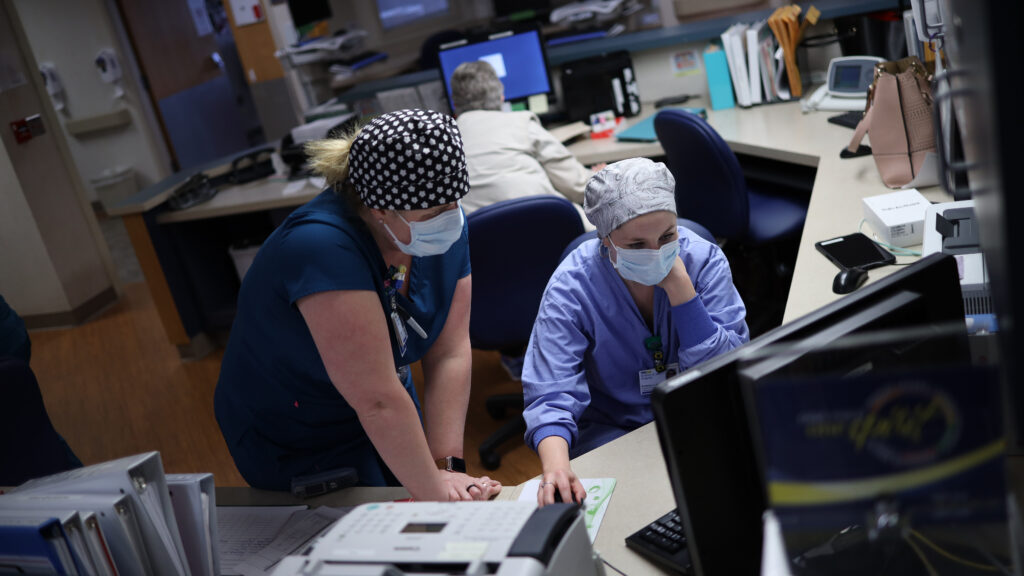
At University Health Kansas City, frontline nurses are working together to redesign IT systems. Their goal: reduce burnout, cut alert fatigue and return thousands of hours to patient care.
932 words~4 min read